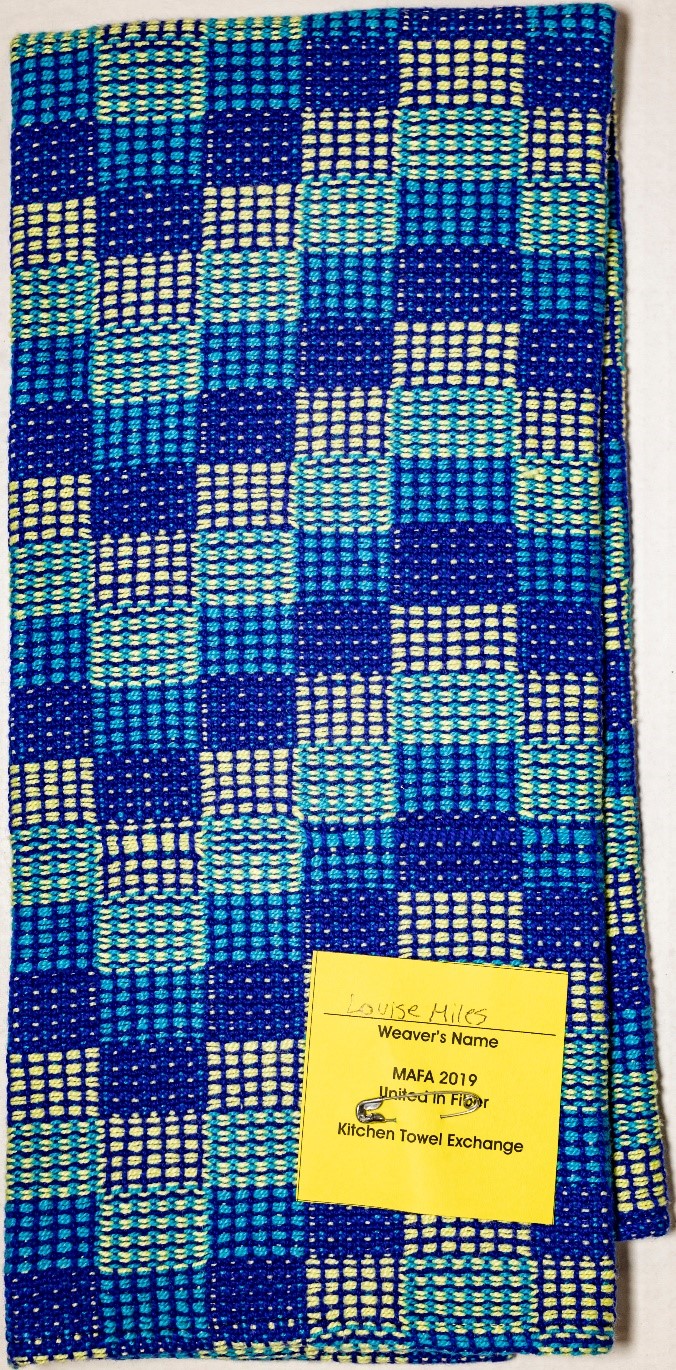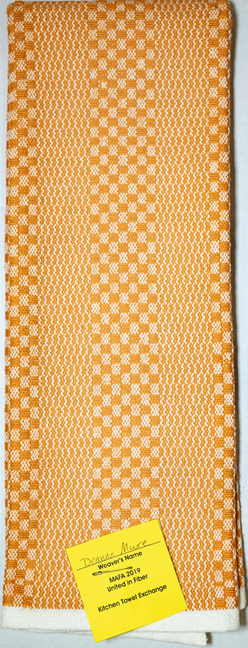
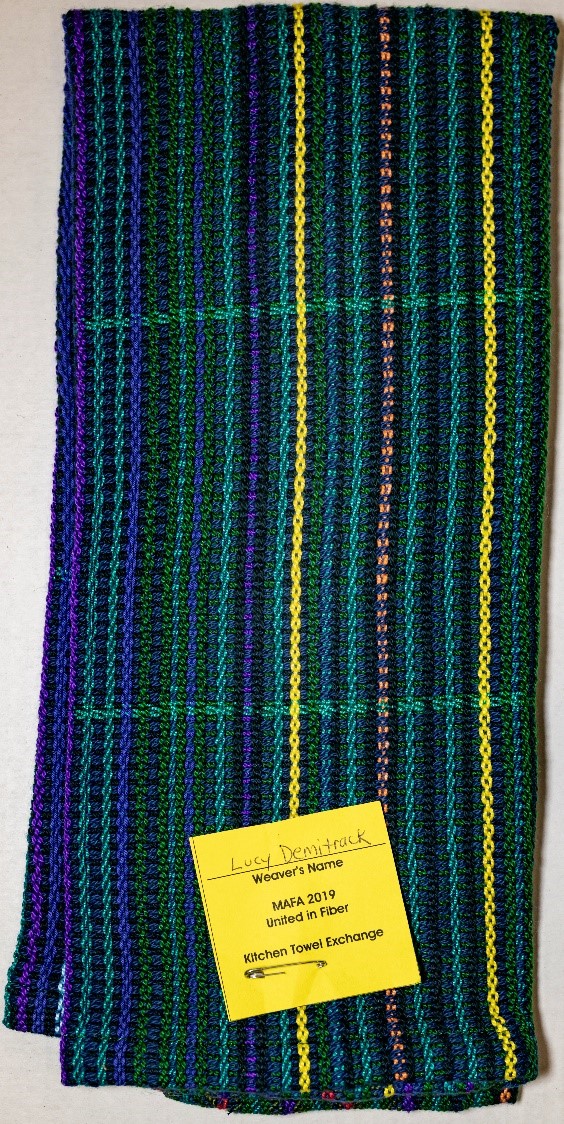
The yarn was predominantly unmercerized cotton. The goal was to use yarns from dark to light so that the light warps would stand out. The colors were chosen as I wound the warp. Occasionally perle cotton was used if the color sequence required it and I ran out of other options.
MAFA2019-060
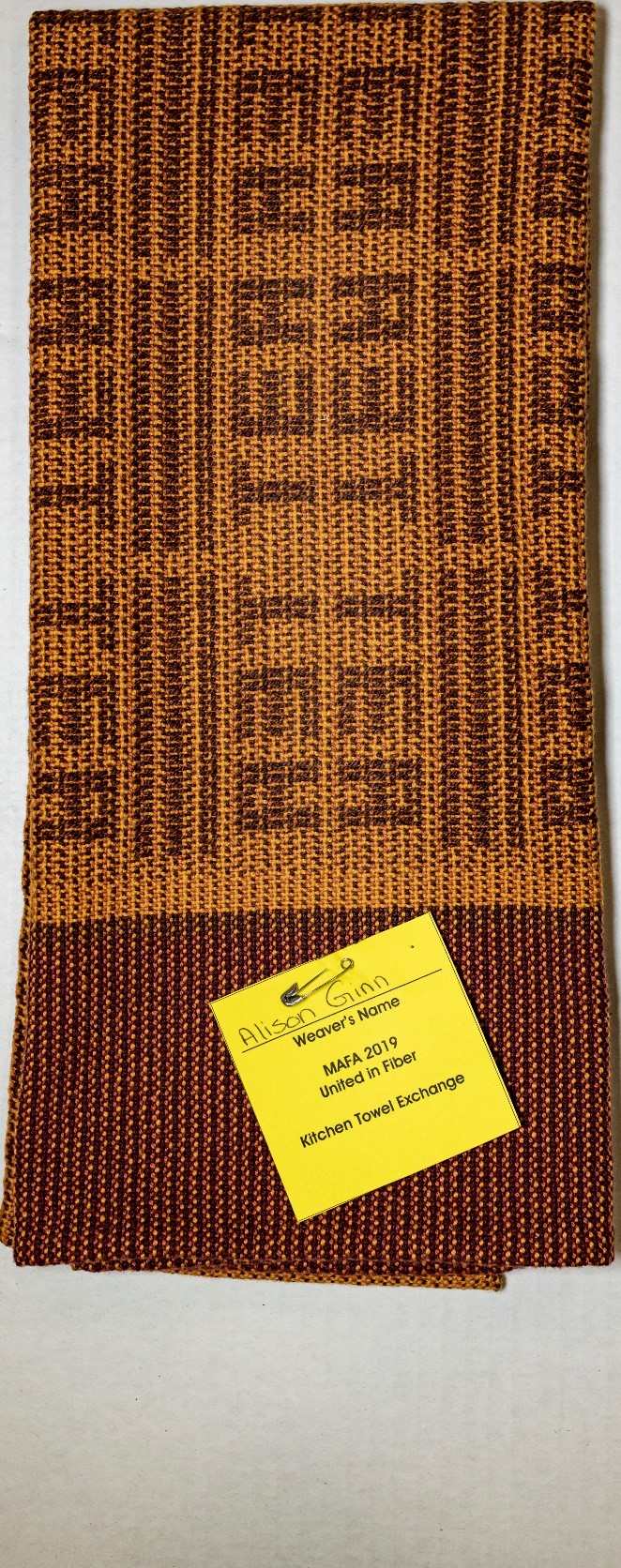
We are big tea lovers in the family – so this towel in Handwoven S/O 2003 caught my eye. I have used this draft numerous times over the years – in various colours and weights of fibre – for towels and as material for tray mats, tea cozies, market bags, etc.
For this set of towels, I returned to colours similar to those in the original article:
warp – brun moyen, rouille & orange brule
weft – magenta, brun moyen (pattern), orange brule (tabby)
Warped at 18 epi, wove at 36 ppi.
MAFA2019-055
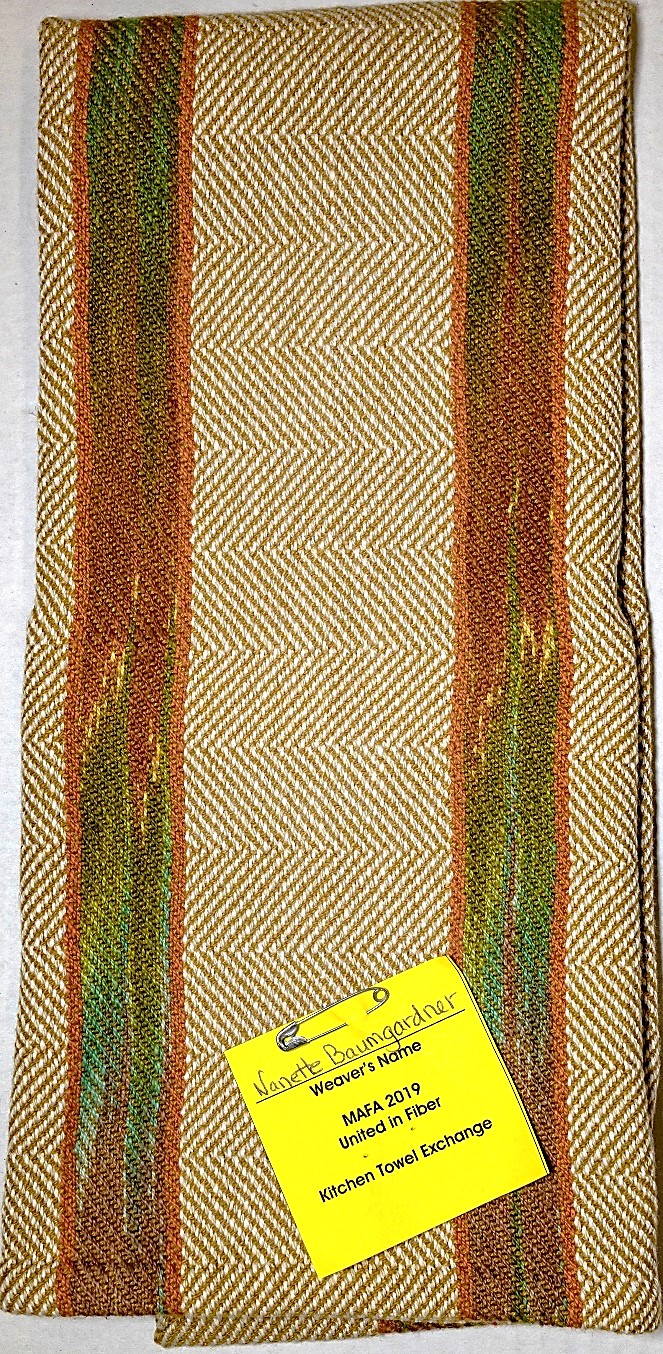
The hand-painted stripes were dyed using Procion MX Fiber Reactive dyes.
I used a different color weft for each towel.
MAFA2019-050
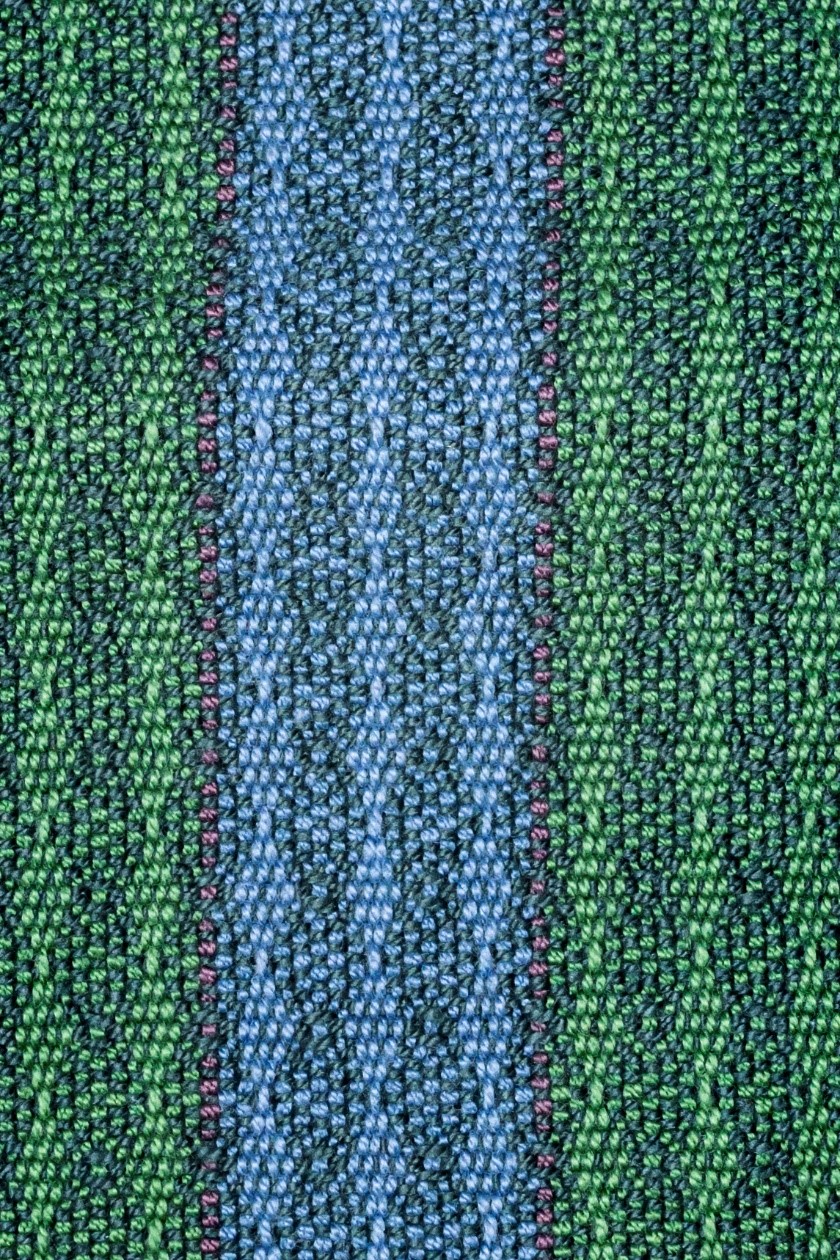
I wove this at 25 epi so it would fit on my workshop loom. If width had not been an issue, I would have woven it at 24 epi.
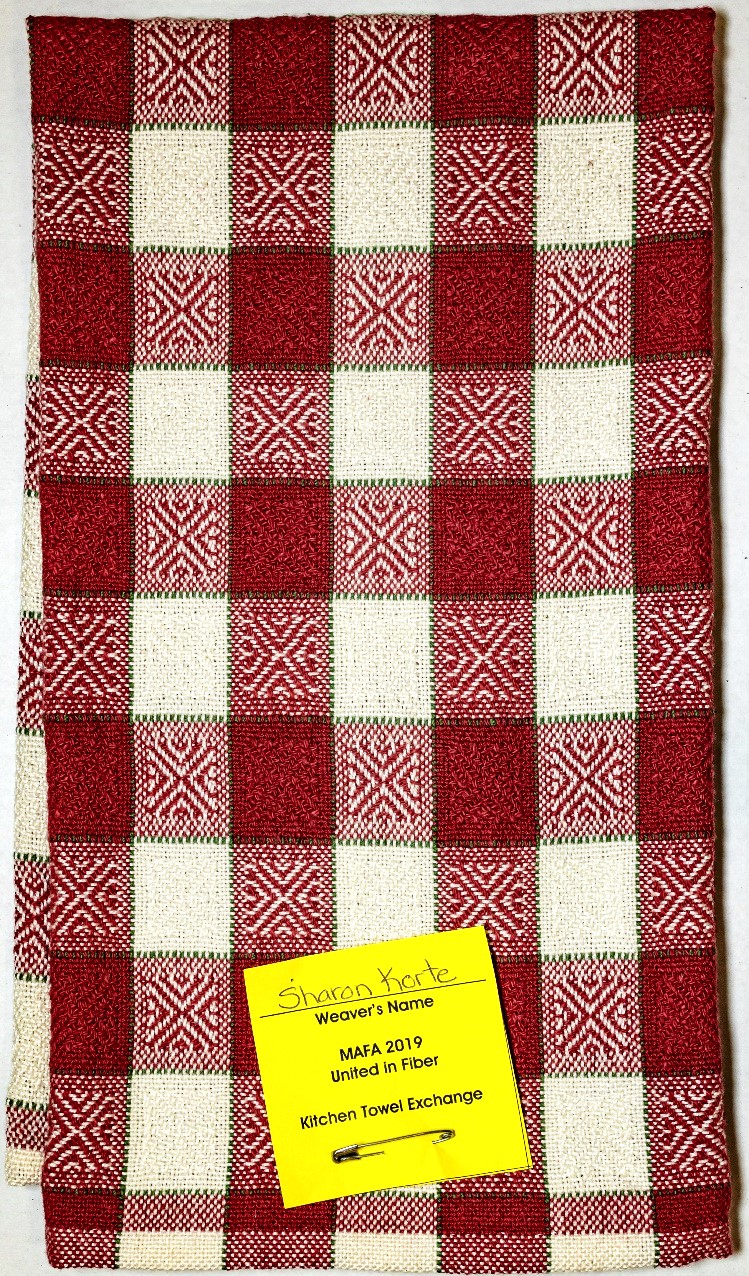
MAFA2019-068
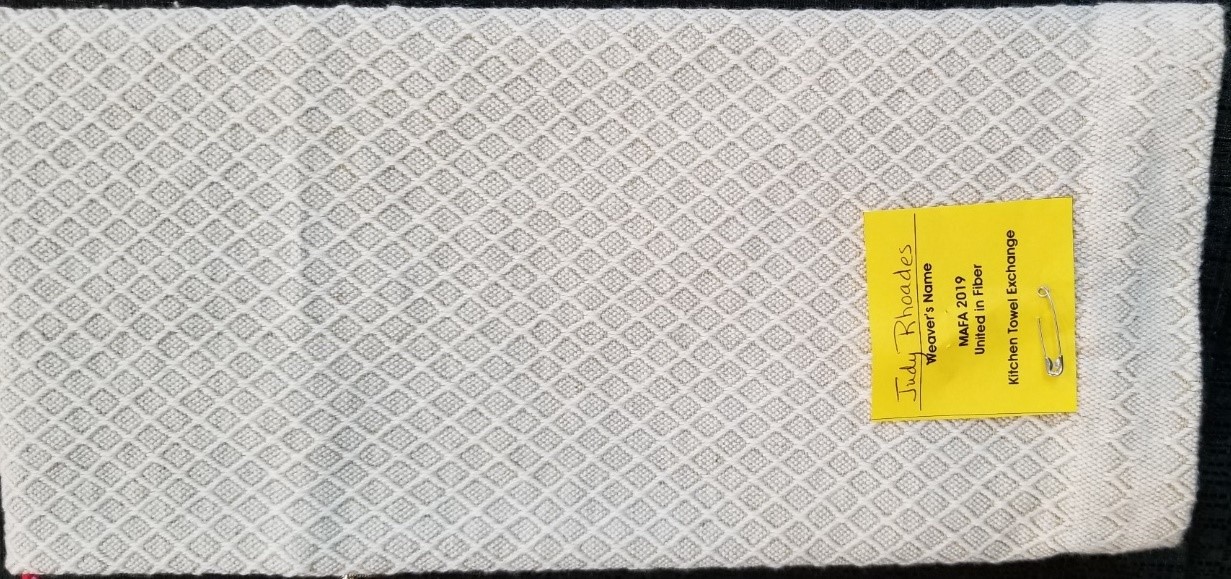
I like to choose a threading that can provide several patterns. Then I play…use one for the hem, another for the body, intersperse plain weave.
MAFA2019-046
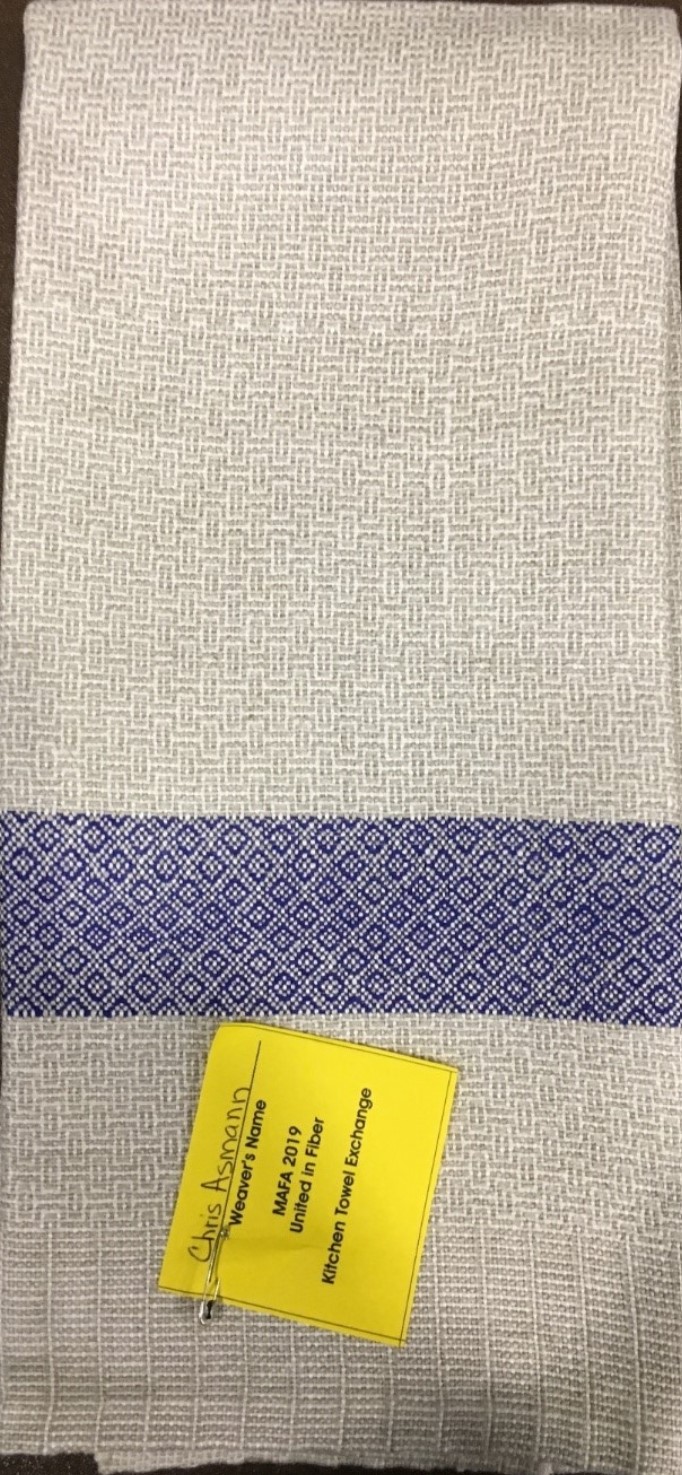
Linen warp bobbins had to be very wet to prevent loops in the selvedge. Tension was a problem throughout and I helped that by spraying the threads. The yarn seems too coarse to make a really nice towel.
MAFA2019-041
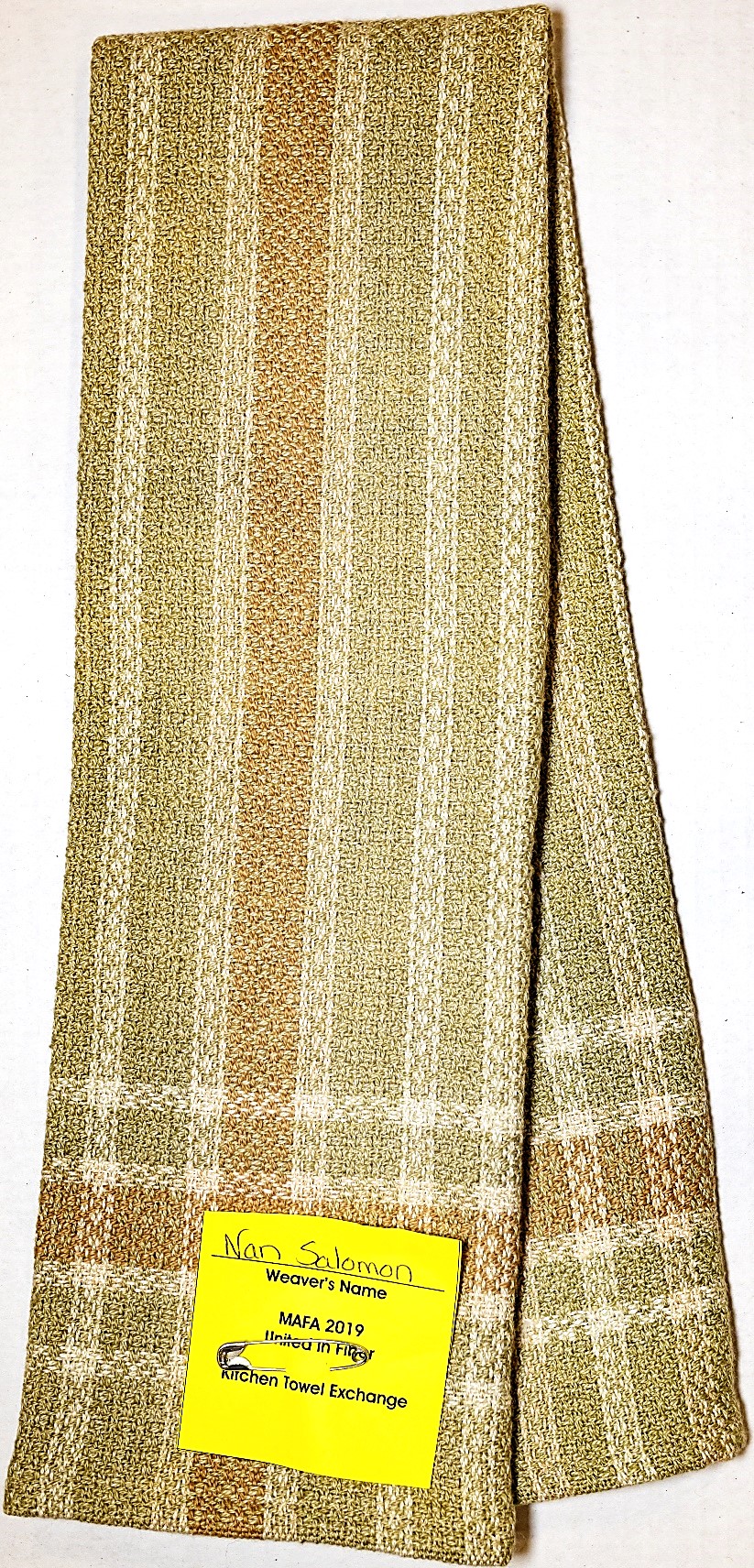
Dark stripes always begin & end on harness 4 in any number of repeats.
Light stripes always begin & end on harness 1 in any number of repeats. The color order is given in the accompanying chart.
These yarns blend Sally Fox’ green and brown special breed cotton with the finest Upland white cotton from the southern US. The deep shades are 50% colored cotton, 50% white; the pale shades are 12 1/2% colored cotton with 87% white. Once washed the yarn blooms and the colors darken. This towel has been washed.