
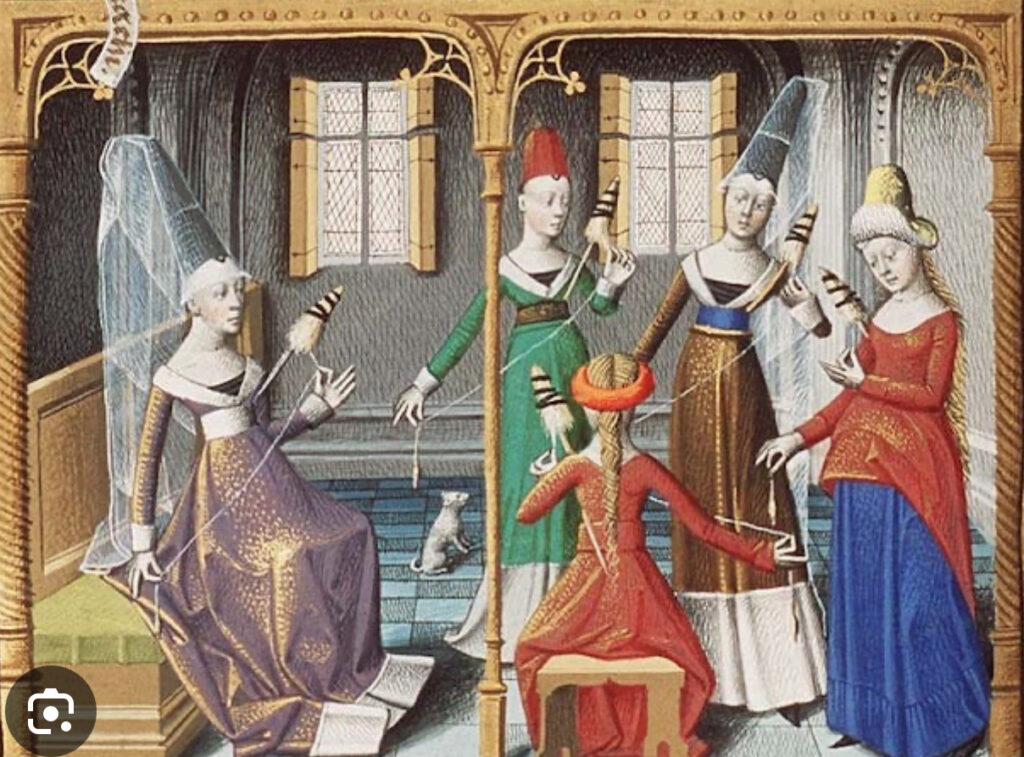
St. Distaff’s Day, also known as Roc Day, is is a day when European women would resume spinning after the Christmas festivities and is a symbol of the importance of spinning in the medieval era. There was no actual Saint Distaff; the name is a fictional one – a symbolic representation of the distaff, the stick used to hold fibers while spinning thread and yarn, which was central to women’s household work for centuries.
This was a free, drop-in online event to celebrate the history of handspinning – a day to gather, share stories, and celebrate the craft.
Questions about Distaff Day? Please email virtual@mafafiber.org
If you missed our St Distaff Day 2026 Celebration, don’t get your fibers in a twist!
Videos of the Event: We will be posting 6 episodes over the next few weeks.
Part 1: Elaine Larsen, from the Northeast Handspinners Association, talks about a “fleece to socks” project she completed using Dorset and Cheviot fleeces.
Part 2: Martha Owen presents from the John C Campbell Folk School (folkschool.org) in the Appalachian Mountains of North Carolina, and tells us about its spinning offerings – plus her own life filled with sheep and wool.
Part 3: Anthony DiRenzo presents Make Something Every Day: A Research-Based Approach. He is interested in the human story of textiles, the science of fibers and dyes, creating community through crafting, and a sustainable future for clothing.
Part 4: Thomas Victor talks about cobweb spinning and the classes he will teach at Convergence 2026.
Part 5: Elliot Rockart, researcher at the textile library, Tatter.org, talks about the history and origins of St Distaff Day.
Part 6: Jennifer Folsom, from the Southeast Fiber Arts Alliance, on “Let’s Talk About Flax, from bloom to loom”
ZOOM CODE OF CONDUCT
The MidAtlantic Fiber Association offers a safe and welcoming environment to listen, learn, and share ideas. To this end, we ask participants to not operate a motor vehicle while attending our meetings, classes, and events remotely via Zoom.