
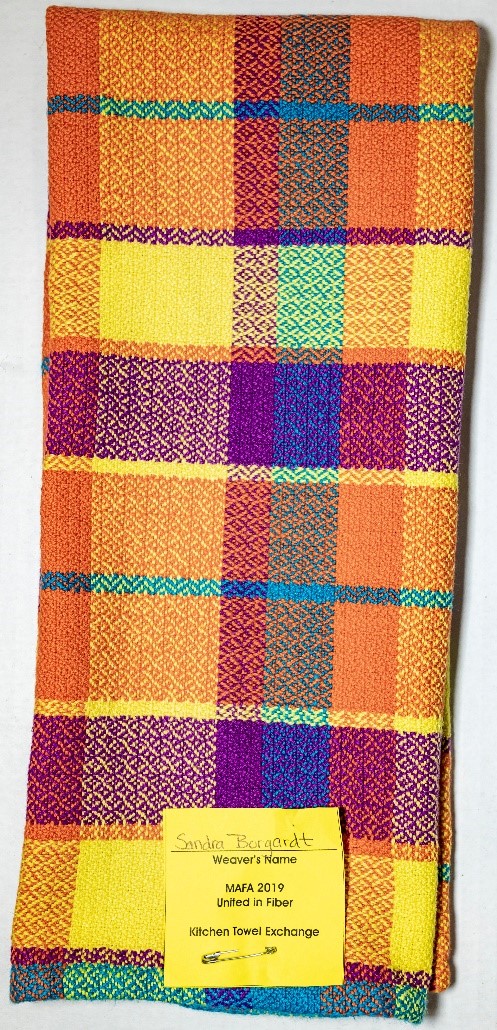
This was my first project that I started and completed all on my own after taking several weaving classes. I followed the warp color and threading order in the kit (from Halcyon Yarn), but quickly changed up the weft color order and treadling after weaving the first towel.
Shafts: 4
MAFA2019-010
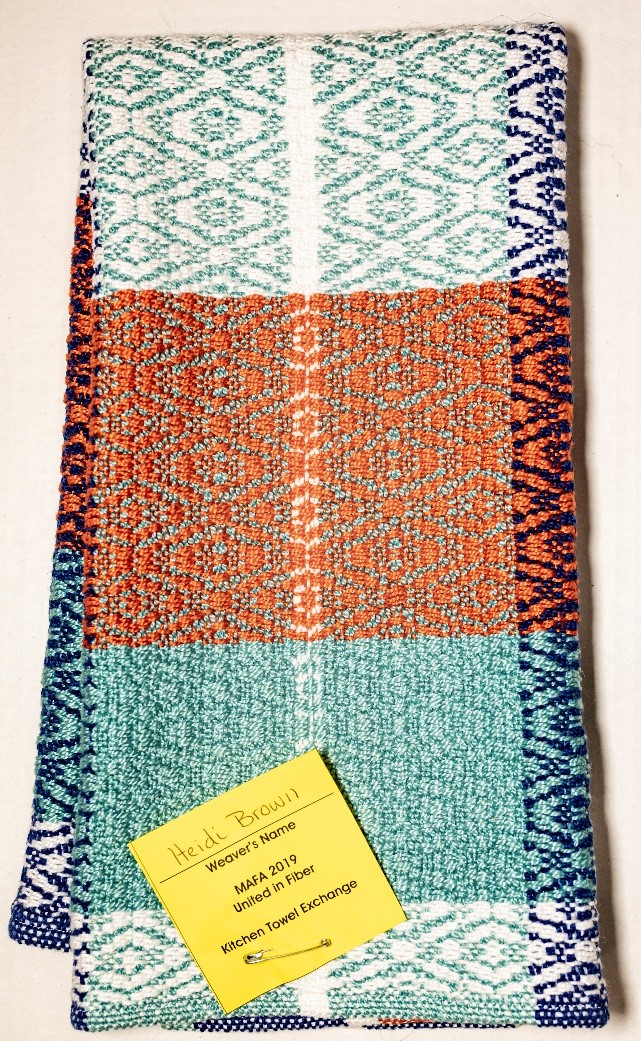
I used Mastering Weave Structures by Sharon Alderman, which is a great book to brush up on your structures….
Had fun weaving it.
MAFA2019-011
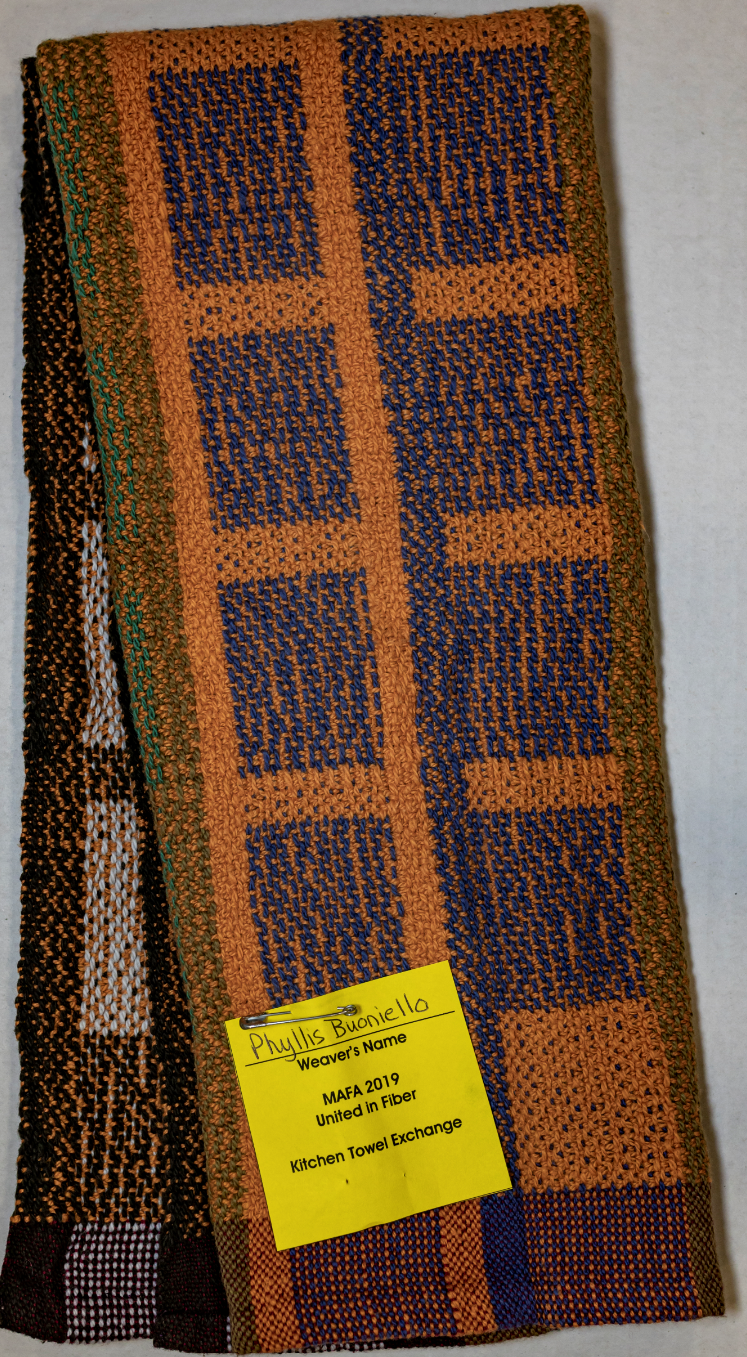
Detailed instructions for doing the mock damask are in the 1994 May/June Handwoven magazine. Take your time on pick-up work. Wrong threads can occasionally get caught resulting in very long floats and it’s difficult un-weaving pick-up work . The instruction don’t indicate it but you should leave your pick-up stick in between the second and third pick-up indicated on the draft. I found a long cable knitting needle work really well for the pick-up work. After the pick-up work the towels weave really fast.
MAFA2019-012
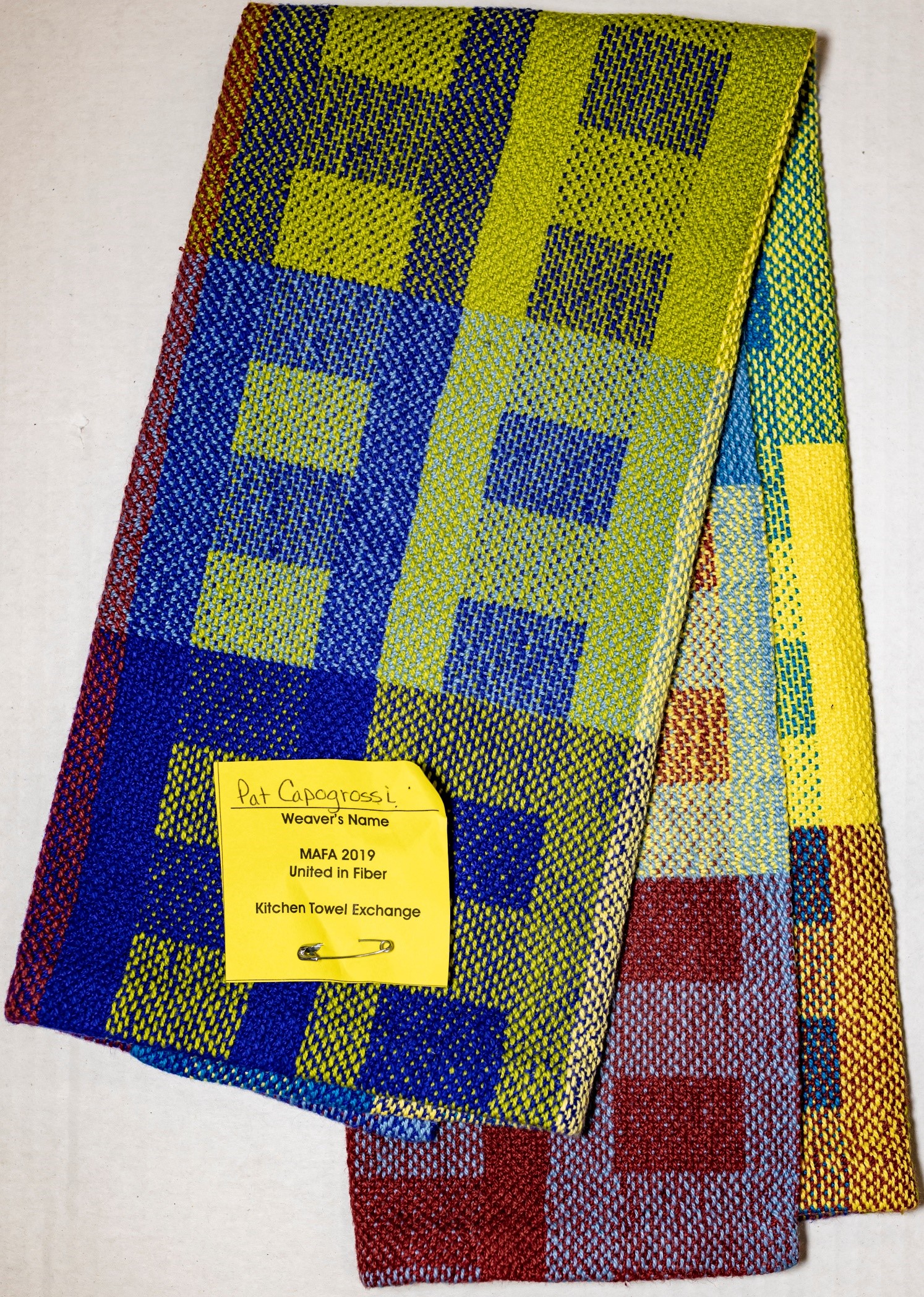
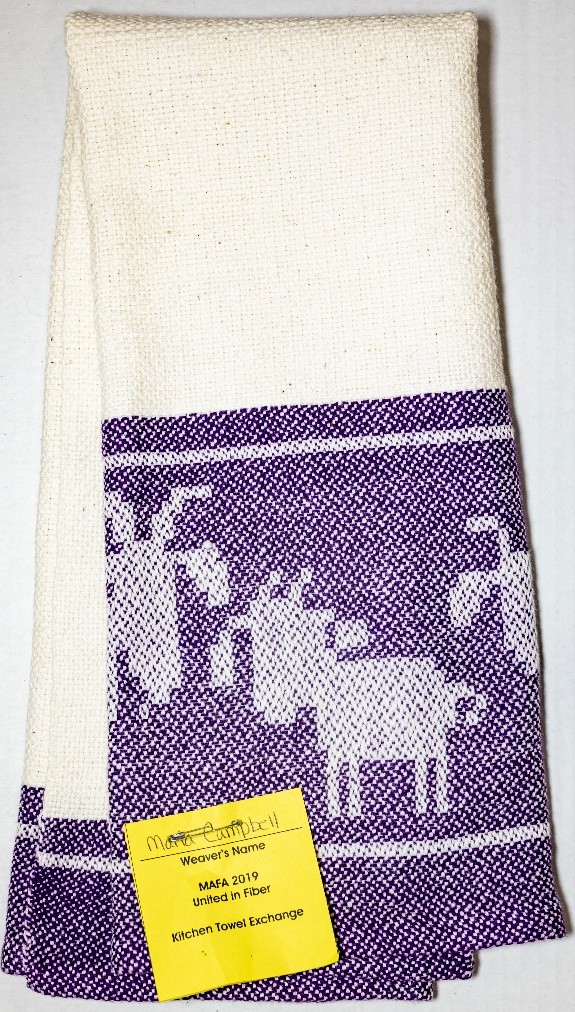
Picked 3 pairs of coordinating colors and used twice in warp by reversing color order within each pair of blocks. Wove off by rotating through all 6 colors of warp and also varying sizes of blocks to make each towel in the warp unique.
MAFA2019-013
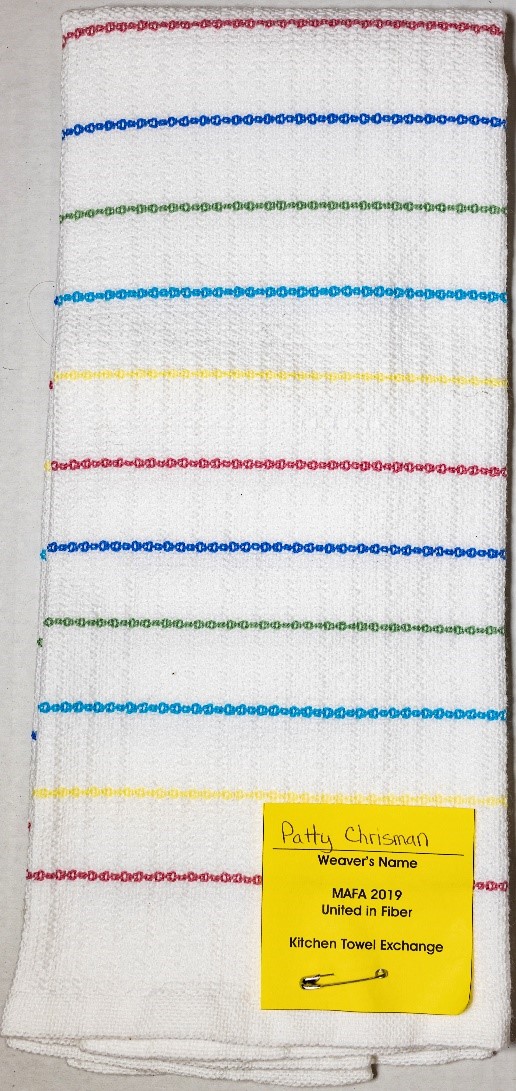
This twill is threaded and treadled based on draft on Heinrich Woolhever’s 1821 Pattern Books Draft. It represents further use of a pattern I chose to explore for the Early Weaving Books and Manuscripts Group of Complex Weavers. The cheerful stripes are my addition.
MAFA2019-014
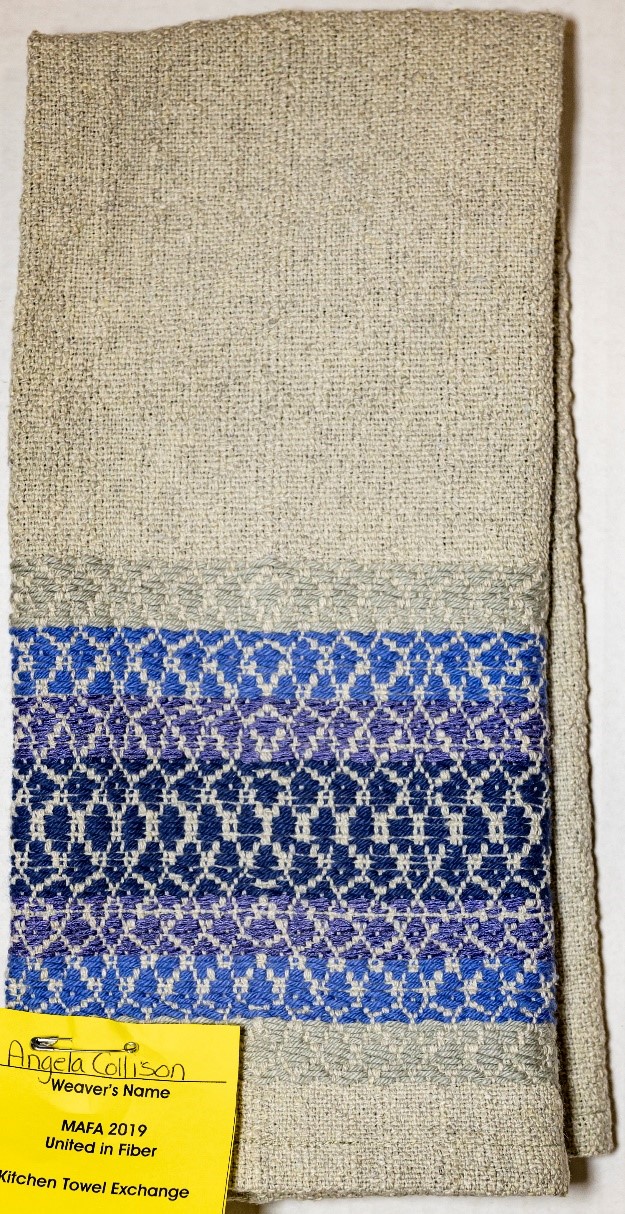
Page 31 of the BGH book shows a skeleton drawdown of Wishing Well for a bookmark that is significantly different from the Wishing Well draft on page 97 (the book suggests it may be due to a treadling variation). Using the skeleton drawdown, I determined the threading/treadling that would provide this effect.
The threading was not drafted as overshot, preferring instead to have groups of 2 or 3 consecutive ends threaded on the same shaft for textural interest. The majority of the towel is woven as plain weave, with one or more bands of the pattern woven as for overshot (pattern picks alternate with plain weave picks). The threading had 431 threads, plus 2 for the floating selveges.
MAFA2019-016
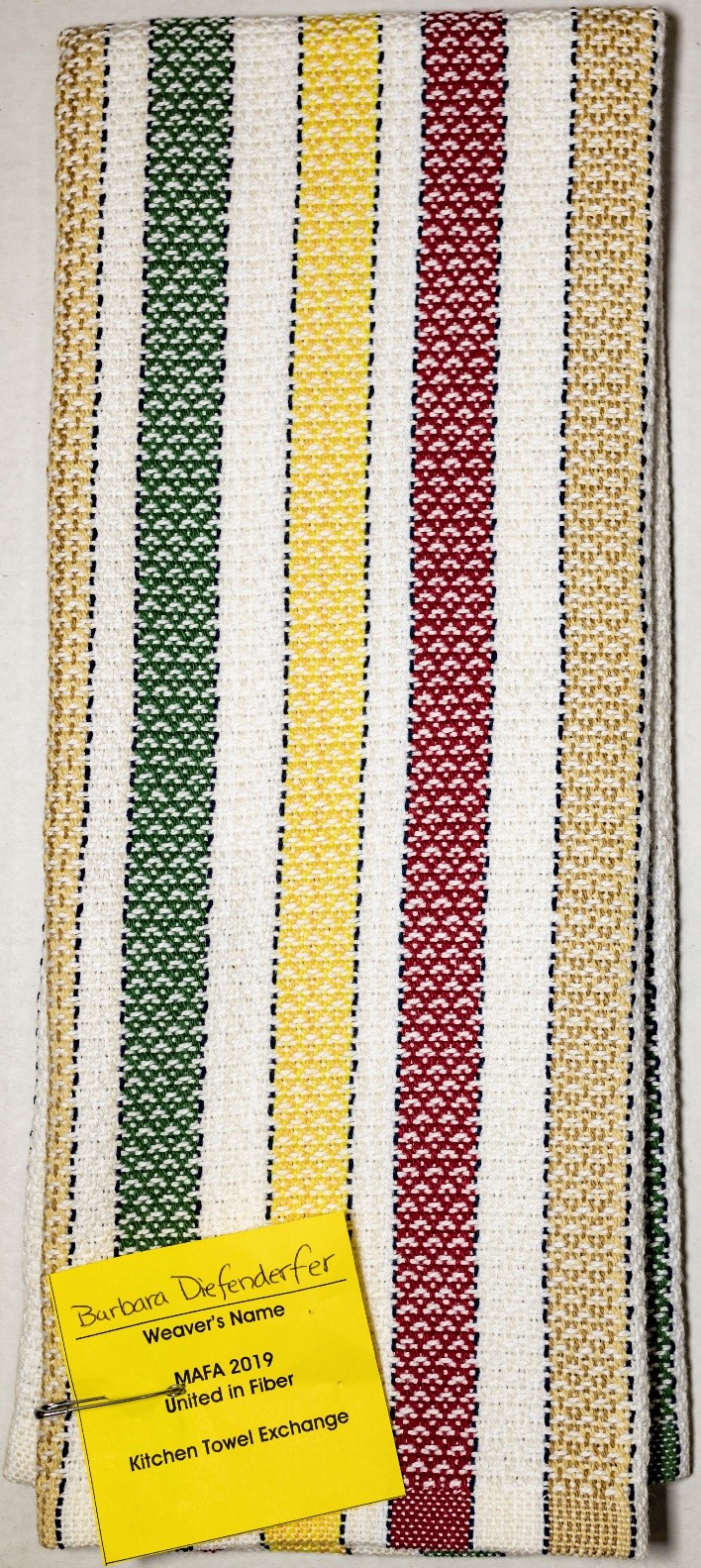
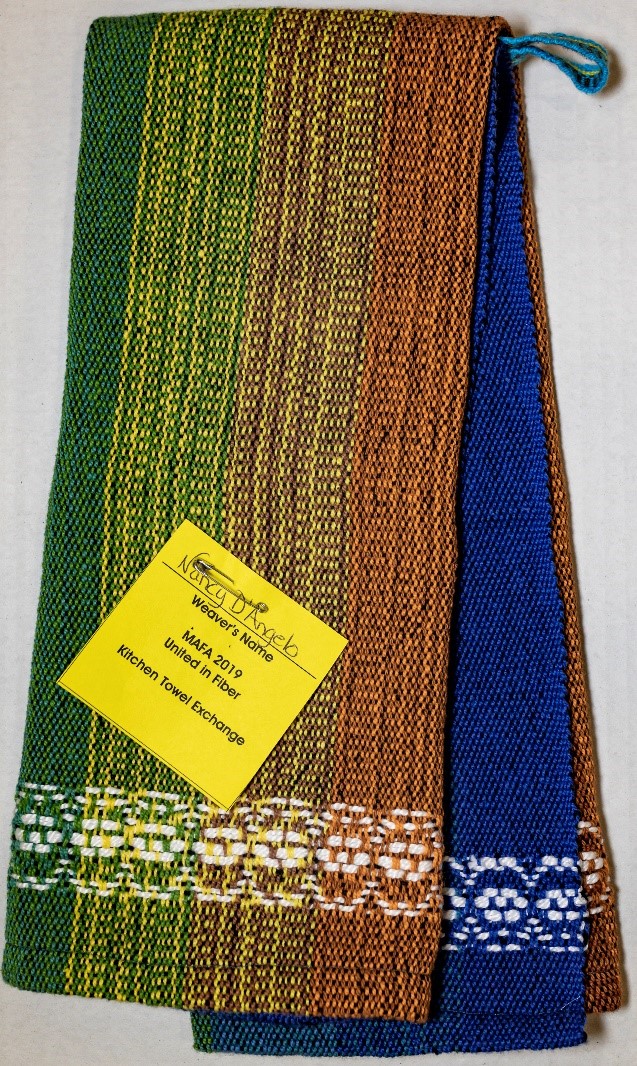
A 4-shaft point twill sounds boring but when you add warp stripes of tan, red, green and bright yellow separated by white stripes edged by a single navy thread there is hope. Add an interesting tie-up and treadling to create an interesting texture you have a towel of beauty. Towels like this make dish drying something you look forward to doing.
I have arranged the treadling on 6 treadles for ease. Only 4 treadles are necessary.
MAFA2019-017
Tip: Use a temple.
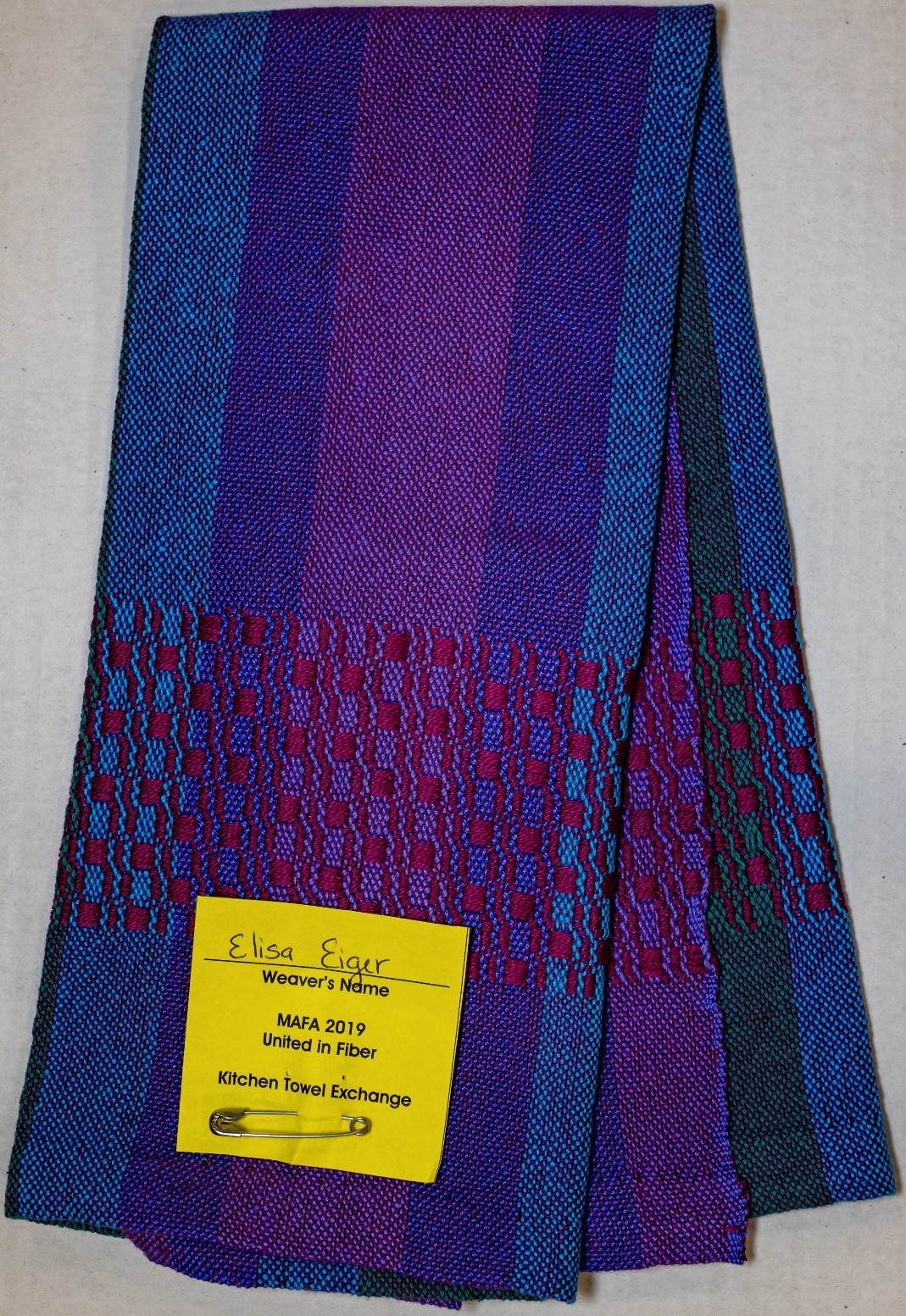
Note that the draft shows only four stripes of the 16 I used in the towel. I basically flopped the draft several times. This resulted in two wide green stripes on the sides and one wide purple stripe in the center. Stripe order is: blue-violet, blue, blue-green, green; G, BG, B, BV; BV, B, BG, G; G, BG, B, V.
This was created in response to Jockey Hollow Weaver’s swatch exchange. We played “Weavers Poker, ” in which each participant was dealt five cards for Weave Structure; Color; Color Relationship; Fiber; and Other, and was challenged to create swatches showing at least 4 of 5. My hand was: monk’s belt; orange; analogous, chenille, and iridescence. My swatches had orange weft, with the monk’s belt pattern in light-orange chenille. For my towels, however, I’m using fuchsia 10/2 for the weft. (It’s still iridescent.)
The draft shows three possibilities for the monk’s belt accent; only the first is used in the towels. These monk’s belt patterns are from Dixon (2007), _The Handweaver’s Pattern Dictionary_, p. 101. Draft shows tabby; in monk’s belt, tabby A and B alternate between the pattern picks.