MAFA2025-3786

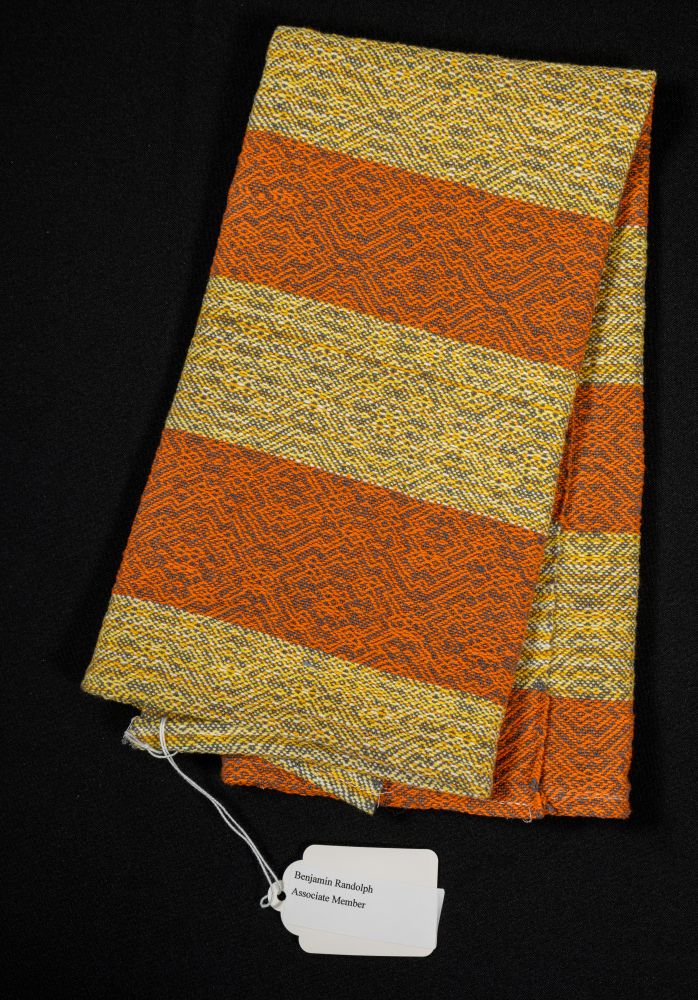
I began with a traditional 4 shaft rosepath threading and then added some basic twill threadings for different stripes in the warp. The final combination is my own design. In total, 461 ends were threaded so it is important to count heddles before starting to thread the loom. I used a 4 shaft direct tied up floor loom for the various towels I wove on this warp.

The treadling in this draft is an advancing twill with reversing points.

MAFA2025-3776

I used the draw down from Handweaving.net number 61229.
I used a 15 dent reed sett 20 epi.
Warped 444 threads 442 for the pattern and 2 for floating selvedge.
In the loom they were 22 inches wide and 30 inches long. After wash and hemming they were 18.5 wide and 25.5 long.
With the draw down from handweaving.net I added a border on each side of 8 threads per side and add a 2 in border pick at bottom and top of the towel.

MAFA2025-3751

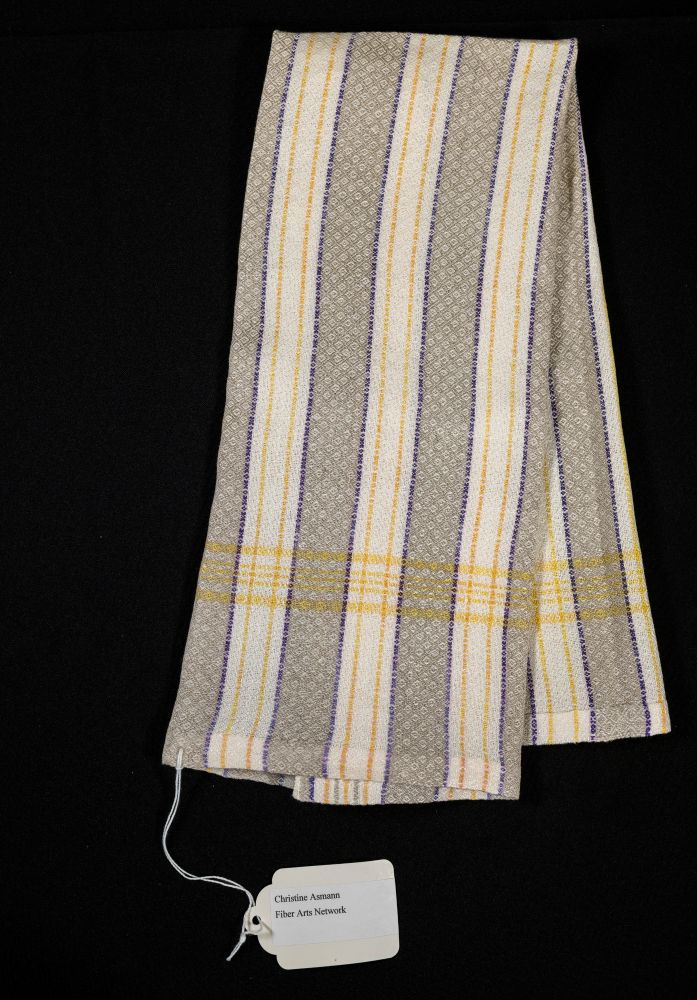
This is an adaptation of an antique towel in my collection, from Germany and dating between 1890 and 1918. It has purple and yellow stripes that are evenly spaced, but out of sync with the twill pattern.

I reverse engineered the pattern and adjusted it to make the colored stripes wider and align them evenly in the twill pattern repeats. I also made some changes to the edges, again for symmetry.
A very similar goose-eye draft is here:
https://www.handweaving.net/collection-drafts/keyword?keyword=26694&page=0

Page 122, Figure 19, Donat, Franz Large Book of Textile Patterns, Germany, 1895, #26694 on Handweaving.net. I did not use this draft, but it is very similar and this type of twill is common among my towels from this period.

The original towel is monogrammed MT, and it has a measured EPI of 42 with 37 average PPI. It appears to be lea 70 or 80 linen singles. It has plain weave selvedges and a tiny turned hem sewn by machine. My sett is less dense to account for 40/2 linen, which was the finest I had for this project.

My towel has hand sewn hems using linen thread. The colors are half-bleached and natural linen as purchased, and half-bleached linen hand dyed to approximate the colors of the original towel, in bright yellow and clear, bright purple.

The towel was woven on a Glimåkra standard coutermarche using regular shuttles and rotary temple.

MAFA2025-3749

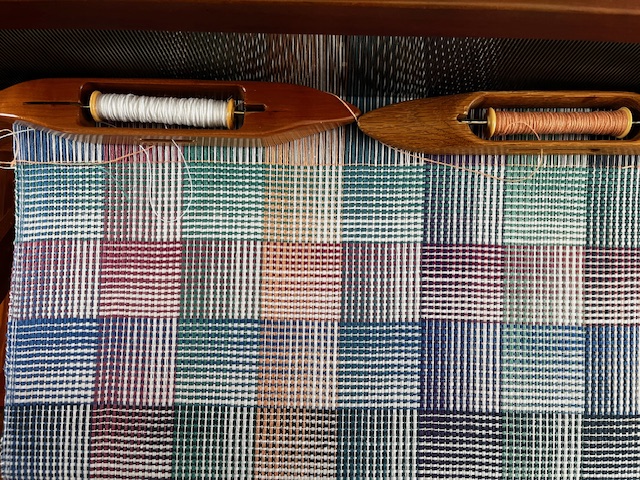
This towel is based on Erica de Ruiter’s Shadow Towels. I have added 12 warps ends on each side to improve the selvedges. Veronique Perrot and Lisa Hill have also been valuable for information for this project.

This can be woven on a 2 shaft or rigid heddle loom.

When weaving, use the outer two threads as a floating selvedge. The 12 ends are used double as 6 working ends in the heddles and reed. You will weave as many as three picks in the same shed and you will need to rely on the outer threads.

I used white 8/2 Brassard cottolin for one of the yarns. The 22/2 Bockens cottolin was from Vastuga in 8 different colors that I had in my stash.

MAFA2025-3748

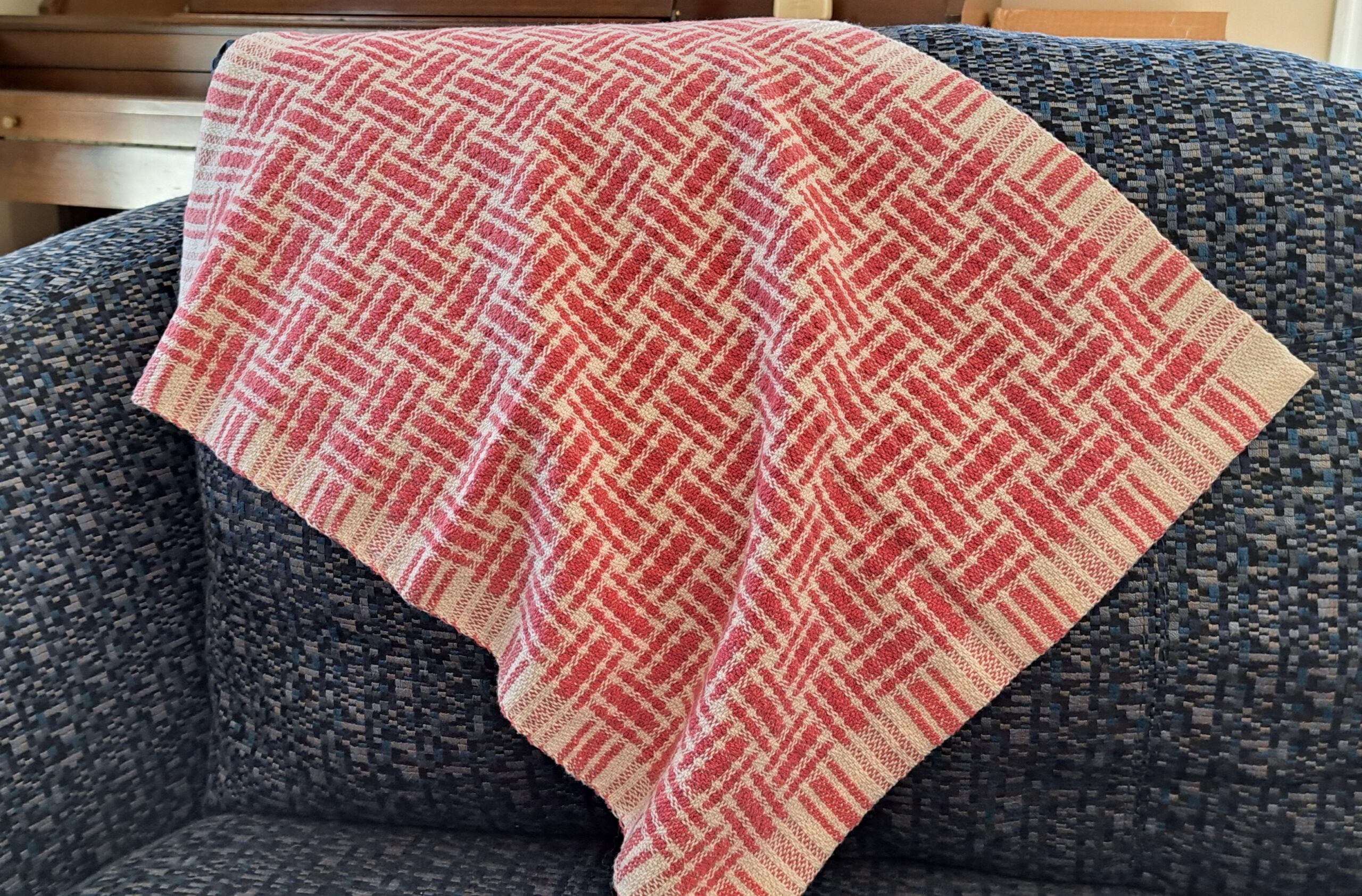
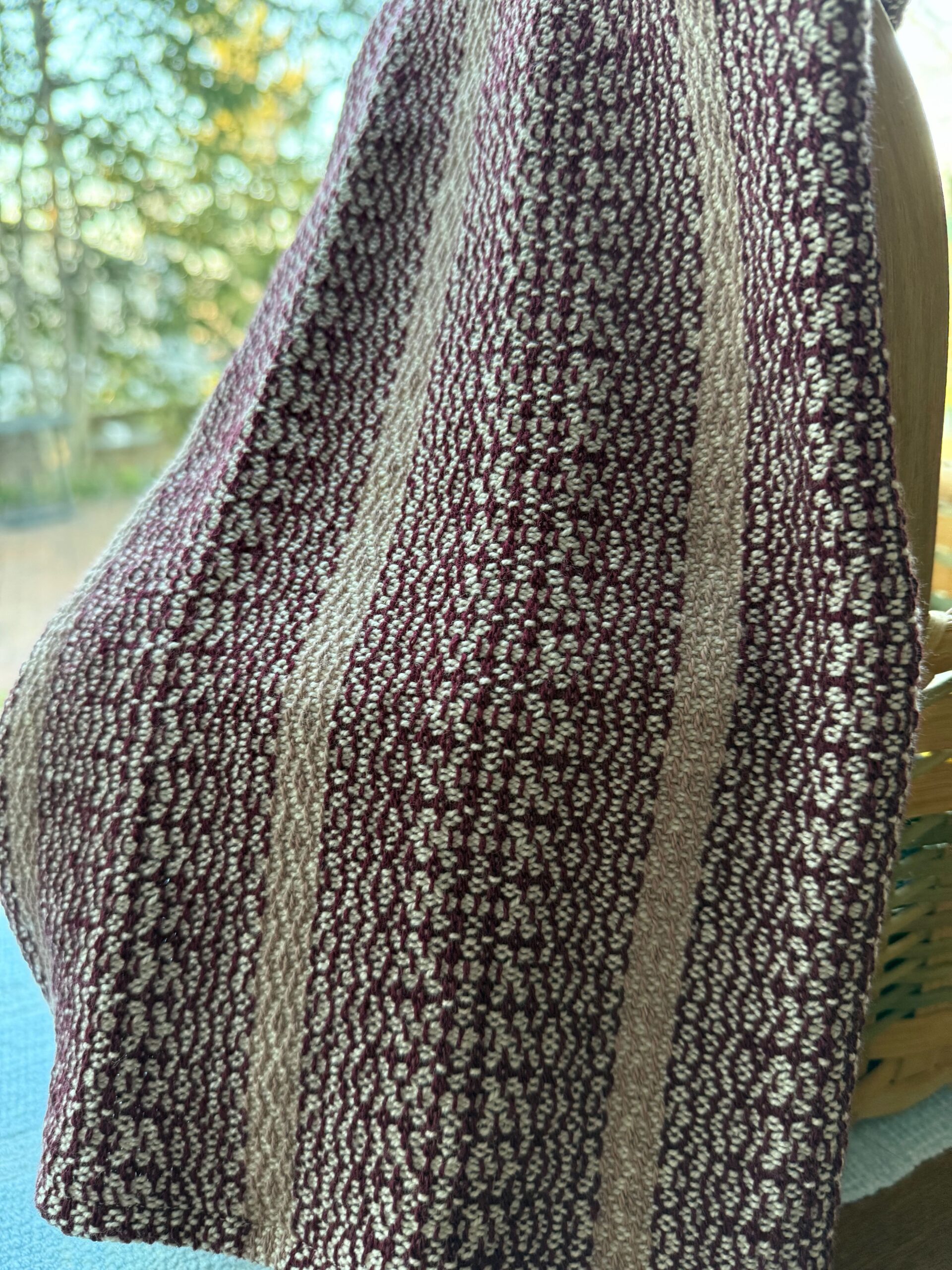
This towel was adapted from a Colour-and-Weave Baby Blanket that I designed for a study group project.
It is log cabin colour-and-weave overlaid on broken twill blocks – with the colour order of the blocks being LDLD DLDL.

I wove three towels – one tromp-as-writ; one using natural weft; and one using rose weft. Each of the single weft colour towels was woven with a straight twill treadling.
I chose the tromp-as-writ towel for the exchange.

Towel uses two colours – one dark and one light – for this towel I chose rose and natural.
408 ends plus 1 floating selvedge each side = 410 ends total
Finished size: 17″x26″