
Collection: MAFA 2025 Towel Exchange
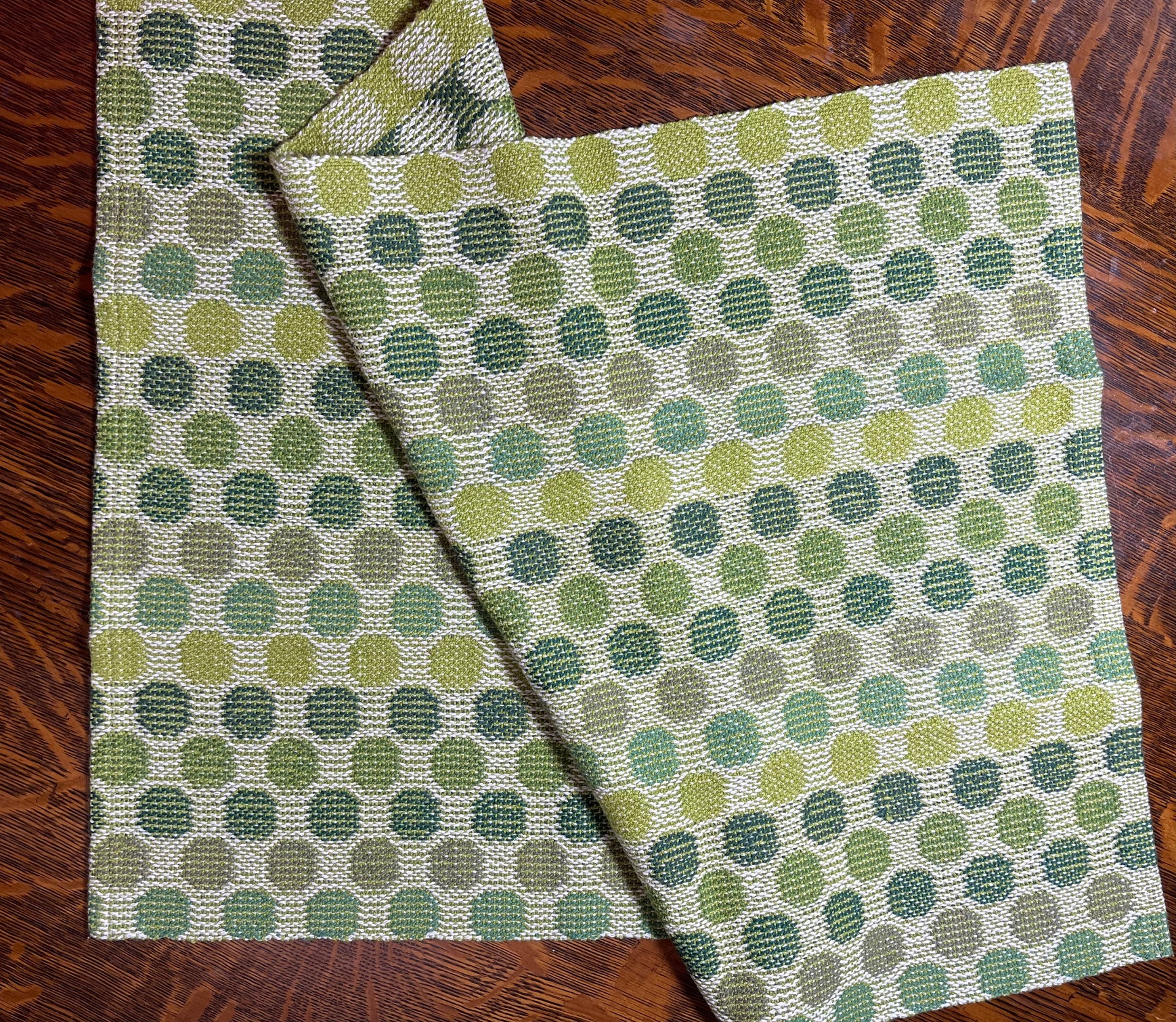
MAFA2025-3902
I expanded the 8 shaft original draft to 24 shafts to balance my loom better. Results should be identical with the 8 shaft version.
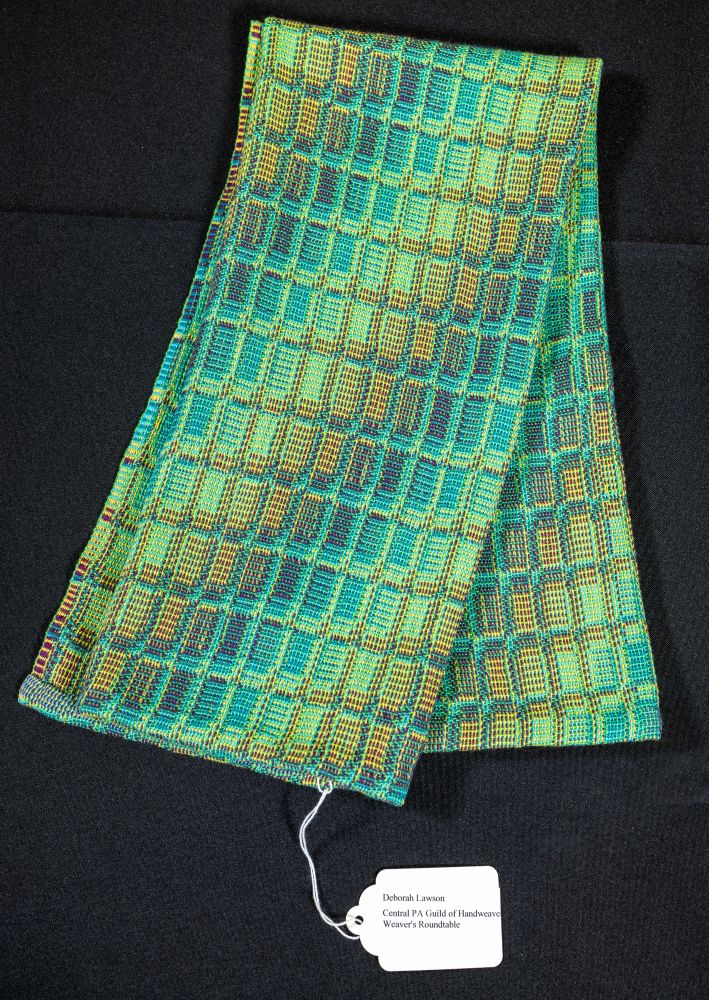
MAFA2025-3901
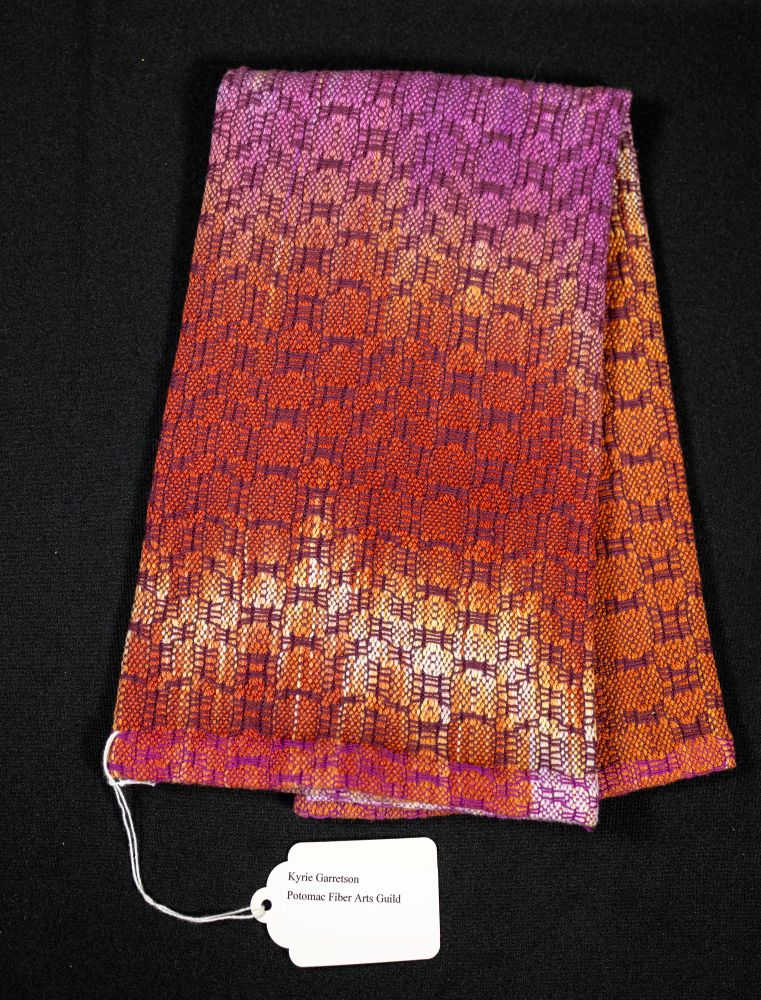
Initial cut at 8-shaft Ms & Os.
Enjoyed the color play of the variegated warp against the dark weft.
Hand – hemmed, 398 ends.
MAFA2025-3868
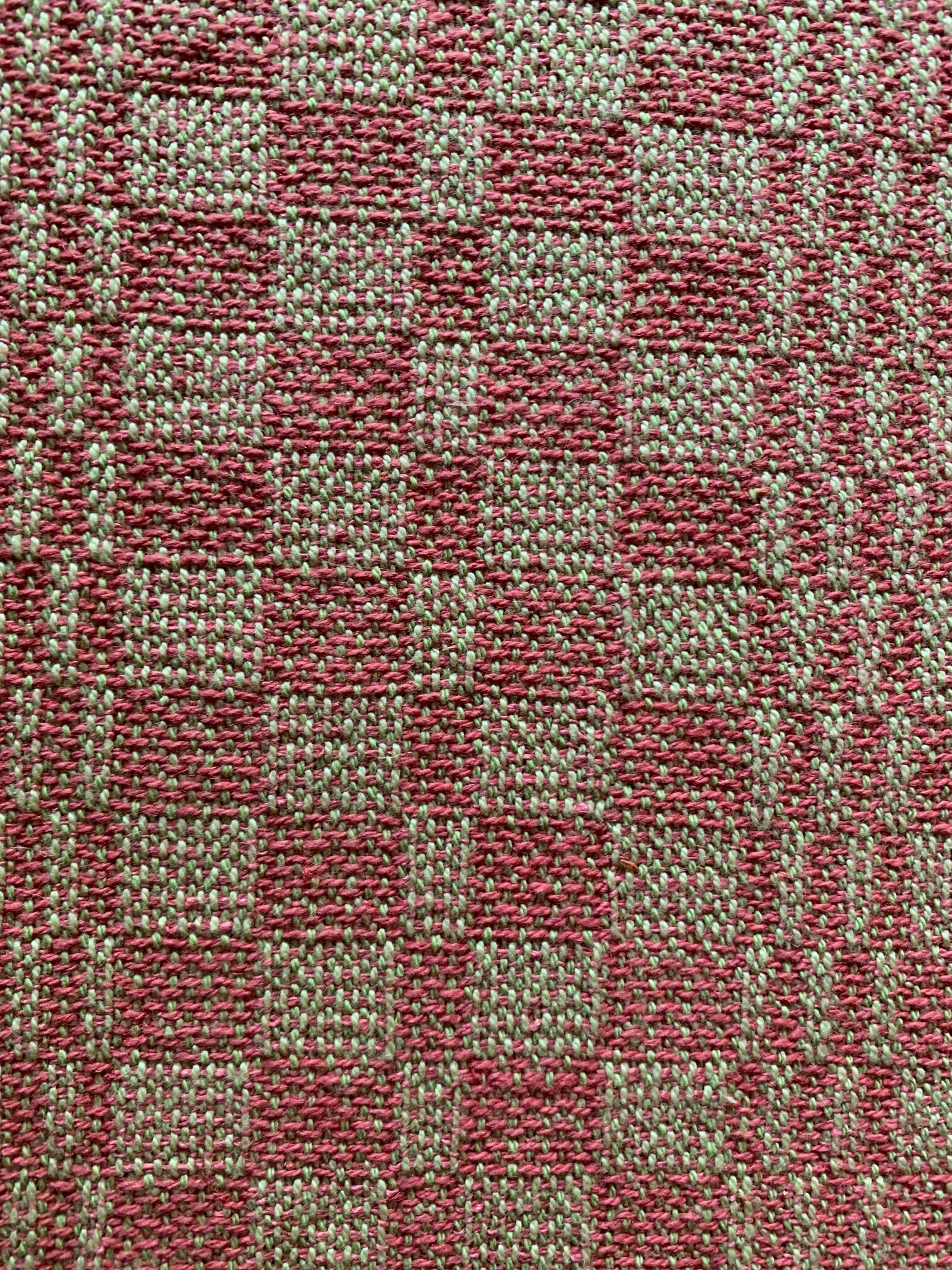
I always use floating selvedges with kitchen towels for less pull in and maintaining some durability and size consistency on the loom-personal choice is enter over, exit under
I’ve enclosed my general instructions as I published in Heddlecraft–one has lots of freedom with block sizes and symmetry versus asymmetry in all forms.
The towel being entered in the exchange is one of the six woven with this threading/warping.
I always choose a rolled hem–this towel is hand-stitched, but a zig zag machine stitch in fine thread would look just fine.
MAFA2025-3851
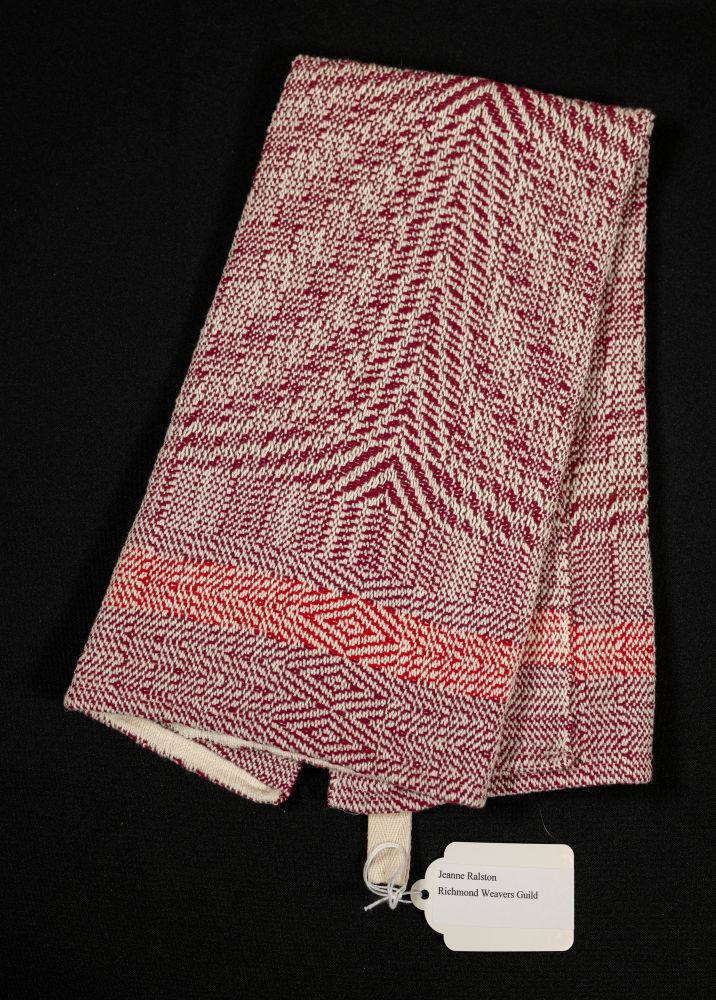
I designed this towel using a the traditional blooming leaf profile draft. I then used (432); (321);(214); and (143) as the blocks 4,3,2,1 respectively to substitute into the profile draft.
I used 486 ends plus two floating selvages.
MAFA2025-3850
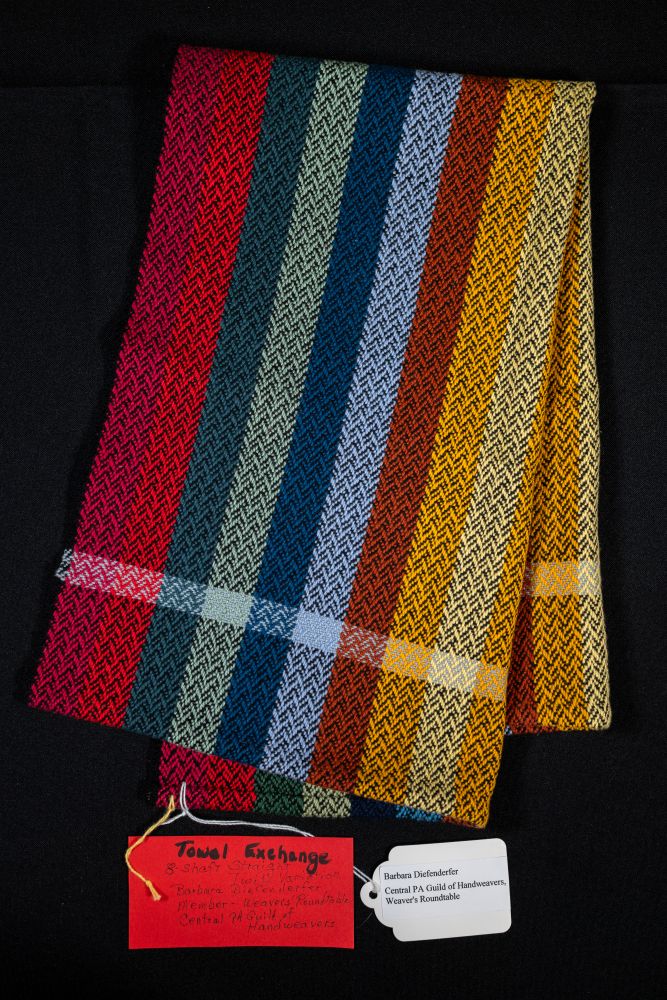
This towel has 408 ends in the warp and was woven to 31 inches long. I began with a 9.5 yard long warp and wove 10 towels. It is my belief that a long warp gives the weaver a large variety of places to play. It also is very economical as far as loom waste is concerned. A warp for one towel has the same amount of loom waste as for for 10 or more towels. 200 yards of loom waste is average for dish towels! Think of the cost and then decide to make many towels using different weft colors and new tie ups or treadlings. This is what I call weaving fun! Additionally, I rarely have only one color in the warp.
I weave a towel as my heart desires, weave two shots of scrap weft and then begin the next towel. When the warp comes to an end and I remove it from the loom, I will sew a row of zigzag stitches at each end of each towel. Next I put the entire warp in the washer and add very warm water, let the towels soak for about 20 minutes and then allow the washer to finish the load. They go to the dryer next and tumble until barely damp. I steam press each towel and cut it from the warp. I then make a narrow turned hem and stitch it with small blind hem stitches. A final pressing and all is finished, I stand back to admire the play of colors and textures.
MAFA2025-3816
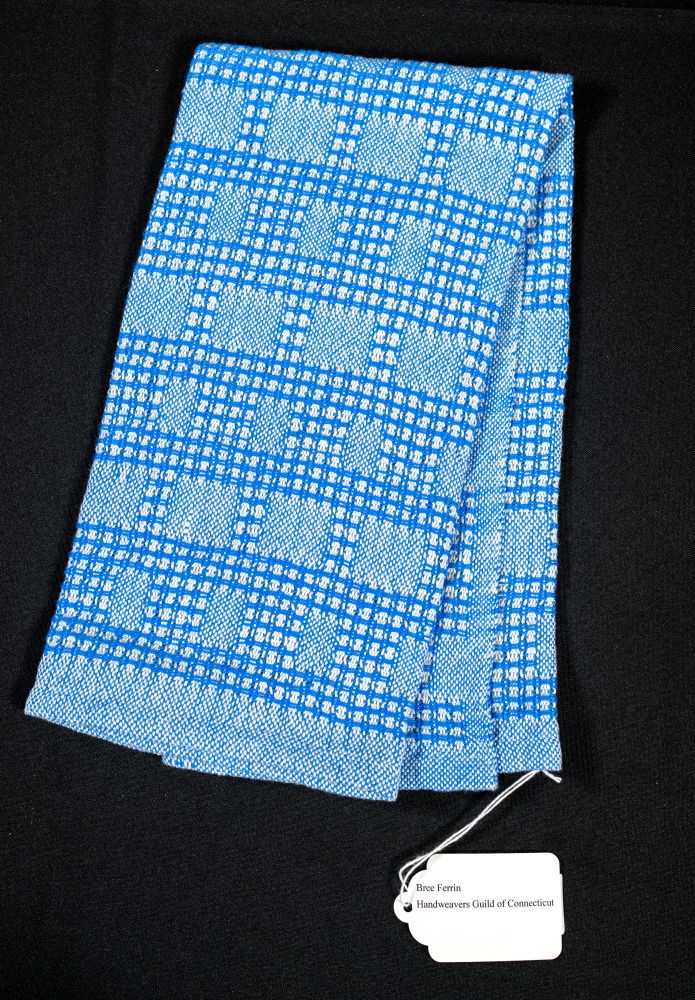
Finished towel is 18.5″, (22″ on loom) x 26″. The 2″ plain weave at the start and finish is used for the hem.
12 dent reed used, sleighed 2121.
Atwater Bronson is heavy on shaft 1 with 198 threads on shaft 1, 74 on shaft 2, 44 on shaft 3 and 80 on shaft 4. For a total 396 ends
MAFA2025-3811
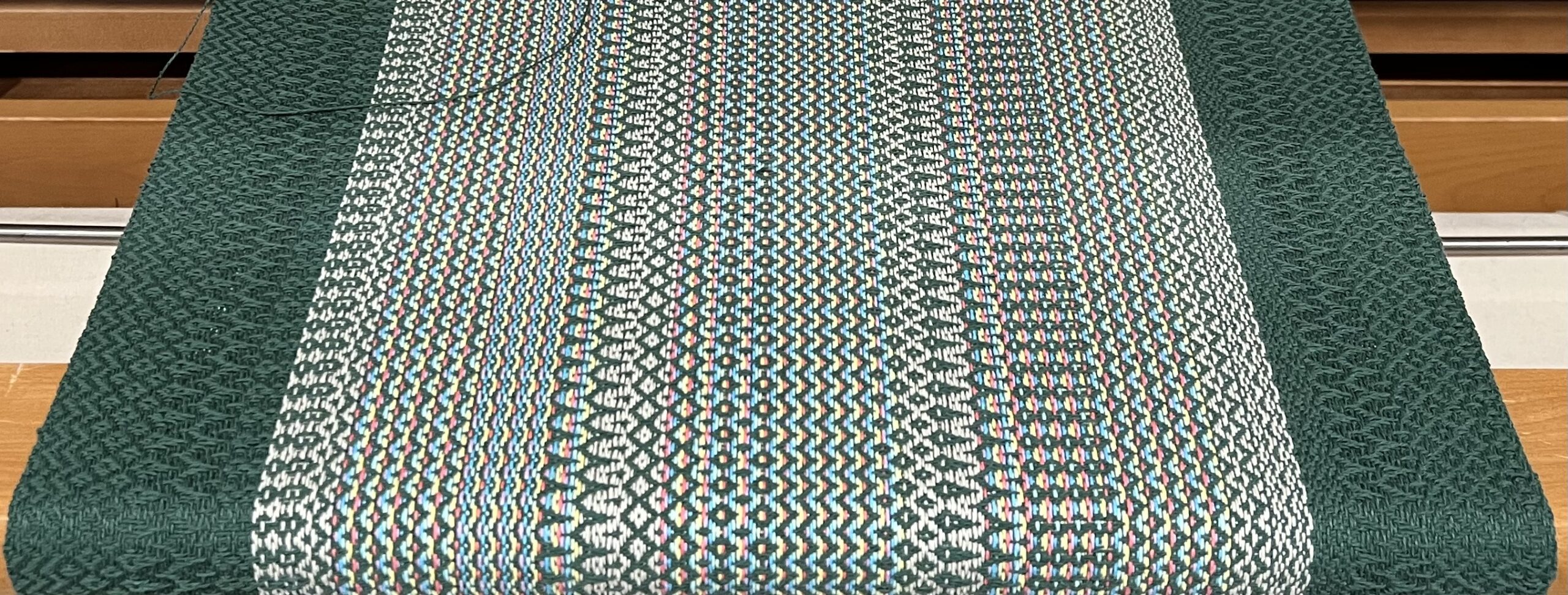
There are 456 ends in this towel. It measures 19″ wide in the reed.
The pattern changes do not line up with the colors. In the draft I used a solid purple to represent the multi-colored areas.
72 green
24 cream
72 ends in a variety of colors
24 cream
72 ends in a variety of colors
24 cream
72 ends in a variety of colors
24 cream
72 green
MAFA2025-3806
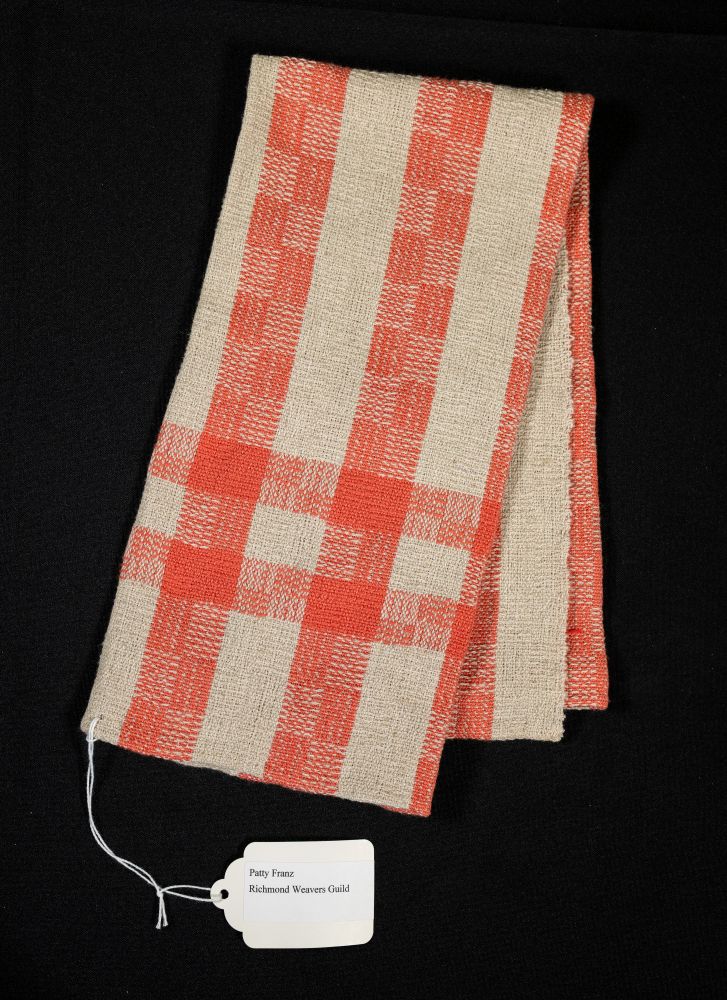
This is the fourth project I have done with this draft. I have enjoyed the interplay between the colors.
The weave is designated to be ten pattern repeats – I have done eight at a time, except in the persimmon weft – then I did four.
My hems are thinner yarn – 20/2 cotton. There is no plain weave with this draft so I used 2,4 alternating with 1,3 for the hems. This is as close as you can get to plain weave.
As always, washing this fabric makes all the difference.
MAFA2025-3797
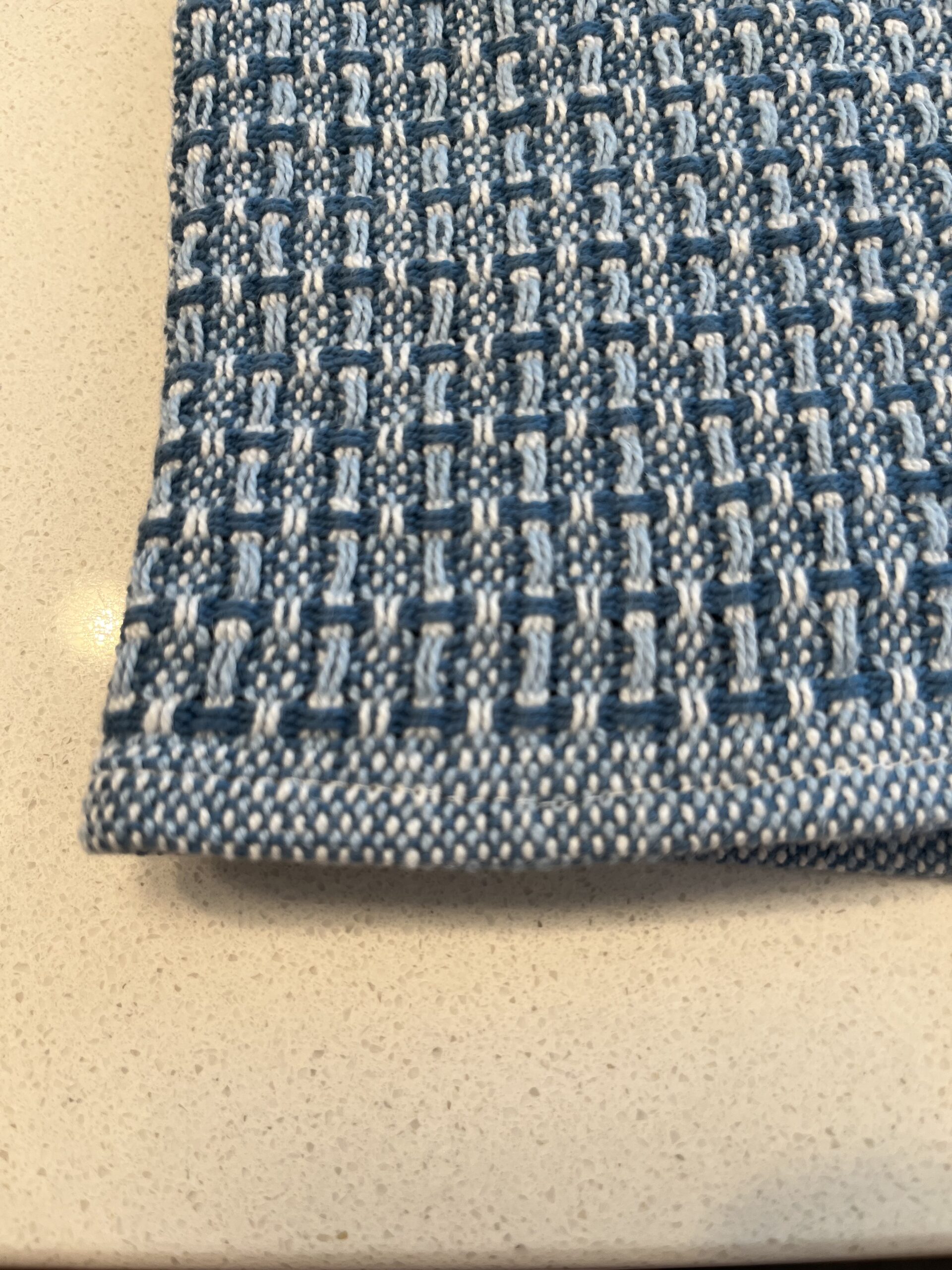
Adding a quarter inch of plain weave at each selvage makes weaving this a lot easier. you don’t have to worry about floating selvages and oddness at the edge because of floats. Same goes for the plain weave at the ends. It’s much easier to hem a plain weave towel on the sewing machine. I have also found that adding some fray check in addition to zig-zagging the raw edge of the finished towel, makes it easier to hem the corners. Also, do not attempt to machine hem this towel unless your sewing machine has a heavy duty motor.