MAFA2019-029

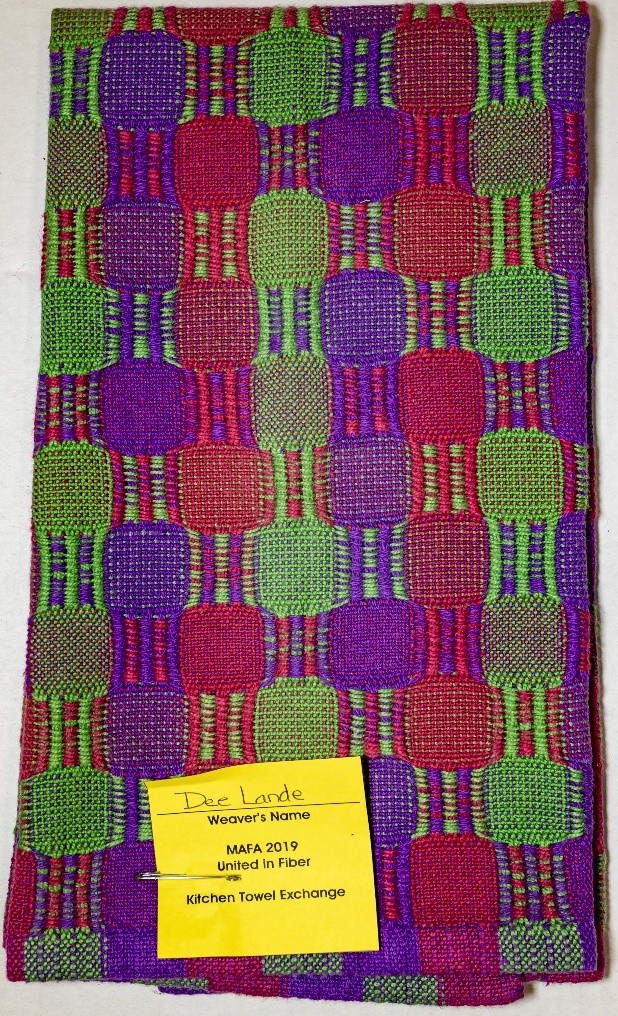
The warp alternates 2 threading blocks with 3 thread colors. This is a two shuttle weave and each block of the 2-block treadling uses two colors in the weft, and the color combination changes with each block change. All 3 of the warp colors are used in the weft in this order: Purple & Red (purple for 1st and last pic) / Green & Purple (green used for 1st and last pic) / Red & Green (red used for 1st and last pic).

This alternating color arrangement gives a two-colored stripe block that changes with each block.

If you have more than 4 shafts, the original directions recommend using a left and right border of plain weave, threaded on shafts 5 and 6.

I really like the way this looks, but it was a bit of a pain to weave (using 2 shuttles and a color change at every block) and I will probably not use this color/weave arrangement again.
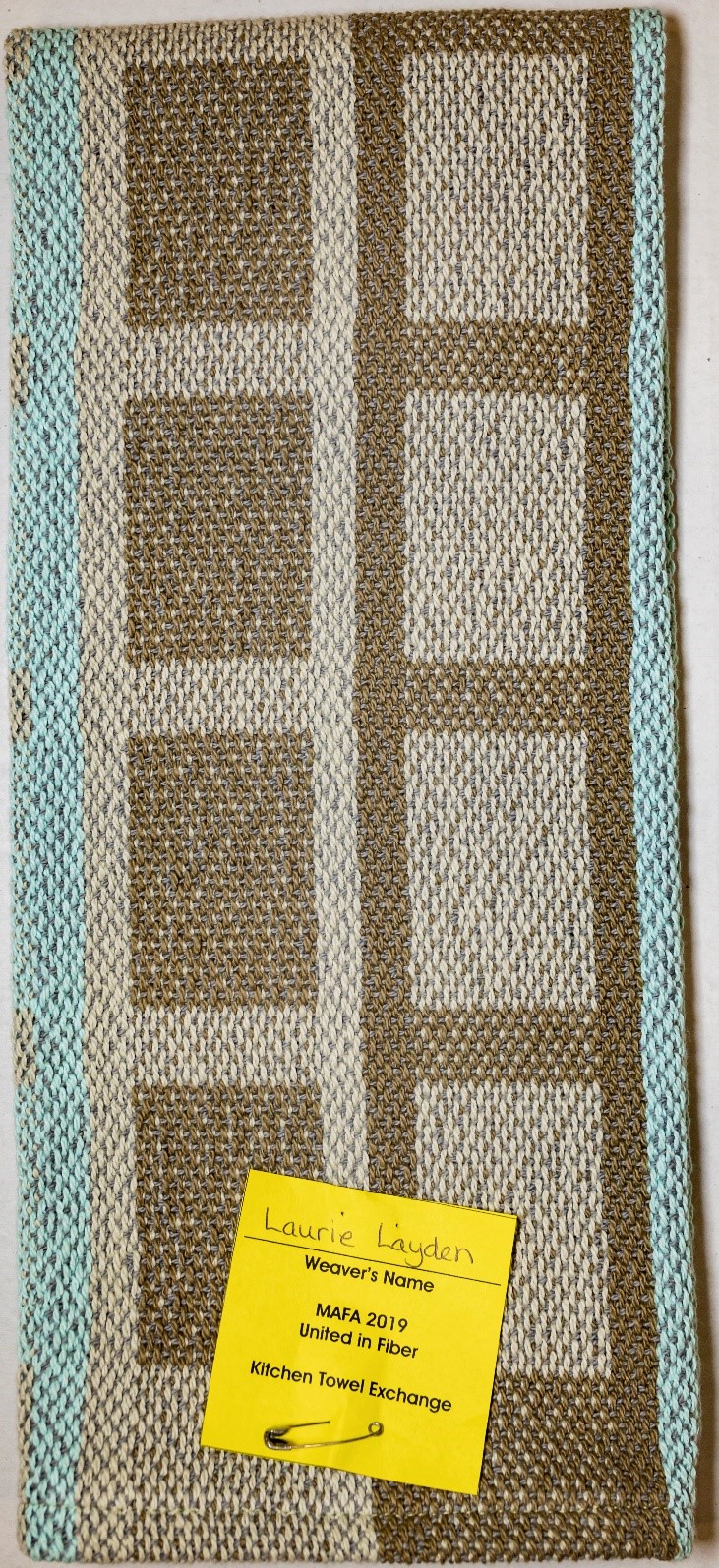
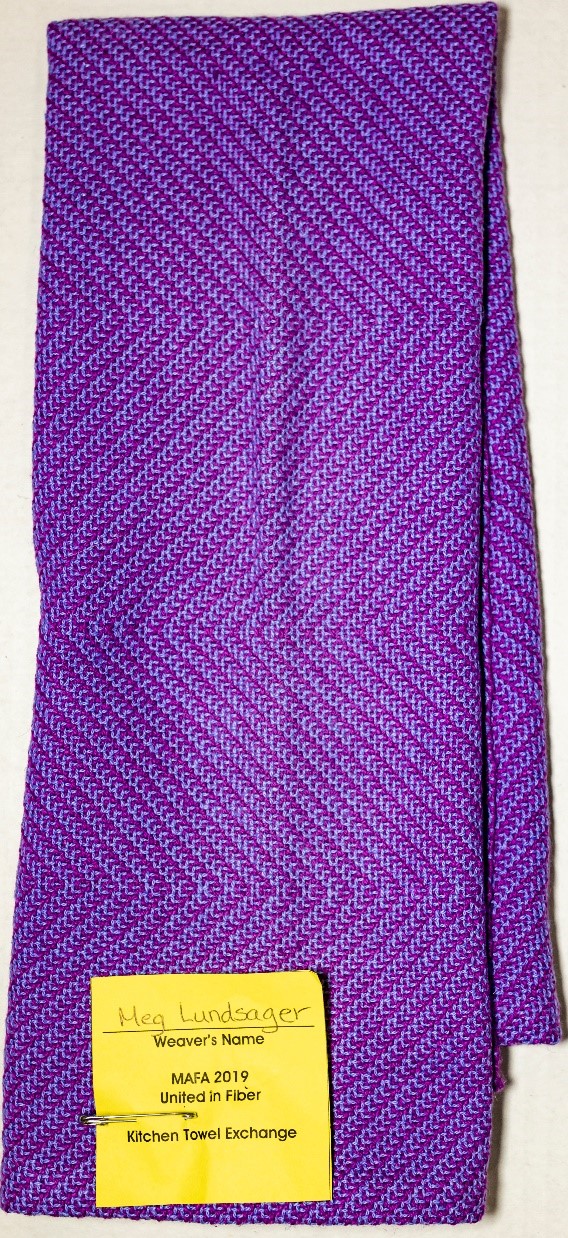
MAFA2019-030

I used what color yarns I had on hand, the numbers on the warp order were for my purpose to keep track of my color selection that I wound on card while winding my warp.

MAFA2019-033

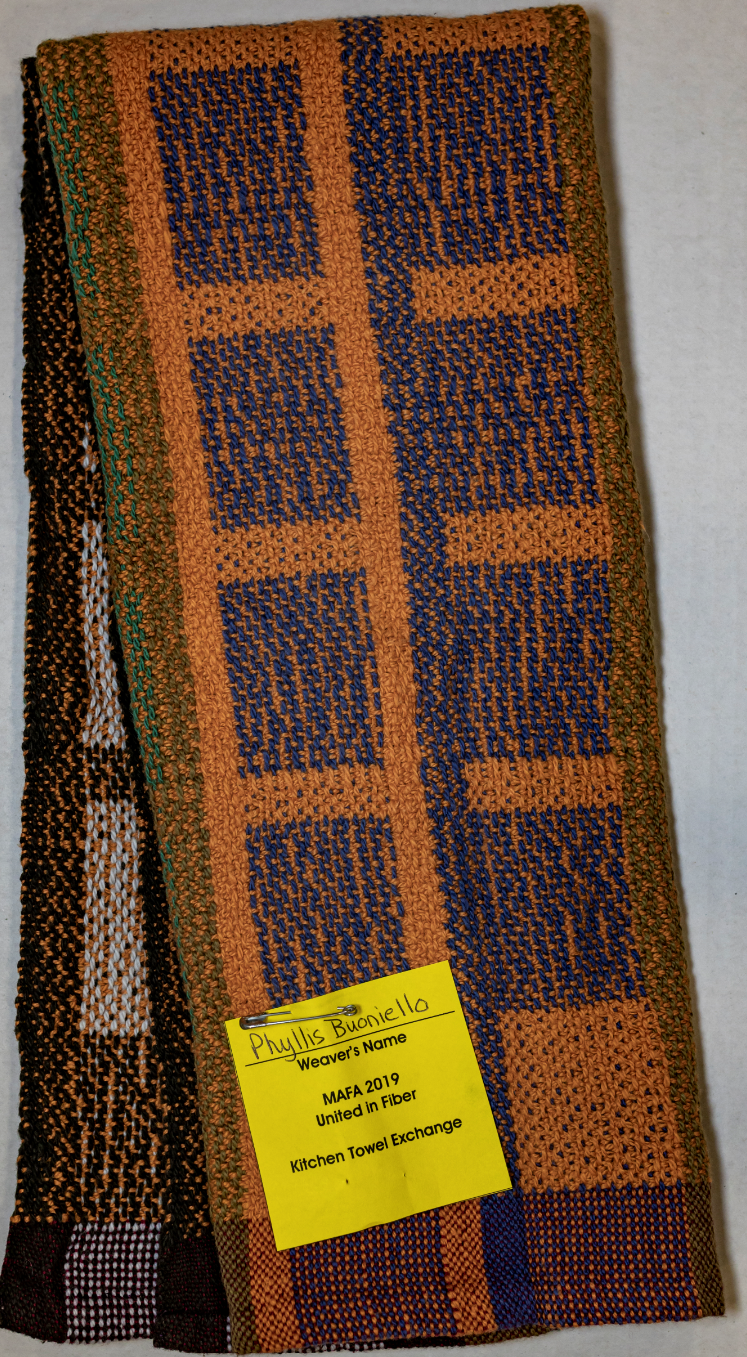
I was looking for some ideas to help me mix colors and found this draft in a Weavers Magazine. I ended up making 4 towels and used the various suggested treadling options to create alternate patterns and a sampler towel for future reference. Weaving this towel taught me how to reverse a treadling order in a way that made sense. It took a bit of experimentation to find the right transition point.

MAFA2019-039

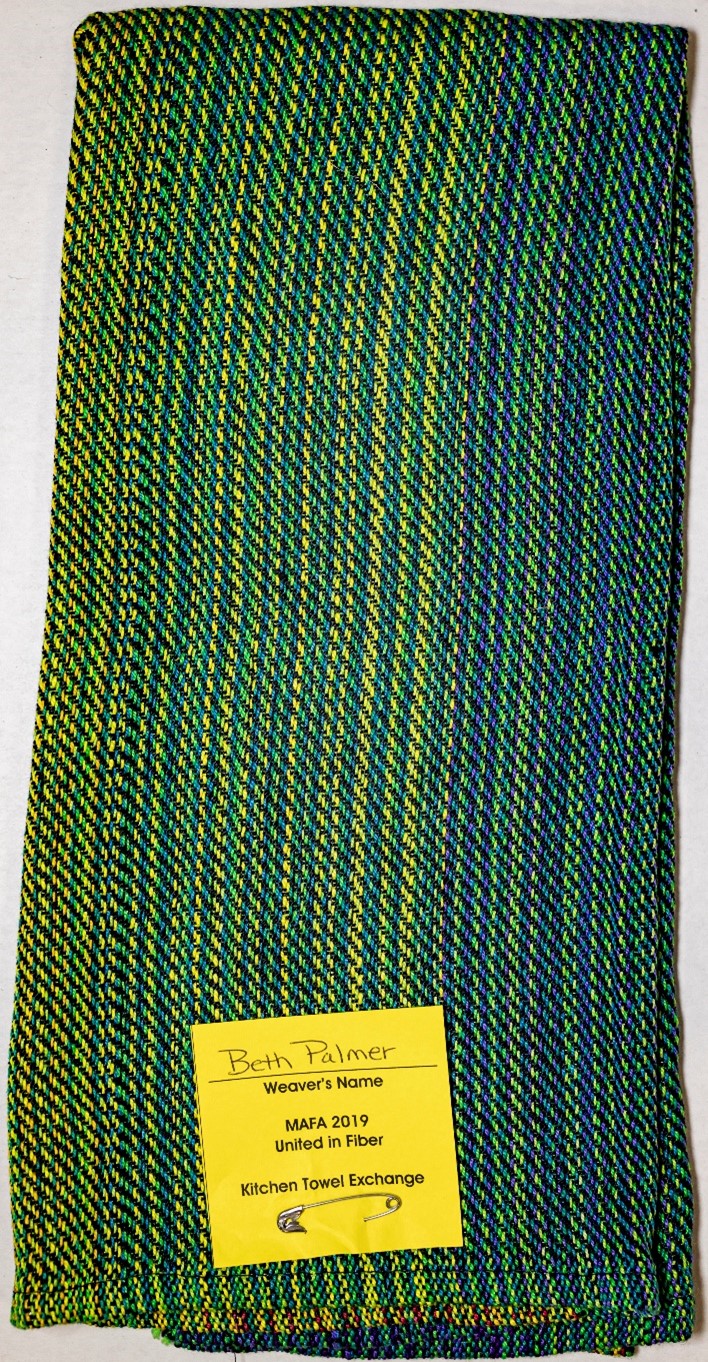
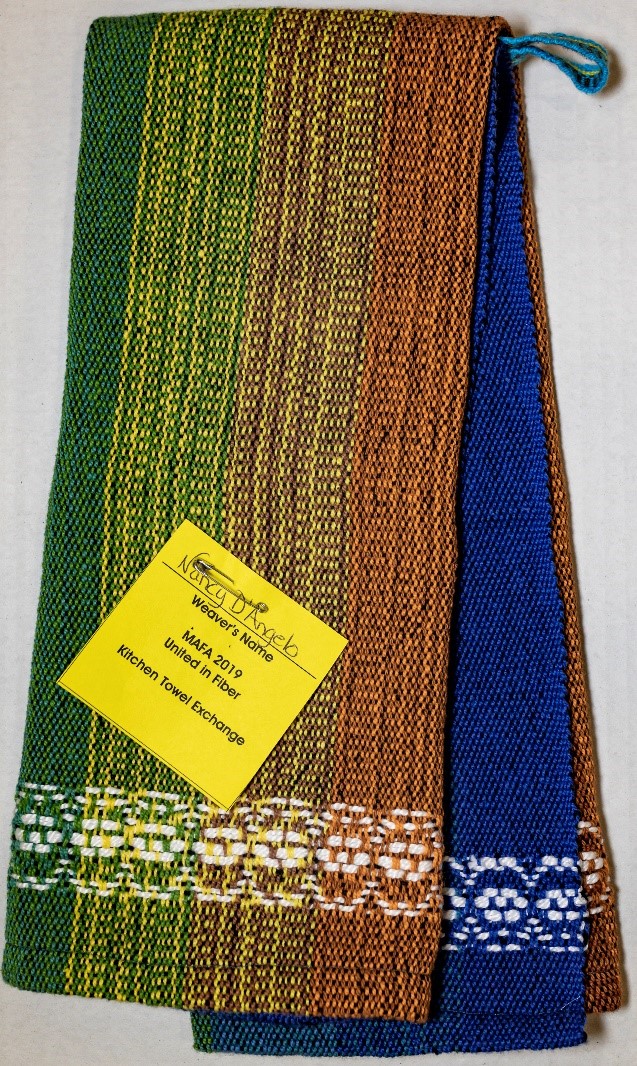
The color sequence (Chasing Rainbows) comes from The Weaver’s Weevil by Rebecca Fox and the warp yarn is 10/2 mercerized cotton from Lunatic Fringe (color spectrum). I used black for the weft and threaded on a straight draw.

MAFA2019-010

I used Mastering Weave Structures by Sharon Alderman, which is a great book to brush up on your structures….

Had fun weaving it.

MAFA2019-019

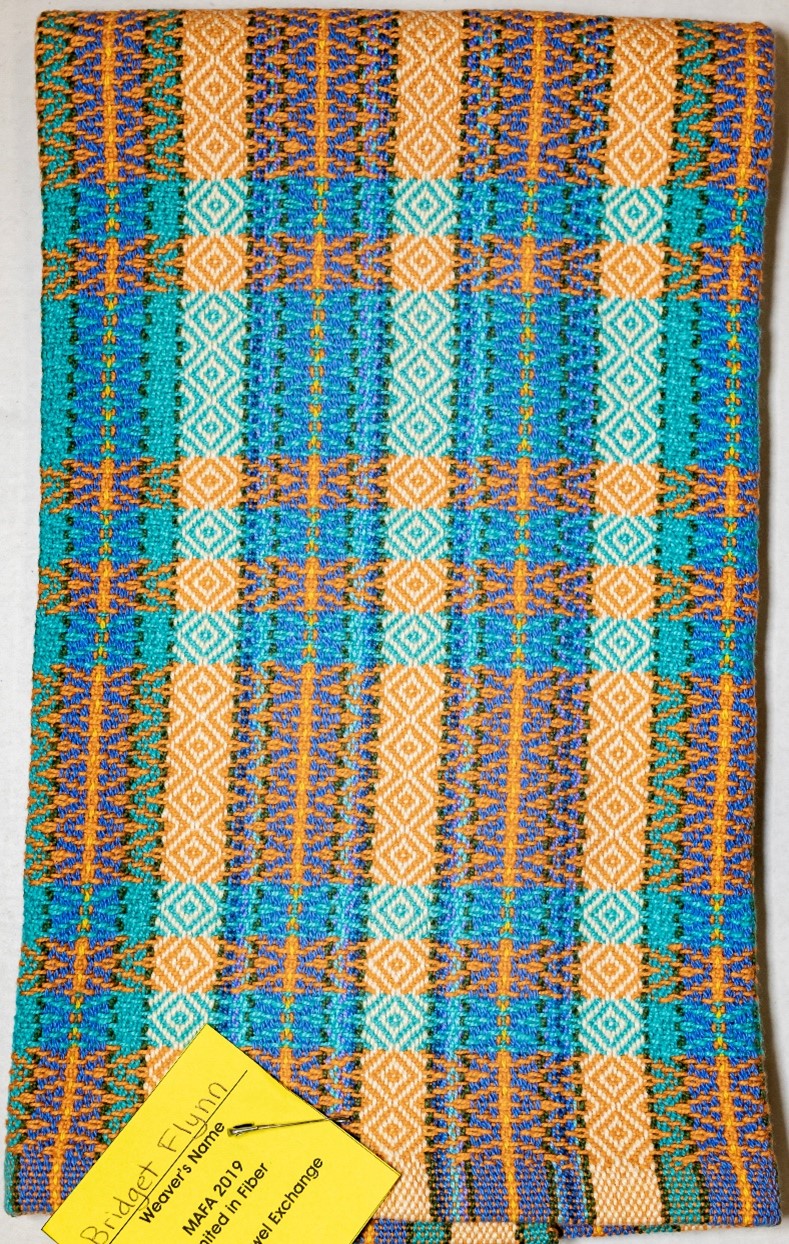
I recorded this draft in iWeaveIt quite a while ago as Simplified Damask from Marguerite Davison’s Handweavers Pattern Book. However, this is not that draft so I now have no idea where the pattern came from.

I repeated the pattern 8 times and added 28 ends at the left-hand side and 12 ends on the right-hand side to balance out the pattern.

MAFA2019-017

Tip: Use a temple.

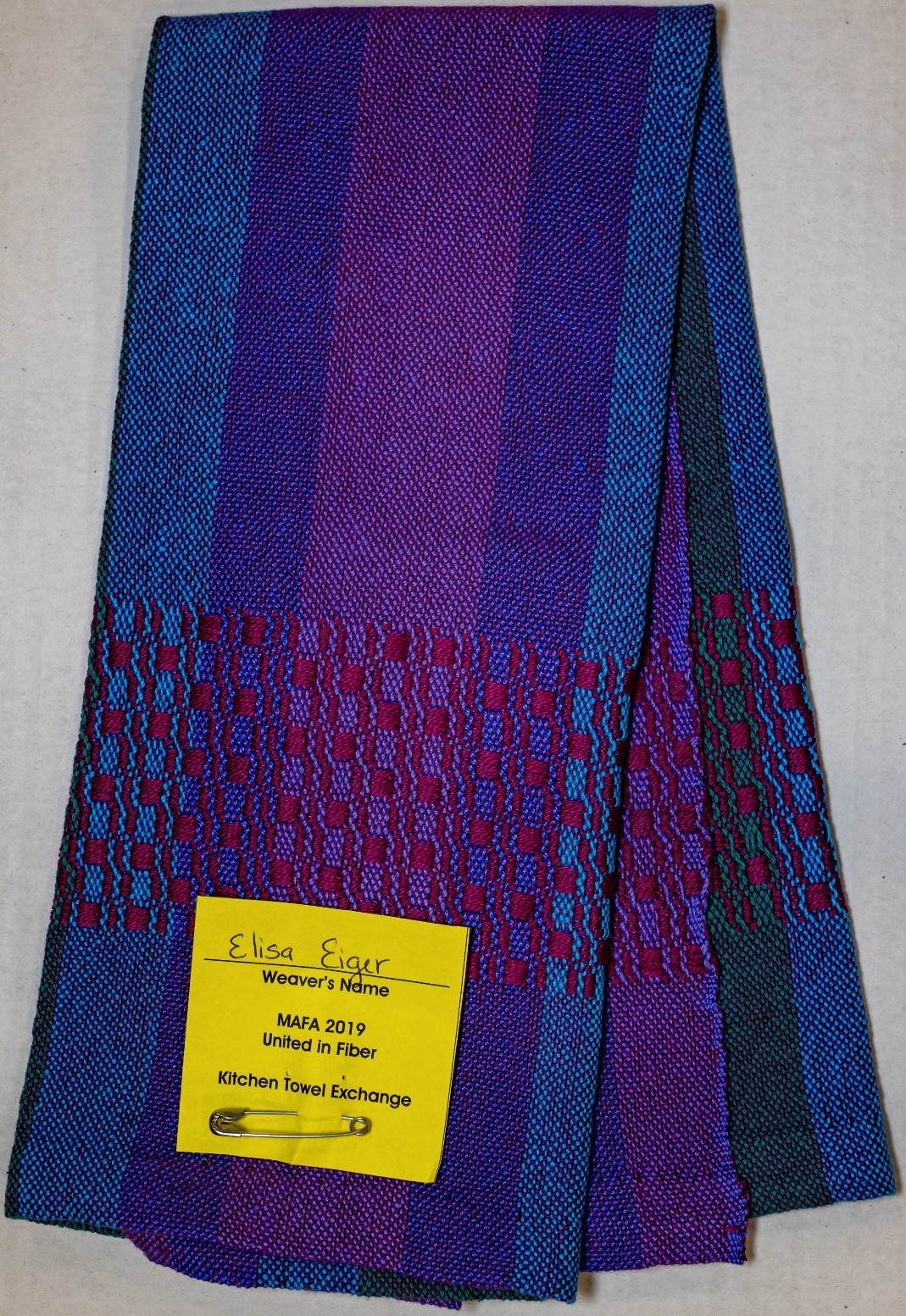
Note that the draft shows only four stripes of the 16 I used in the towel. I basically flopped the draft several times. This resulted in two wide green stripes on the sides and one wide purple stripe in the center. Stripe order is: blue-violet, blue, blue-green, green; G, BG, B, BV; BV, B, BG, G; G, BG, B, V.

This was created in response to Jockey Hollow Weaver’s swatch exchange. We played “Weavers Poker, ” in which each participant was dealt five cards for Weave Structure; Color; Color Relationship; Fiber; and Other, and was challenged to create swatches showing at least 4 of 5. My hand was: monk’s belt; orange; analogous, chenille, and iridescence. My swatches had orange weft, with the monk’s belt pattern in light-orange chenille. For my towels, however, I’m using fuchsia 10/2 for the weft. (It’s still iridescent.)

The draft shows three possibilities for the monk’s belt accent; only the first is used in the towels. These monk’s belt patterns are from Dixon (2007), _The Handweaver’s Pattern Dictionary_, p. 101. Draft shows tabby; in monk’s belt, tabby A and B alternate between the pattern picks.

MAFA2019-016

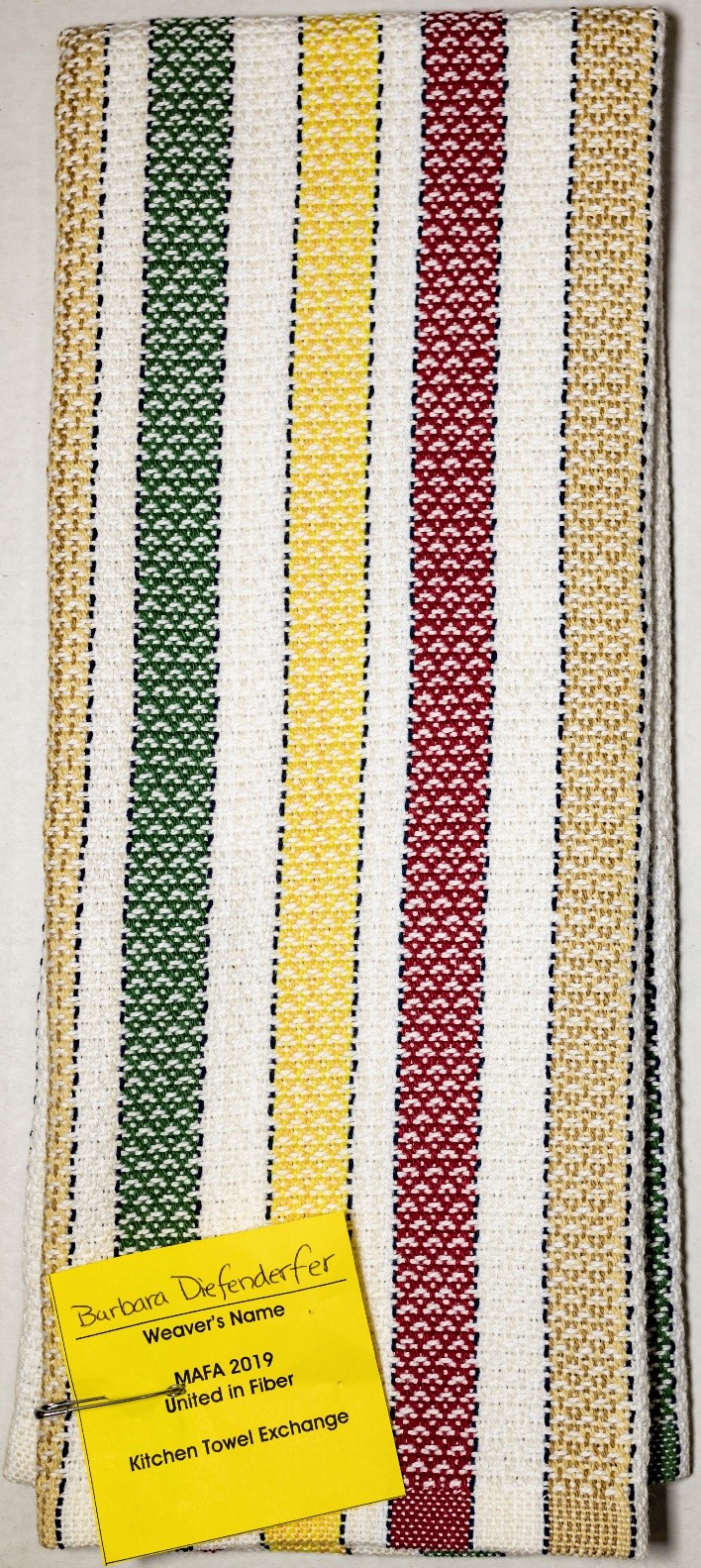
A 4-shaft point twill sounds boring but when you add warp stripes of tan, red, green and bright yellow separated by white stripes edged by a single navy thread there is hope. Add an interesting tie-up and treadling to create an interesting texture you have a towel of beauty. Towels like this make dish drying something you look forward to doing.

I have arranged the treadling on 6 treadles for ease. Only 4 treadles are necessary.

MAFA2019-015

Use tabby. I used a jack loom so I reversed the tie-up shown in the book.

MAFA2019-014

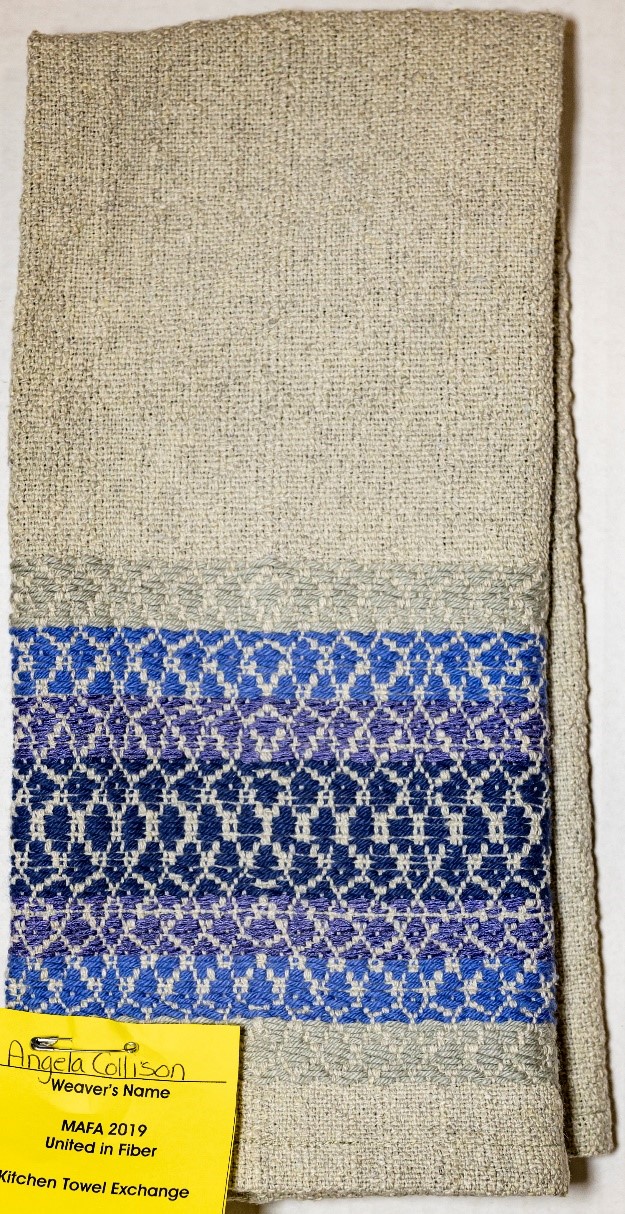
Page 31 of the BGH book shows a skeleton drawdown of Wishing Well for a bookmark that is significantly different from the Wishing Well draft on page 97 (the book suggests it may be due to a treadling variation). Using the skeleton drawdown, I determined the threading/treadling that would provide this effect.

The threading was not drafted as overshot, preferring instead to have groups of 2 or 3 consecutive ends threaded on the same shaft for textural interest. The majority of the towel is woven as plain weave, with one or more bands of the pattern woven as for overshot (pattern picks alternate with plain weave picks). The threading had 431 threads, plus 2 for the floating selveges.