24

MAFA2025-3964

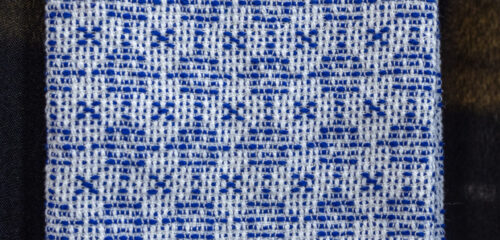
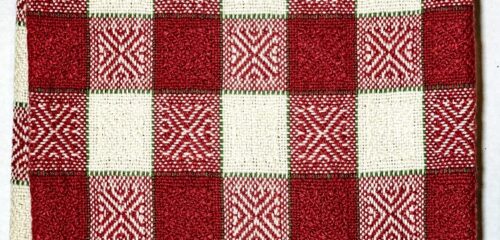
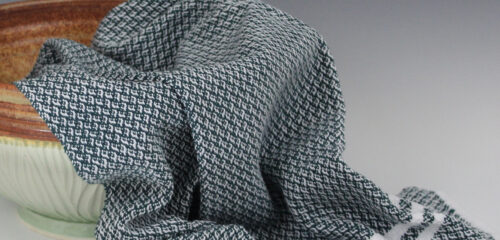
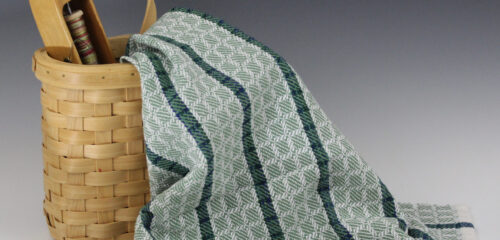
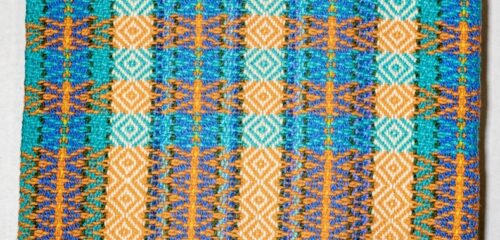
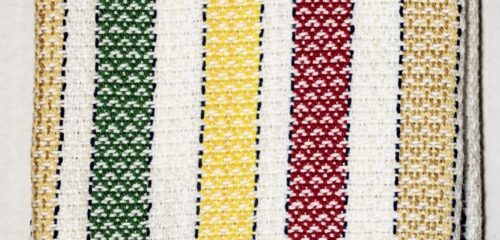
Pattern from Handwoven May / June 2020
Tom Knisely
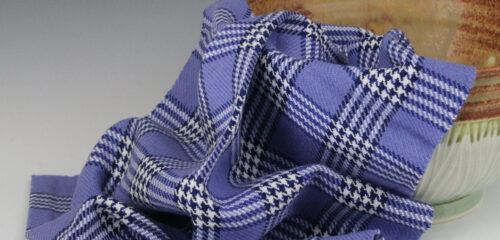
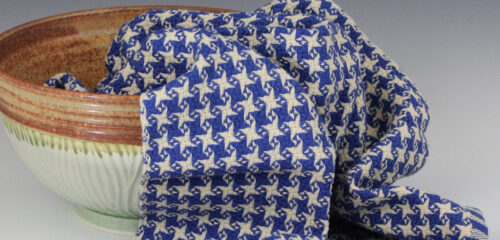
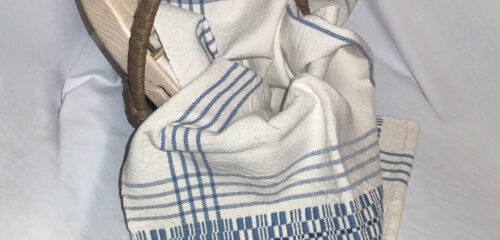
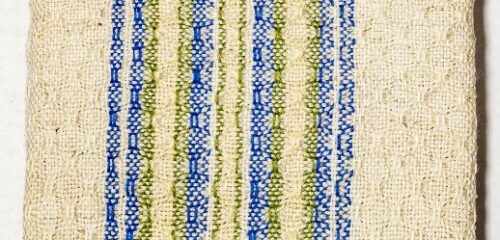
Huck Lace Napkins adapted to make towel
8/2 cotton warp/weft
578warp ends sett at 24 EPI. 2/ dent in a 12 dent reed
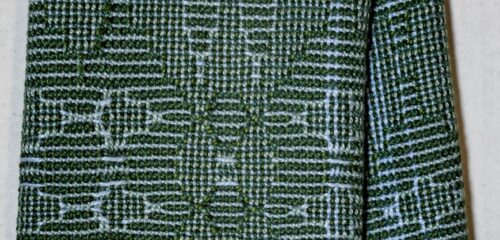
Hand stitched hems

MAFA2025-3957

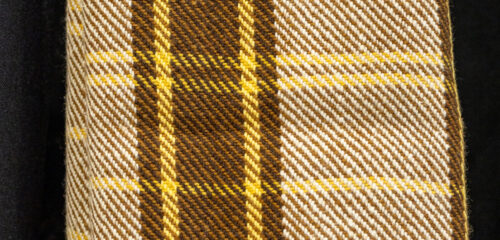
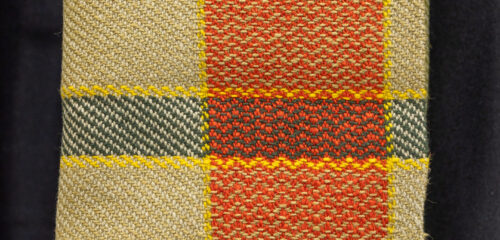
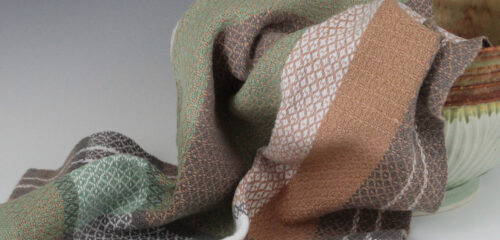
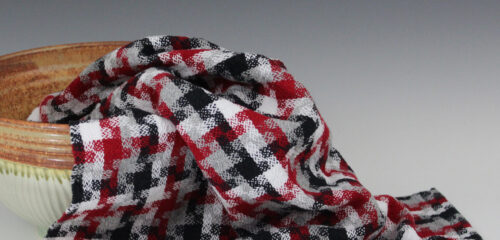
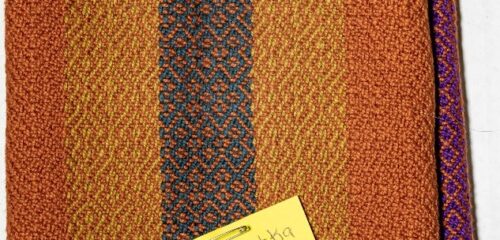
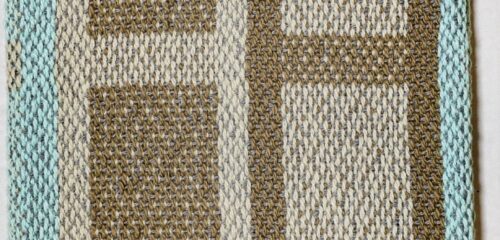
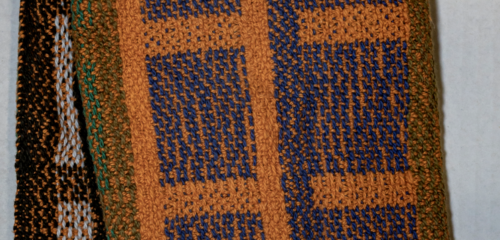
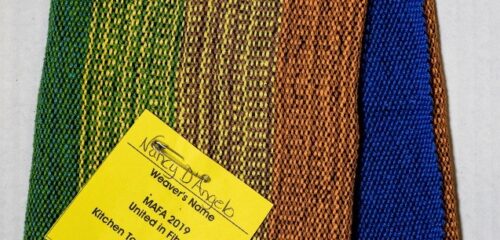
The warp is a randomly arranged assortment of yarns in the brown and tan family with a black weft. Warp measured in groups of 6 and then threaded randomly through the heddles. 504 ends.

MAFA2025-3955

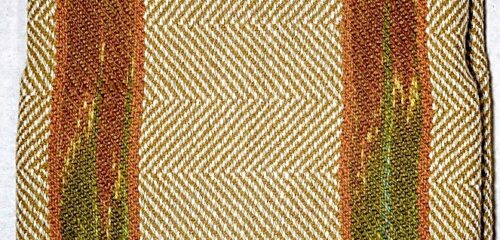
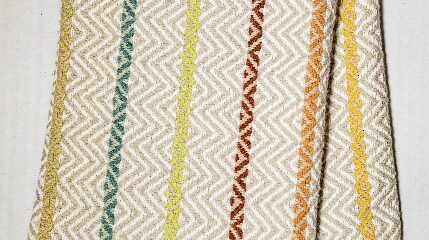
There are roughly 18 picks per inch. I chose a slightly warp faced weave in order to show the warp colors a bit more than a balanced weave would.

The broken twill ground was threaded on harnesses 1-4, and the point twill stripes were on 5-8

19.5″ in the reed, 34″ long under tension
16.75″ x 27″ after hemming and machine washing in warm water, partially dried in dryer on high

I used two floating selvedges on each side, each in its own dent

MAFA2025-3954

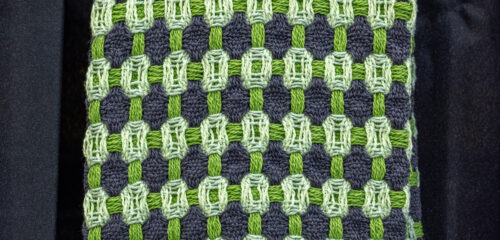
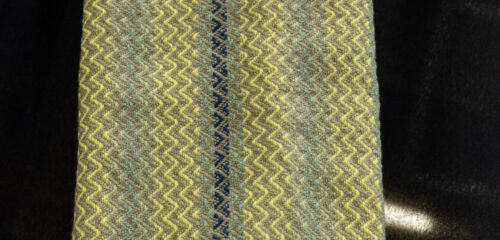
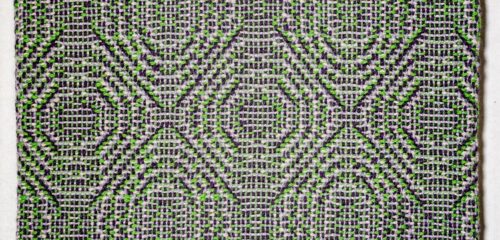
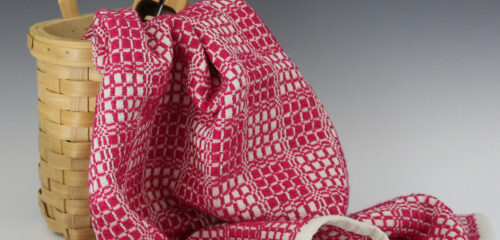
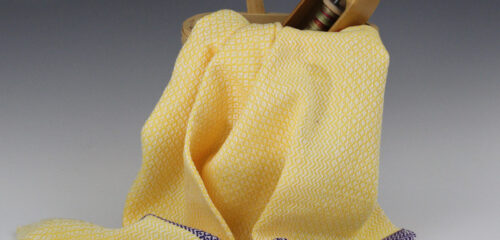
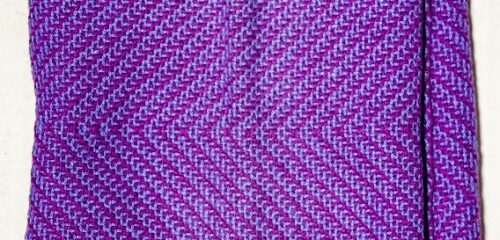
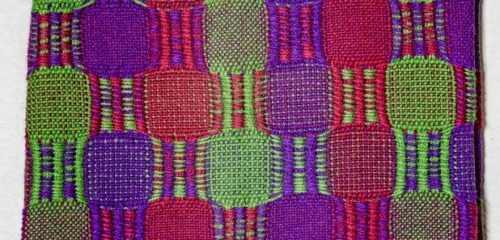
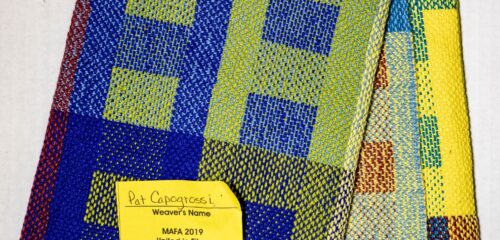
This design is a combination of the well-known tumbling blocks on sixteen shafts and a pattern I designed for the “other” eight shafts since I was working with a 24 shaft point on the loom for several other purposes.
And yes, I was pushing the deadline for my 2025 Cross Country Weavers sample for the theme “Turn, Turn, Turn+ and the tumbling blocks “turn.”

MAFA2025-3933

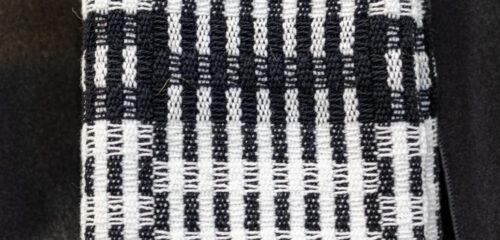
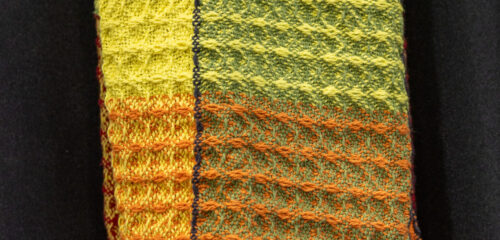
The piece is woven using Deborah Silver’s split-shed technique. I hand-drew the cartoon for the pickup oatterning.

I warped my table loom with enough for two runners. The first I cut off and used for a weaving guild challenge. This is the completed one shown in the photos. This photo is not great because it wasn’t taken for the purpose of exhibition entry. I gave this one away as part of the challenge/exchange. The one to be submitted is underway but not quite finished. (I need to finish it before MAFA because this is on my table loom and I will need the loom for a workshop.) One of the photos shows it as it is currently on the loom.

Finishing was a bit of a challenge. I steamed it rather than immersing it in water because I wasn’t sure how all of the different fibers would react. It shrank quite a bit. The photos don’t show it clearly but the wool portions fluffed up and created a nice dimensional effect.

The draft shows the structure without patterning.

MAFA2025-3930

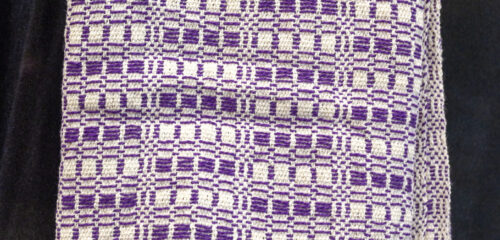
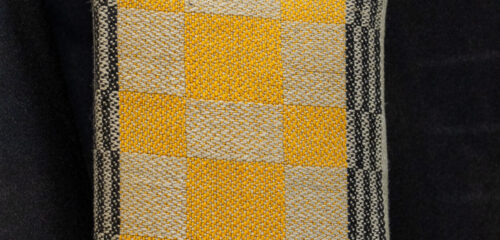
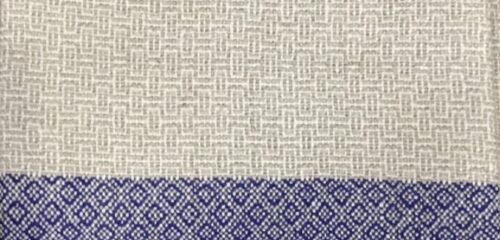
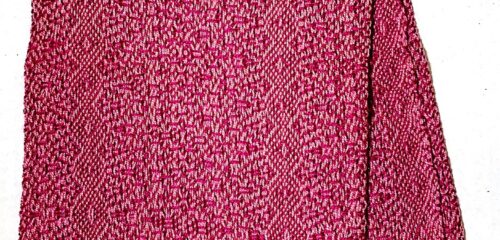
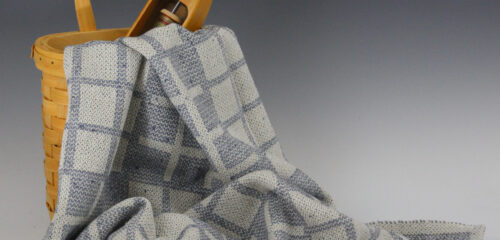
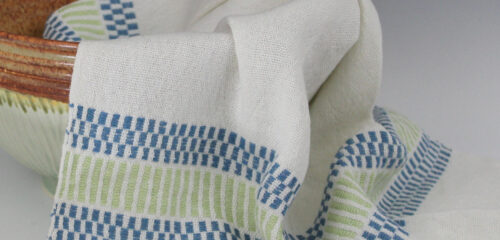
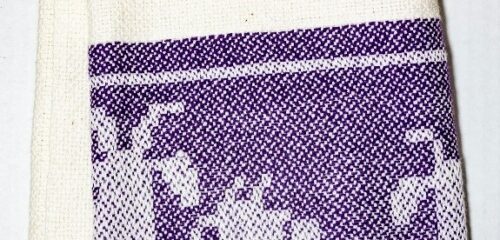
Our study group topic was Quigley, so I decided to design an original pattern to weave placemats out of as a way to understand the structure better. The total number of ends is 372 plus floating selvedges and the width in reed was 15.5″. The placemats are hemmed with a rolled hem in such a manner that either side of the placemat may be used as the “right side”.

MAFA2025-3851

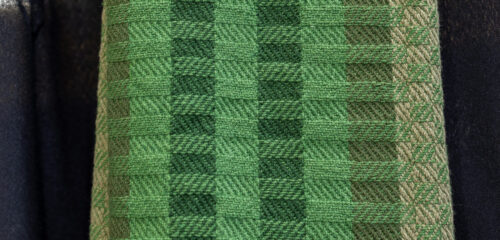
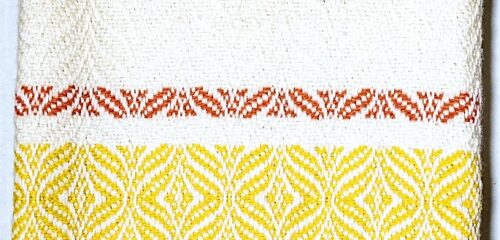
I designed this towel using a the traditional blooming leaf profile draft. I then used (432); (321);(214); and (143) as the blocks 4,3,2,1 respectively to substitute into the profile draft.
I used 486 ends plus two floating selvages.

MAFA2023-043

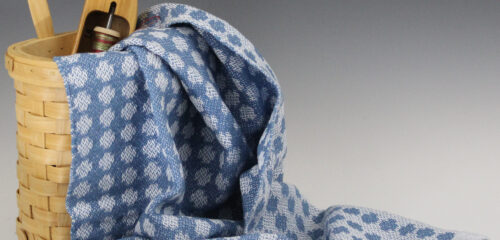
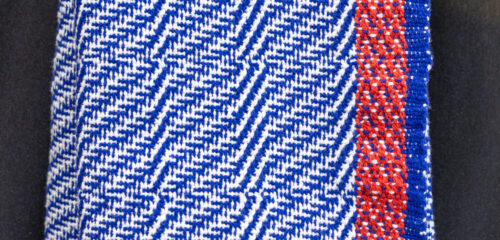
This was my first ever kitchen towel project! It also was my first shaddow weave!

My inspiration was thinking about an American flag and how the stripes would undulate if the wind were blowing.

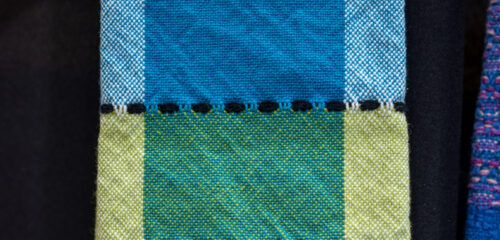
I chose to shadow weave in blue and white vs red and white to maximize the contrast of the yarns.

This design was created for my submission to the Woolery 2023 Weave-Off. My warp was long enough for me to make several towels and I’m happy to share one of them as part of the towel exchange.

The trickiest part of this project was that some of warp threads wanted to cross. This resulted in 2 white threads or 2 blue threads being next to each other at a few places in the warp. It wasn’t particularly noticeable in the waves but it was quite obvious in the weft picks that became the hem. It’s not clear if this was a tension issue or if the sett could have been decreased. Getting them to uncross when weaving the hem picks is possible but tedious.

In the attached WIF and reading from right to left, the first 88 warp threads are the pattern and can be repeated. For the finished towel, I repeated this 5 times and then transitioned back to the hem portion.

MAFA2023-037

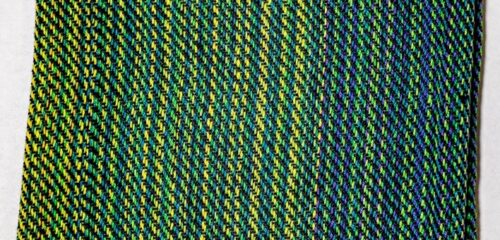
452 ends
I put on a long warp and regretted it later; with the color changes it was slow weaving. I was unable to find an attractive way to carry the colors along a selvage.
I liked the use of two shafts to create a plain weave border at each selvage. It solved the issue of the long floats at deflected DW selvages.

MAFA2023-036

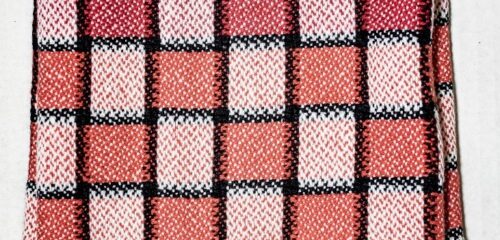
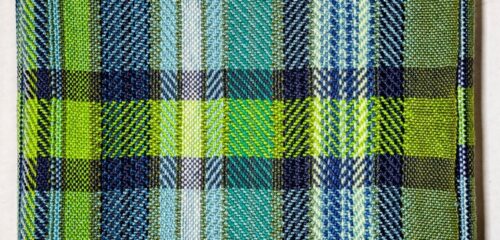
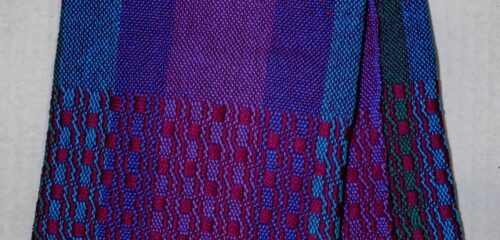
Wind on 500 ends: 496 for the threading and 2 doubled floating selvedges (which I like for strength in a workhorse handwoven) Be sure to keep a record of your color order for symmetry. I found it best to create threading blocks divisible by 4 to accommodate winding on two or four threads at a time. Width on loom was 20 2/3″ and after wet finishing lost about 10%. I hemstitched after wet finishing.

Be sure to put on lots of warp–two block turned twill permits so much experimentation with colors and block heights. My draft includes the threading and tie-up I used, plus my color order, but possible treadlings are so many. I utilized only one color (from the warp) in the weft but you can create variety with Fibonacci orders, plaids, and additional colors. Be sure to keep precise notes!

My 8/2 cotton was from Great Northern and the cottolin is Bockens’ “Nialin”.