
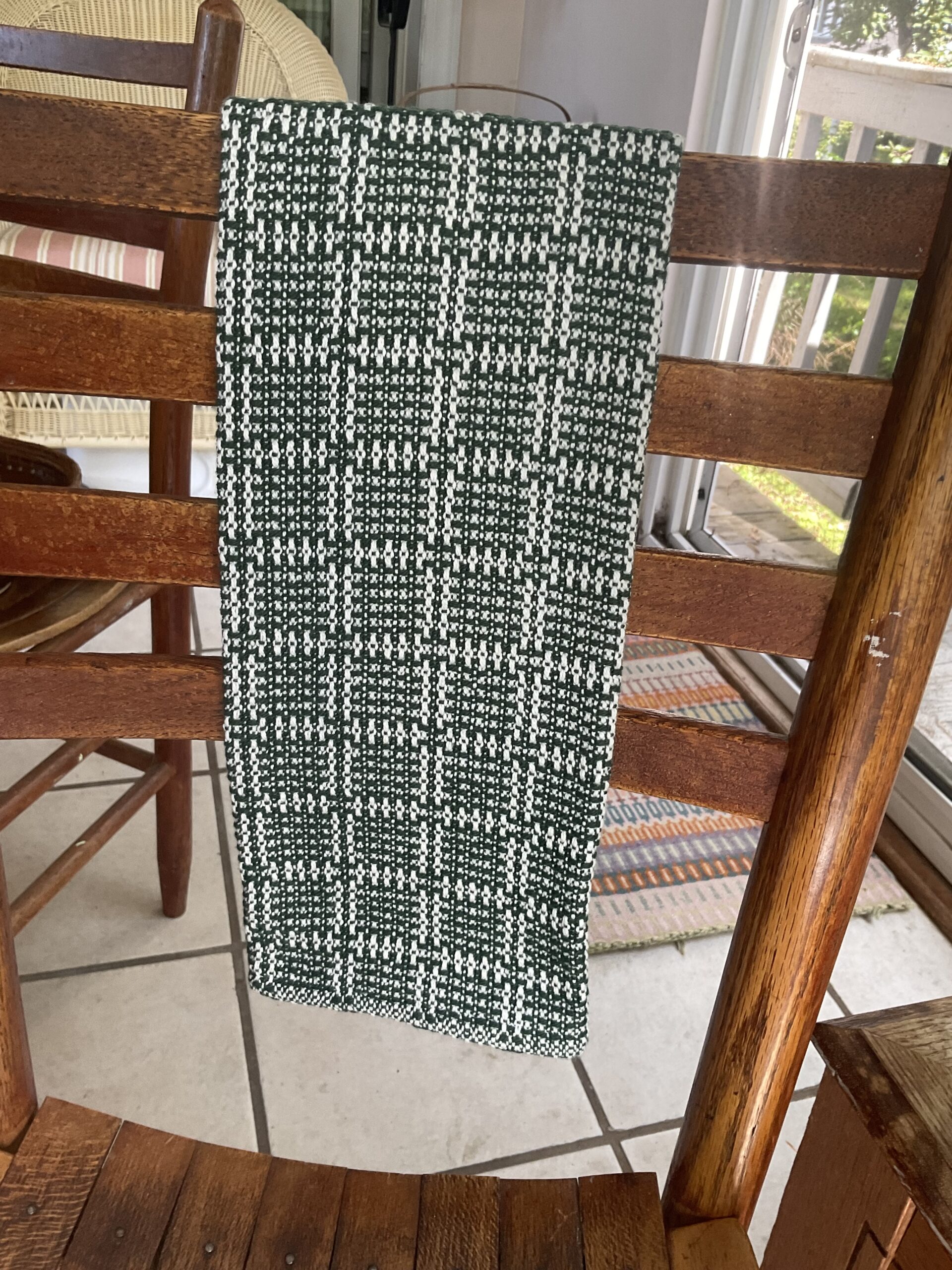
This draft was fun to weave and I love the texture of the finished towel (machine washed and dried). I wove some on this warp with 8/4 cotton as well, the squares were bigger, but they were nice as well.
MAFA2025-3871
At MAFA 2023, I created a shirt pattern in my class with Cal Patch. I wanted to use that pattern again, but for a different style of shirt. I plan to make this new shirt more like a tunic and possibly with a square neck. The front and back will be three pieces with two bird’s eye pieces on the front with one plain piece. The back will be the opposite.
In October 2024, our guild did some indigo dyeing. I decided to dye a warp at this event for my shirt. I found a commercial shirt pattern that helped me figure out what I wanted to do with my own shirt. This pattern involved two different fabrics – which I could create on one warp.
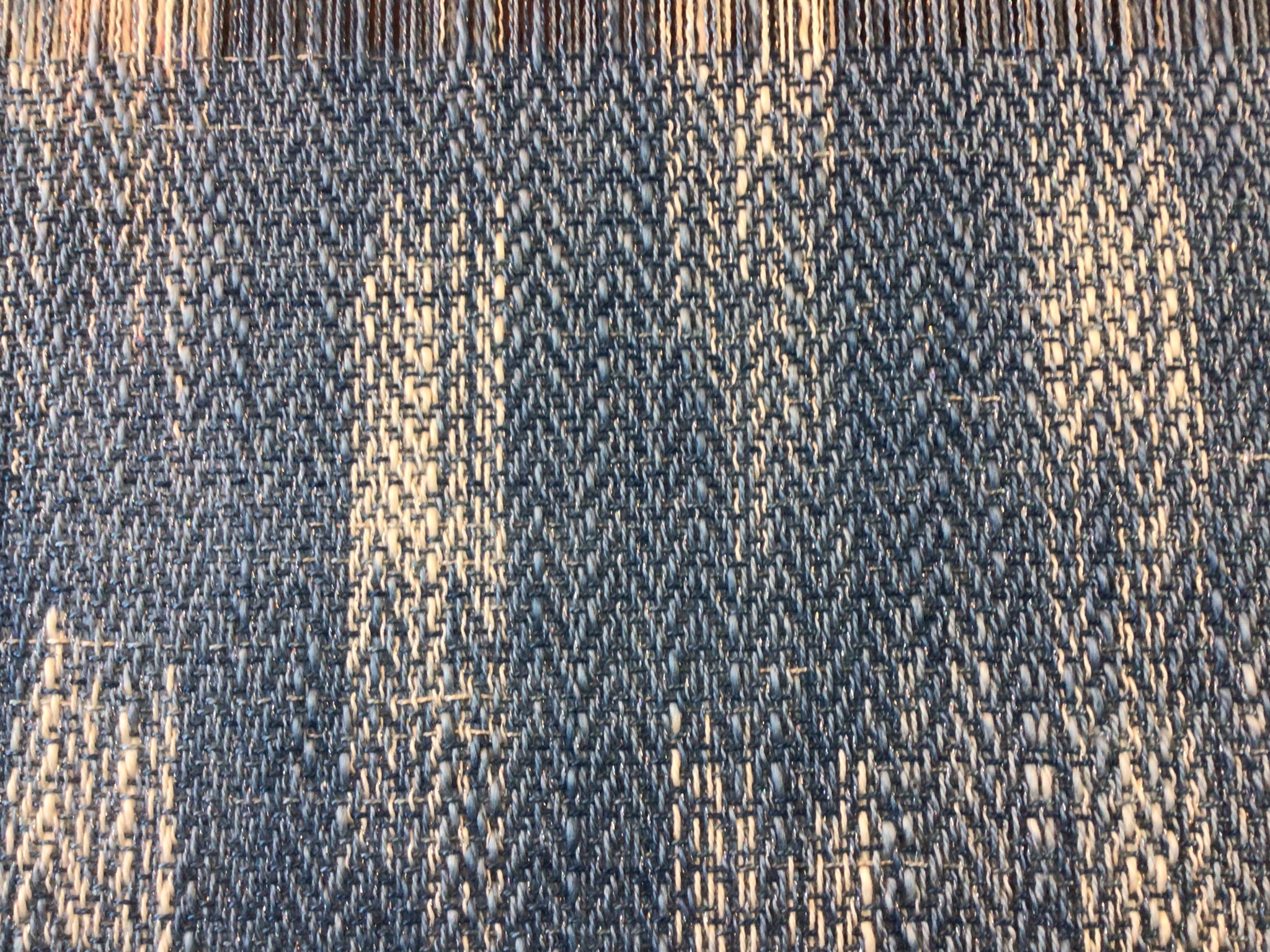
I made a six yard warp that has 1056 ends set at 24 epi. Half the warp was woven in a Bird’s Eye pattern beat at about 16 ppi. I used some 10/2 cotton that I had dyed at a different workshop for my weft. It was also dyed with indigo. The second half of the warp is plain weave woven with a mill end light blue cotton.
I did attempt some space dyeing on my warp, but I did not allow enough dye to get into the plain weave half of the warp. So the whole warp looks somewhat space dyed. I also should have been more patient and let my warp sit in the dye bath longer. I would have liked for the blue to be deeper.
The beat for this fabric was challenging for me. I like a firm beat. I usually match my epi and ppi. This was a good exercise for me. The fabric is loose and should be a good summer weight.
MAFA2025-3854
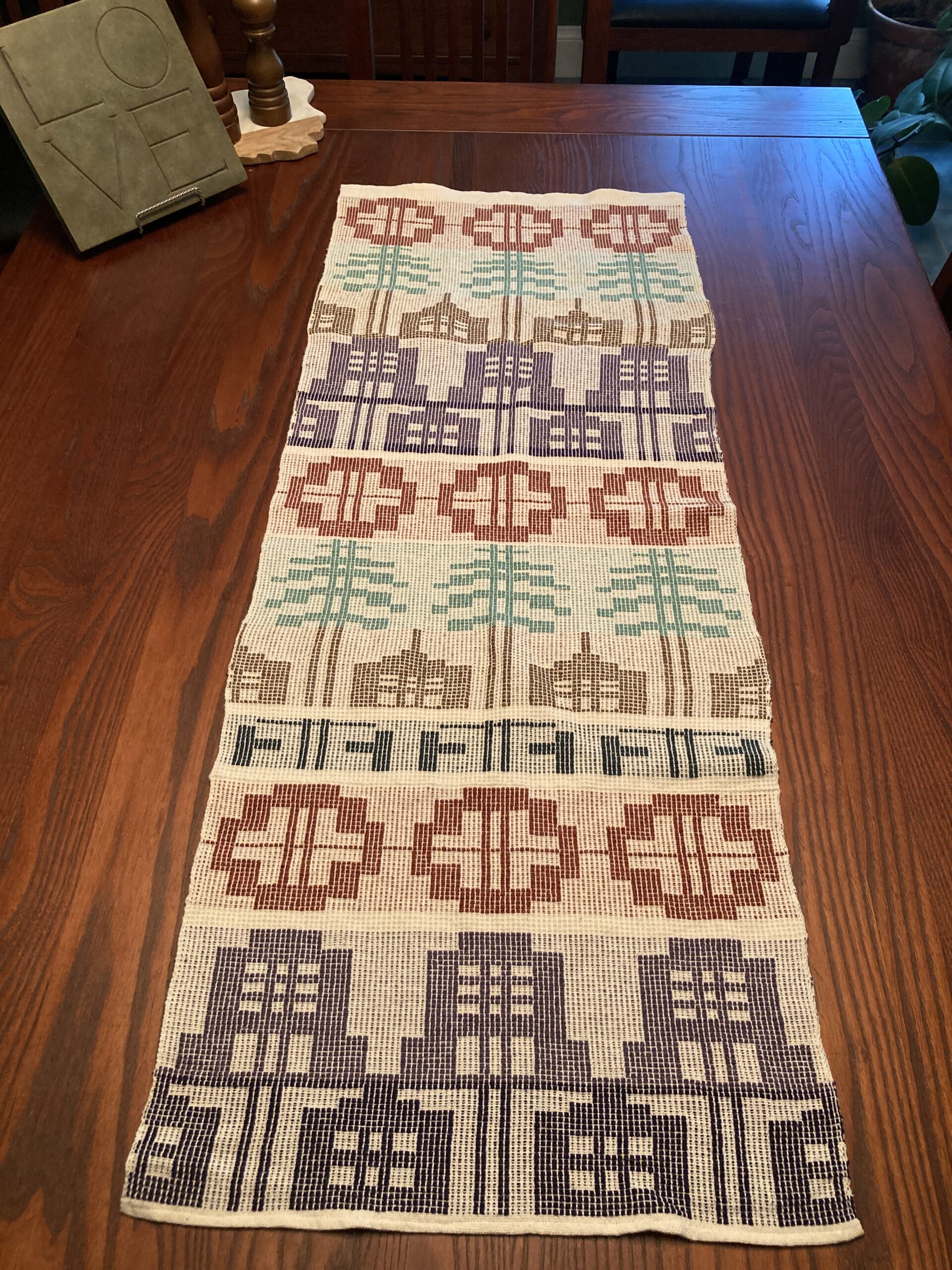
The idea for this runner is from Mary Meigs Atwater’s Recipe Book; series V, number 11, titled botanical garden. I used her profile draft but altered my tie up to create buildings and trees versus her garden.
It was a pleasure to weave and my next go at it will be with a colored warp.
MAFA2025-3853
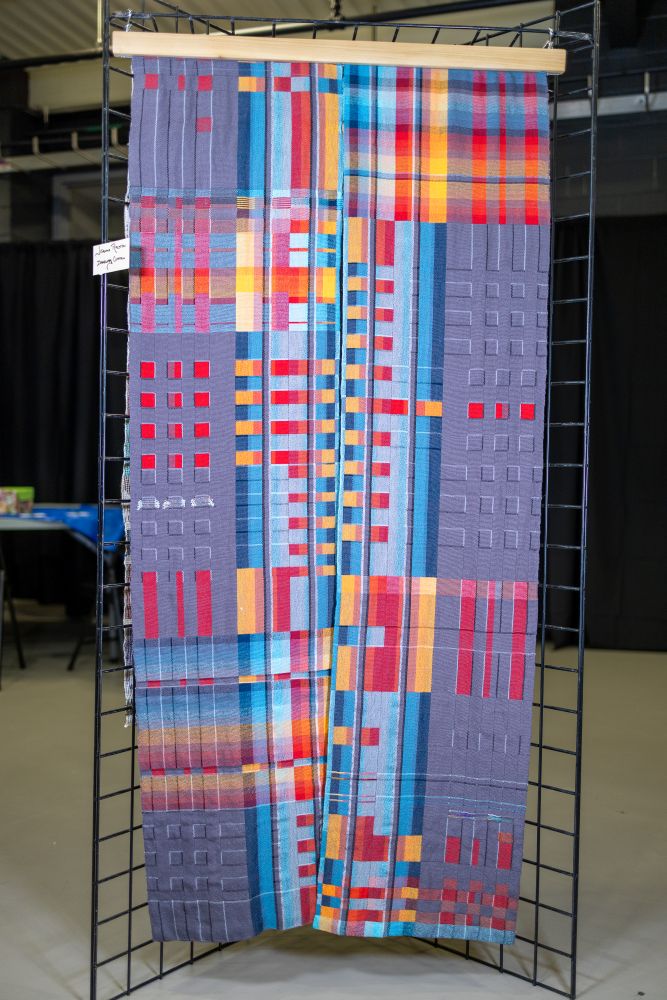
I wove this piece in the hopes of achieving the appearance of a grid (3 D) on the finished textile (see picture 2). I couldn’t bear to weave all gray double weave so I added color to one side of the warp to add some vibrancy.
There are some 3 dimensional aspects even on the colored half where I tried to create an overlying grid. (See picture 3).
A wif does not portray the double weave structure so is not included. However, I used traditional two block double weave on an 8 shaft loom and varied between the four possible tie ups. My color draft and tie ups are pictured.
The piece now hangs as a doorway curtain leading into the yoga room of our home.
MAFA2025-3851
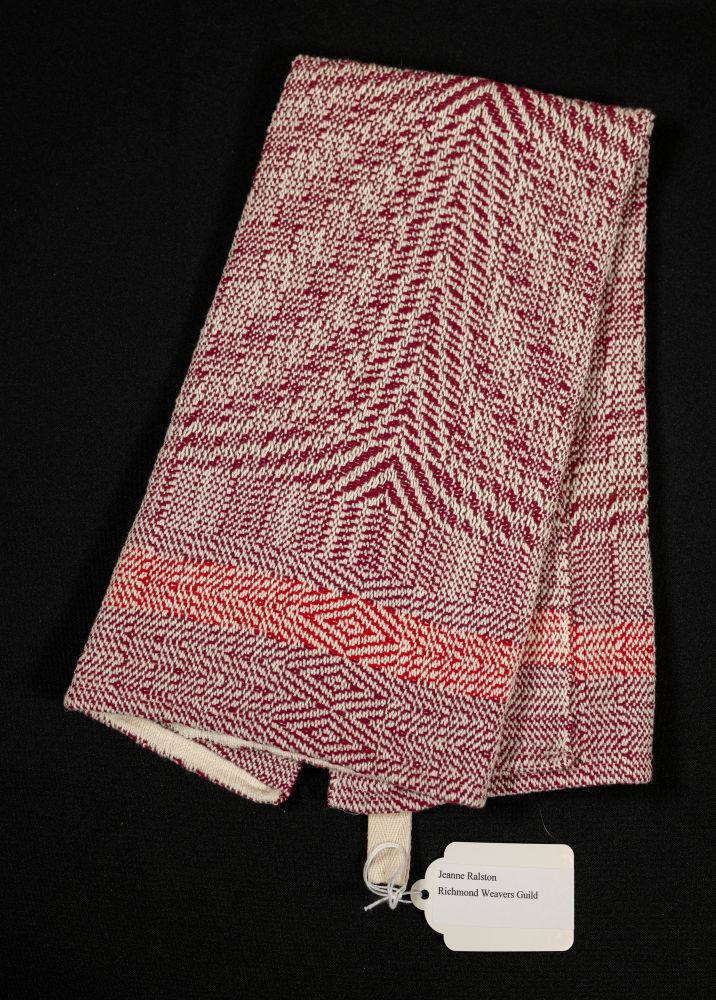
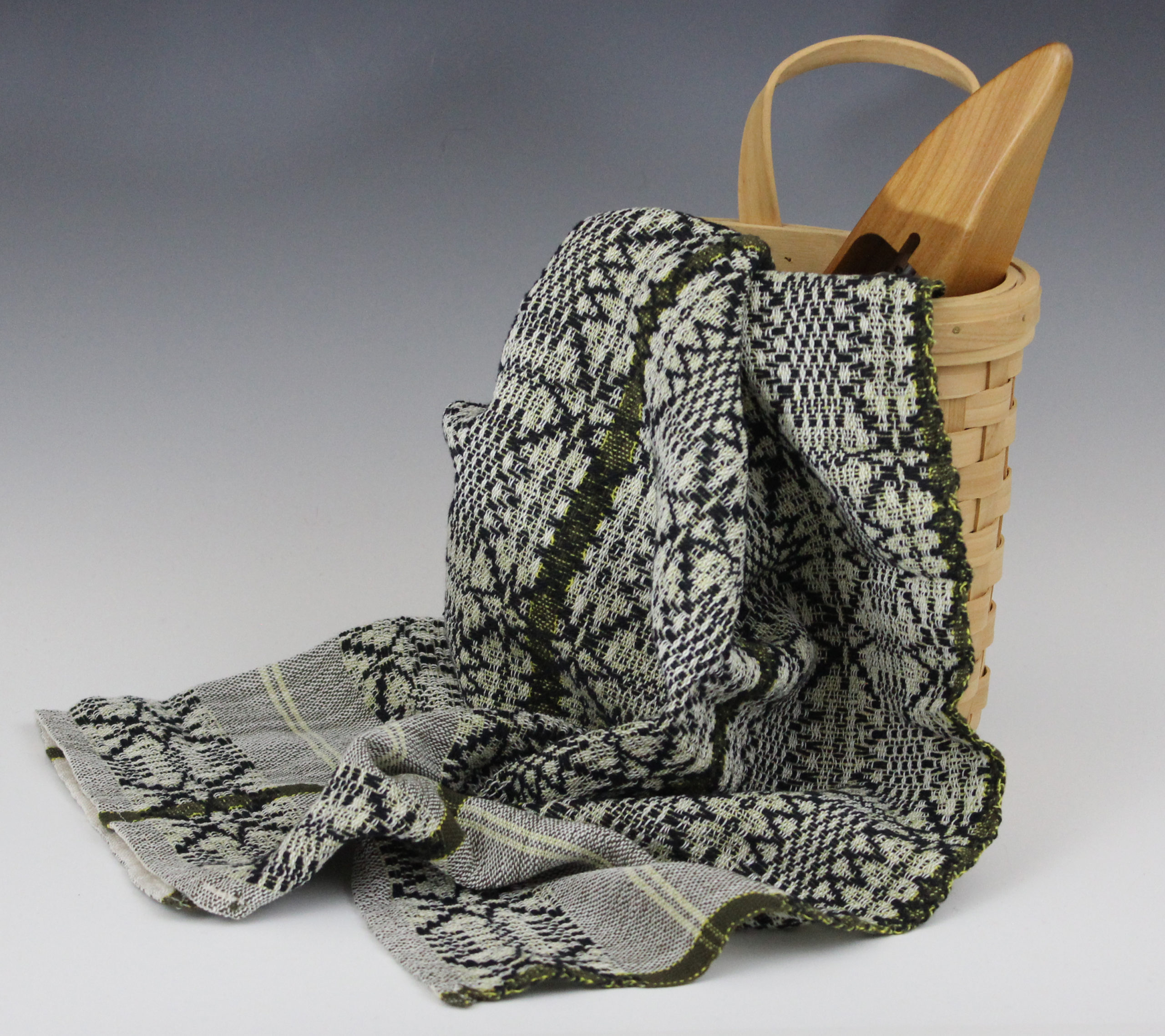
I designed this towel using a the traditional blooming leaf profile draft. I then used (432); (321);(214); and (143) as the blocks 4,3,2,1 respectively to substitute into the profile draft.
I used 486 ends plus two floating selvages.
MAFA2025-3806
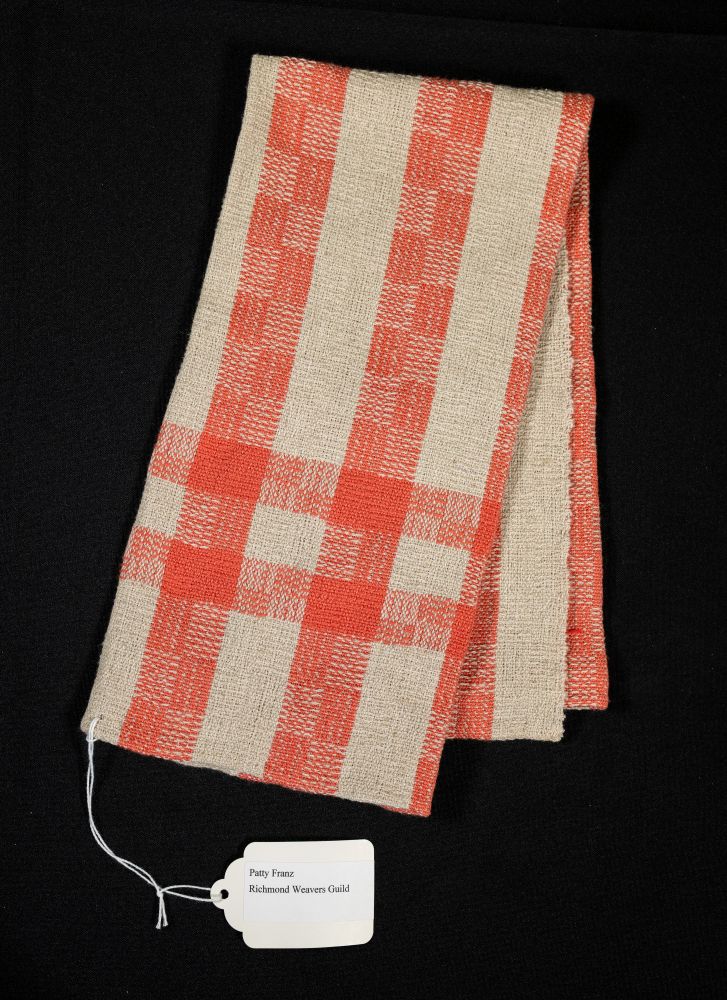
This is the fourth project I have done with this draft. I have enjoyed the interplay between the colors.
The weave is designated to be ten pattern repeats – I have done eight at a time, except in the persimmon weft – then I did four.
My hems are thinner yarn – 20/2 cotton. There is no plain weave with this draft so I used 2,4 alternating with 1,3 for the hems. This is as close as you can get to plain weave.
As always, washing this fabric makes all the difference.
MAFA2023-037
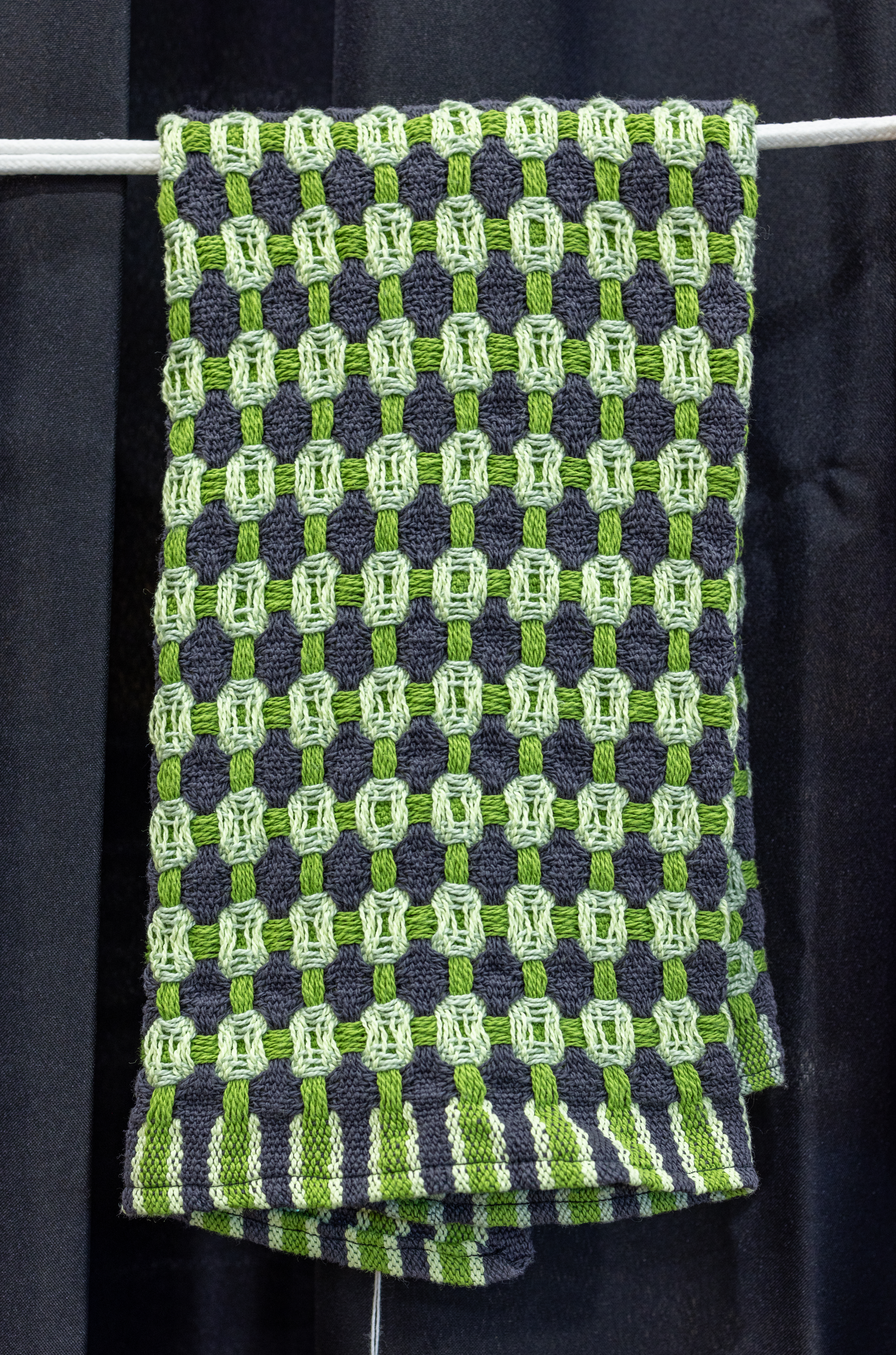
452 ends
I put on a long warp and regretted it later; with the color changes it was slow weaving. I was unable to find an attractive way to carry the colors along a selvage.
I liked the use of two shafts to create a plain weave border at each selvage. It solved the issue of the long floats at deflected DW selvages.
MAFA2023-015
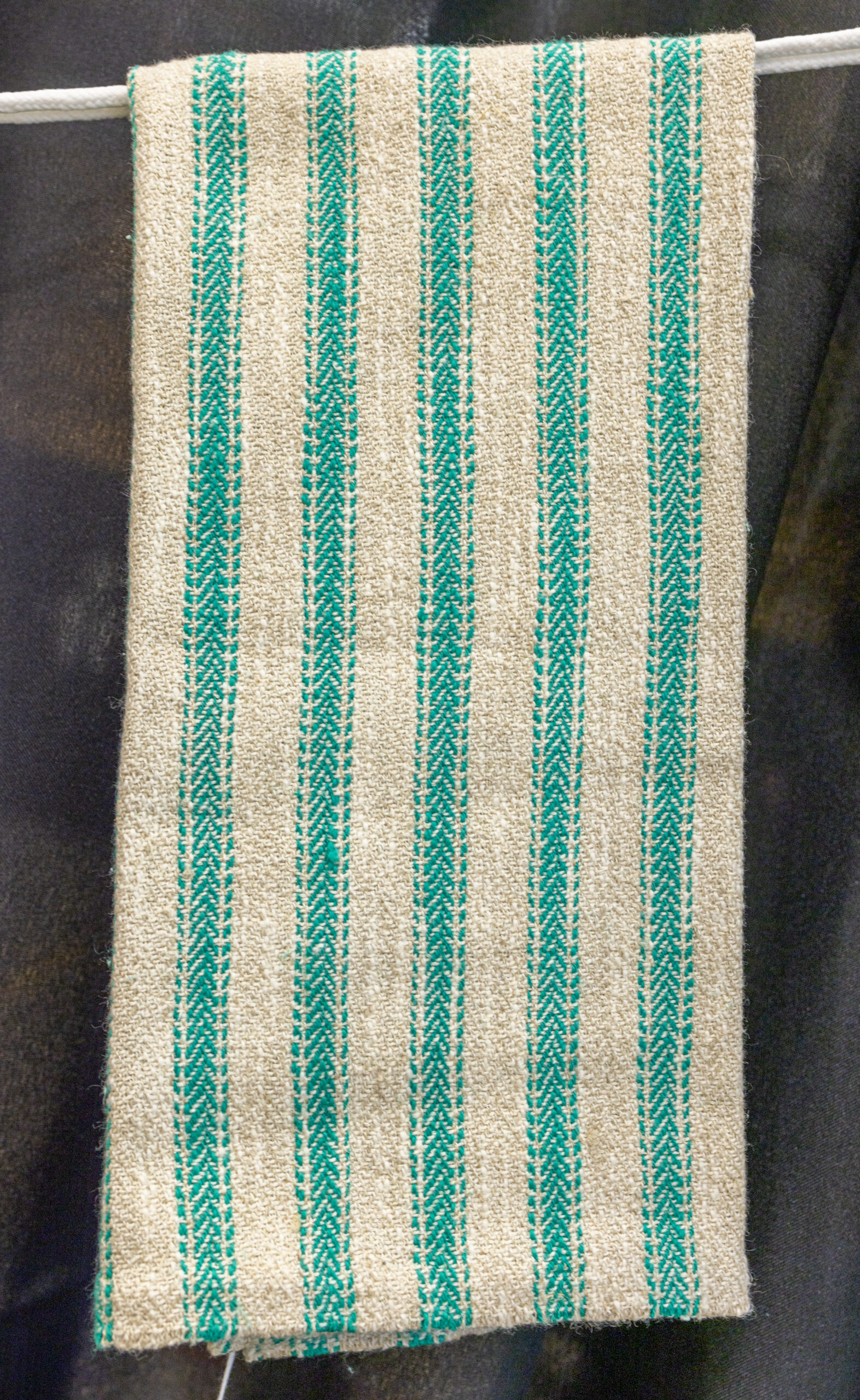
On the .wif, the first 14 thread is one edge of the towel and the other edge is the last 32 threads. Repeat the 40 threads in the middle as often as needed for the towel you are weaving. I overestimated the shrinkage of my weaving, so this is a big towel.
Warping this towel was a lot of work because of all the thread changes. I like what I got, but I am not sure I would do it again. I create a three page spreadsheet to make sure that I got all the threads in the right order while warping and then used those sheets for my threading also.
I like the towels I made, but not sure if I would do this again. I did accomplish one of my goals which was to use up some of my stash. I have a lot more of the yarns I used in the weft.
MAFA2021-044
I used a Josephine Estes miniature, “Cambridge Beauty” (www2.cs.arizona.edu/patterns/weaving/monographs/eje_min1.pdf), to design this towel. I added some striped segments that altered the miniature repeats to create the structured effect I was seeking in the towel.
735 ends plus 2 FS each side.
I played with the treadling to create many different versions of the towels. The draft shows the treadling for the main pattern repeat. For the towel submitted, I used a segment of the treadling repeat for the border along each edge of the towel and then wove some plain weave with striping before starting to weave the main pattern repeat.
MAFA2021-015

I was inspired when Judith, a member of our guild, wove this for our April 2021 newsletter sample.
This was fun. I put on five yards of warp, total of 562 ends (used floating selvages). I had a 20 inch width and wove 32 inches in length. I threaded one inch plainweave on each side and wove two inches of plainweave at the bottom. I wove the 1/2 inch hem in finer cottlin so that it would have less bulk.
The weave is a standard huck lace and is very versatile. Lots of different treadling patterns.
My stripes are based on Fibonacci numbers. I started with one repeat in cottolin, then a blue stripe of one repeat, then one beige repeat again, then a blue stripe, then two beige repeats, blue stripe and lastly three cottolin repeats and a blue stripe. The beige cottolin stripes are following the Fibonacci sequence of adding the last two numbers together – 1,1,2,3. The next number would be 5. I use this sequence often.
Judith has taught me a lot over the last few years and it seems appropriate to share her weaving pattern with others. If you want to see what Judith wove and other weaving that the Richmond Weaving Guild has shared, go here: www.flickr.com/photos/128696390@N07.