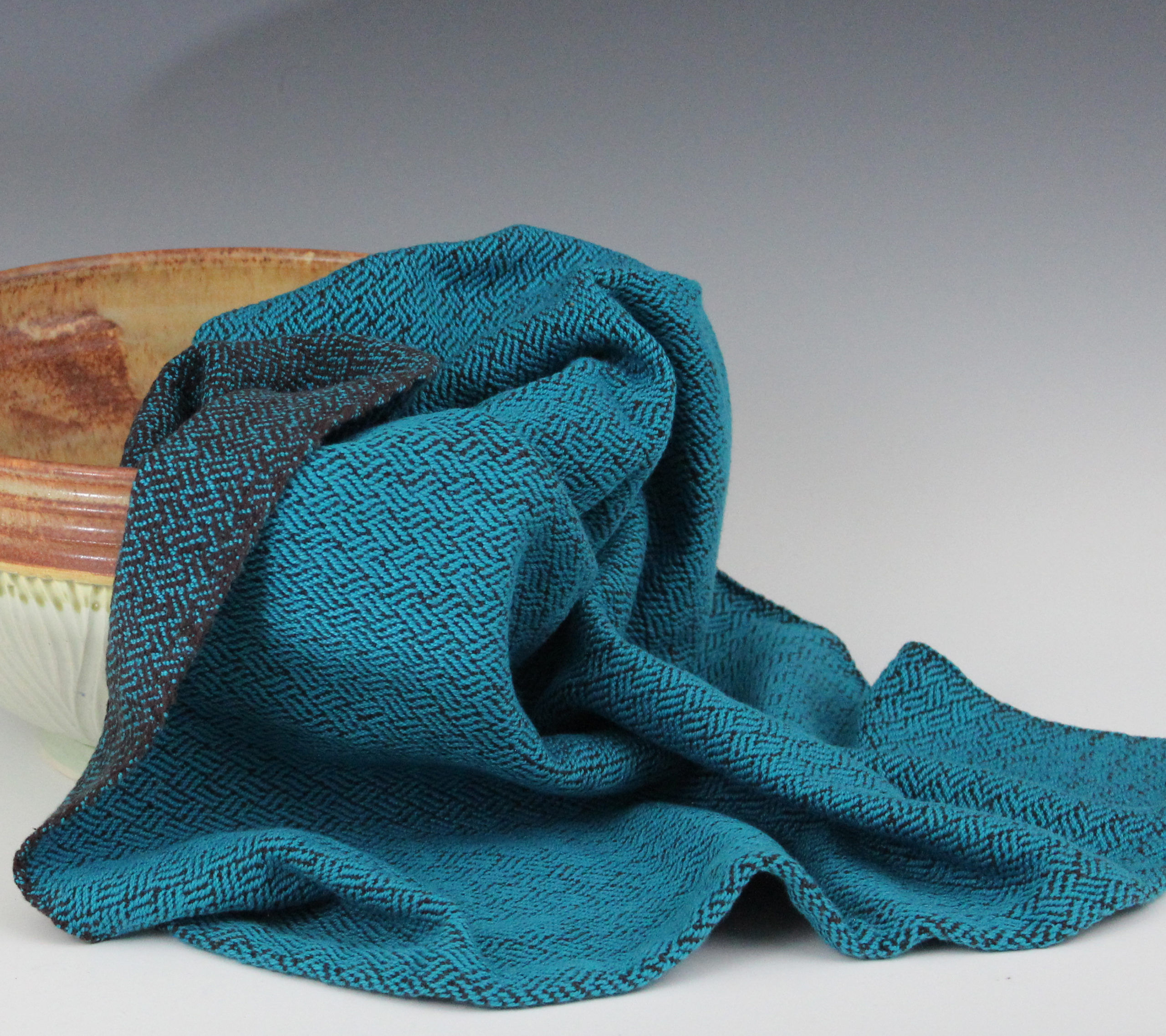
MAFA2021-036

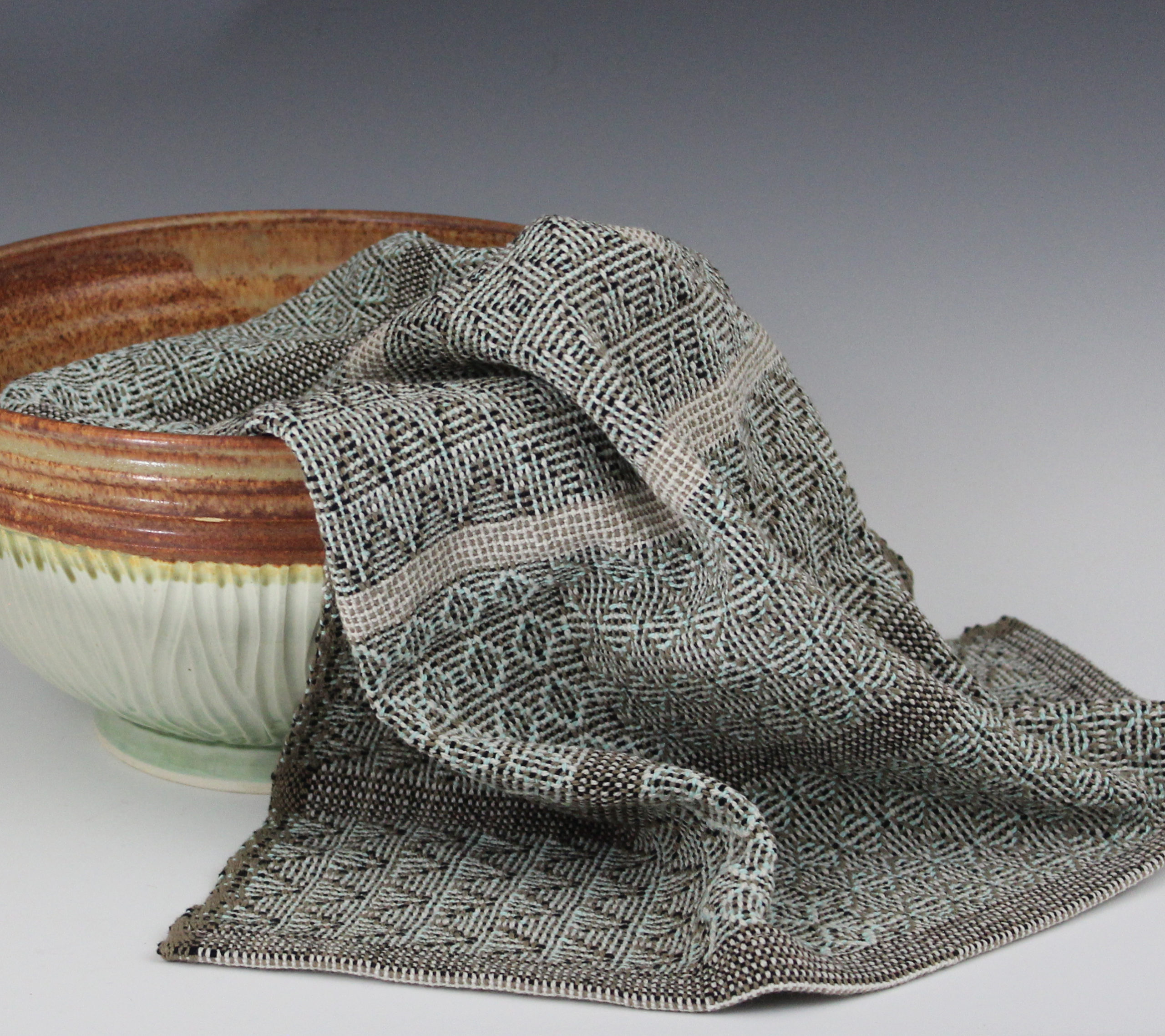
I used 422 ends including floating selvages. The warp is Chocolate Brown by Spartan Dyers from Cotton Clouds. The weft is turquoise by Maurice Brassard from The Woolery.

My draft is #355 in Strickler’s A Weaver’s Book of Eight-Shaft Patterns. This is a plaited twill pattern.

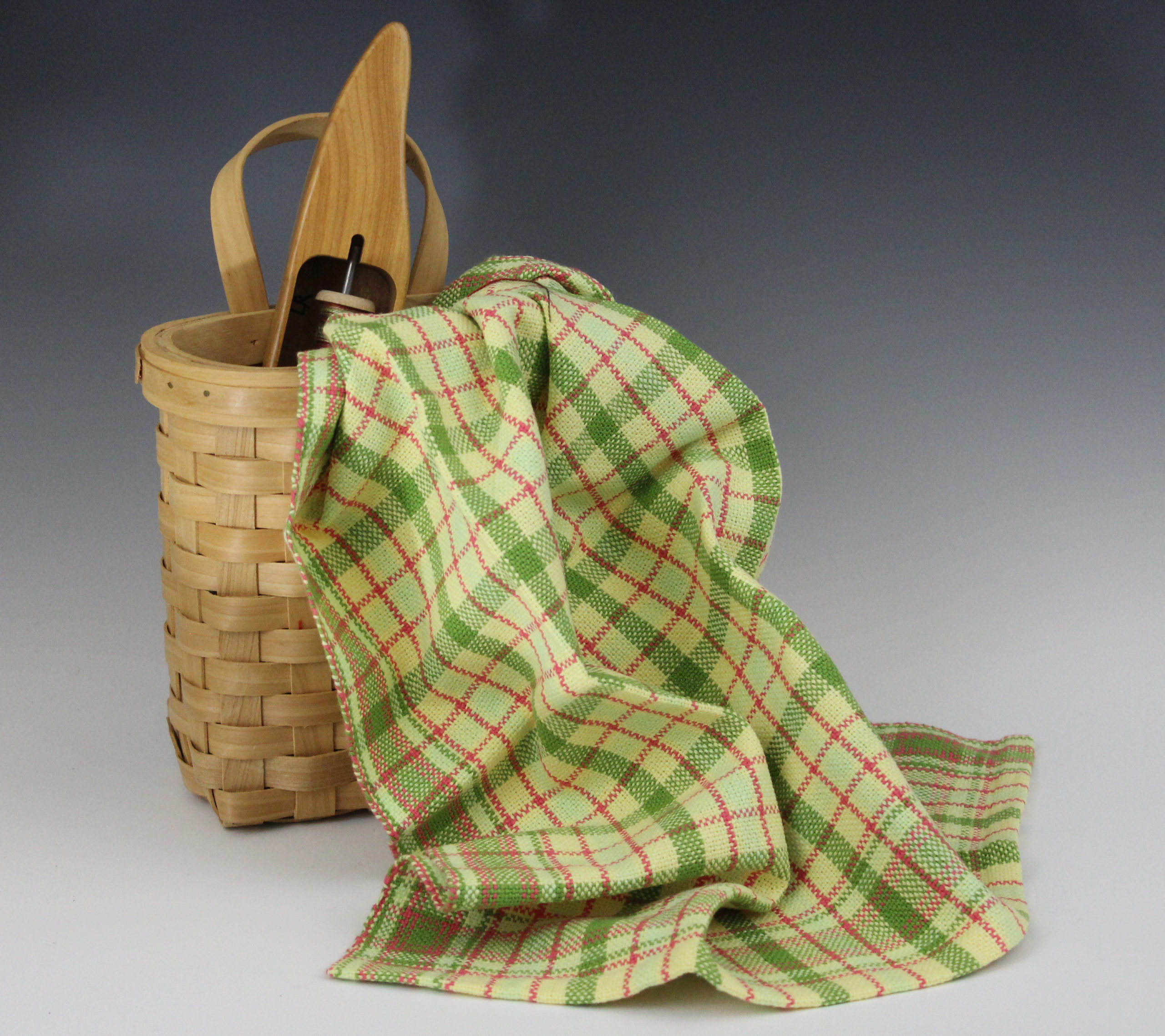
MAFA2021-037

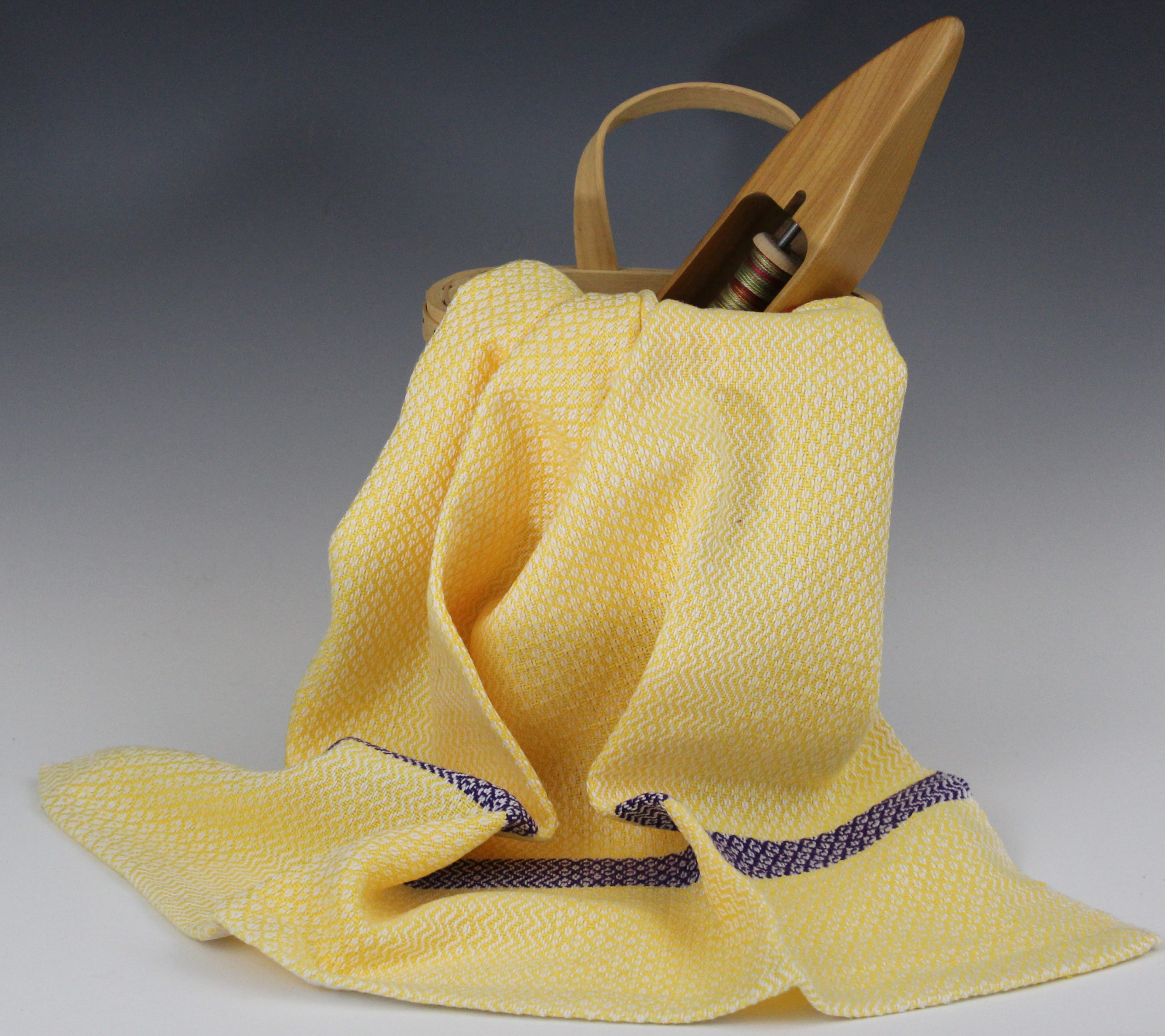
I was influenced by the piece Vavstuga had for Bockens Egyptian 8/2 cotton on their website (store.vavstuga.com/product/yarn-bock-cot-8-2-dyed.html). Their current piece is actually a little different, as the one that influenced me had some red accent yarns in warp and weft. I liked the combination of yellow and light green, with the red accent.

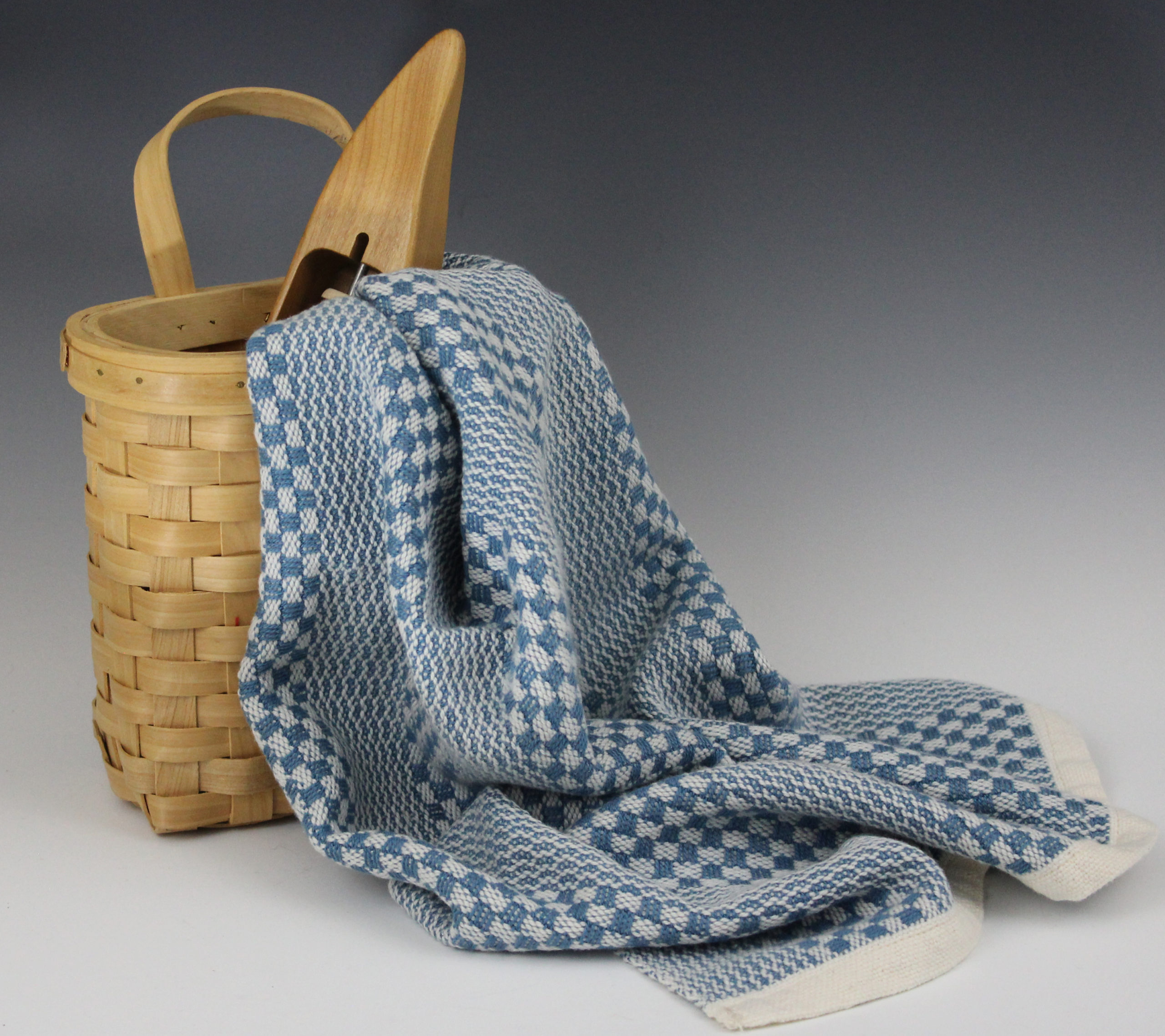
MAFA2021-038

The original draft I found on the Schacht website had 414 ends, so I adjusted to 430 ends to meet the necessary width requirement. I also used a simplified threading, a draft of which was supplied to me by Judie Eatough.

I machine washed the towel in cold water and dried in the dryer on high heat to wet set. The towel was then pressed using a cotton and steam setting on my iron.

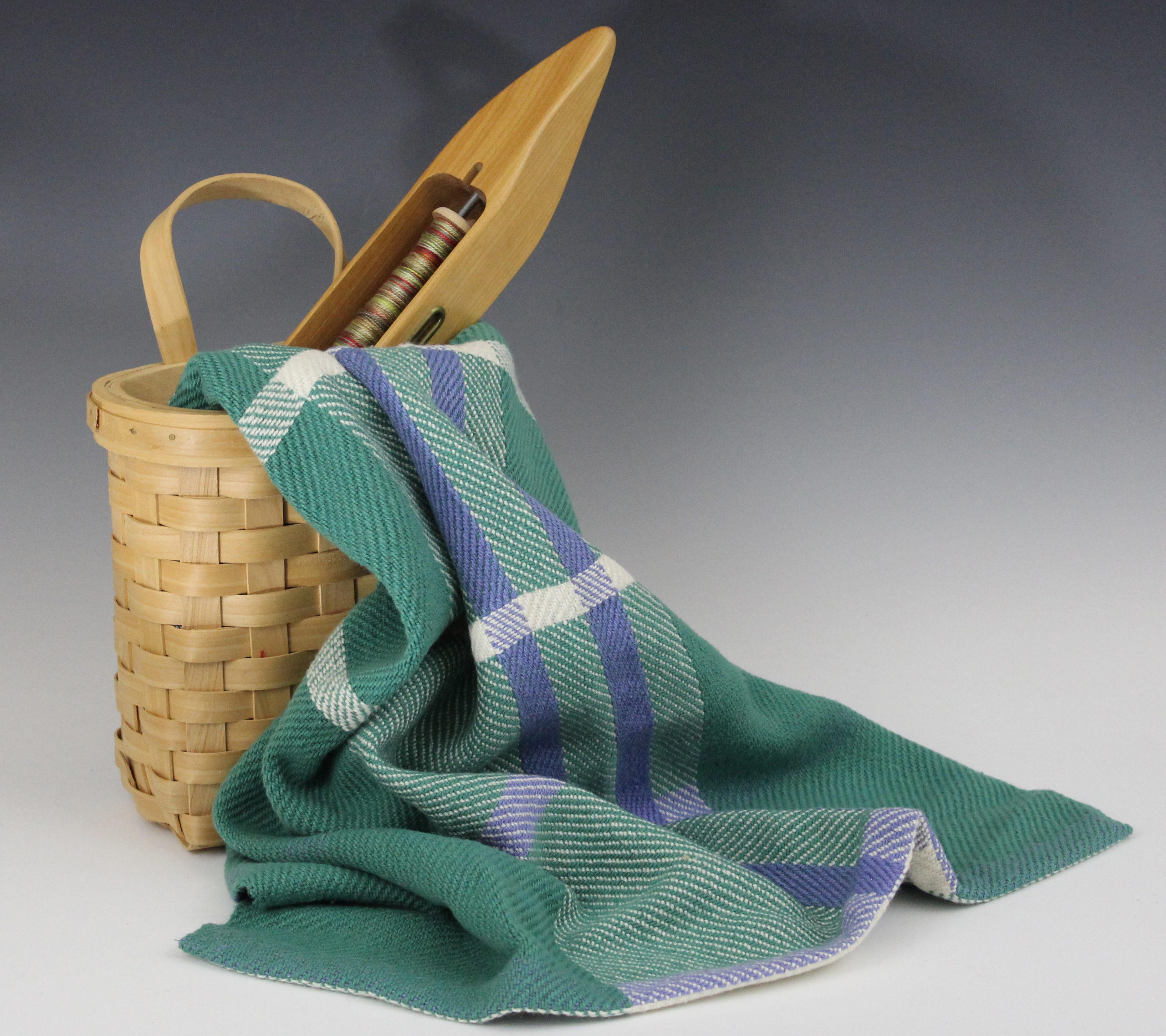
I used a 12 yard warp of 8/2 ring spun cotton and used Brassard’s 8/2 cotton for weft in the color Vieu Blue.

The towel was machine hemmed.

I love weaving these towels as the pattern is so easy to memorize and you can just weave almost without thought. The easy simplified threading I used makes threading the heddles an easy task.

MAFA2021-039

Note that the heddle count is significantly greater for harnesses 2 and 3 and minimal for harnesses 1 and 4.

MAFA2021-040

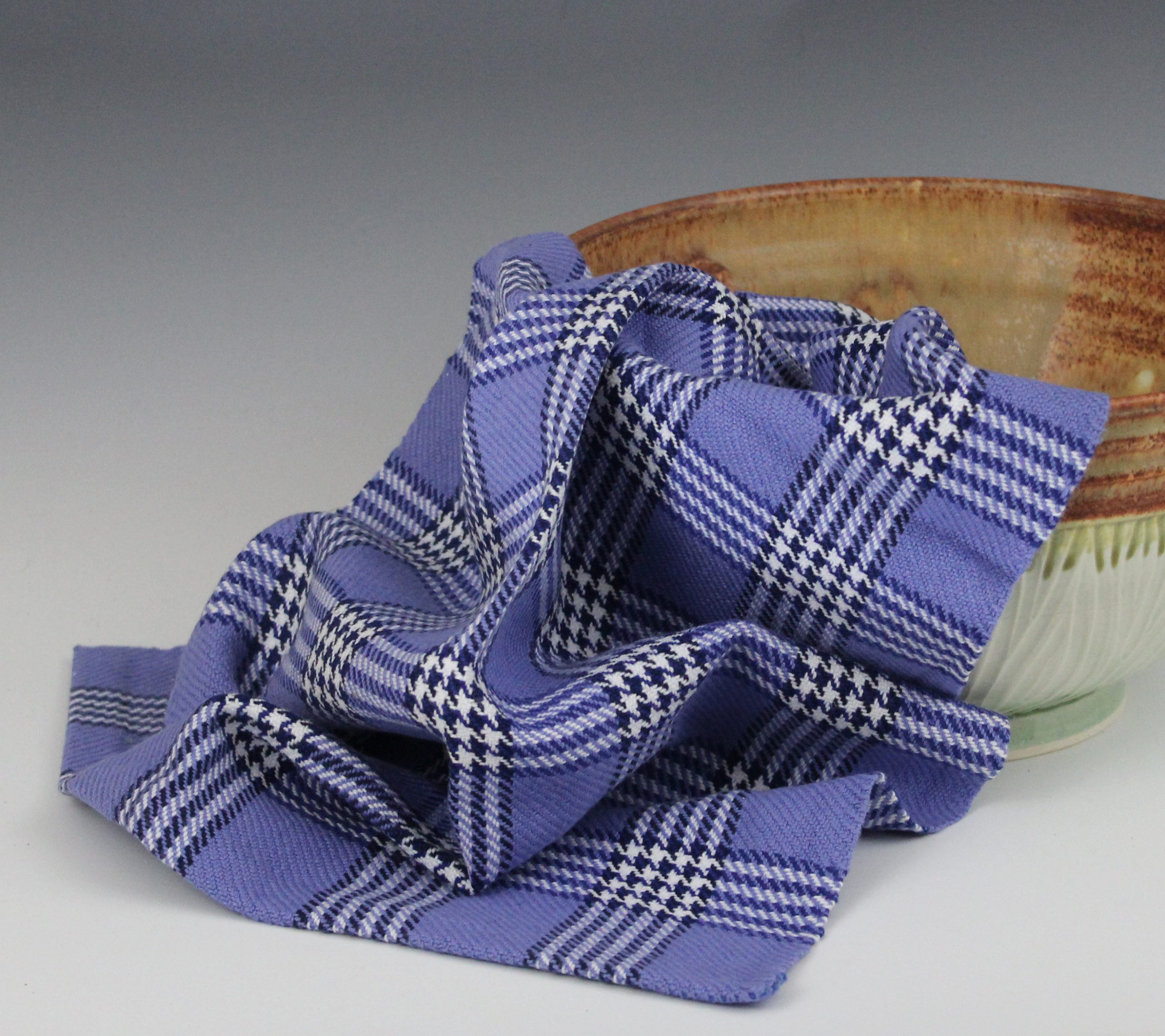
I was introduced to this pattern, “Checked Houndstooth,” in a Scandinavian Towel class taught by Melissa Weaver Dunning. This traditional design can be found in Simple Weaves by Birgitta Bengtsson Bjork & Tina Ingell, p. 92.

Warp is wound 36 Periwinkle, 4 Marine, 4 White, 4 M, 4W, 4M, 4W, 4M, 4W, 4M—a total of 72 ends in one repeat, ending with 36 Periwinkle to balance. Add an extra 4 threads for EACH selvage, doubling the first and last four threads. Weft color order is the same.

Materials used were 8/2 Brassard Cottolins in Periwinkle, Marine, and Blanchi (White).

MAFA2021-021

I created this draft as a sketch and then modified it as I wove. I had intended to warp it in three sections: ABA. Somehow, my B section became 2 sections when I inadvertently went from beige, white, beige to white, beige, white in my threading.

I love my “happy accidents,” but they are difficult to share with others.

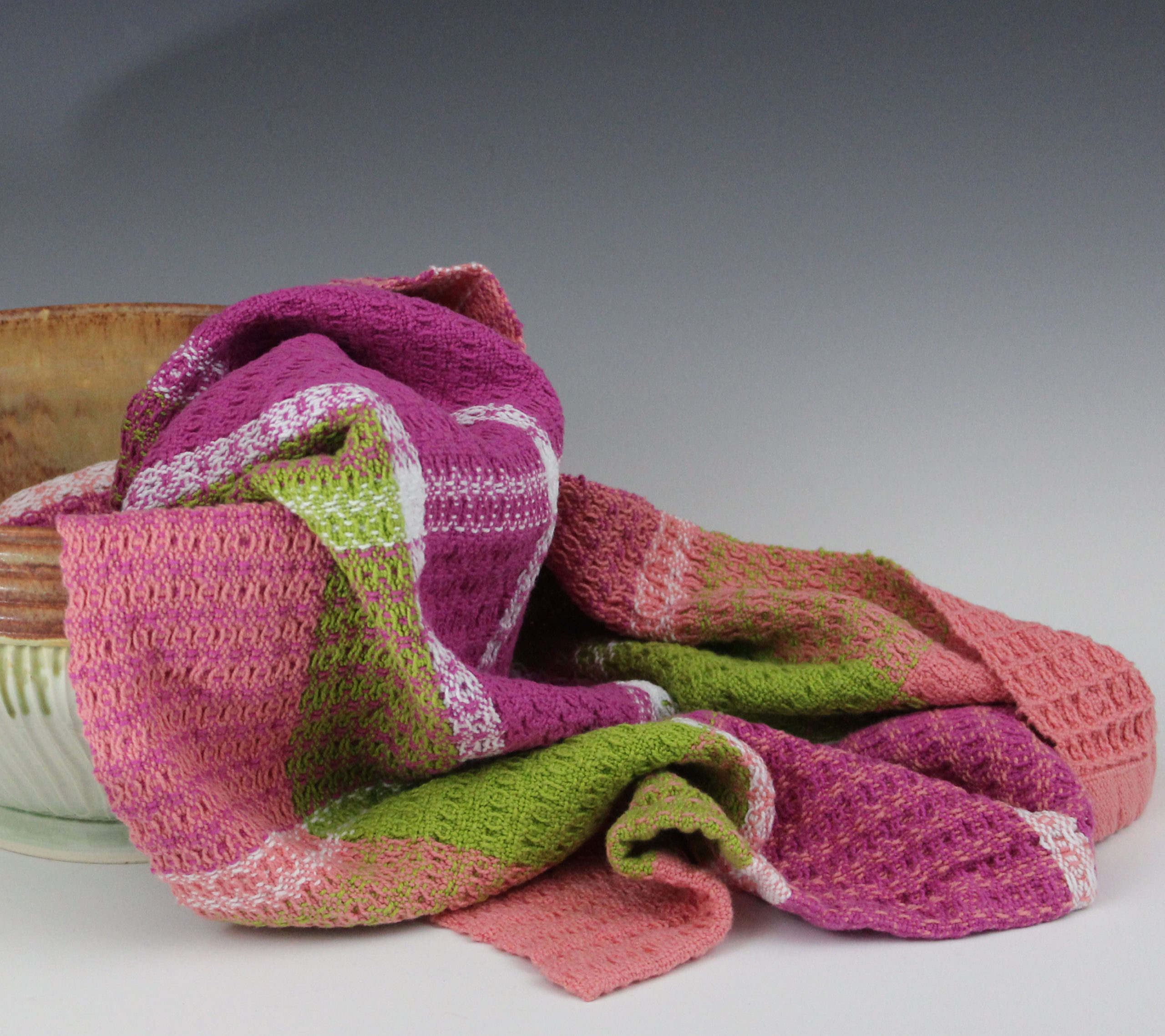
MAFA2021-022

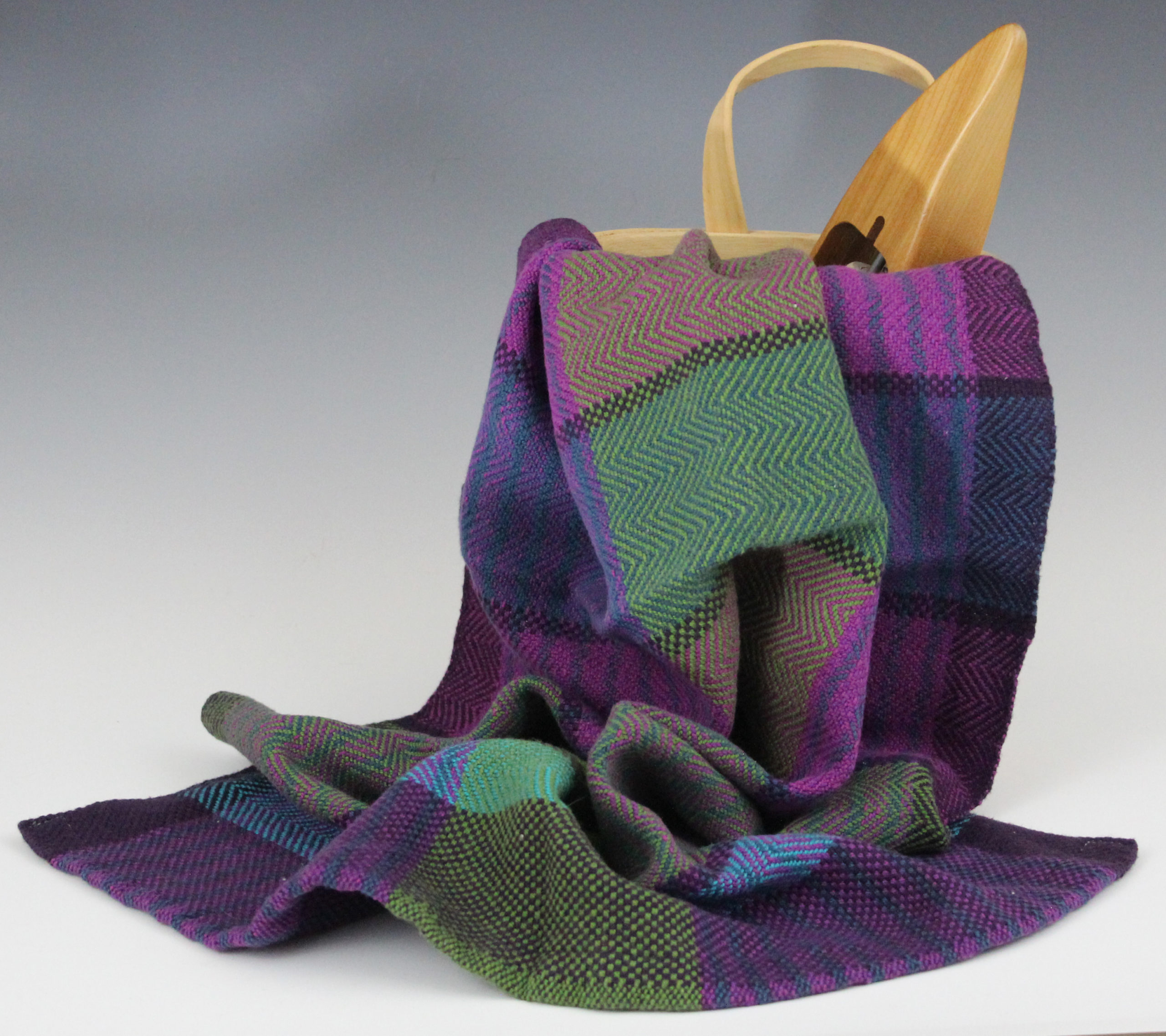
I always loved the look of turned twill and Jane Stafford renewed my interest with her lesson in her Online Guild. The colors in the towel were inspired from a clothing tag that I’ve held onto for years. I also love purple and green and they remind me of spring. In hindsight, the natural color section in the warp is probably too wide. I did have some issues with the combination of cotton and cottolin yarns in side by side groups. The 8/2 cottolin appeared to be at a tighter tension, making the natural 8/2 cotton slack, and creating some difficulty with missed threads while weaving.

MAFA2021-023

My towel has a combination of twill treadling with narrow strips of basketweave to outline the weft color changes. This was a simple project with lots of opportunities for different outcomes by changing tie-ups and treadling.

MAFA2021-024

This was fun and fast to weave.

24 epi
24 ppi
576 ends and 2 floating selvages

I simplified the treadling for a less busy effect.

Before finishing: 26″ long x 22″ wide
After finishing: 22″ long x 20.5″ wide
Shrinkage: 22%

Machine wash cool, normal cycle; 20 minutes heated dryer; pressed

MAFA2021-025

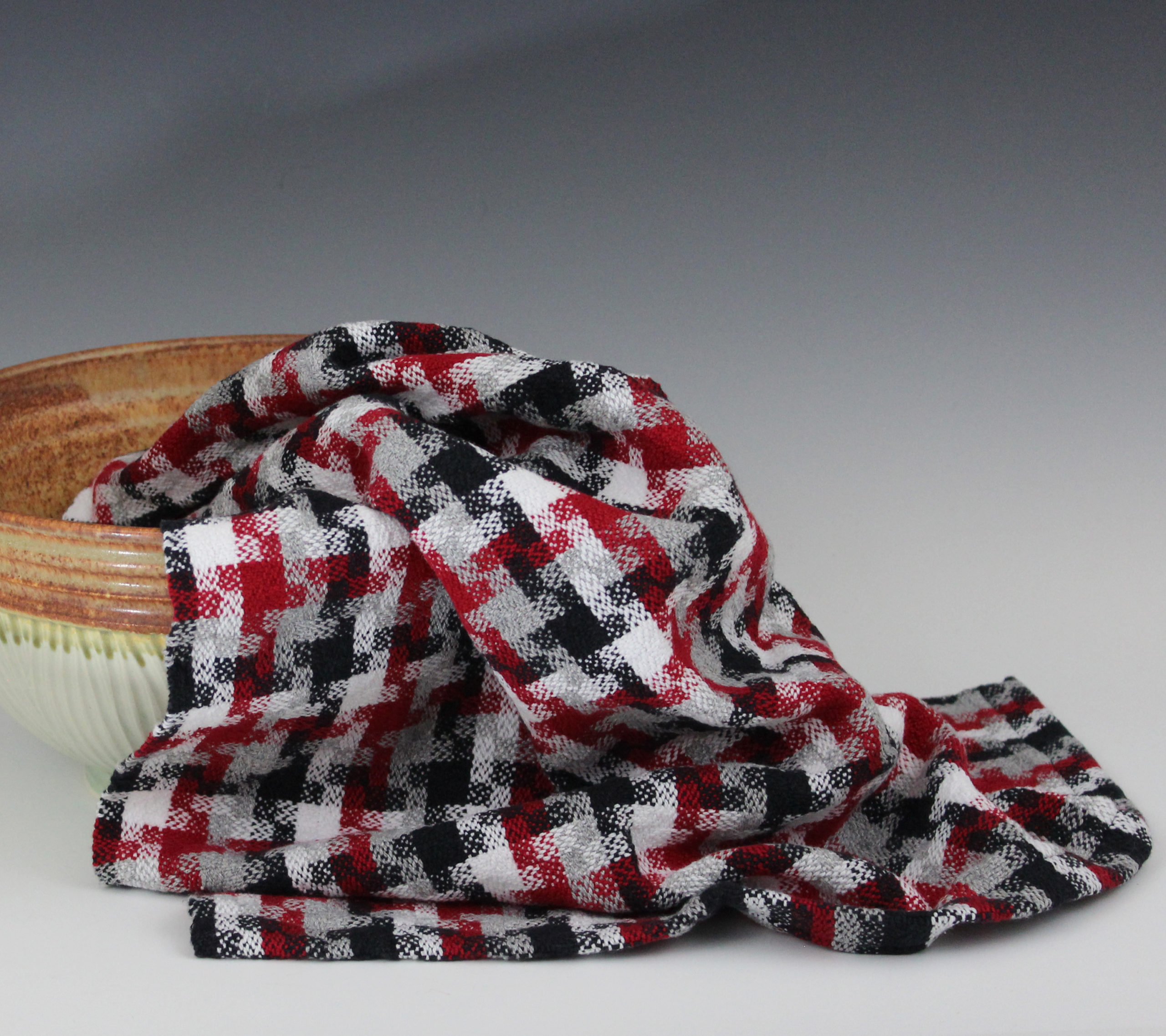
Twill blocks in 4 warp colors (red, black, grey, white) with block changes not coinciding with color changes. Blocks were woven as 3/1 and 1/3 twill rotating the same four colors as the warp. Color changes were made every 16 picks, alternating which side the new color started on to reduce bulk of weft ends.

Width in reed was 24″. The towel finished width (draw-in and shrinkage) was 21.5″. Towels were woven with 1 3/4″ hem, 36″ pattern, and 1 3/4″ hem under tension. Finished towel length after hemming was 30.5″. PPI were approximately 22 under tension.