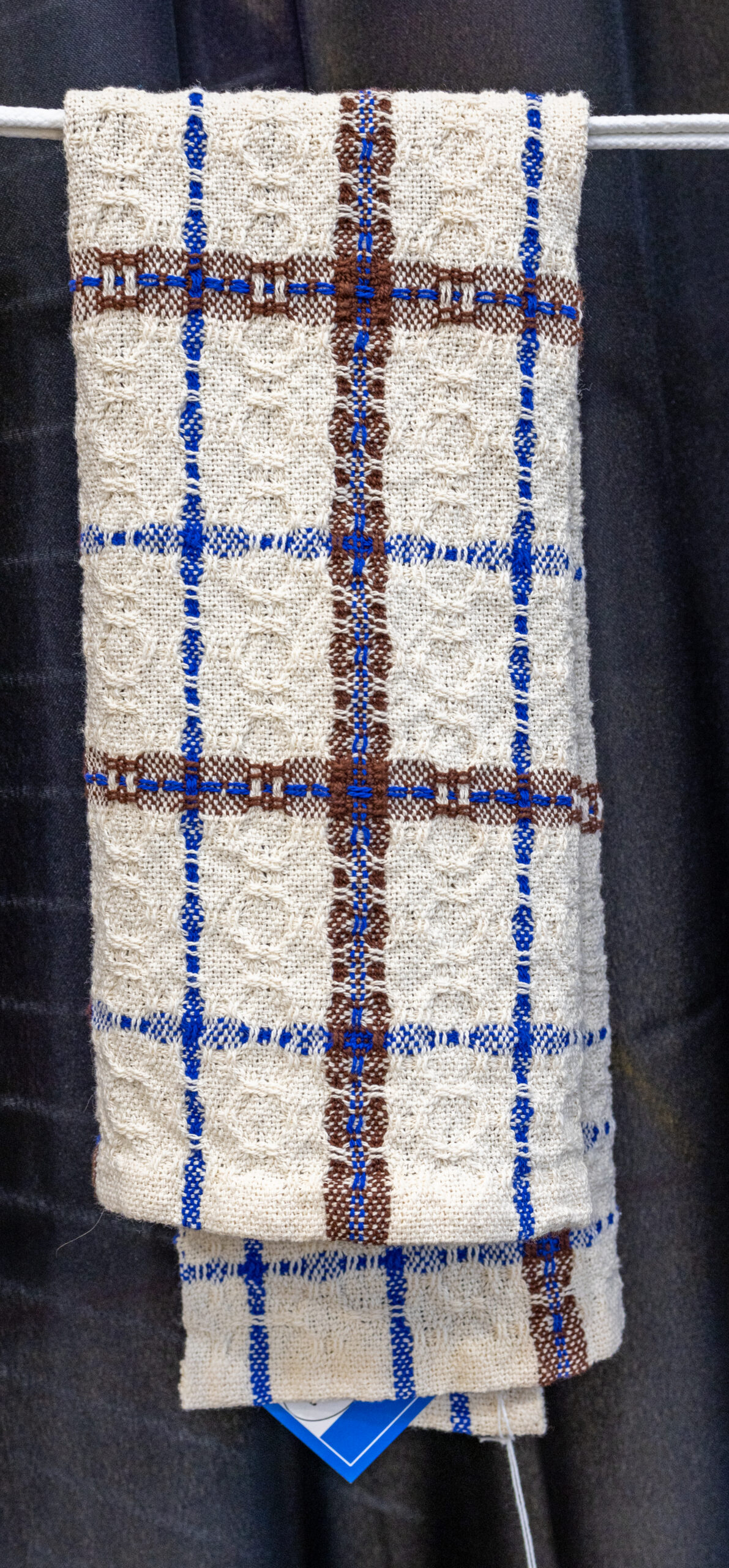
MAFA2025-3806

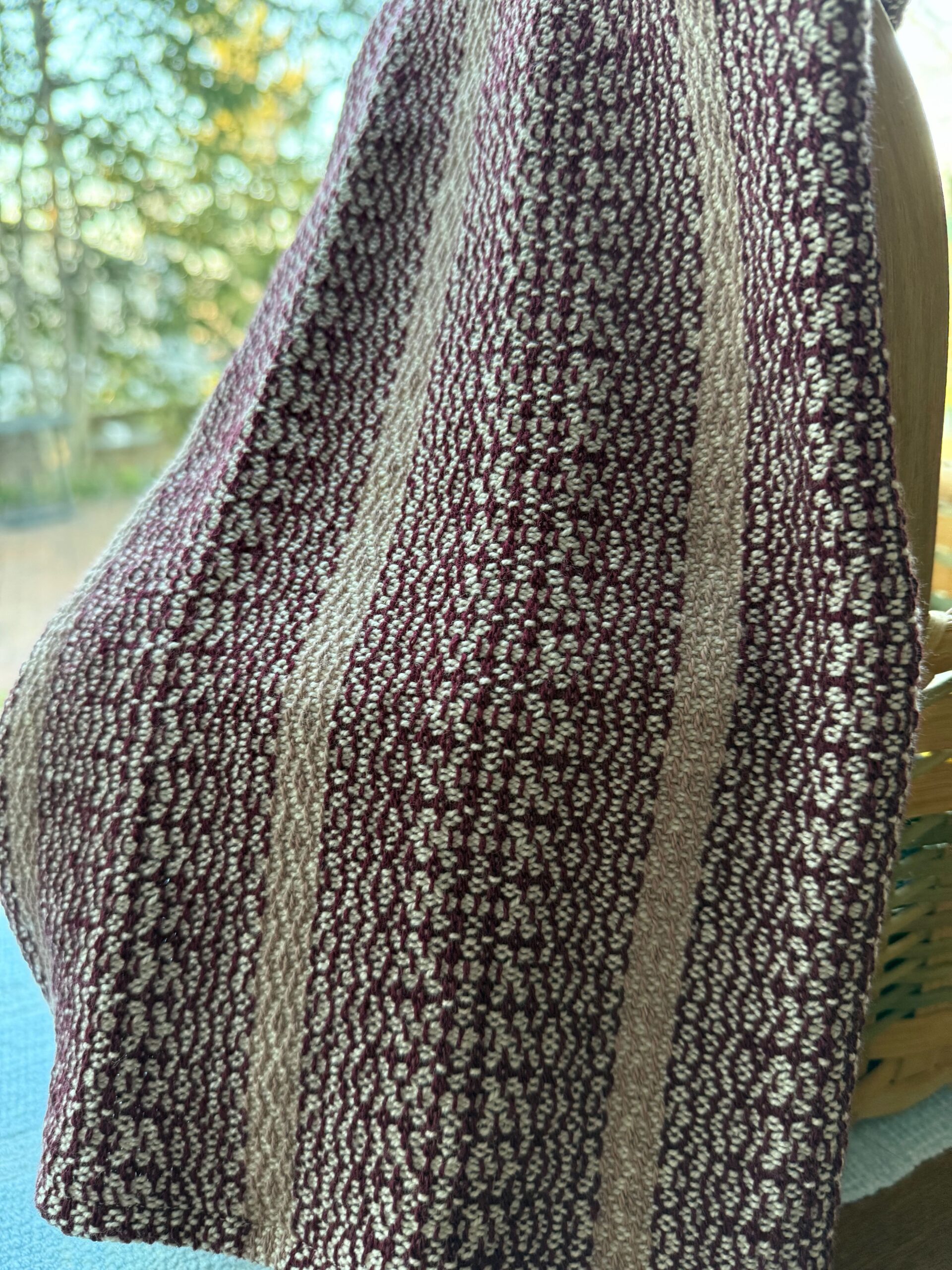
This is the fourth project I have done with this draft. I have enjoyed the interplay between the colors.

The weave is designated to be ten pattern repeats – I have done eight at a time, except in the persimmon weft – then I did four.

My hems are thinner yarn – 20/2 cotton. There is no plain weave with this draft so I used 2,4 alternating with 1,3 for the hems. This is as close as you can get to plain weave.

As always, washing this fabric makes all the difference.

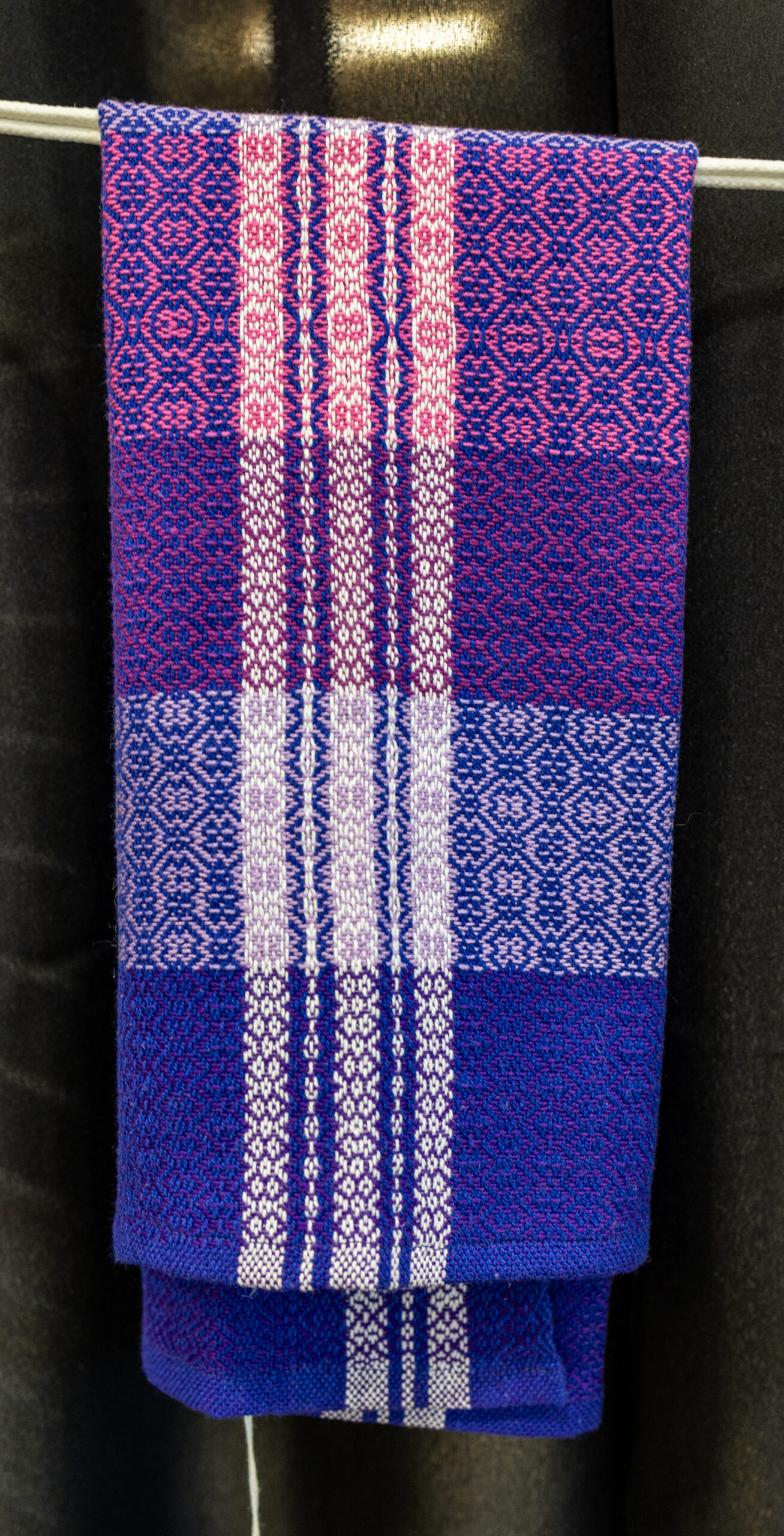
MAFA2025-3797

Adding a quarter inch of plain weave at each selvage makes weaving this a lot easier. you don’t have to worry about floating selvages and oddness at the edge because of floats. Same goes for the plain weave at the ends. It’s much easier to hem a plain weave towel on the sewing machine. I have also found that adding some fray check in addition to zig-zagging the raw edge of the finished towel, makes it easier to hem the corners. Also, do not attempt to machine hem this towel unless your sewing machine has a heavy duty motor.

MAFA2025-3786

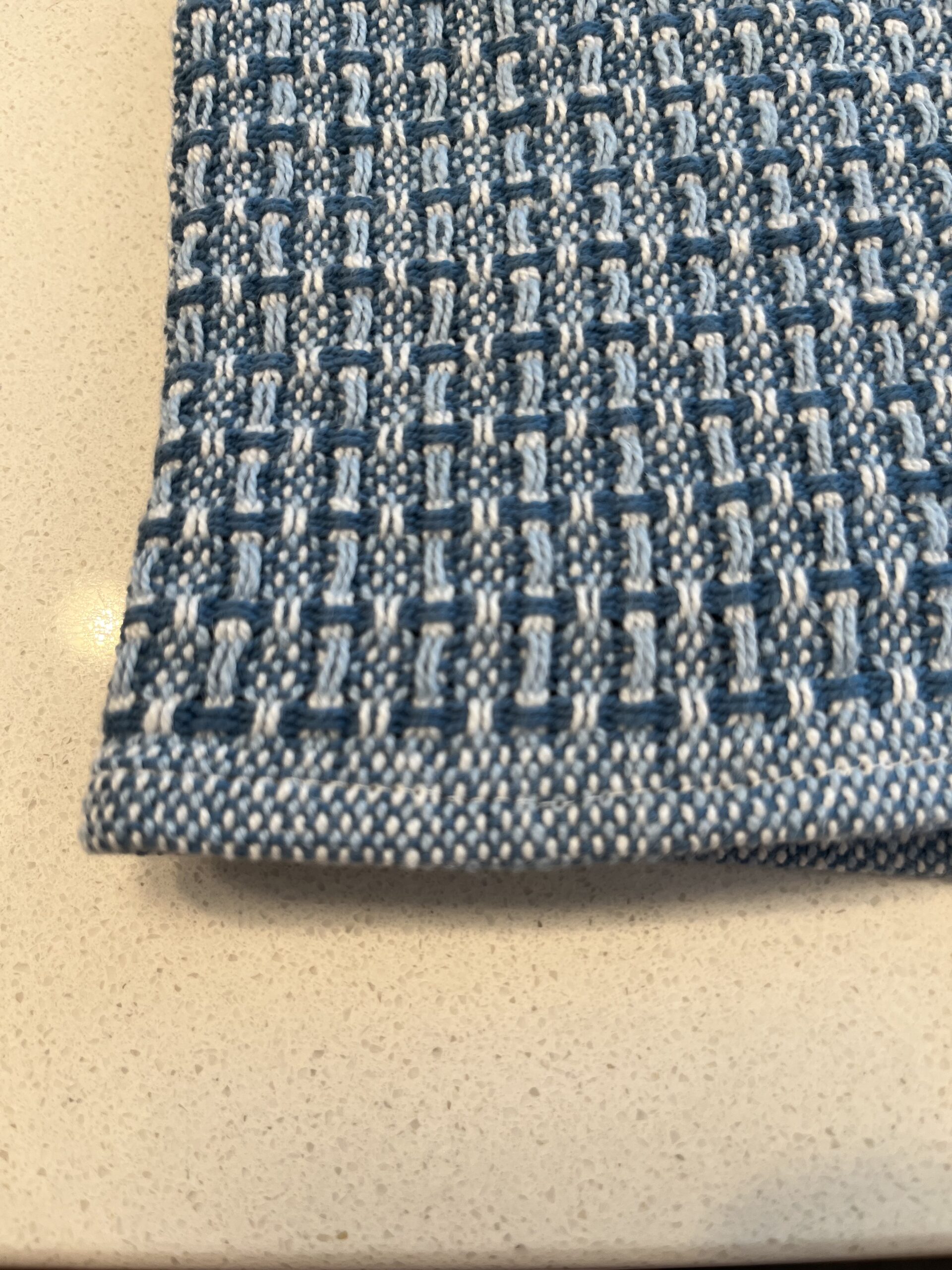
I began with a traditional 4 shaft rosepath threading and then added some basic twill threadings for different stripes in the warp. The final combination is my own design. In total, 461 ends were threaded so it is important to count heddles before starting to thread the loom. I used a 4 shaft direct tied up floor loom for the various towels I wove on this warp.

The treadling in this draft is an advancing twill with reversing points.

MAFA2025-3769

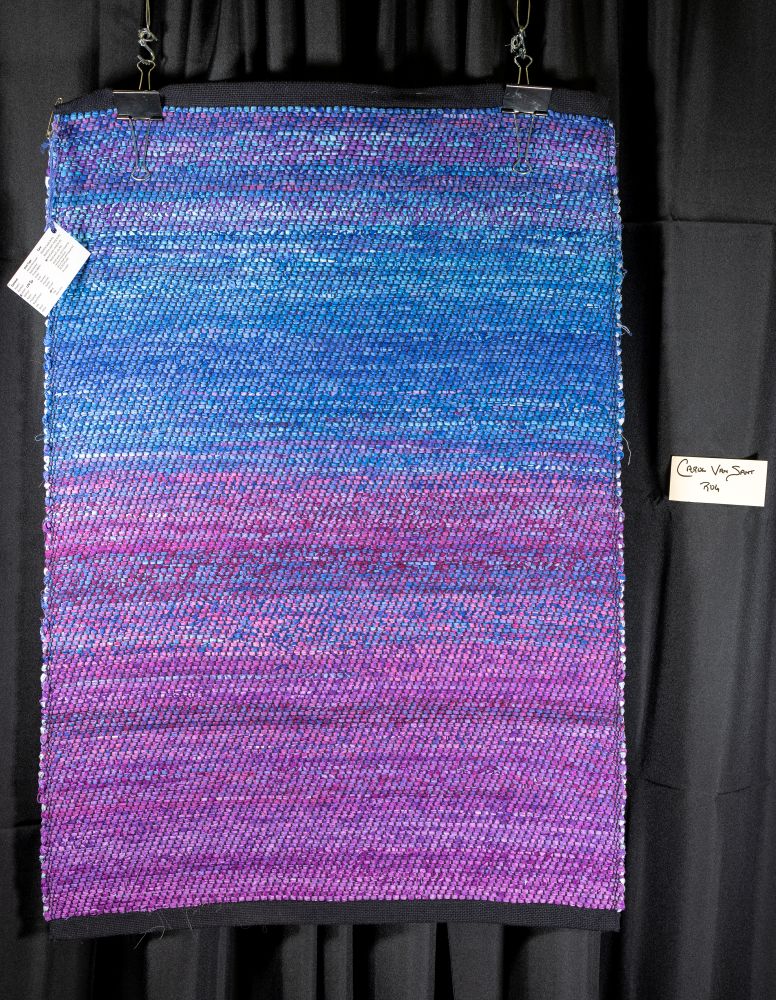
For the blue/purple side of the rug, I tried to weave the fabric strips in to create a movement from blue to purple. I chose the backside fabric to be a contrasting color to the front. The hems are based on Tom Knisley’s hem pattern.

MAFA2025-3749

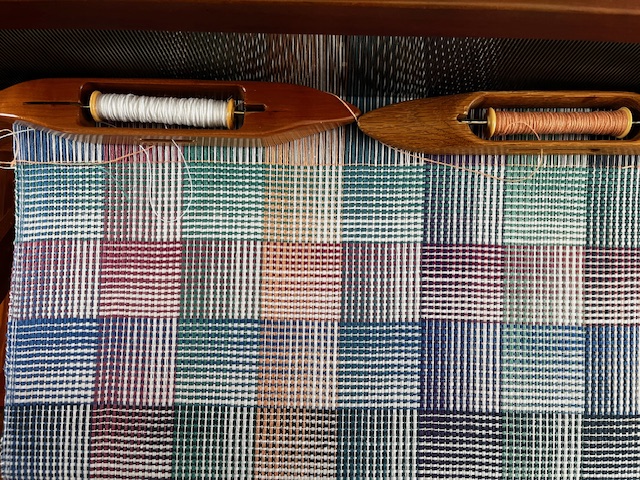
This towel is based on Erica de Ruiter’s Shadow Towels. I have added 12 warps ends on each side to improve the selvedges. Veronique Perrot and Lisa Hill have also been valuable for information for this project.

This can be woven on a 2 shaft or rigid heddle loom.

When weaving, use the outer two threads as a floating selvedge. The 12 ends are used double as 6 working ends in the heddles and reed. You will weave as many as three picks in the same shed and you will need to rely on the outer threads.

I used white 8/2 Brassard cottolin for one of the yarns. The 22/2 Bockens cottolin was from Vastuga in 8 different colors that I had in my stash.

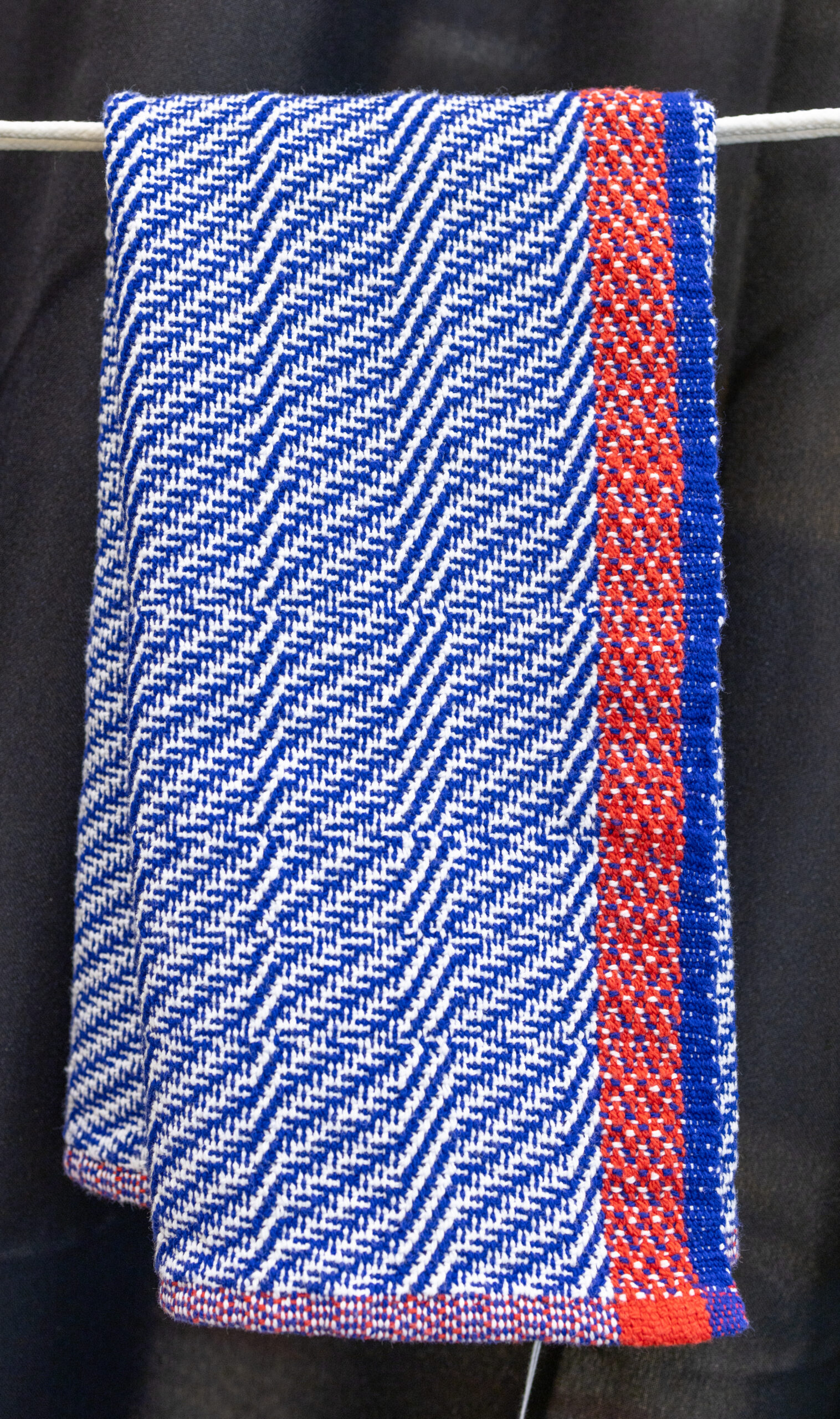
MAFA2023-043

This was my first ever kitchen towel project! It also was my first shaddow weave!

My inspiration was thinking about an American flag and how the stripes would undulate if the wind were blowing.

I chose to shadow weave in blue and white vs red and white to maximize the contrast of the yarns.

This design was created for my submission to the Woolery 2023 Weave-Off. My warp was long enough for me to make several towels and I’m happy to share one of them as part of the towel exchange.

The trickiest part of this project was that some of warp threads wanted to cross. This resulted in 2 white threads or 2 blue threads being next to each other at a few places in the warp. It wasn’t particularly noticeable in the waves but it was quite obvious in the weft picks that became the hem. It’s not clear if this was a tension issue or if the sett could have been decreased. Getting them to uncross when weaving the hem picks is possible but tedious.

In the attached WIF and reading from right to left, the first 88 warp threads are the pattern and can be repeated. For the finished towel, I repeated this 5 times and then transitioned back to the hem portion.

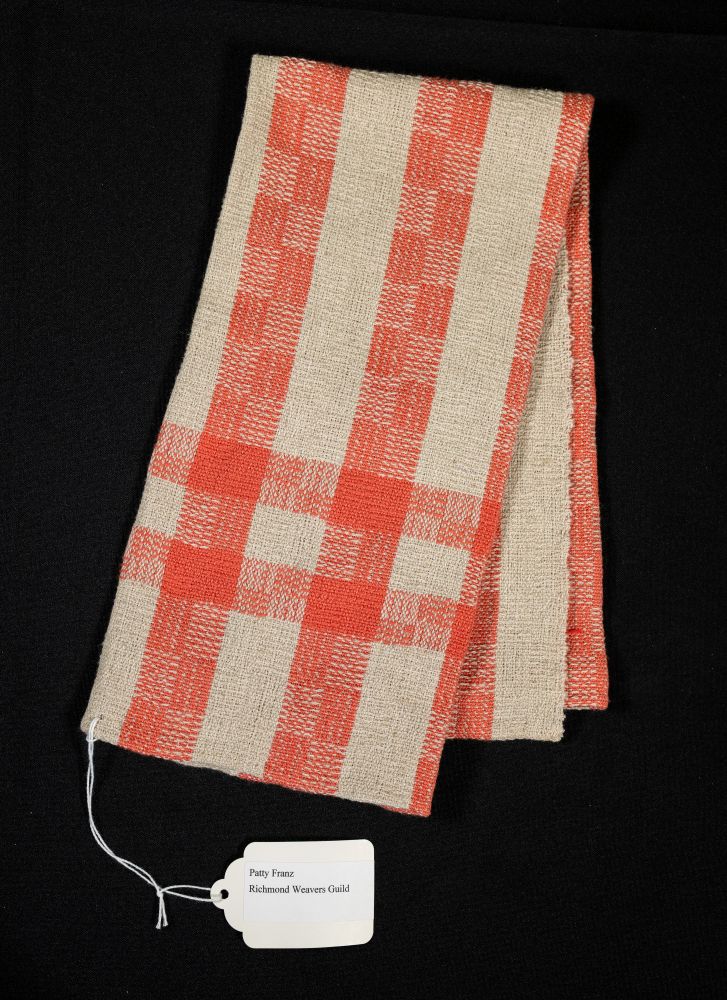
MAFA2023-040

Towel uses 2 variations of treadling with a traditional M & W twill pattern. Vary treadling and colors as desired. Floating selvedges are incorporated. Hems are woven with plain weave, folded and machine stitched. WIF file shows 2 options for colors and treadling. There are many more options.

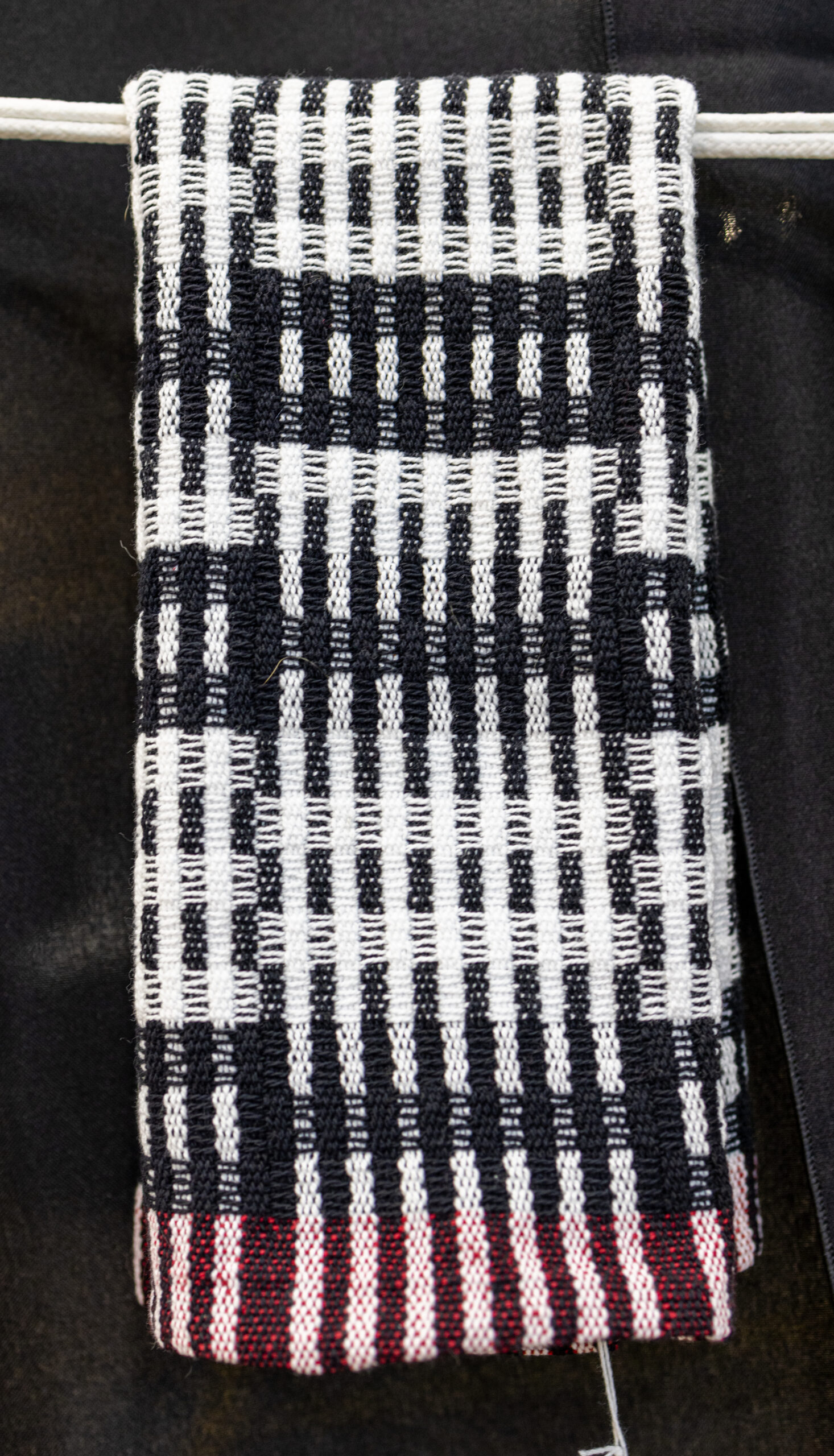
MAFA2023-035

Each warp stripe is 6 ends wide, alternating black and white except between wider sections where I doubled the black stripe. Weft stripes can repeat as much as you like.

This pattern was inspired by my recent trip to New Zealand and the preponderance of black and white checked fabric I encountered there. White represents good and black represents evil. The red used for the hems represents blood or life force.

I adapted this pattern from an episode of Jane Stafford’s online Weaving School and a pattern she offers entitled “Mocking Around.”

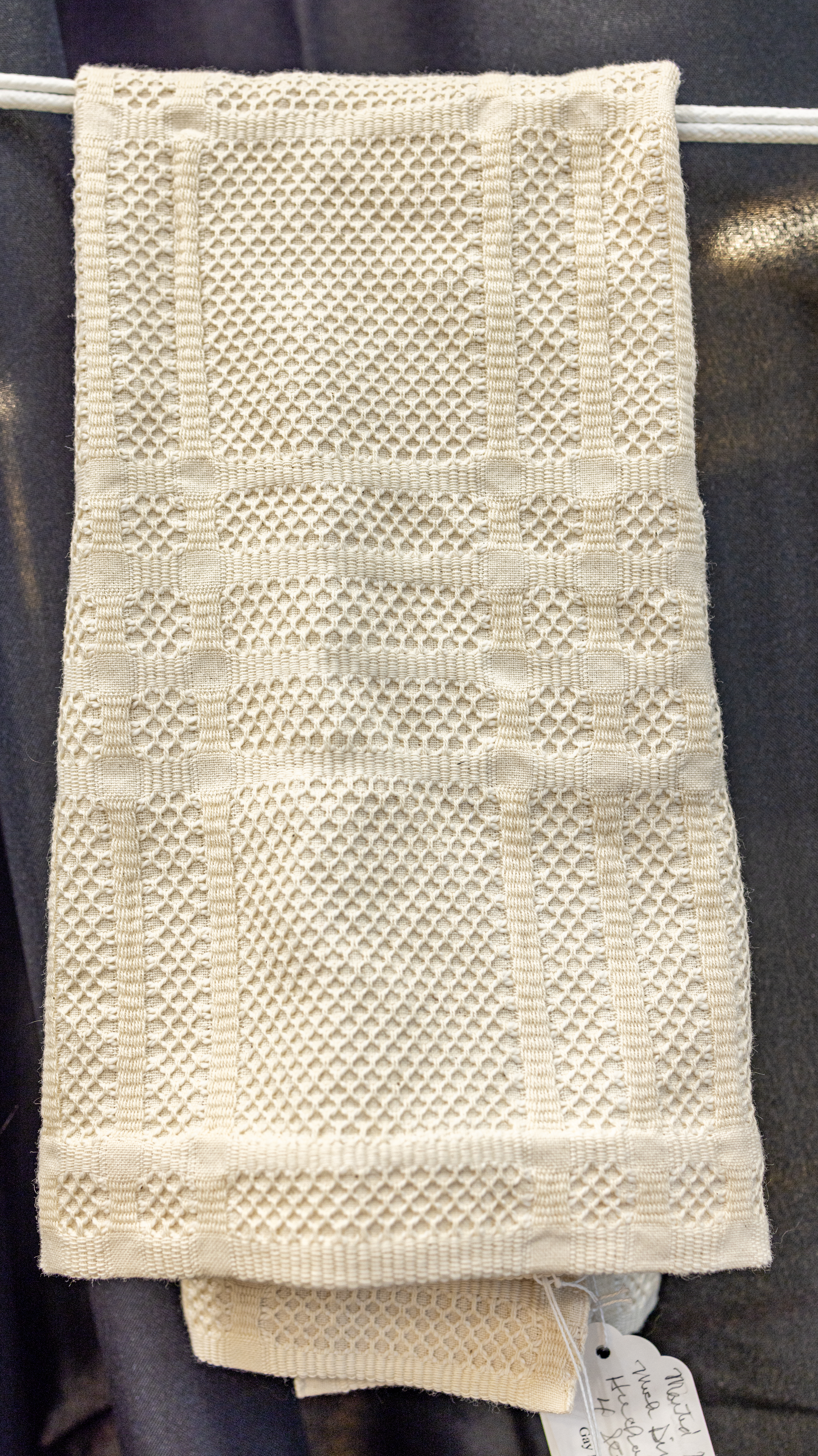
MAFA2023-031

I wet finished the towel by boiling it in water with dawn detergent for one hour and laid it flat to dry.
I used a 19th century draft for a southern counterpane from Martin Marshall an Alabama weaver. I have not been able to find the original owner of the draft attributed to a private owner in the Made in Alabama book.

MAFA2023-030

This basic design was on the Handwoven Magazine website but woven in huck lace on 8 shafts. I liked the design and wanted to try some Swedish lace on 4 shafts so I modified the design and moved blocks around using weaving software. When I found a threading I liked, I could weave different towels by altering the treadling blocks and adding or deleting horizontal color stripes.