MAFA2021-050

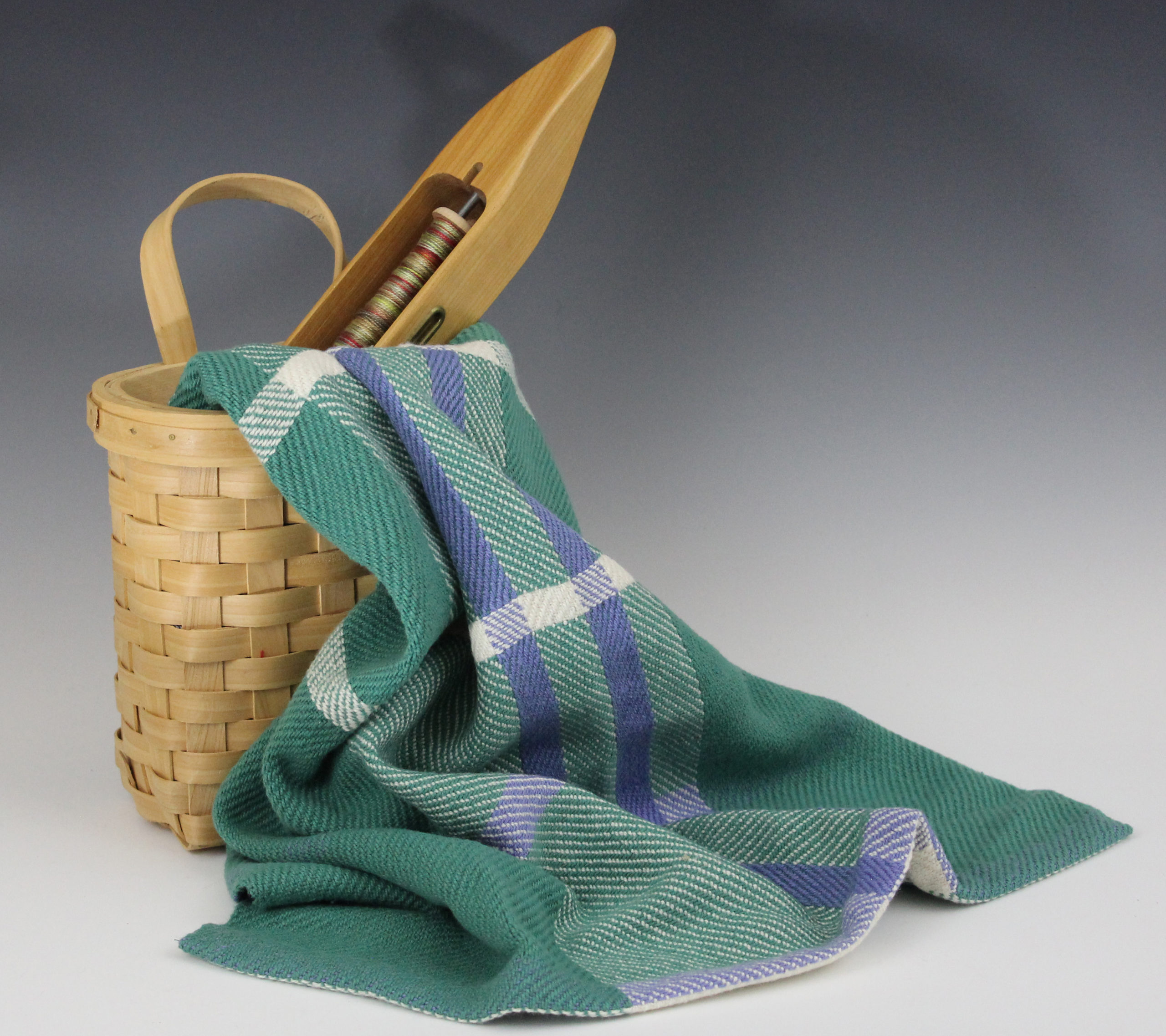
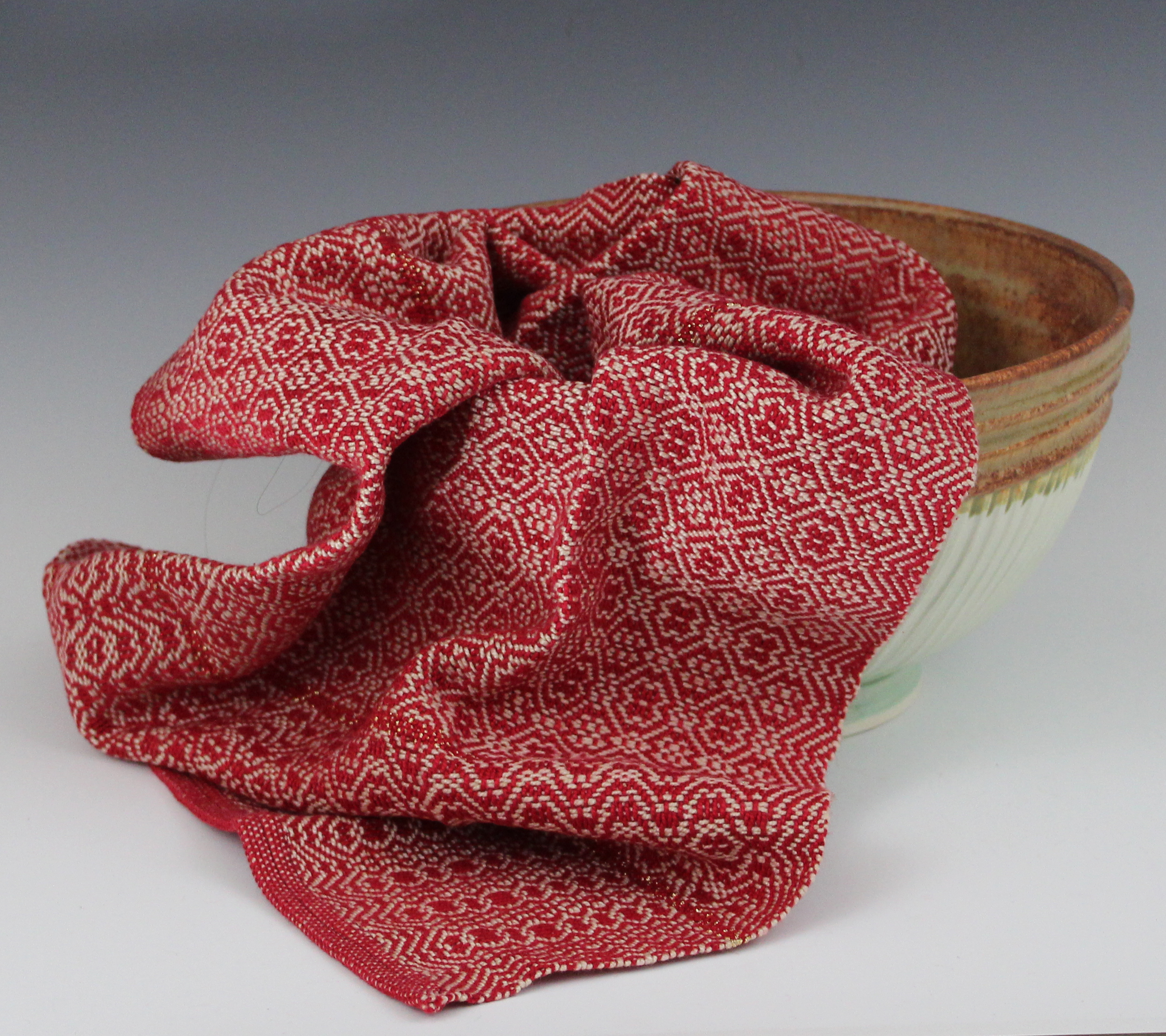
I selected this pattern because I liked the geometry. I learned more about block patterns and how they are constructed. Strickler’s book notes that this draft, woven by Barbara McClanathan, is a 2 block twill adapted from Väv Magazinet, 1984, Nr.4, pages 20-21.

Here are more details on the loom set up, warping, and weaving.

Shaft    1    2   3   4    5    6     7   8
Count 46 46 46 46 80 80 80 80

Valley Yarns 10/2 Cotton—a very sticky yarn that made threading a challenge. Floating selvedges broke several times. Had to ease up on the tension. I’d recommend 2 floating selvedge ends per side.

MAFA2021-032

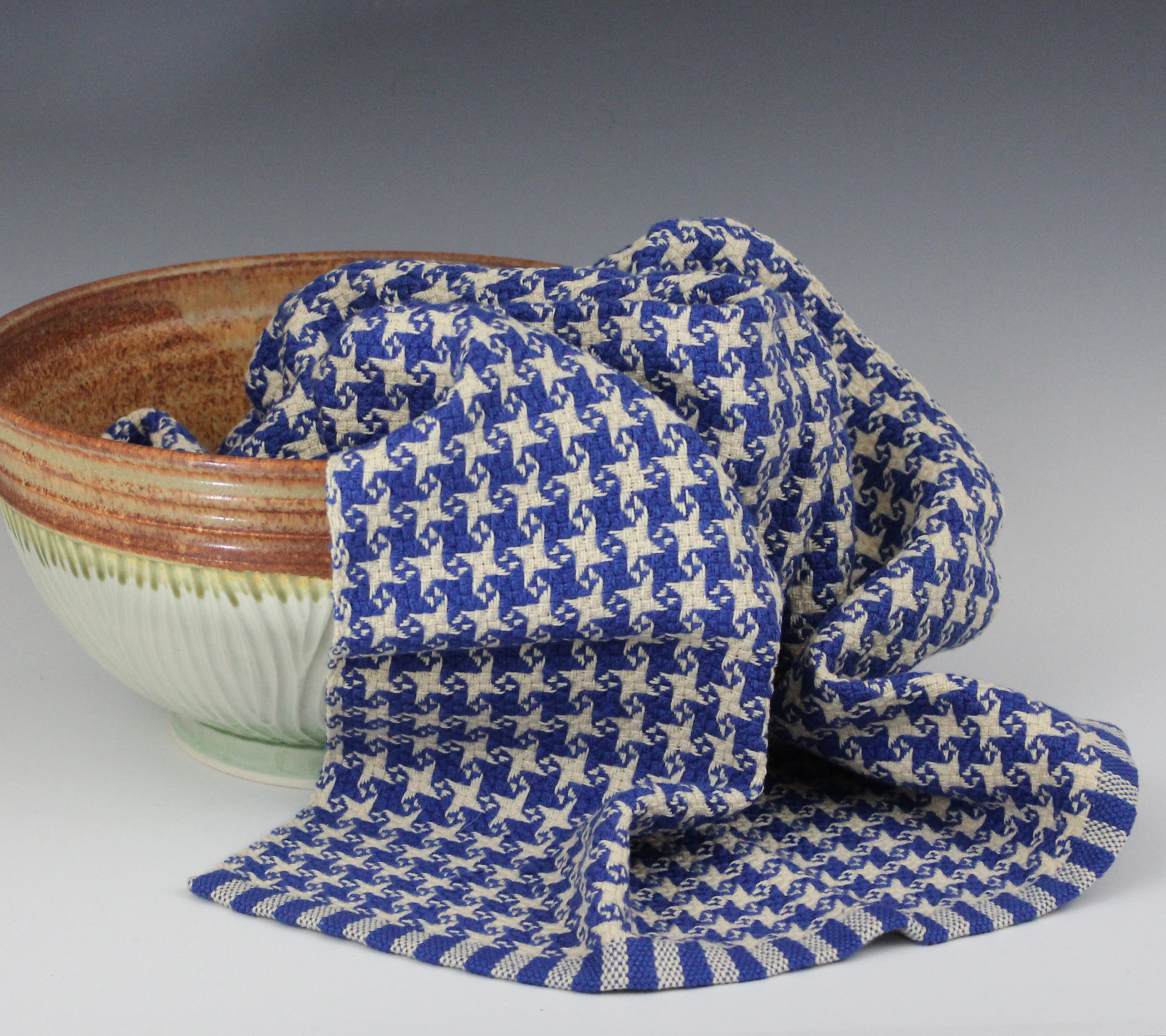
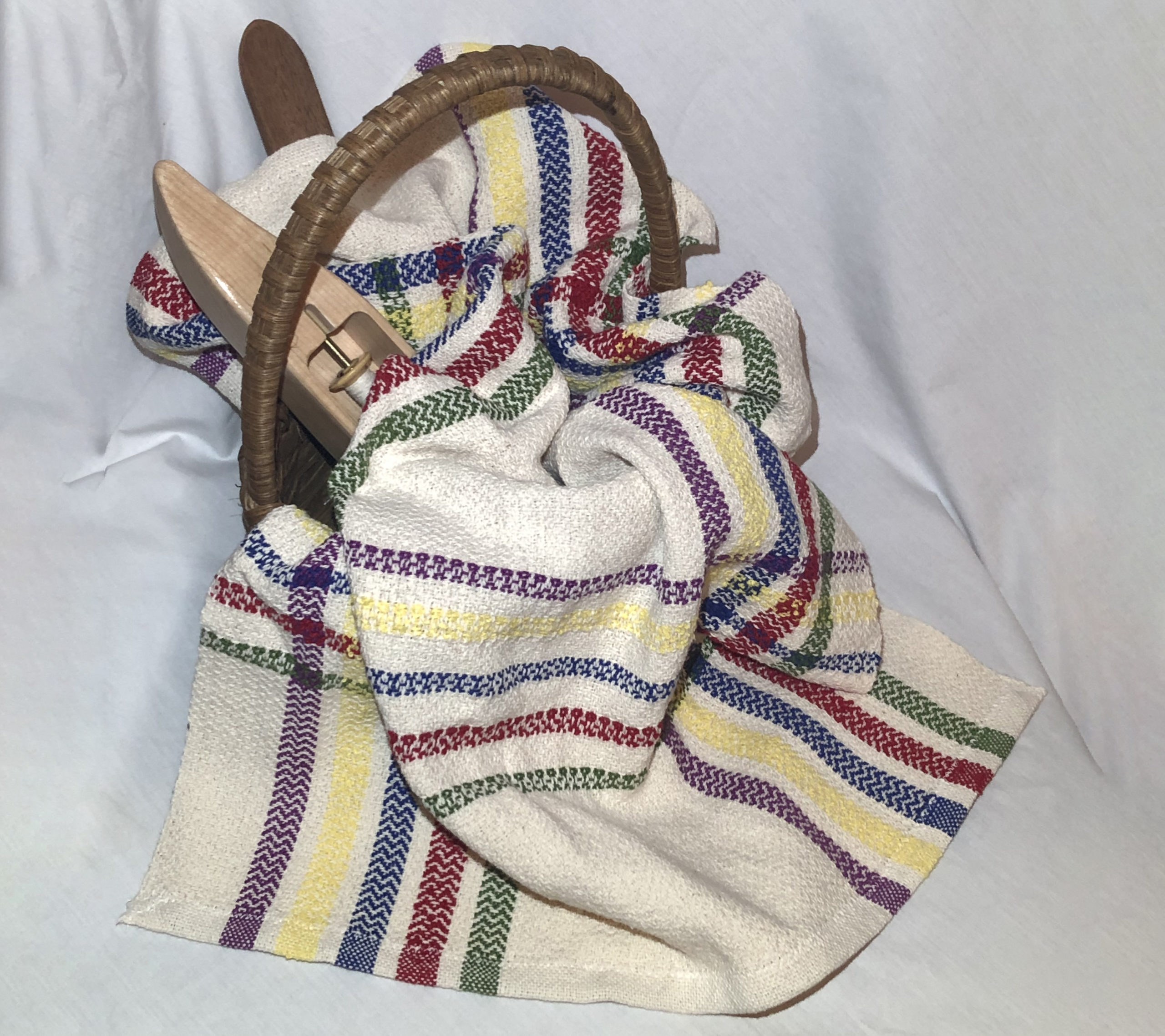
This is the oldest, simplest, and most traditional Scottish tartan. It is variously known as Shepherd’s Check, Houndstooth, or Northumberland (Northumbria) tartan, as that is the area where it originated. I can just imagine those early medieval weavers deciding to add a little variety to their monotonous weaving experience by alternating the wool of black and light sheep. I chose this pattern because Northumberland County (Virginia) is the county where our Guild is located. I first became fascinated with tartans and their history when I took Melissa Weaver Dunning’s Tartan class at MAFA 2019!

You can add any variation of trim detail that you’d like; I used a simple 1 inch all-white stripe about 4 inches from the bottom.

MAFA2021-022

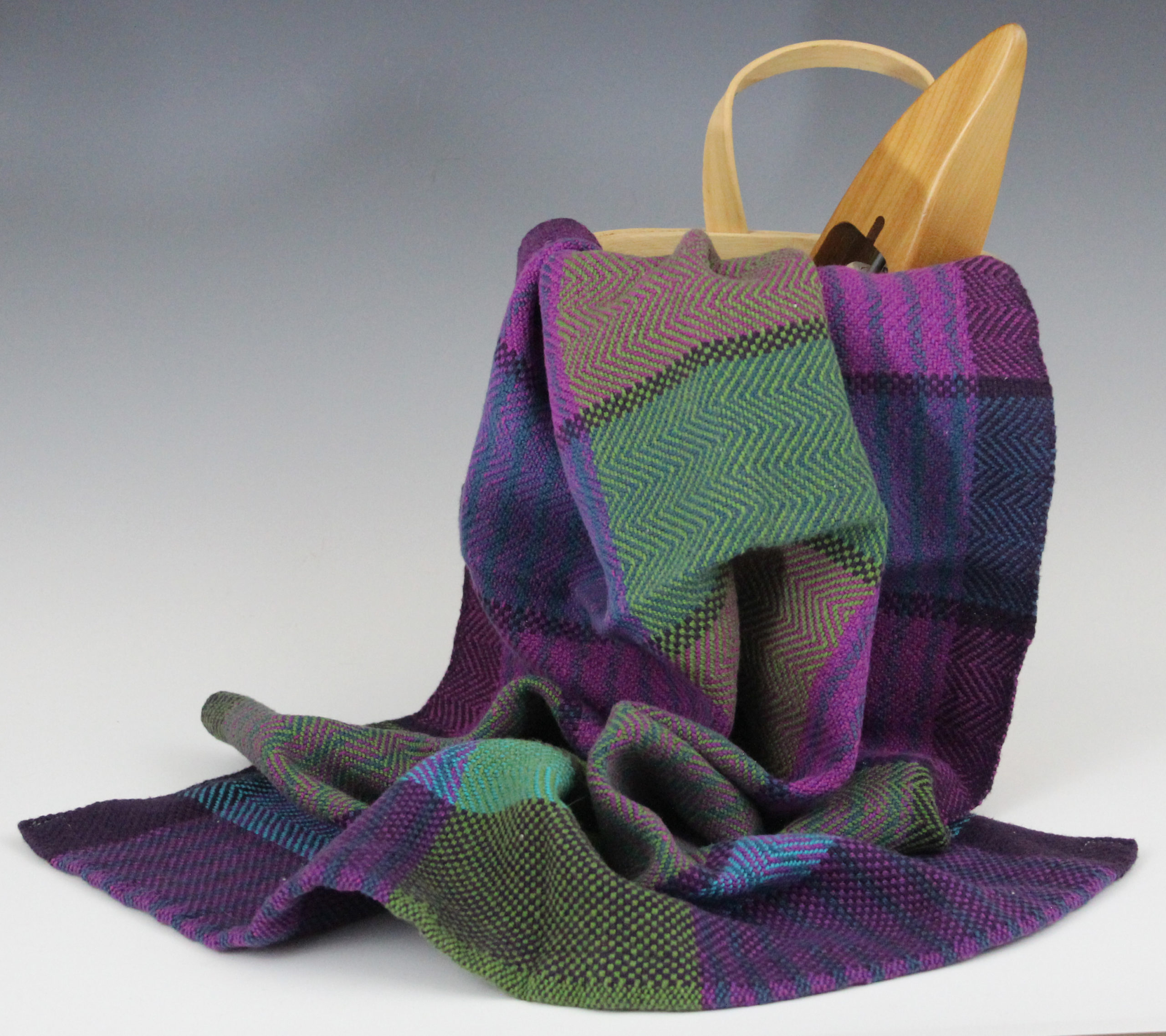
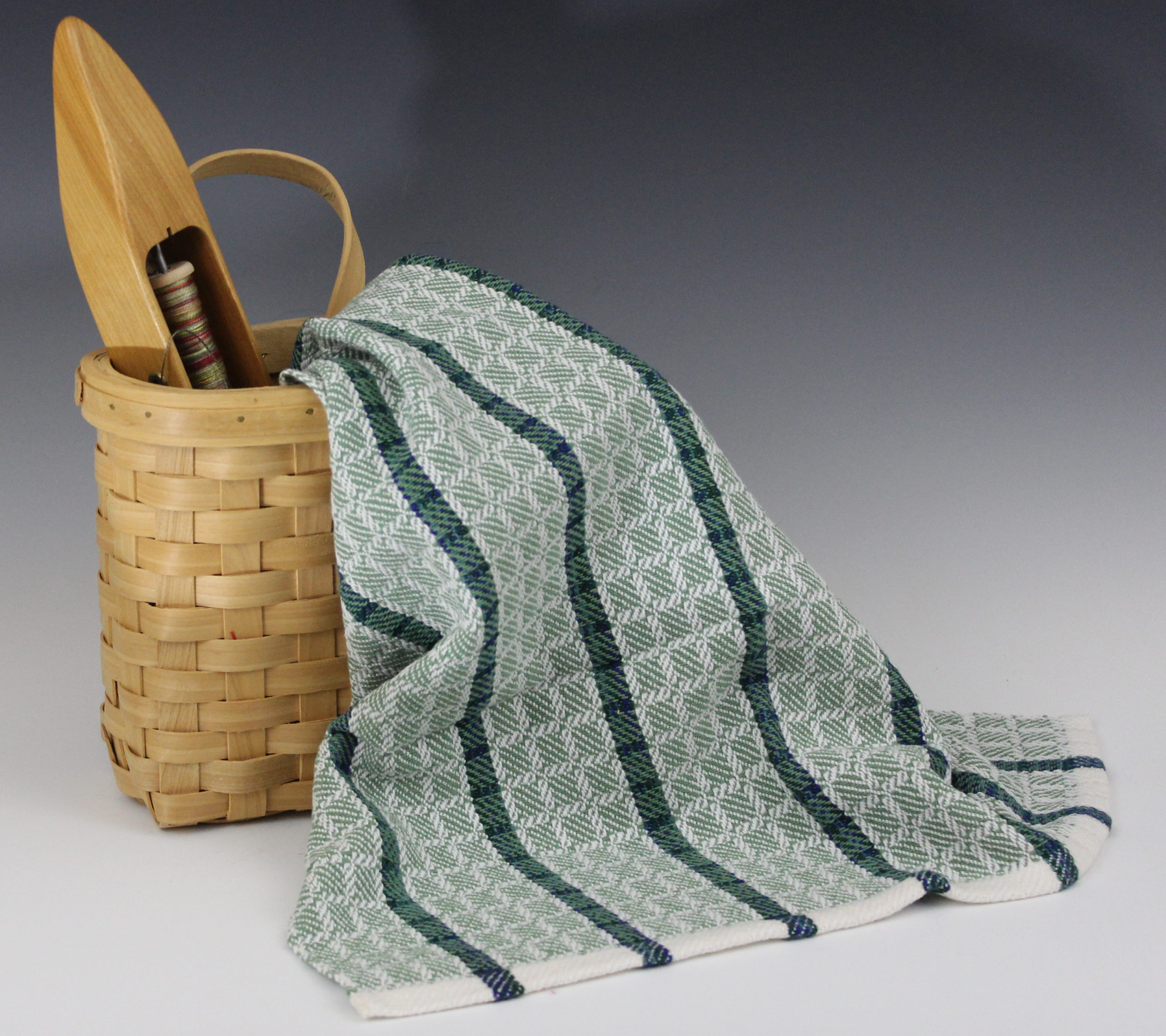
I always loved the look of turned twill and Jane Stafford renewed my interest with her lesson in her Online Guild. The colors in the towel were inspired from a clothing tag that I’ve held onto for years. I also love purple and green and they remind me of spring. In hindsight, the natural color section in the warp is probably too wide. I did have some issues with the combination of cotton and cottolin yarns in side by side groups. The 8/2 cottolin appeared to be at a tighter tension, making the natural 8/2 cotton slack, and creating some difficulty with missed threads while weaving.

MAFA2021-023

My towel has a combination of twill treadling with narrow strips of basketweave to outline the weft color changes. This was a simple project with lots of opportunities for different outcomes by changing tie-ups and treadling.

MAFA2021-026

I used the napkin patterns in the Handwoven article and adapted them. I used the treadling for towel 1.

I began and ended the towel with 1 ½ inches of 10/2 weft to make the hems a little less chunky.

20″ in reed; 30″ long. Warp ends: 488 + selvages.

MAFA2021-025

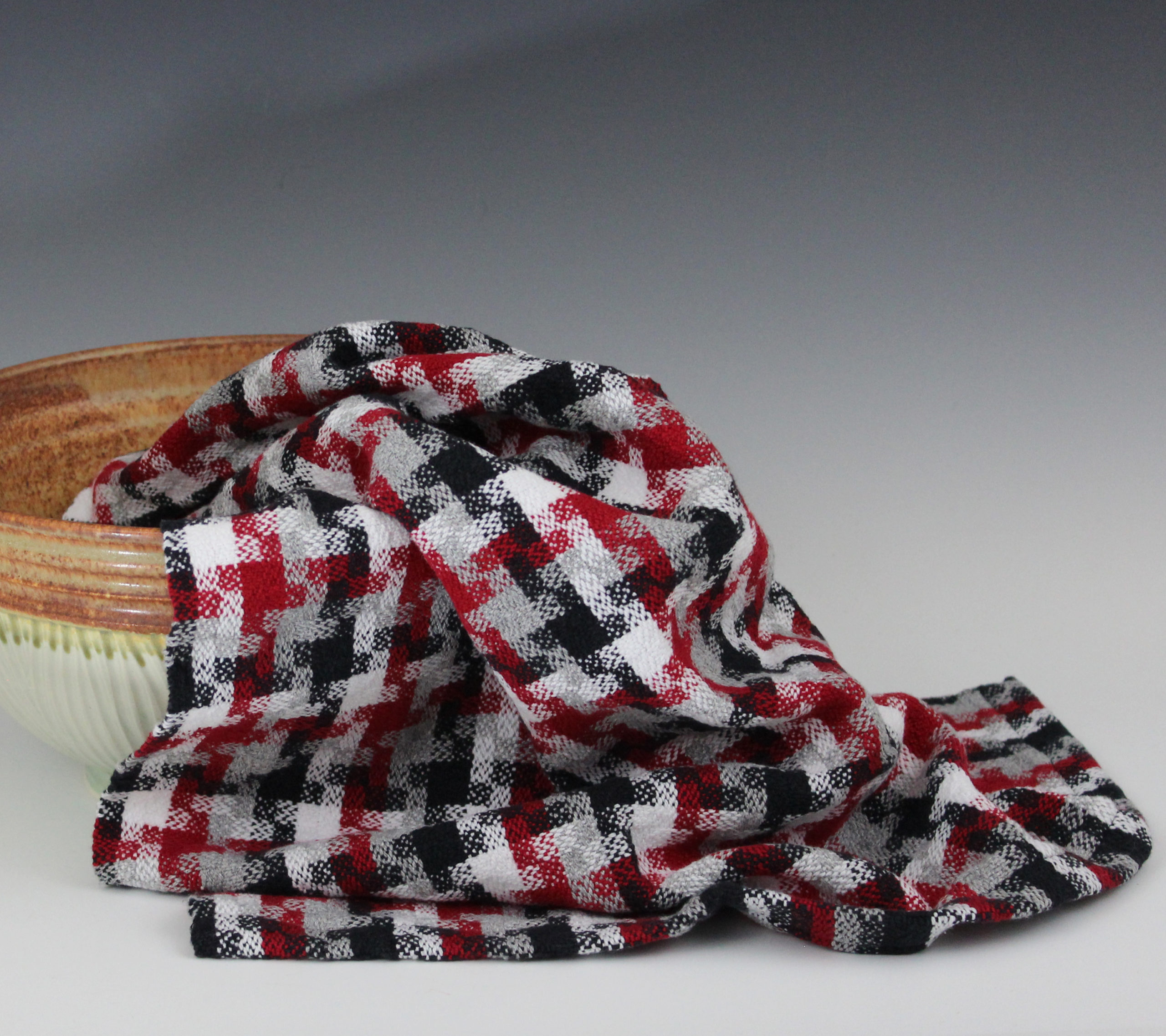
Twill blocks in 4 warp colors (red, black, grey, white) with block changes not coinciding with color changes. Blocks were woven as 3/1 and 1/3 twill rotating the same four colors as the warp. Color changes were made every 16 picks, alternating which side the new color started on to reduce bulk of weft ends.

Width in reed was 24″. The towel finished width (draw-in and shrinkage) was 21.5″. Towels were woven with 1 3/4″ hem, 36″ pattern, and 1 3/4″ hem under tension. Finished towel length after hemming was 30.5″. PPI were approximately 22 under tension.

MAFA2021-012

Traditional twill threadings like the Ms & Ws I used lend themselves to treadling variations. This towel includes straight, point, as-drawn-in, and several variations I “unvented” while playing around with Fiberworks. In the MAFA Samples Database, there is a second .wif file showing all the treadlings I considered when designing this towel. (Remember to add tabby if you used the overshot treadling at the end.) Of course, you can also create treadling variations at the loom by alternating odd and even treadles as the spirit moves you, or by applying concepts from structures such as overshot. I hope that this towel inspires you to create something that is uniquely yours.

I’m also using this warp to weave my swatches for Jockey Hollow Weavers’ annual exchange; this year’s theme is “Red,” for the guild’s 40th (ruby) anniversary. (2021 is also the ruby anniversary of the first MAFA conference; JHW’s founders were inspired to create a guild in their area after attending the conference.) And, being a lazy weaver, I’m also using this warp to weave additional squares for Violet Protest, a public art project created by Ann Morton. (www.violetprotest.com/about)

Sett: 20 epi (2/dent in 10-dent reed)
Ends: (22 ends/repeat * 16 repeats) + 11 (M to balance) + 24 (border) = 387 
WIR: 19.65″
Hem: 1/2″ turned hem -> 1.5″. Wove in a scrap piece of 5/2 to mark the folds; pulled this yarn right before pressing the hem just prior to machine-sewing.
Border: 12 picks, about 1/2″
Edge pattern : 3.5″
Band pattern: ~ 2″ (49 picks)
Body pattern: 12.5″
4 picks of plainweave metallic to separate patterns
Mirror second half (which I did not do as precisely as I had intended.)

Used a weighted floating selvage. Draw-in was greater than expected; used a temple. Shrinkage after machine washing and drying was 10% widthwise and negligible lengthwise (which makes me suspect I mis-measured when it was on the loom; I would have expected 10-15%).
MAFA2021-017

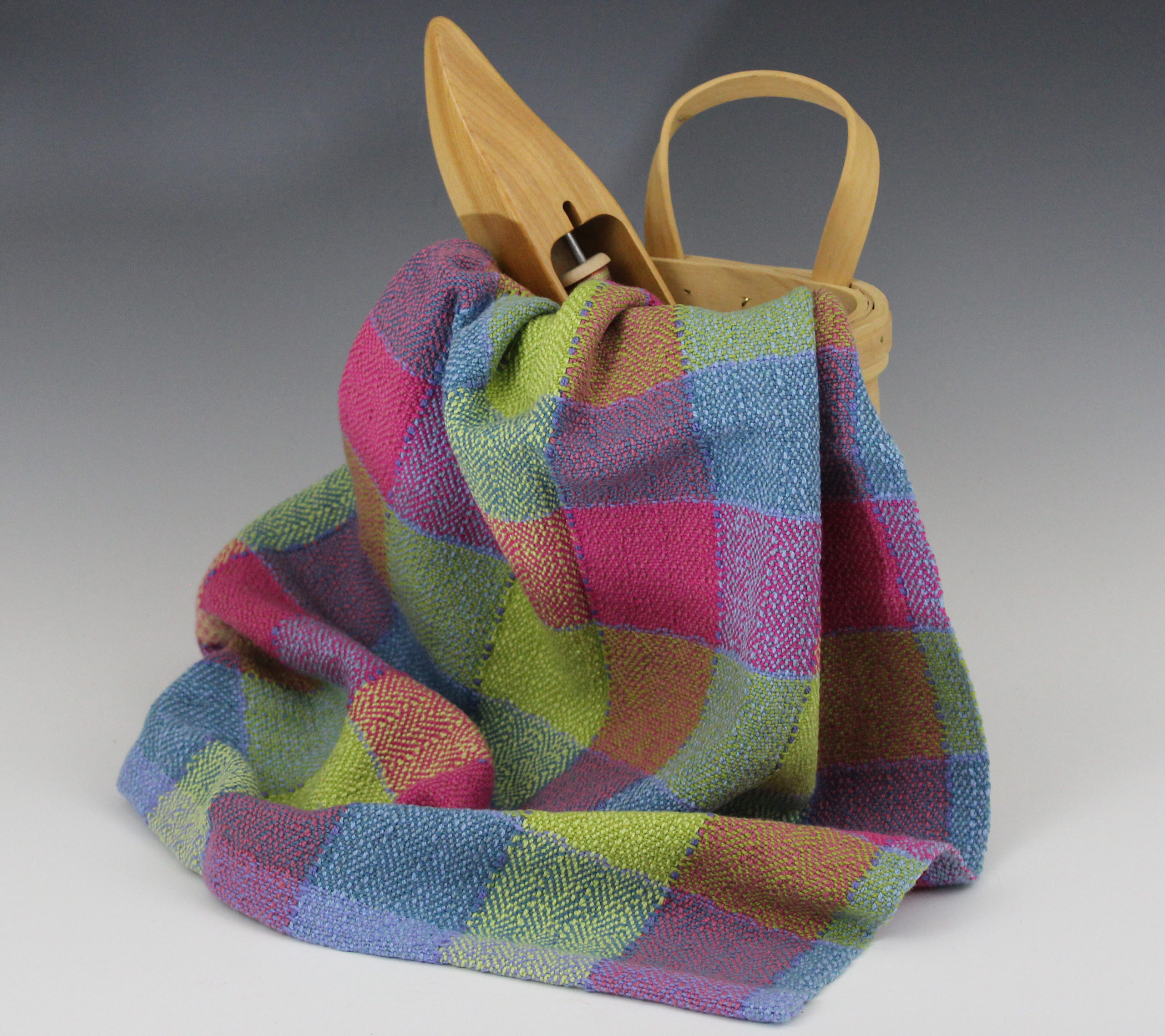
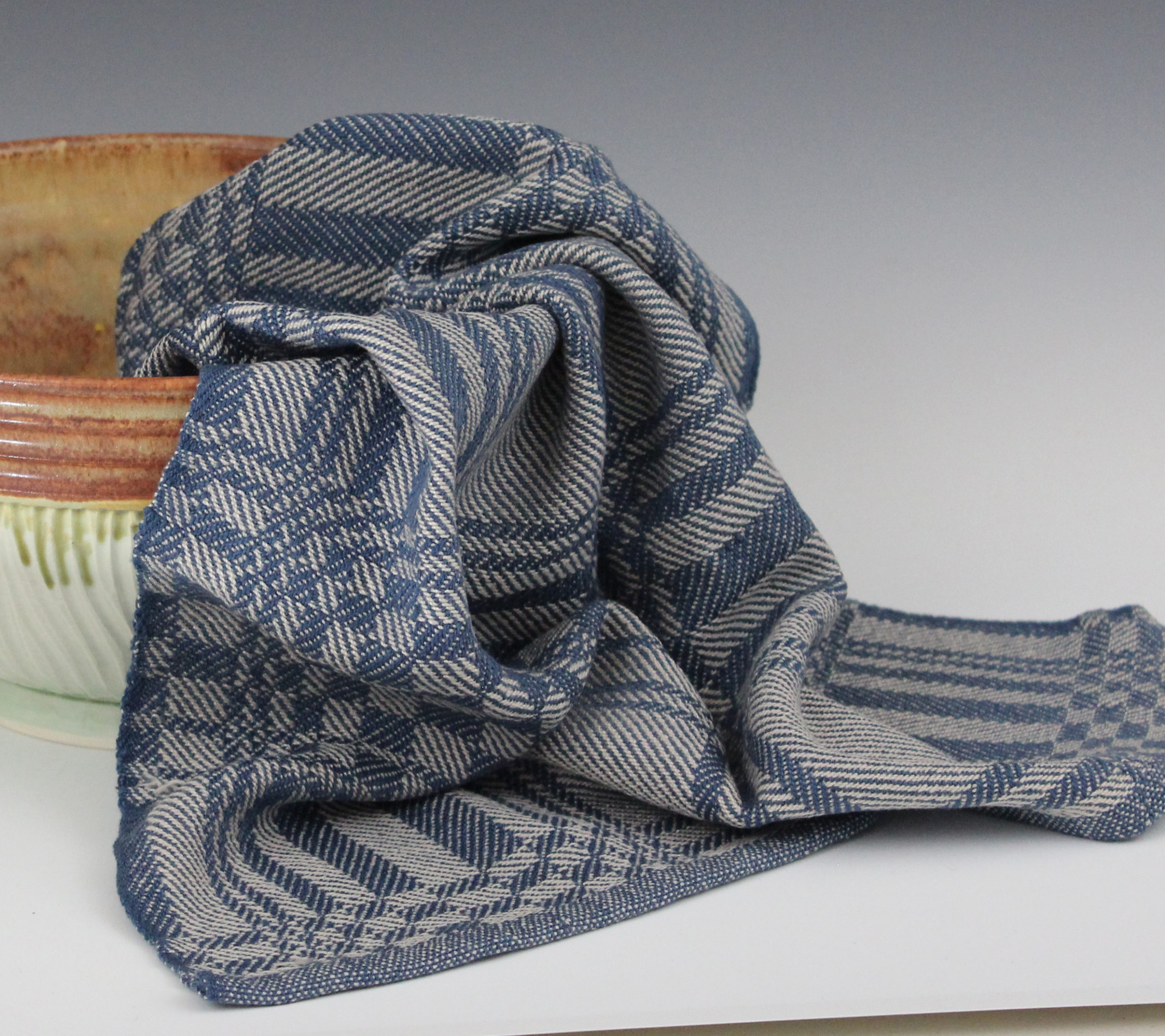
The treadling was adjusted to allow squared blocks, with 8/2 Brassard cotton used for warp and weft. After being washed, the texture is nubby and more pronounced. The weaving width in the reed was 20.75″. I like the look and enjoy the process of hemming by hand. Changing weft colors gives so many different variations and shades and made it a fun project to weave.

MAFA2021-019

The loom was warped for a total of four towels. A total of 434 ends at 20 epi for the warp and 20 ppi for the weft. Allowance of two inches at the top and bottom of each towel. Using Fibonacci as my theme in color and design. The red and yellow thread is of a boucle type.

MAFA2021-007

I like weaving turned twills and find that towels woven with the design have a nice texture as well as visual pattern. I had a partial cone of variegated 8/2 cotton that would not be enough for a full towel, so I started placing stripes in the warp. After weaving the towels on this warp, I found that there are similar striped designs everywhere.