MAFA2021-050

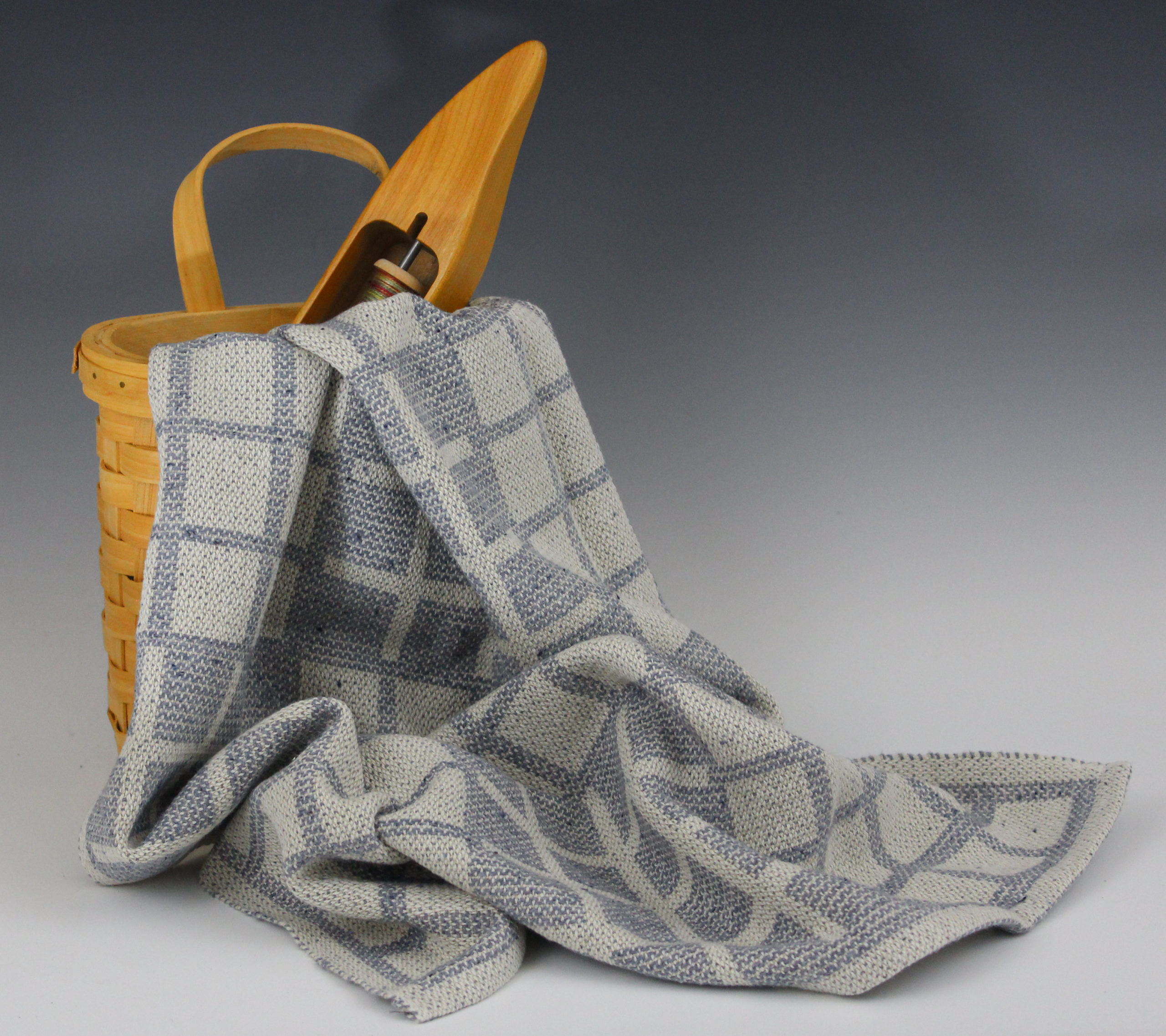
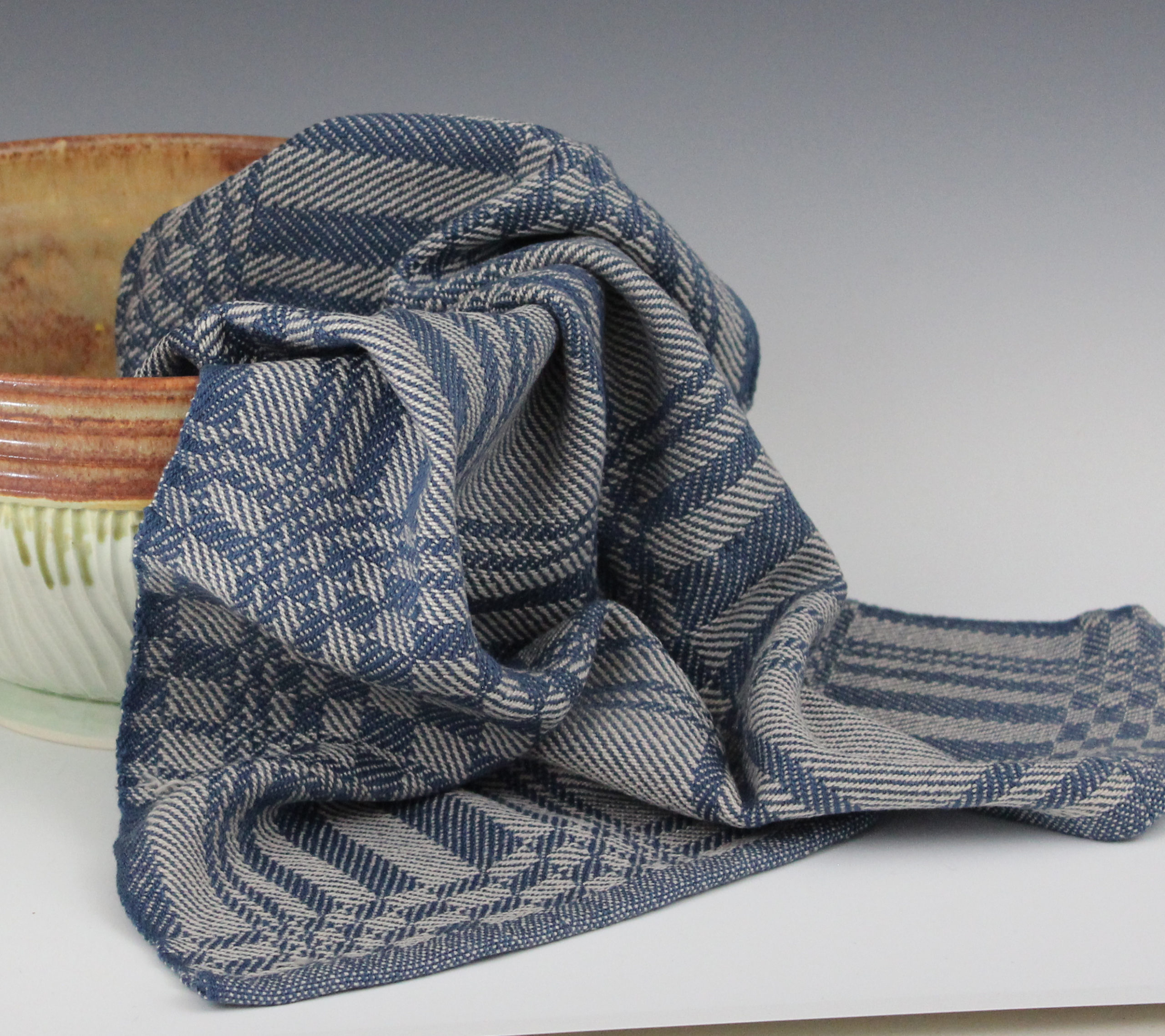
I selected this pattern because I liked the geometry. I learned more about block patterns and how they are constructed. Strickler’s book notes that this draft, woven by Barbara McClanathan, is a 2 block twill adapted from Väv Magazinet, 1984, Nr.4, pages 20-21.

Here are more details on the loom set up, warping, and weaving.

Shaft    1    2   3   4    5    6     7   8
Count 46 46 46 46 80 80 80 80

Valley Yarns 10/2 Cotton—a very sticky yarn that made threading a challenge. Floating selvedges broke several times. Had to ease up on the tension. I’d recommend 2 floating selvedge ends per side.
MAFA2021-042

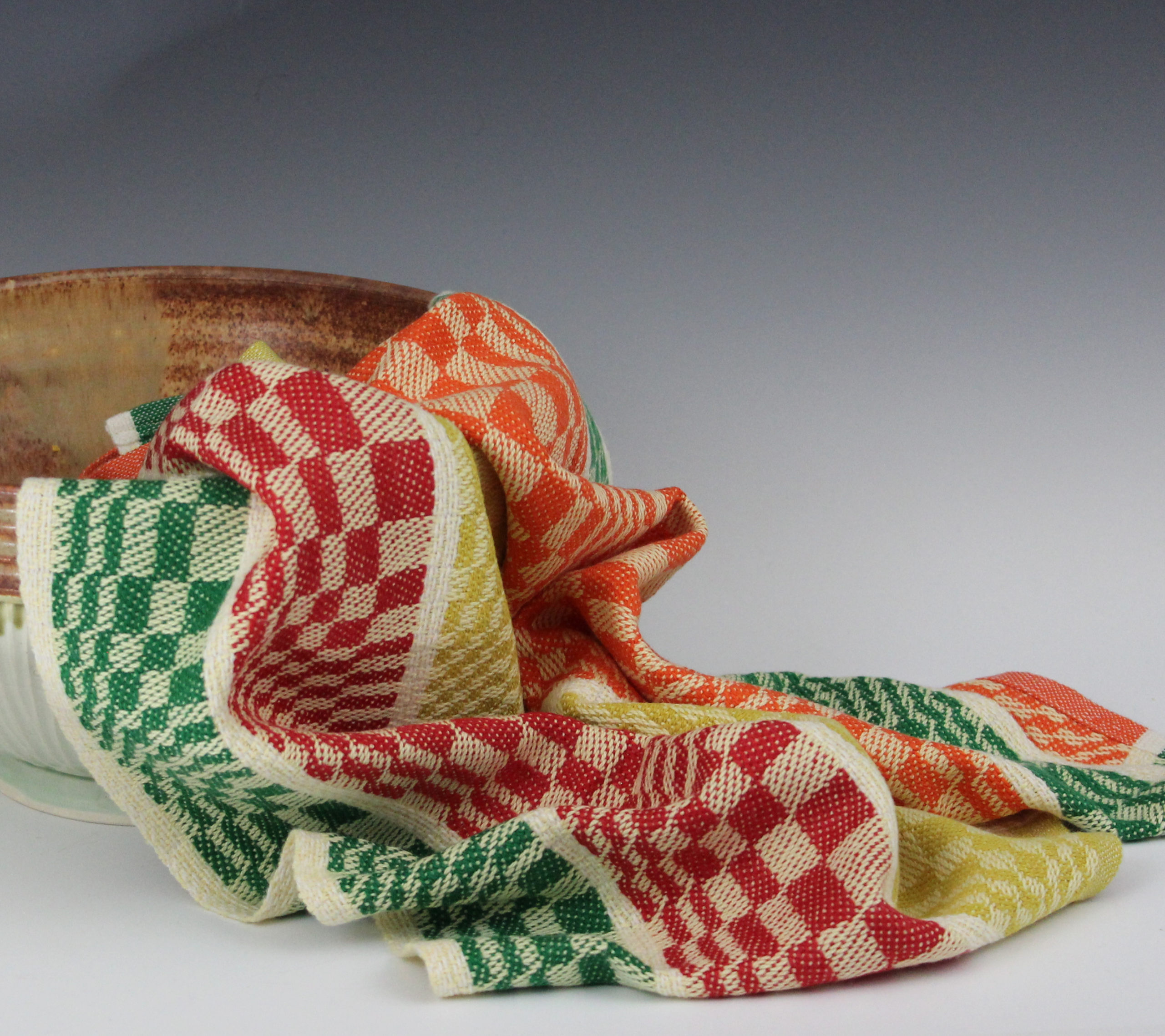
I was inspired by “Twill Illusions with Two and Four Blocks” by Freya van Holst Pellekaan, p. 96 in Best of Weaver’s: Twill Thrills (2004).
Basic threading, tie-up, and treadling for 5-end satin blocks is in Handweaving.net #74464.

Warp color progression, right-to-left: 514 ends plus 2 FS:

1. 12 natural
2. 55 green
3. 10 natural
4. 75 red
5. 10 natural
6. 100 gold
7. 10 natural
8. 165 orange
9. 10 natural
10. 55 green
11. 12 natural
FS: 2 (1 on each side)

MAFA2021-040

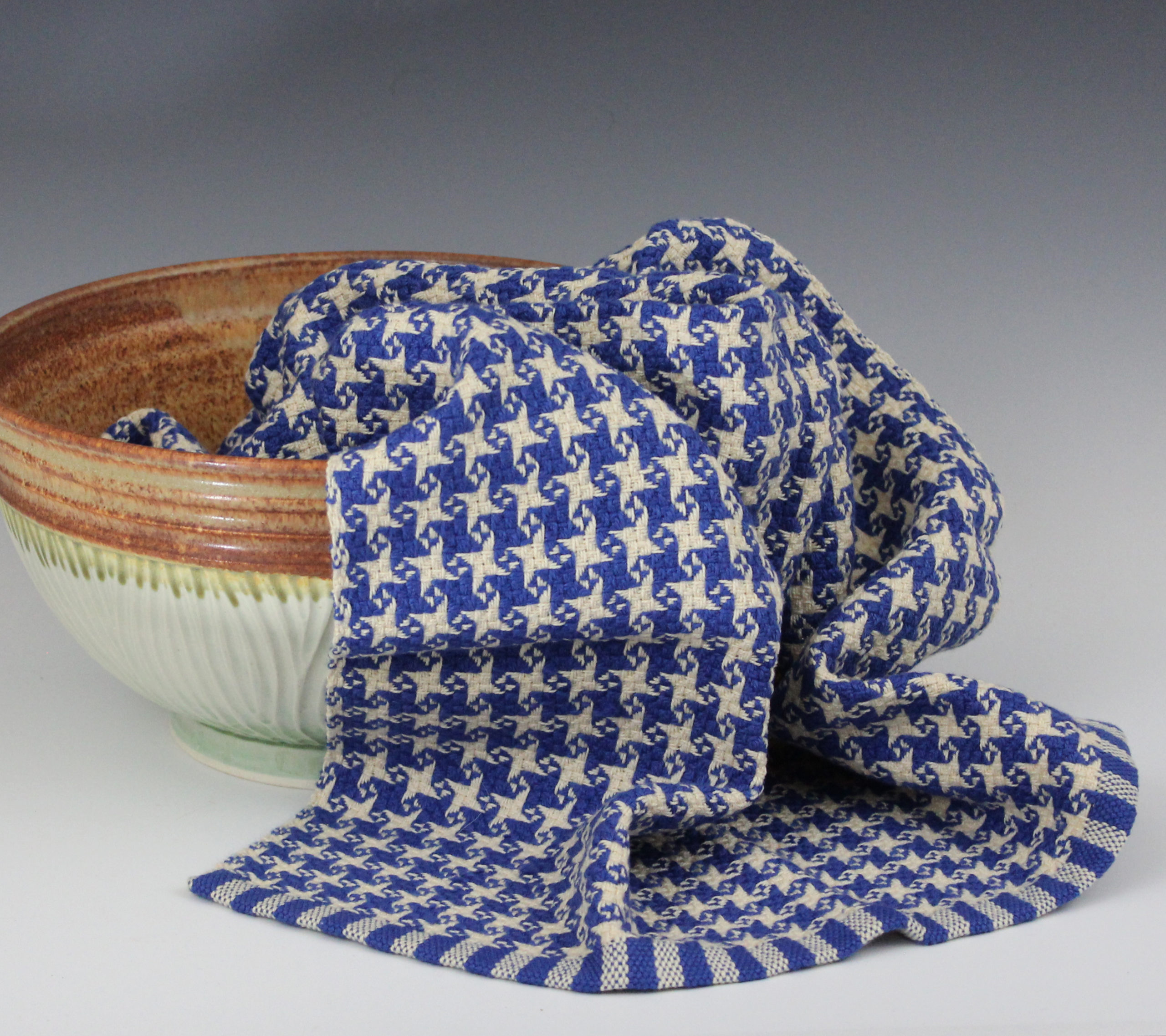
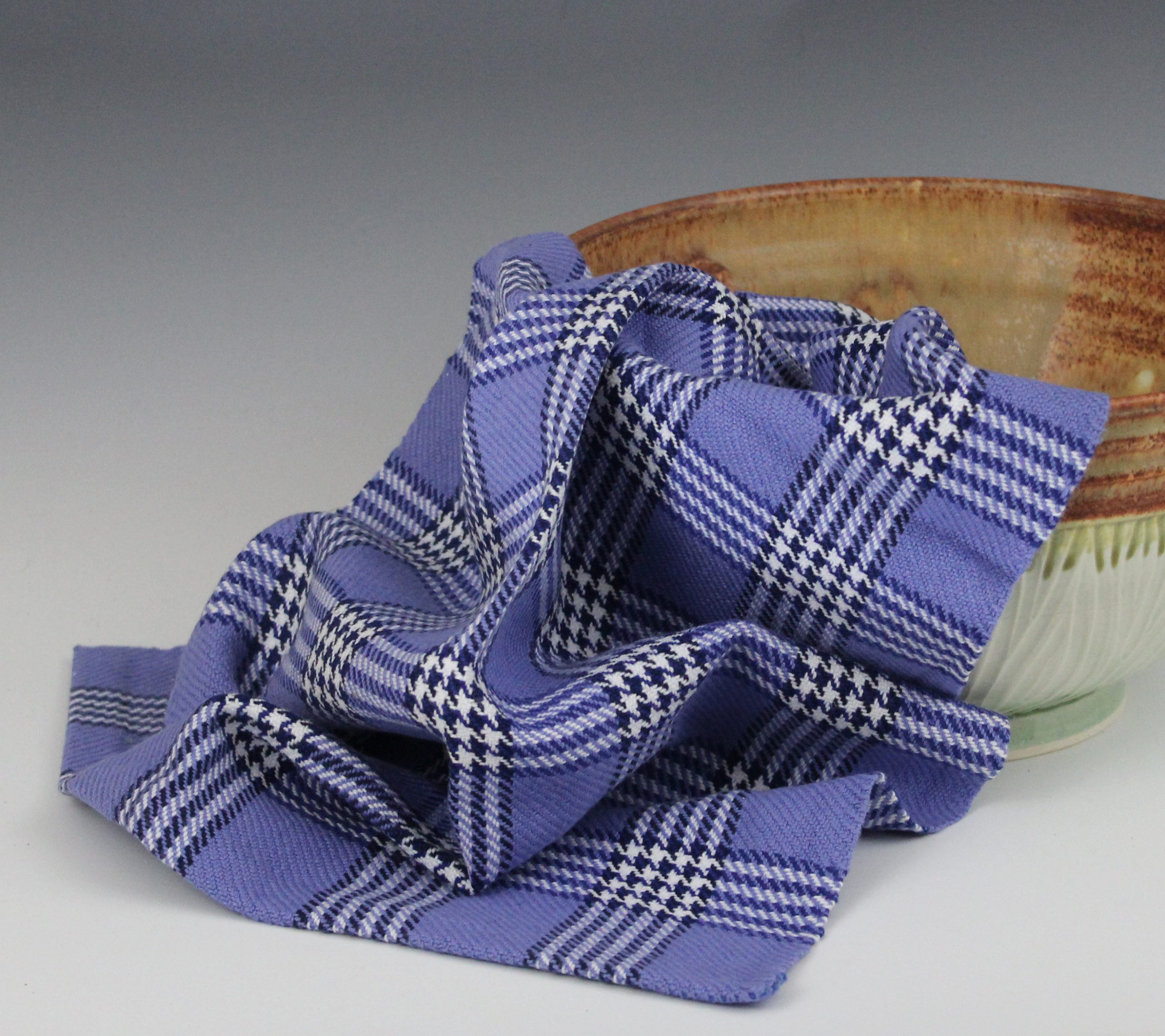
I was introduced to this pattern, “Checked Houndstooth,” in a Scandinavian Towel class taught by Melissa Weaver Dunning. This traditional design can be found in Simple Weaves by Birgitta Bengtsson Bjork & Tina Ingell, p. 92.

Warp is wound 36 Periwinkle, 4 Marine, 4 White, 4 M, 4W, 4M, 4W, 4M, 4W, 4M—a total of 72 ends in one repeat, ending with 36 Periwinkle to balance. Add an extra 4 threads for EACH selvage, doubling the first and last four threads. Weft color order is the same.

Materials used were 8/2 Brassard Cottolins in Periwinkle, Marine, and Blanchi (White).

MAFA2021-034

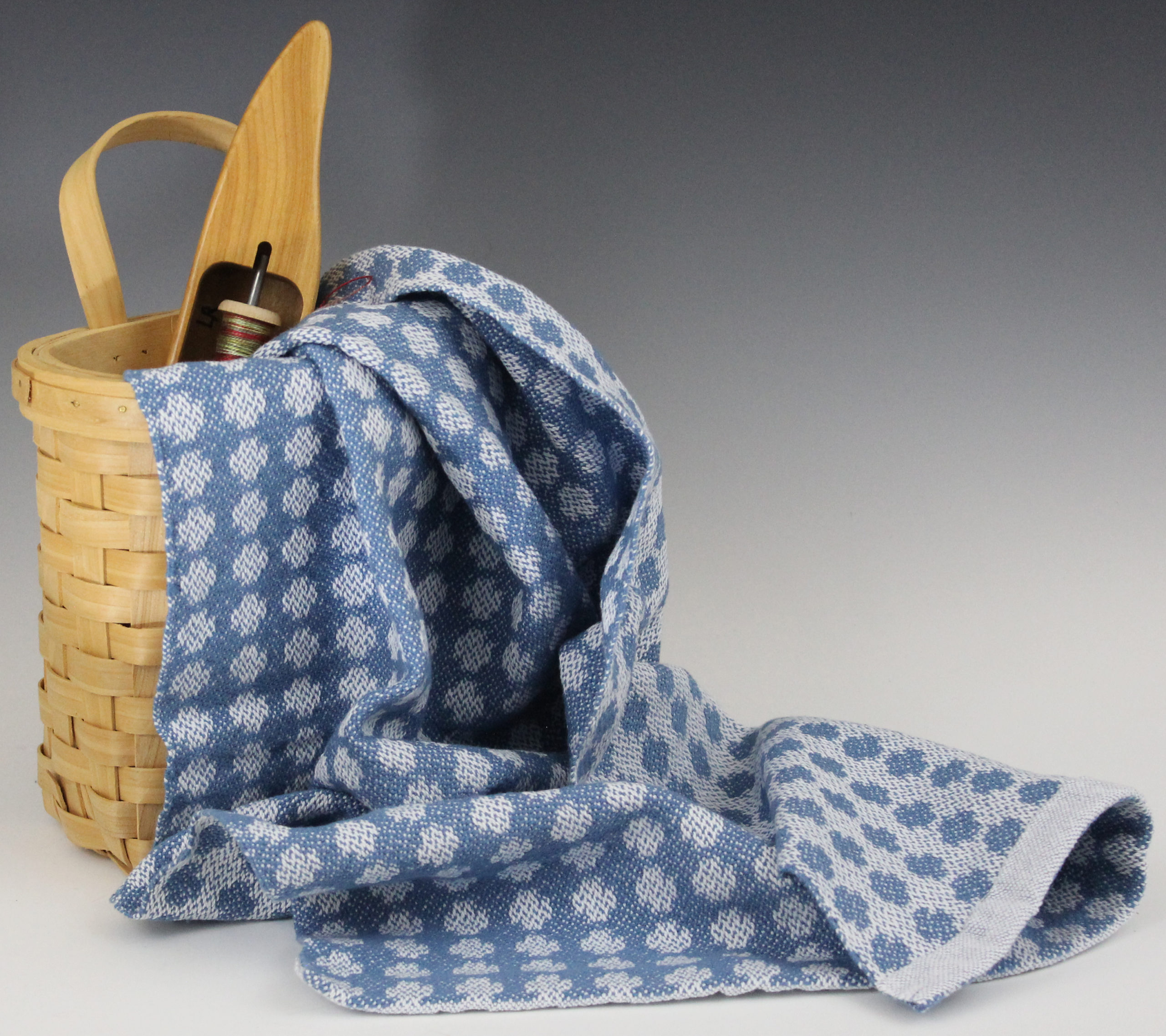
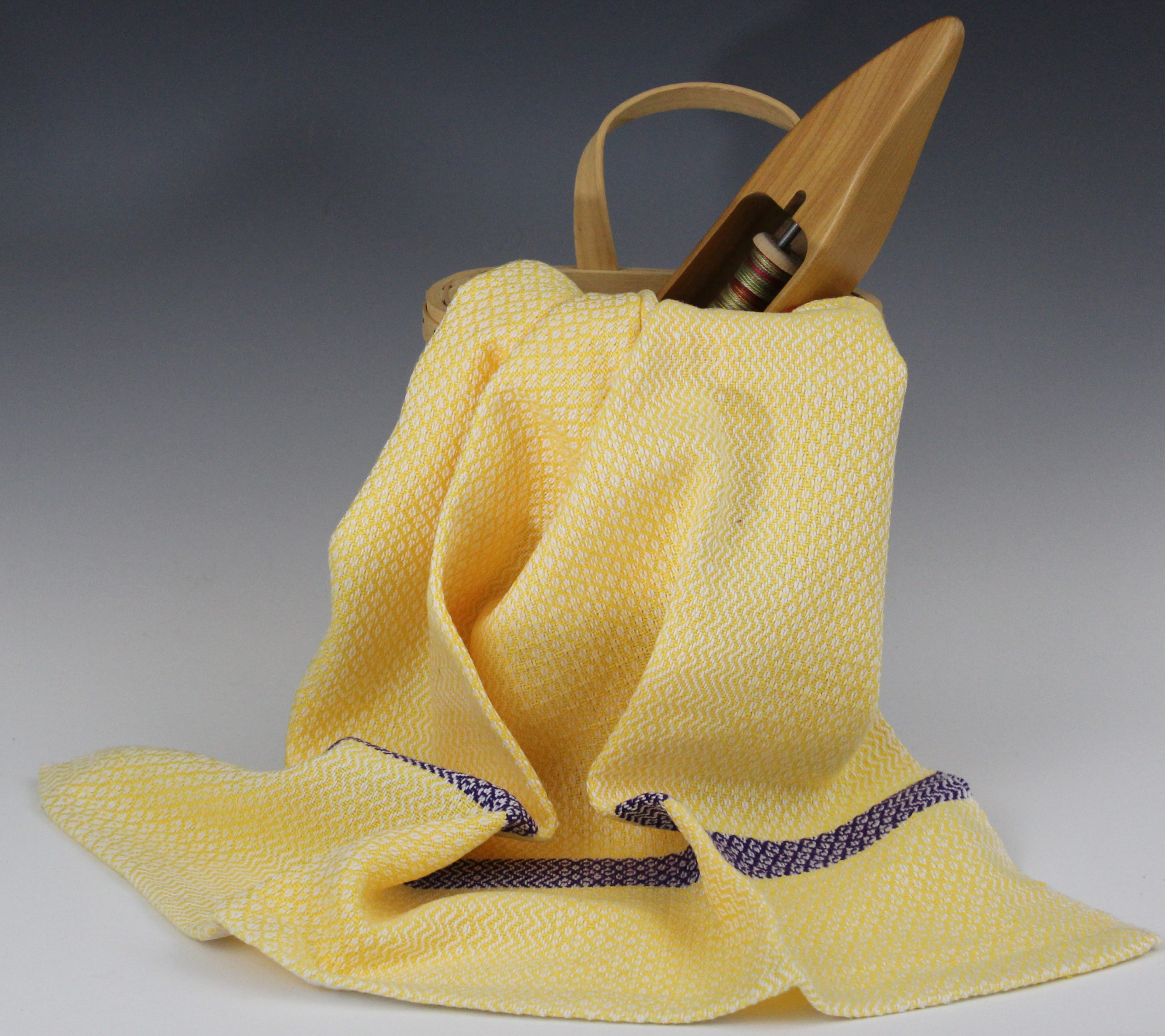
Warp (10/2 organic cotton) was 513 ends including floating selvages. Used #3 treadling. A rolled hem was machine stitched.

MAFA2021-033

Changing the blocks in the tie-up and treadling can produce a variety of designs in the cloth while weaving on one warp. Towel designs are a good way to play with blocks in the tie up and treadling. I wove four different towels by changing blocks in both tie-up and treadling.

MAFA2021-028

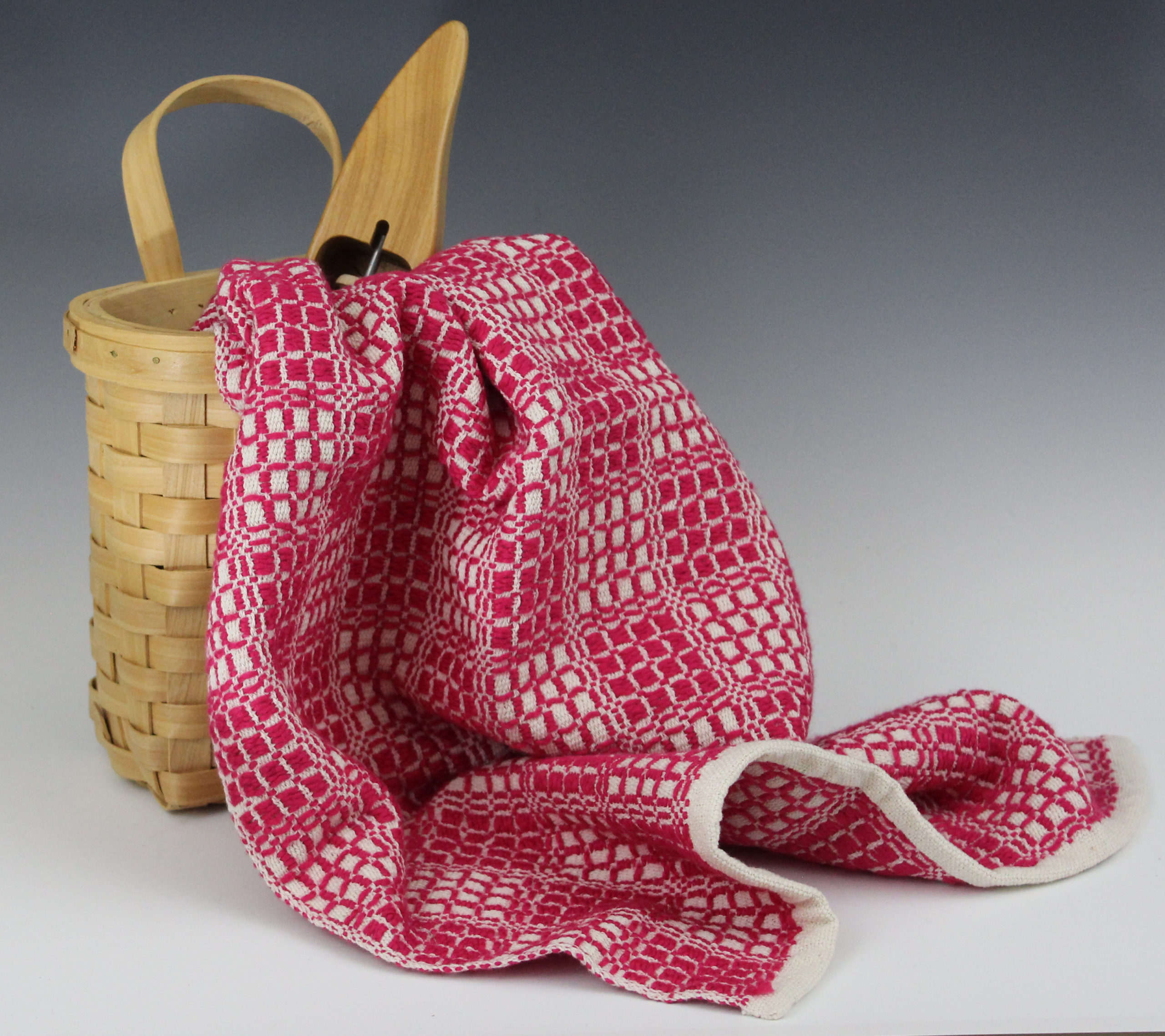
I made 6 towels on this warp. For all the towels except this one, I used 8/2 cotton. On this towel, I used a thicker cotton (Conshohocken ‘Softball’ cotton, color 088 – cherry). It made the whole towel very fluffy and I loved it.

MAFA2021-026

I used the napkin patterns in the Handwoven article and adapted them. I used the treadling for towel 1.

I began and ended the towel with 1 ½ inches of 10/2 weft to make the hems a little less chunky.

20″ in reed; 30″ long. Warp ends: 488 + selvages.

MAFA2021-024

This was fun and fast to weave.

24 epi
24 ppi
576 ends and 2 floating selvages

I simplified the treadling for a less busy effect.

Before finishing: 26″ long x 22″ wide
After finishing: 22″ long x 20.5″ wide
Shrinkage: 22%

Machine wash cool, normal cycle; 20 minutes heated dryer; pressed

MAFA2021-025

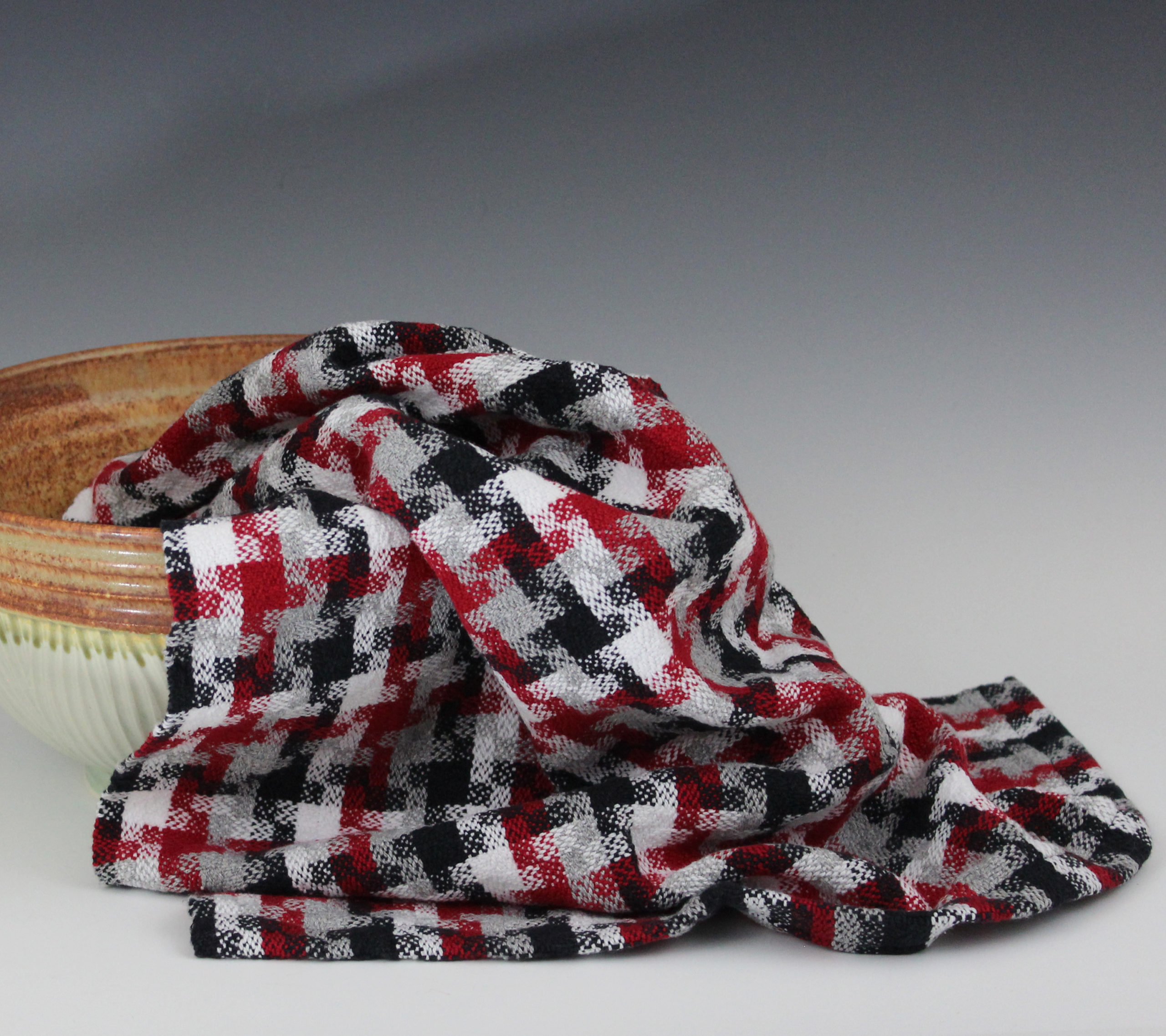
Twill blocks in 4 warp colors (red, black, grey, white) with block changes not coinciding with color changes. Blocks were woven as 3/1 and 1/3 twill rotating the same four colors as the warp. Color changes were made every 16 picks, alternating which side the new color started on to reduce bulk of weft ends.

Width in reed was 24″. The towel finished width (draw-in and shrinkage) was 21.5″. Towels were woven with 1 3/4″ hem, 36″ pattern, and 1 3/4″ hem under tension. Finished towel length after hemming was 30.5″. PPI were approximately 22 under tension.

MAFA2021-011

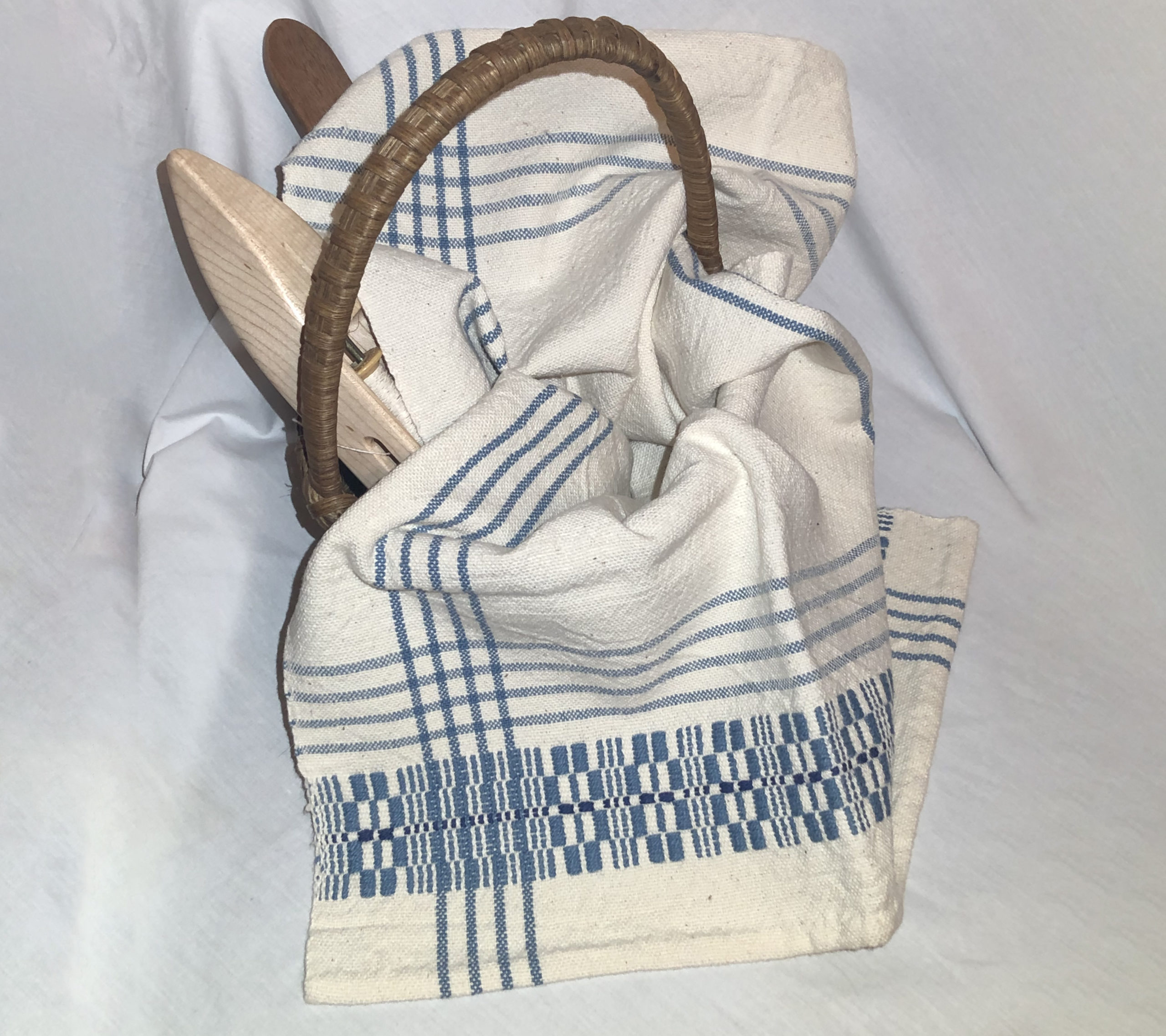
I am delighted by the possibilities of such a simple weave as Monks Belt!