MAFA2021-016

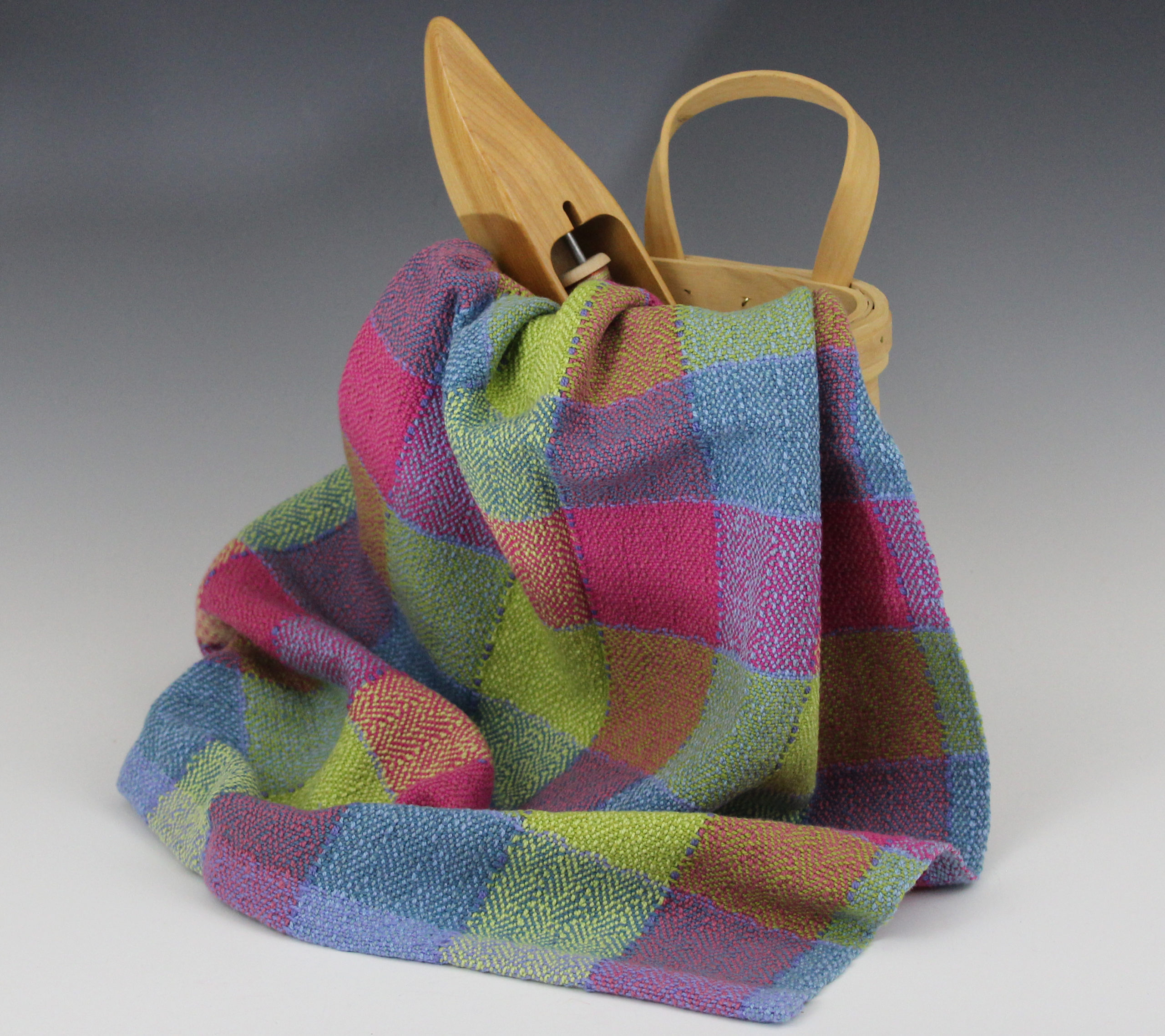
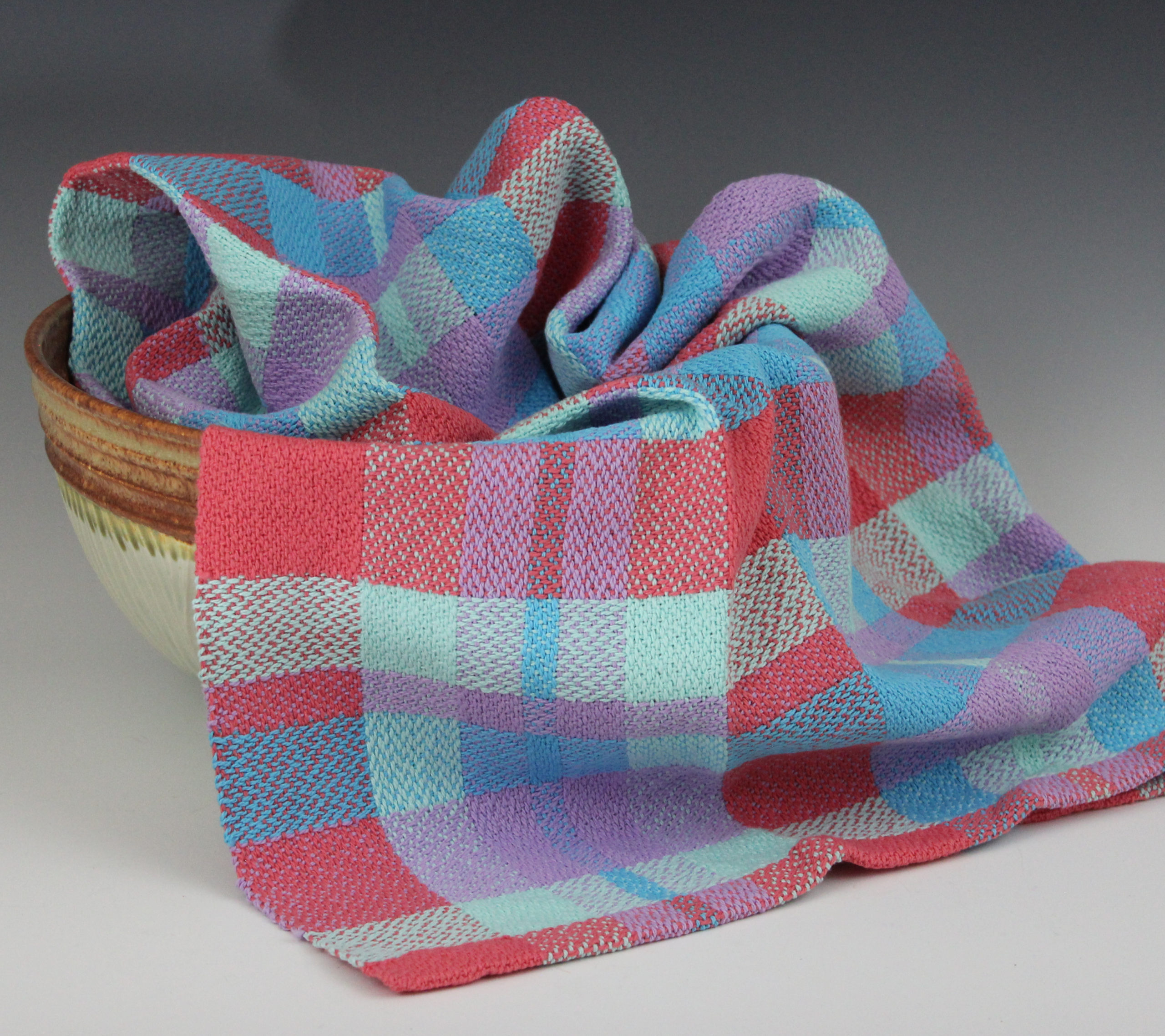
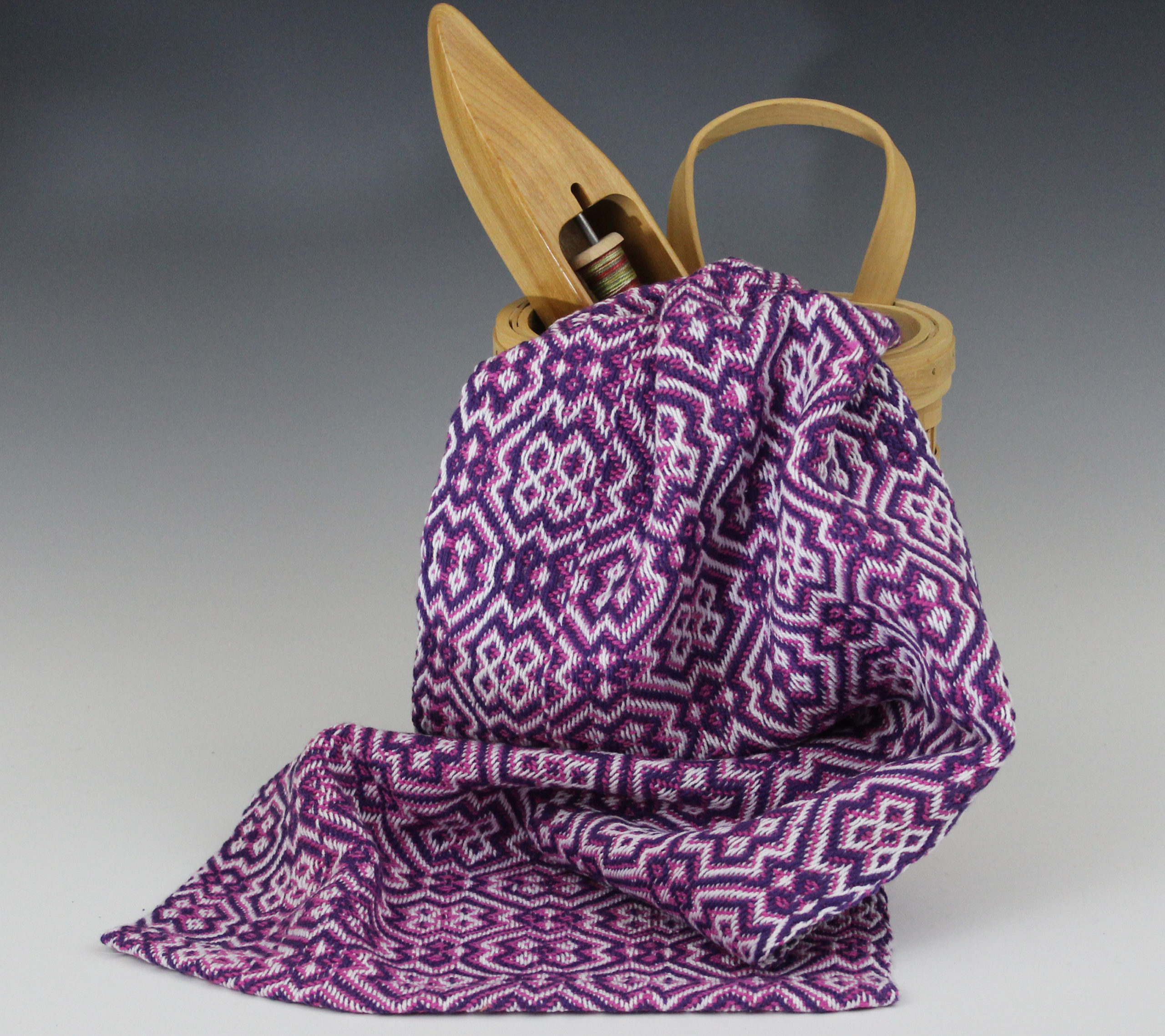
I am learning more and more each time I weave. I am taking classes this time around to help me learn how to more efficiently warp my loom. And this was the first time weaving on my new-to-me Leclerc table loom.

I really enjoyed watching the pattern emerge as I went. My towel is based on the eight-shaft threading, treadling variation #5 in the workshop booklet. I miscalculated on how many repeats needed to be in the warp so the towels came out very narrow. I am still learning on how to make what dents I have work with what I want to produce.

I really enjoyed working with the colors and hope to do more with this pattern and loom in the future. And special thanks to Robyn Spady who taught us all about shadow weaving and was so patient with me.

MAFA2021-017

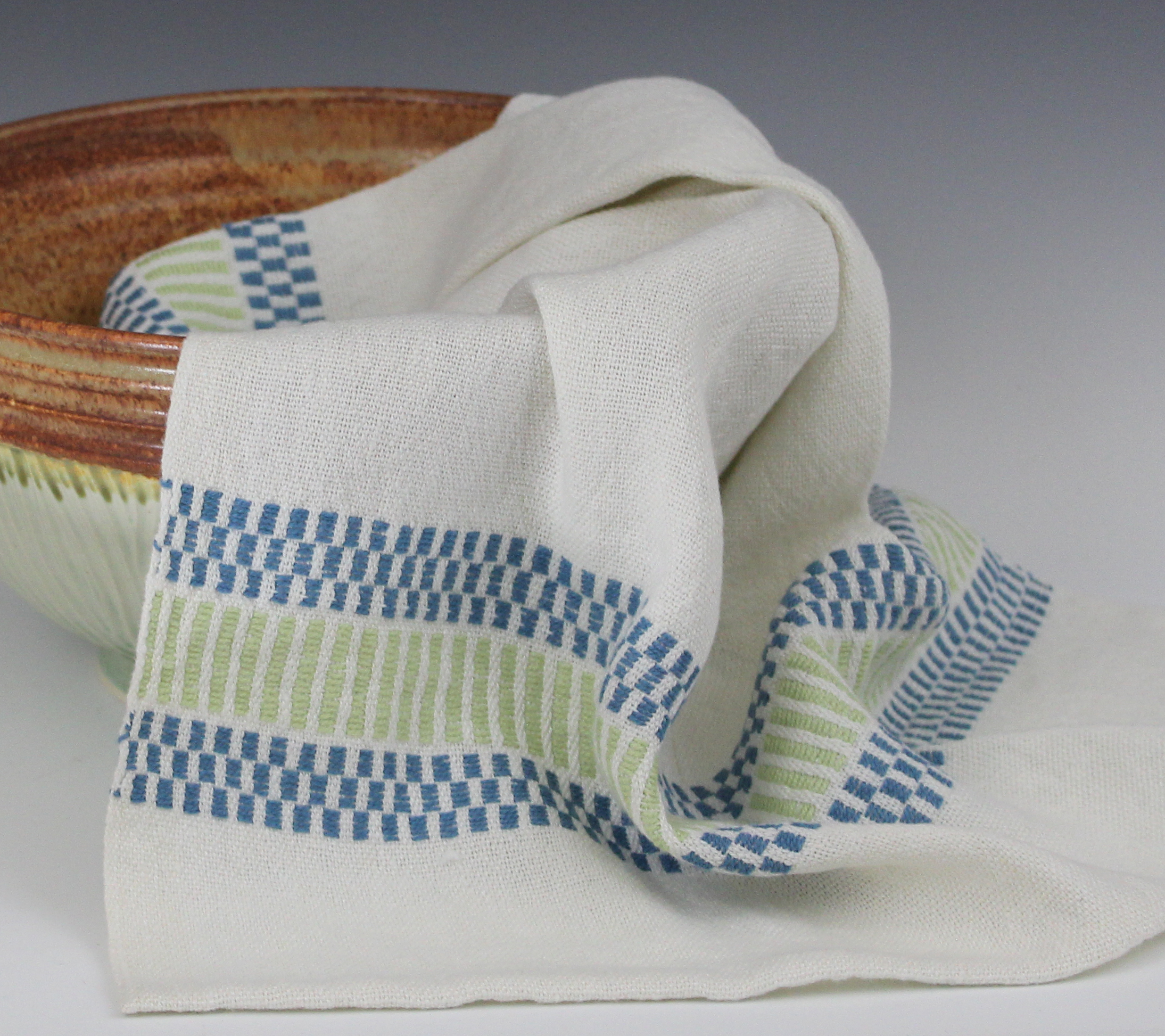
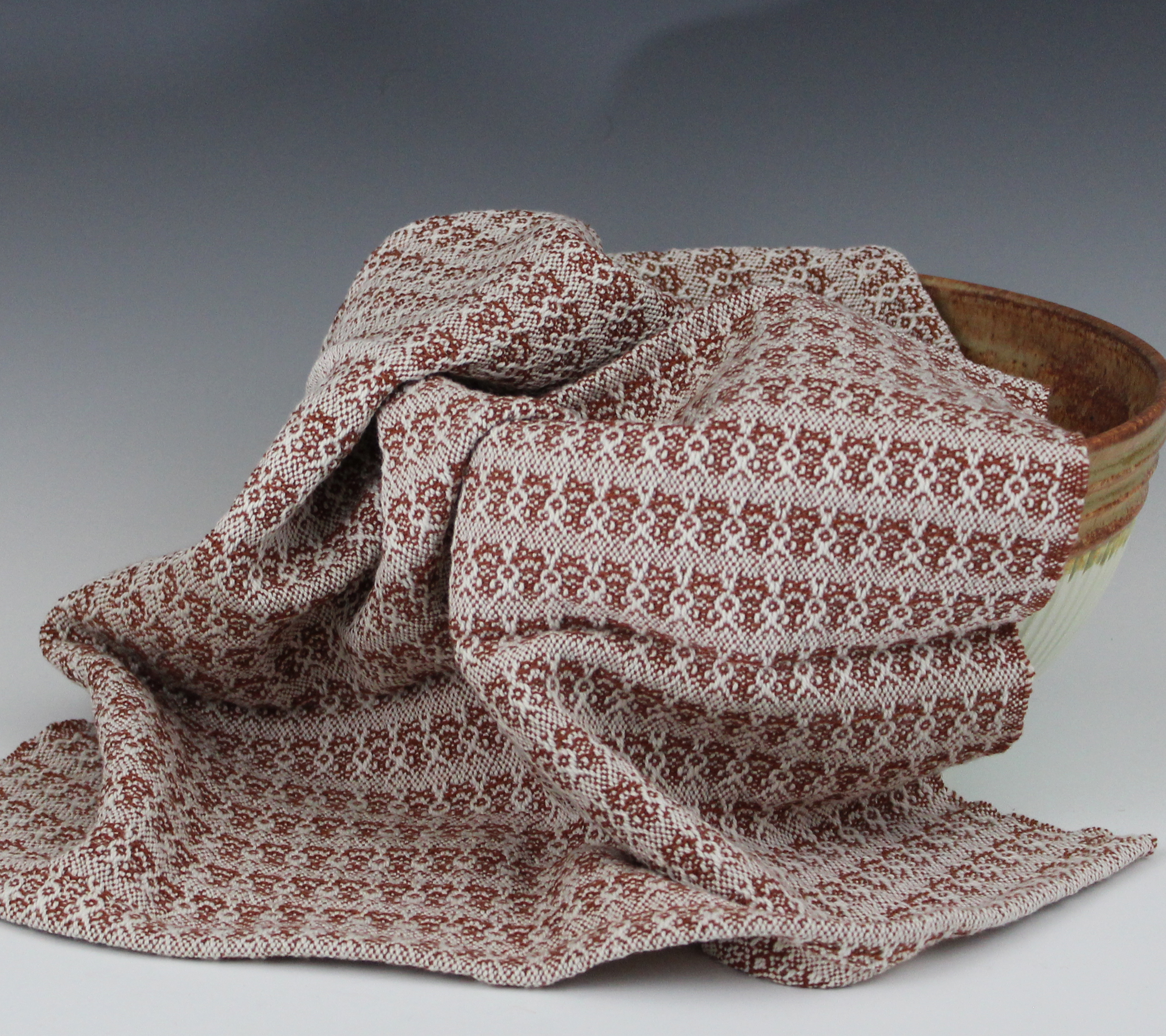
The treadling was adjusted to allow squared blocks, with 8/2 Brassard cotton used for warp and weft. After being washed, the texture is nubby and more pronounced. The weaving width in the reed was 20.75″. I like the look and enjoy the process of hemming by hand. Changing weft colors gives so many different variations and shades and made it a fun project to weave.

MAFA2021-018

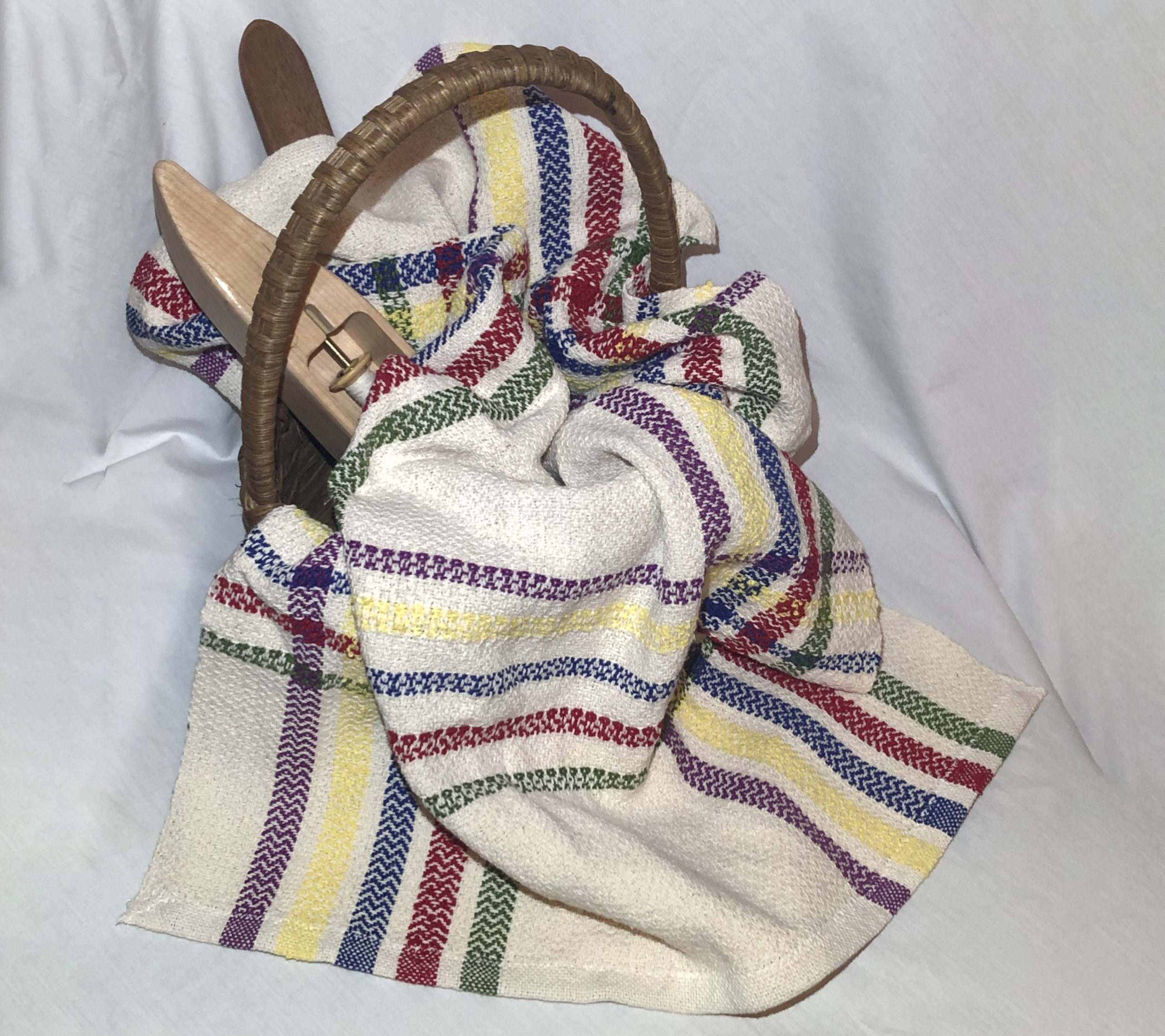
I wanted to weave a linen towel but with this design the linen weft didn’t work well, so I changed to cotton and was well pleased. This can be woven on a 4 shaft loom also—Davison has many patterns.

MAFA2021-019

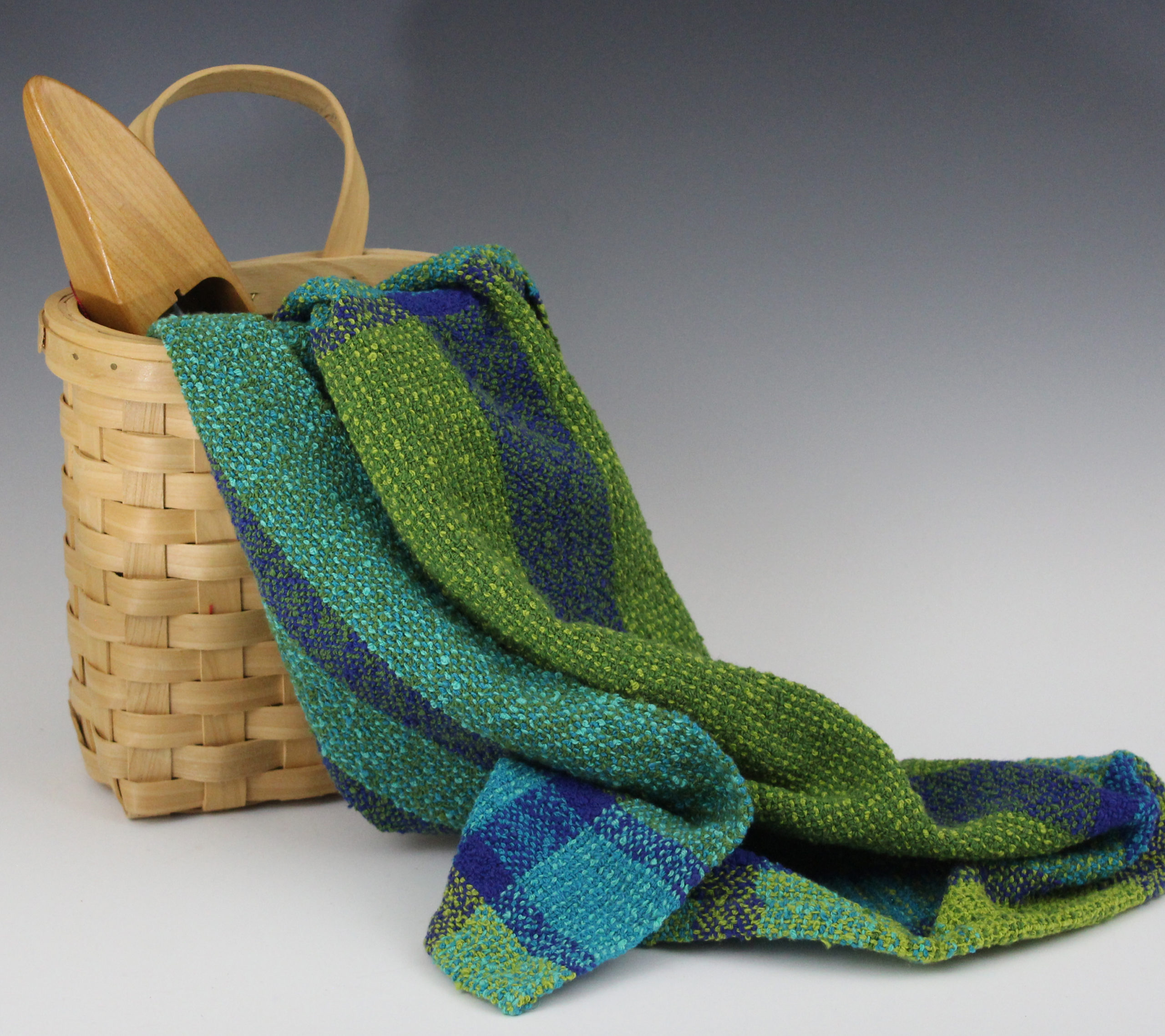
The loom was warped for a total of four towels. A total of 434 ends at 20 epi for the warp and 20 ppi for the weft. Allowance of two inches at the top and bottom of each towel. Using Fibonacci as my theme in color and design. The red and yellow thread is of a boucle type.

MAFA2021-020

This draft is a color and graphic exploration as part of the Jane Stafford Textiles Online Guild. This was created though her design influence. Consider using your interpretation of Fibonacci numbers. One thing that has become clear as I have worked with Jane Stafford is that we must not be hesitant to weave plain weave. Make what you weave creative with color and design and embrace it!

Technical information on the loom:

12 epi
262 ends
6 dent reed
Warp length: 7.5 yards/8 towels
Width on loom: 22″
Length on loom: 30″
Finished towel approximately 18 x 26″

Yarn purchased from Jane Stafford Textiles in the following colors:

Limette
Pale Limette
Peacock
Turquoise
Royal

Sold in 1/2 pound cones with 1150 yds/cone.

MAFA2021-001

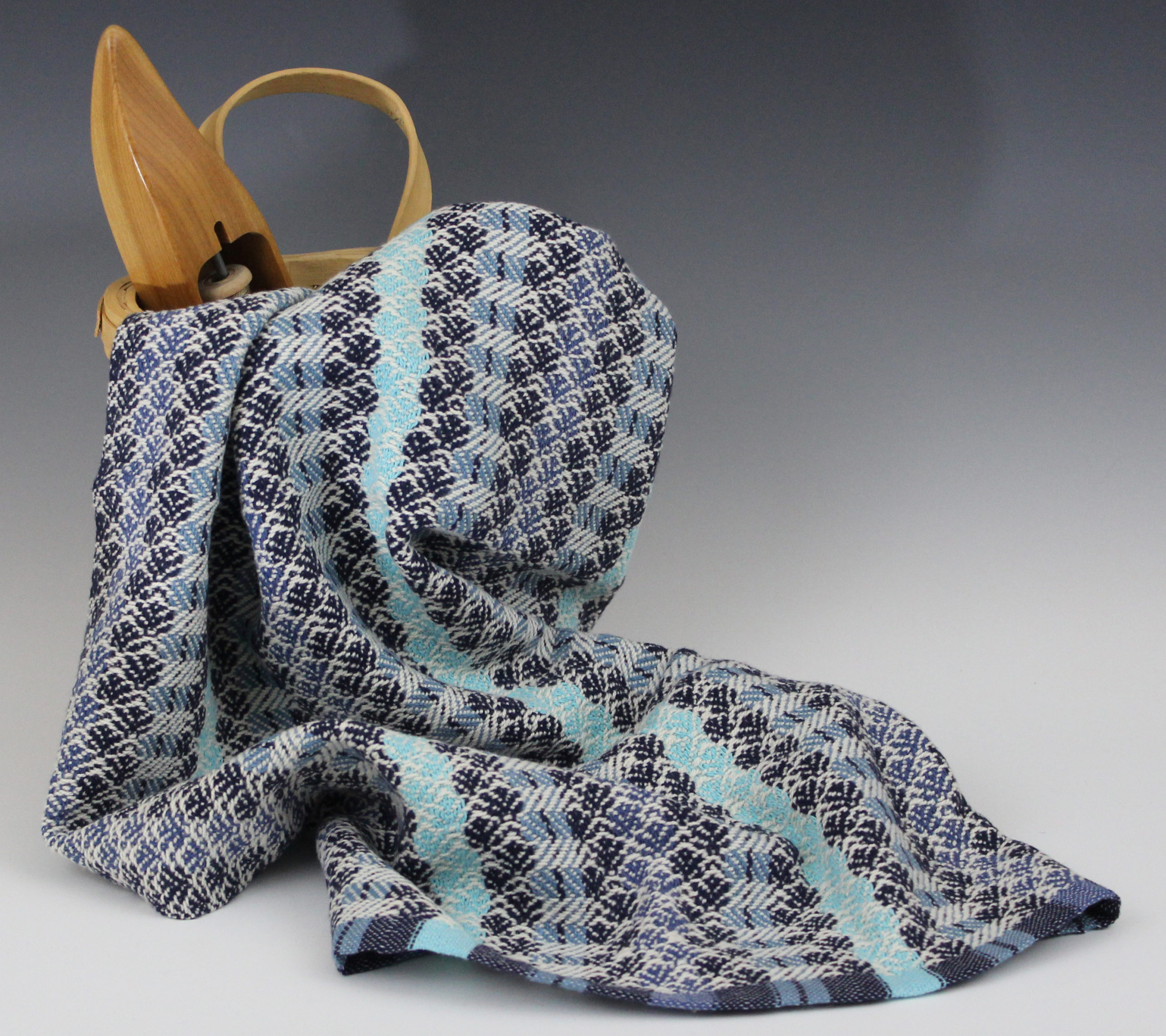
I am a novice weaver, and this is my 10th project. I had initially planned this project for 40/2 linen, but I was unable to find colored linen in that grist. Scaled up for 16/2 linen the pattern is more dramatic and the cloth is robust. This wasn’t what I envisioned when I planned the project, but I am satisfied with the outcome. It’s not perfect, but it is perfectly functional. I hope it will provide many years of service.

I wove on a Glimåkra Standard using 8 shafts. A ladder hemstitched section was added after a partial pattern repeat and it was reversed to duplicate the design on the second hem. Both hems are hand sewn with linen thread.

Initial size was 33.5″ x 19.5″; hemmed it was 31″ x 19.5″ and final size after washing and pressing is 29.75″ x 18.5″. I hard pressed with a heavy iron to give the linen a polished appearance.
There are 392 ends in the warp with a partial repeat at one end to have similar left and right sides in the finished towel. This is in the attached WIF. Likewise there is a partial repeat and a reverse in the hems, for the same reason. It’s shown on the beginning of the file only. I sleyed 1 end per dent in a 20 dent reed. I wove with a temple and the weft was wetted on the bobbins to help it beat in well and make a more dense cloth.

I wove this without floating selvages but the pattern would benefit from them. The colors do not alternate 1:1. Because of this, to make sure all the warp ends were caught in each pick, the shuttles had to cross sometimes in one direction, other times the reverse. It made for slower weaving and uneven selvages.

The original source of this color-and-weave design is: Die Färbige Gewebermusturung by Franz Donat, published in 1907. This particular draft is a figure from Master Plate XLVIII No. 6A, Motif 4.

MAFA2021-002

I used several colors of Bluegrass Mills’ 6/2 unmercerized cotton yarn for my towel.

Plain weave for turned hem, sewn by hand.

I love this weave, and have used it several times for towels. I varied the stripes in warp and weft for more visual interest.


MAFA2021-003

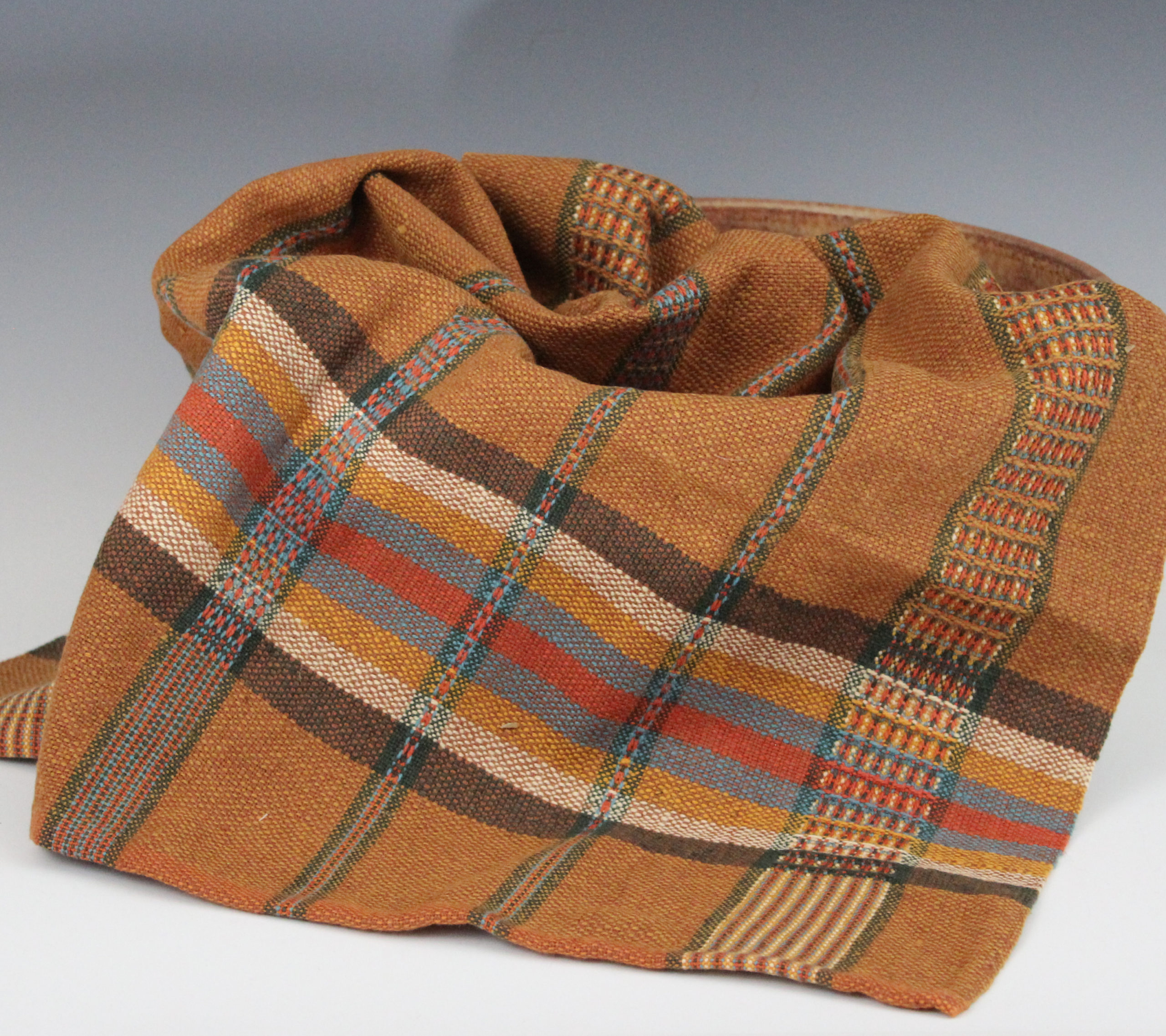
This towel is a design to combine waffle and tabby. I used five shafts for the waffle areas and three shafts for the tabby areas. For the waffle areas I sett the ends at 32 epi, tighter than the tabby areas of 24 epi. I also added several different colors for the waffle stripes while the majority of the warp is a dark neutral color.

Warp: 22/2 cottolin. Colors: tobacco 2017, maize, gold 2054, orange 2015, aqua 2032, pine 2065

Weft: Hem: 16/2 cotton, orange 62. Body: 22/2 cottolin. Colors: ochre 2011, maize, gold 2054, orange 2015, aqua 2032, pine 2065

Dimensions
Before washing: 21 7/8 inches wide and 36 1/4 inches long
After washing: 20 inches wide and 32 1/4 inches long

Warm water; regular cycle; iron while damp; no dryer

MAFA2021-004

I played around with the threading by adding some bands of straight twill between sections of the rosepath threadings. I also used sewing thread for weaving the hem sections.

MAFA2021-005

It’s been several years since I wove this towel and I have no memory of where it came from. I think it came from a breast cancer awareness publication.