Plain Compound weaves

MAFA2025-3933

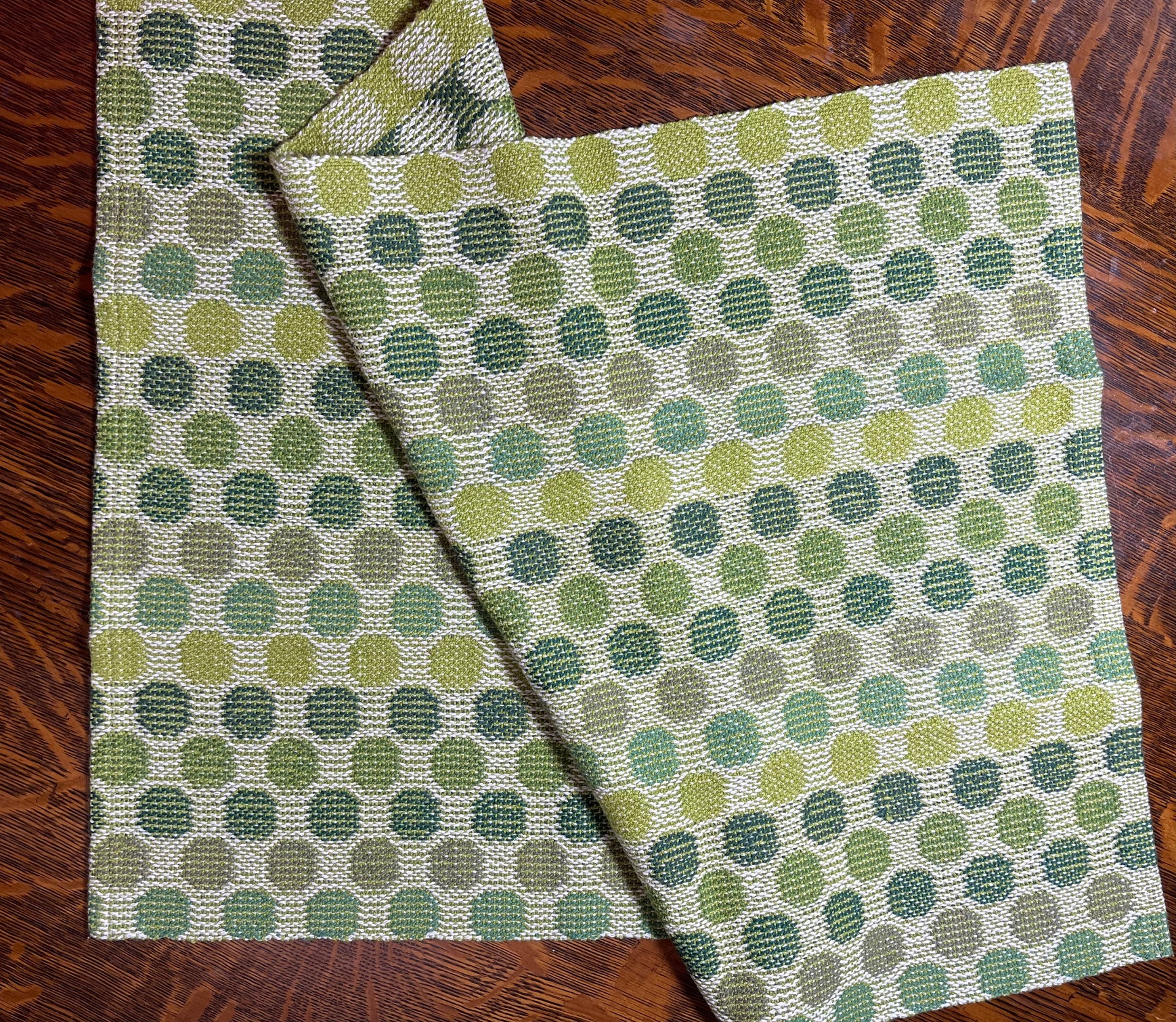
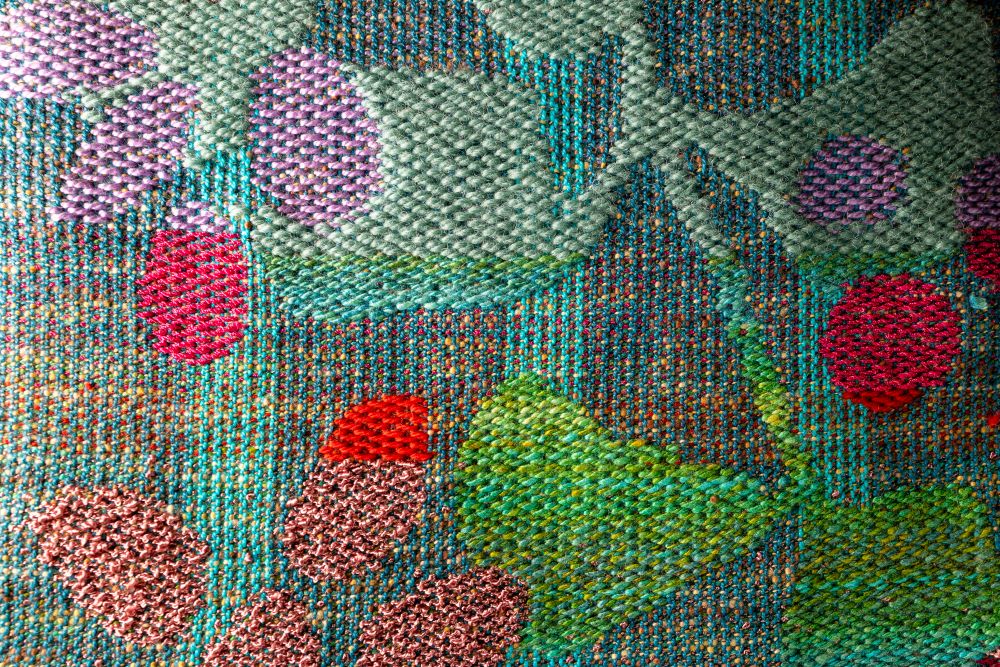
The piece is woven using Deborah Silver’s split-shed technique. I hand-drew the cartoon for the pickup oatterning.

I warped my table loom with enough for two runners. The first I cut off and used for a weaving guild challenge. This is the completed one shown in the photos. This photo is not great because it wasn’t taken for the purpose of exhibition entry. I gave this one away as part of the challenge/exchange. The one to be submitted is underway but not quite finished. (I need to finish it before MAFA because this is on my table loom and I will need the loom for a workshop.) One of the photos shows it as it is currently on the loom.

Finishing was a bit of a challenge. I steamed it rather than immersing it in water because I wasn’t sure how all of the different fibers would react. It shrank quite a bit. The photos don’t show it clearly but the wool portions fluffed up and created a nice dimensional effect.

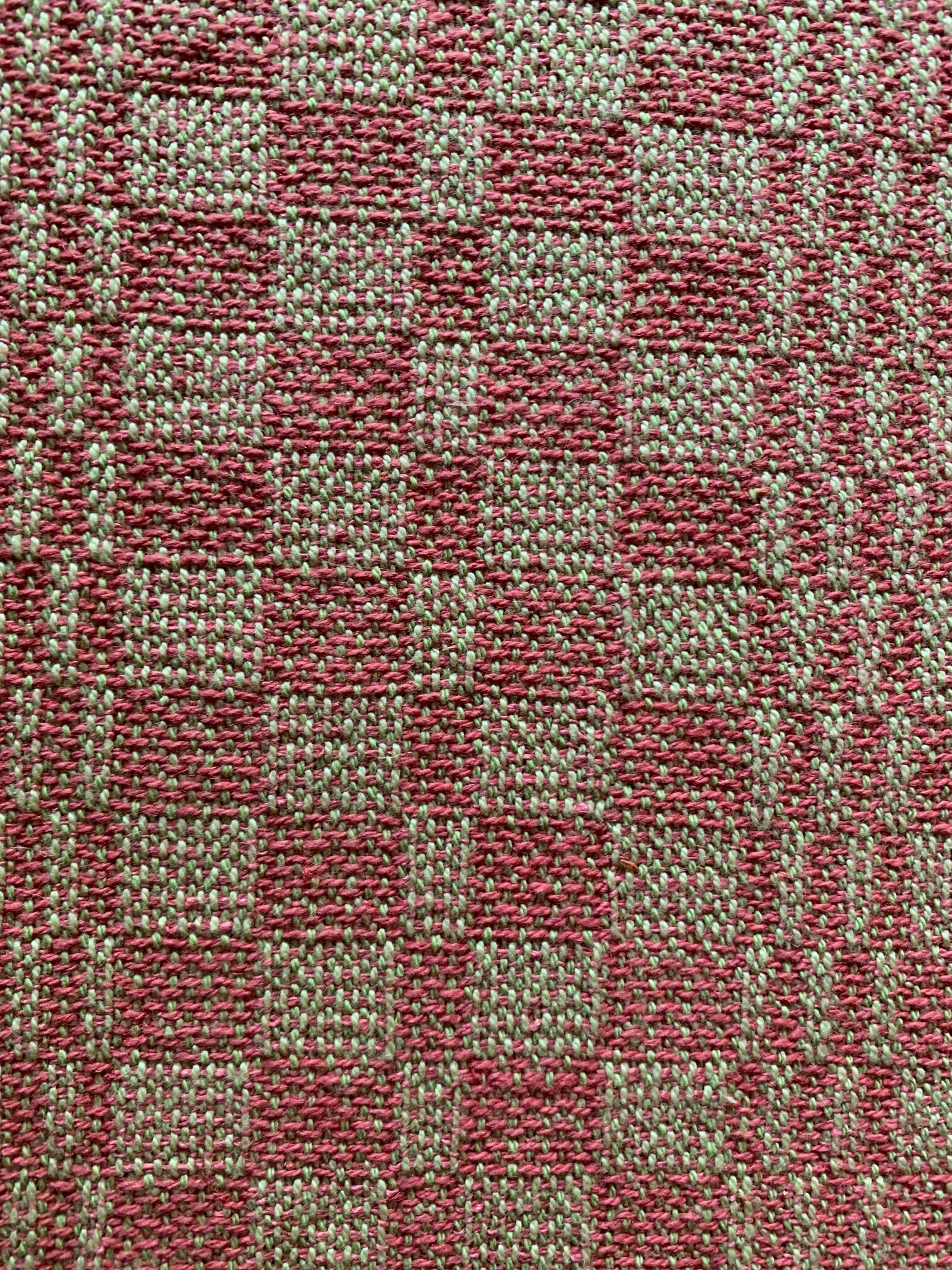
The draft shows the structure without patterning.
MAFA2025-3930

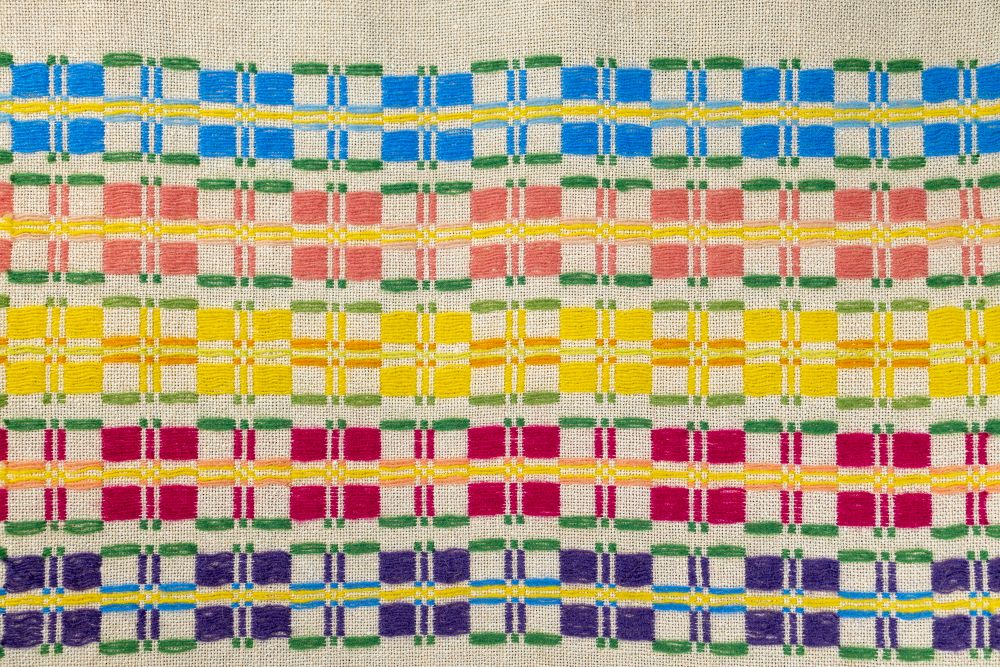
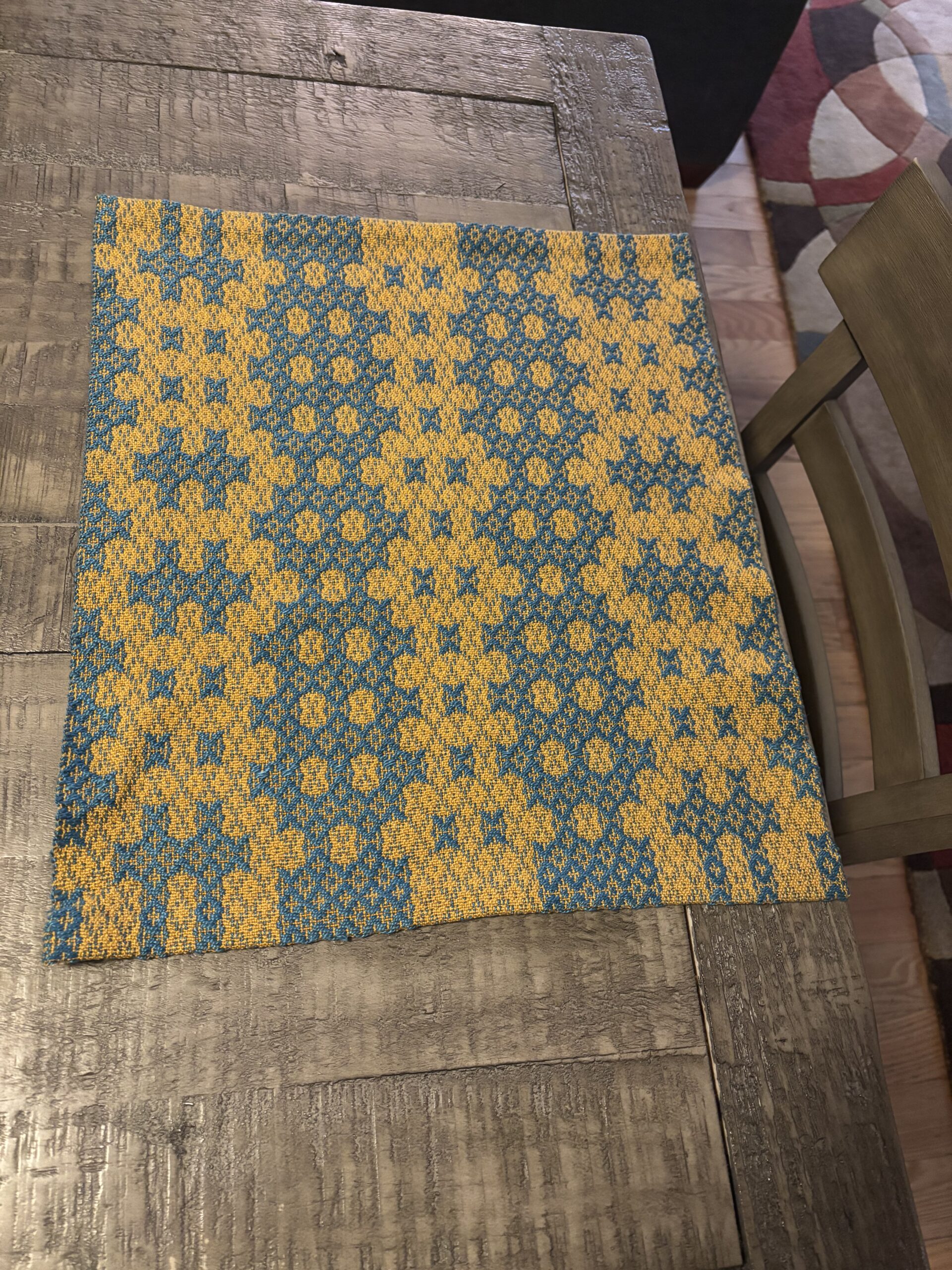
Our study group topic was Quigley, so I decided to design an original pattern to weave placemats out of as a way to understand the structure better. The total number of ends is 372 plus floating selvedges and the width in reed was 15.5″. The placemats are hemmed with a rolled hem in such a manner that either side of the placemat may be used as the “right side”.

MAFA2025-3879

This yardage will be used to weave two tote bags of my own design. I wound a 3 yd warp using 414 ends of 16/2 linen and 2 selvedge threads on each side using 16/3 linen. The width on the loom was 23 inches. Yardage off loom and unwashed is 70 inches in length and 22 inches in width. I am anticipating about an addition inch or two decrease in width after washing.

I used a temple while weaving and made sure to mist the warp and linen bobbins to avoid fraying or breaking. I varied the colors of the wool pattern weft to simulate spring flowers.

MAFA2025-3874

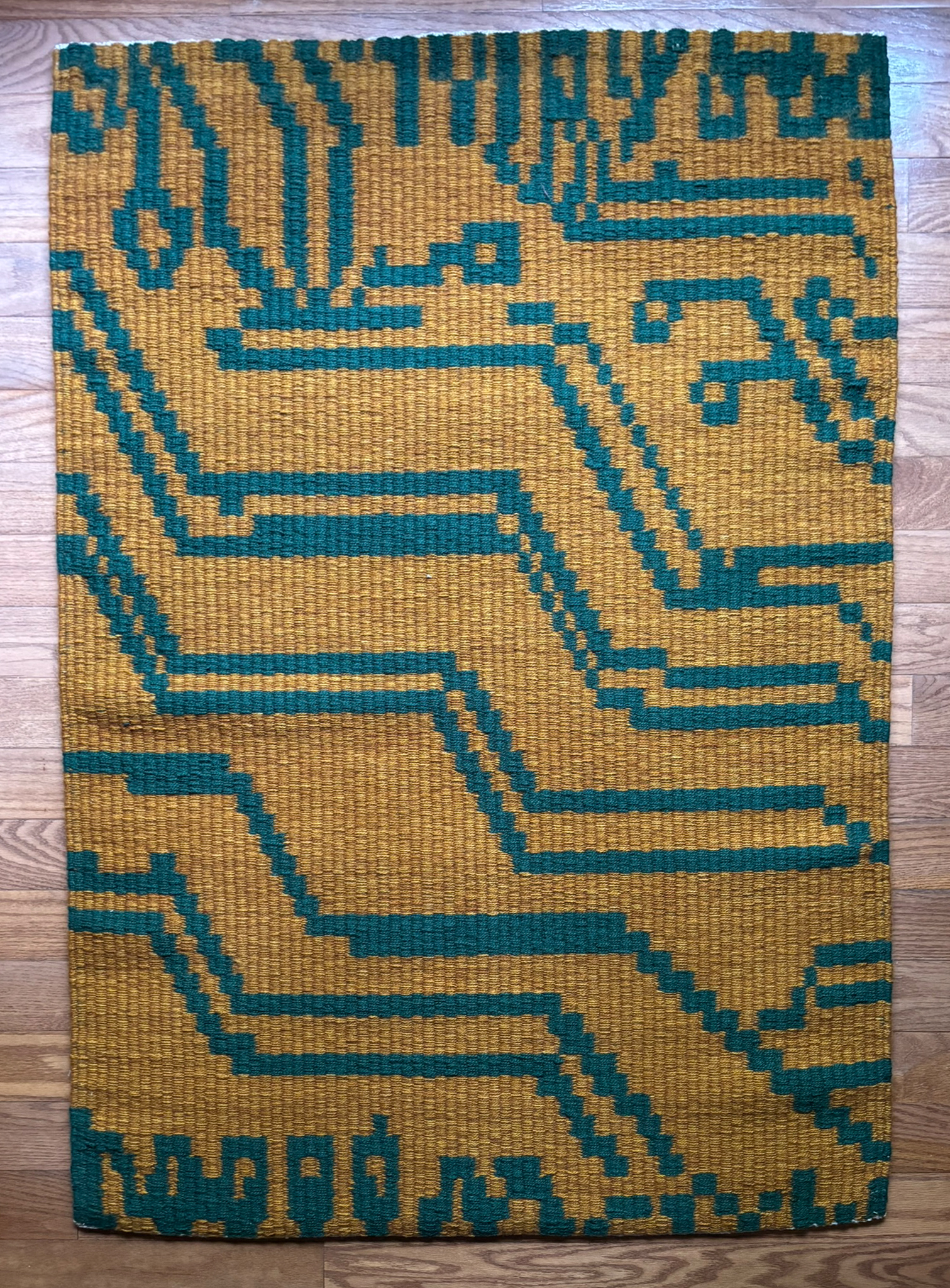
This reversible rug was designed as a three-end tied unit weave and woven using shaft-switching. The selvedges were card-woven. The gold color was hand-dyed.

MAFA2025-3868

I always use floating selvedges with kitchen towels for less pull in and maintaining some durability and size consistency on the loom-personal choice is enter over, exit under
I’ve enclosed my general instructions as I published in Heddlecraft–one has lots of freedom with block sizes and symmetry versus asymmetry in all forms.
The towel being entered in the exchange is one of the six woven with this threading/warping.
I always choose a rolled hem–this towel is hand-stitched, but a zig zag machine stitch in fine thread would look just fine.

MAFA2025-3854

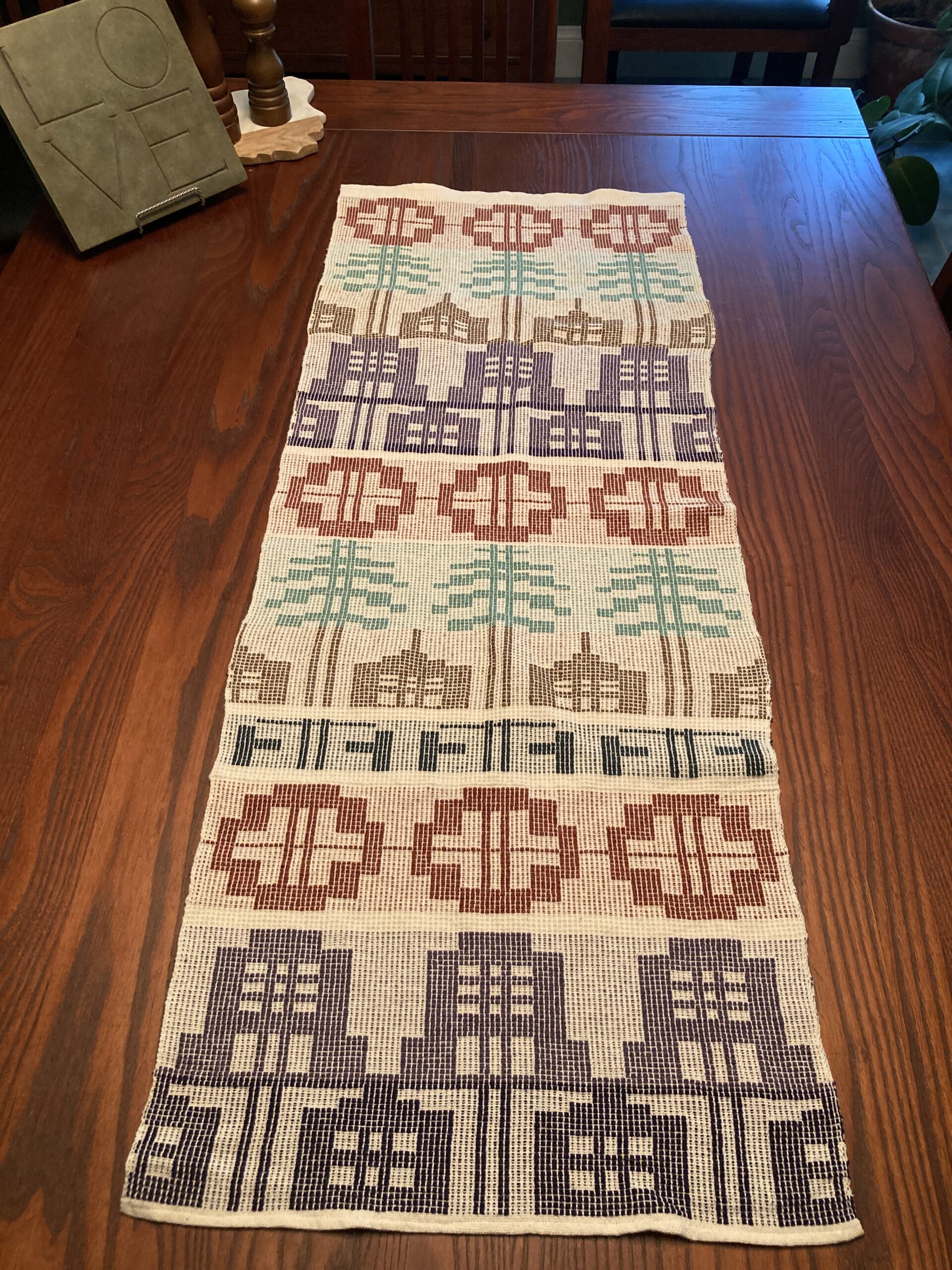
The idea for this runner is from Mary Meigs Atwater’s Recipe Book; series V, number 11, titled botanical garden. I used her profile draft but altered my tie up to create buildings and trees versus her garden.
It was a pleasure to weave and my next go at it will be with a colored warp.

MAFA2025-3853

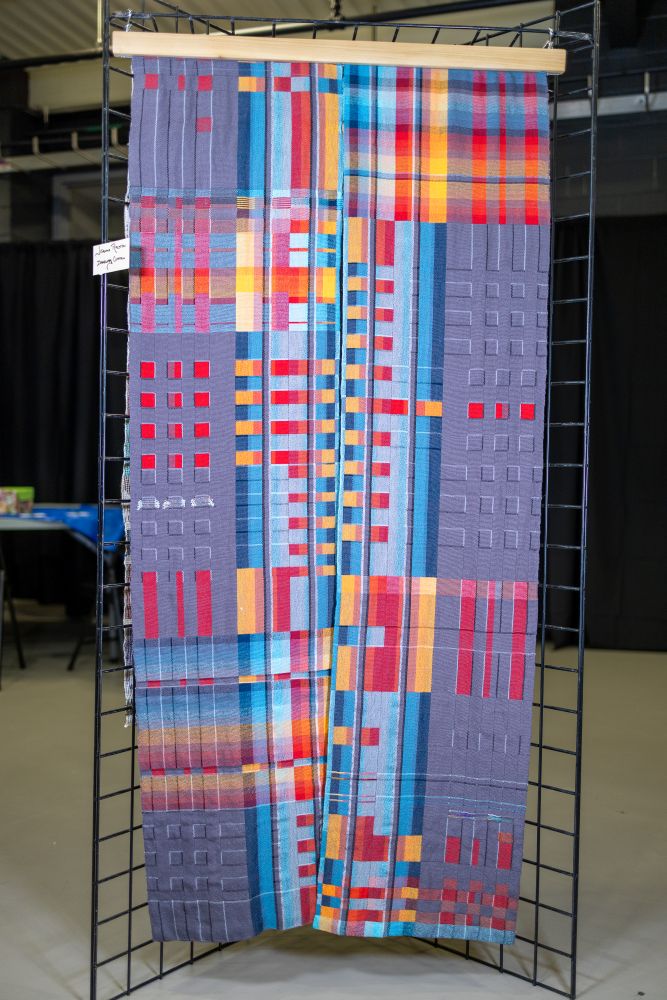
I wove this piece in the hopes of achieving the appearance of a grid (3 D) on the finished textile (see picture 2). I couldn’t bear to weave all gray double weave so I added color to one side of the warp to add some vibrancy.

There are some 3 dimensional aspects even on the colored half where I tried to create an overlying grid. (See picture 3).

A wif does not portray the double weave structure so is not included. However, I used traditional two block double weave on an 8 shaft loom and varied between the four possible tie ups. My color draft and tie ups are pictured.

The piece now hangs as a doorway curtain leading into the yoga room of our home.

MAFA2025-3816

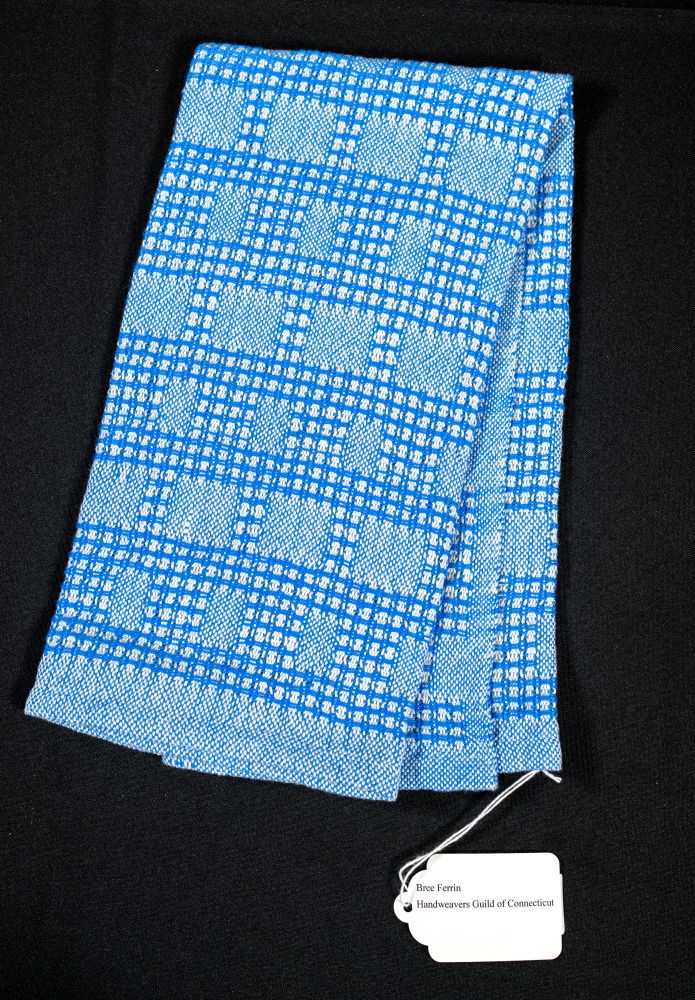
Finished towel is 18.5″, (22″ on loom) x 26″. The 2″ plain weave at the start and finish is used for the hem.
12 dent reed used, sleighed 2121.
Atwater Bronson is heavy on shaft 1 with 198 threads on shaft 1, 74 on shaft 2, 44 on shaft 3 and 80 on shaft 4. For a total 396 ends

MAFA2025-3769

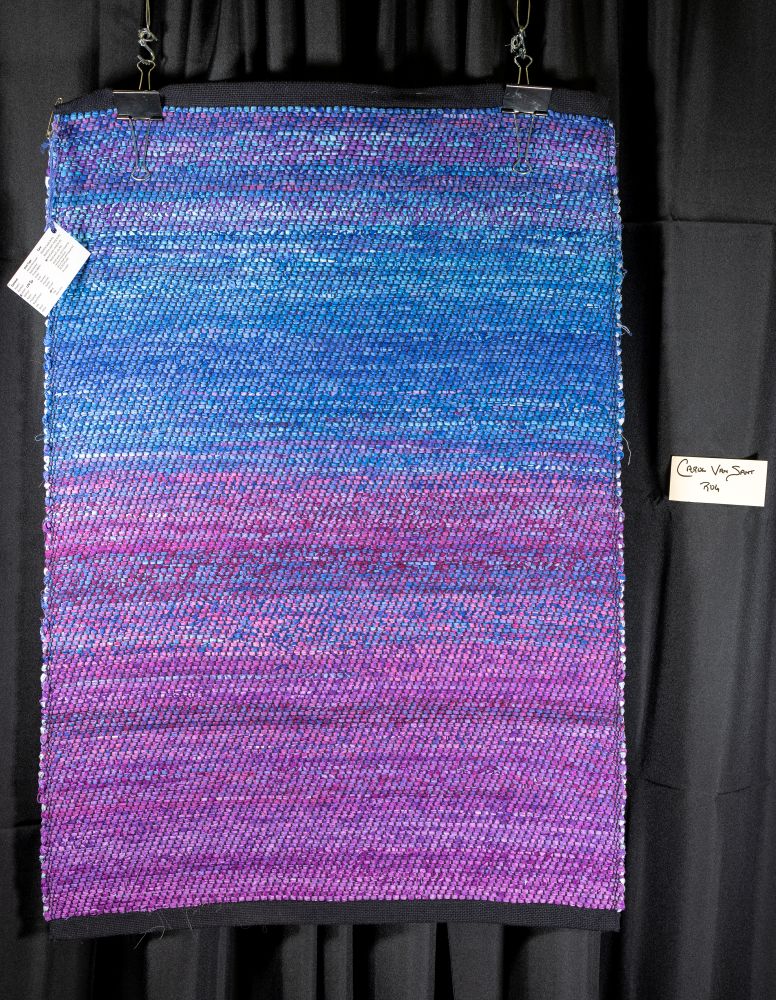
For the blue/purple side of the rug, I tried to weave the fabric strips in to create a movement from blue to purple. I chose the backside fabric to be a contrasting color to the front. The hems are based on Tom Knisley’s hem pattern.