6

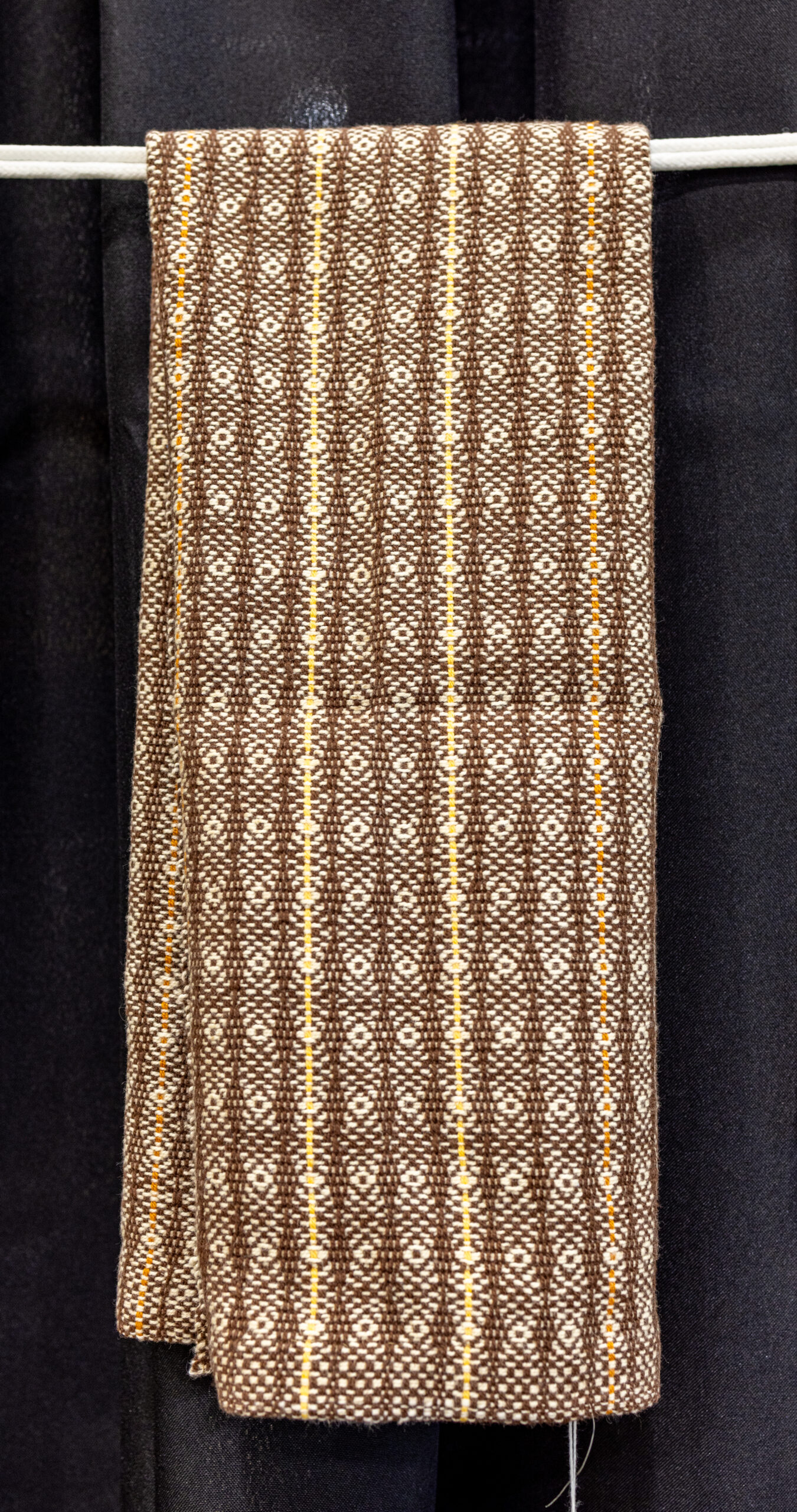
MAFA2025-3868

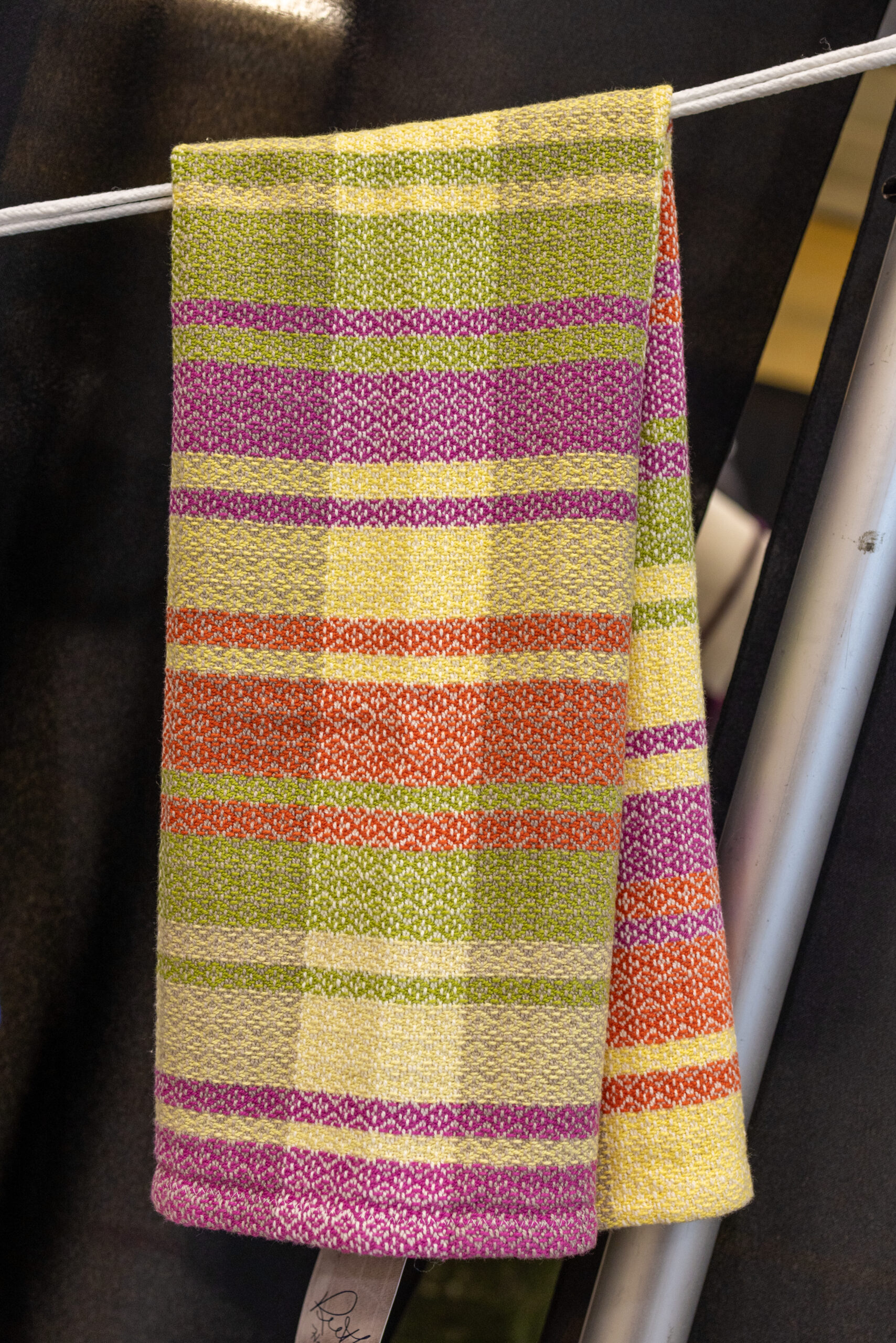
I always use floating selvedges with kitchen towels for less pull in and maintaining some durability and size consistency on the loom-personal choice is enter over, exit under
I’ve enclosed my general instructions as I published in Heddlecraft–one has lots of freedom with block sizes and symmetry versus asymmetry in all forms.
The towel being entered in the exchange is one of the six woven with this threading/warping.
I always choose a rolled hem–this towel is hand-stitched, but a zig zag machine stitch in fine thread would look just fine.

MAFA2025-3811

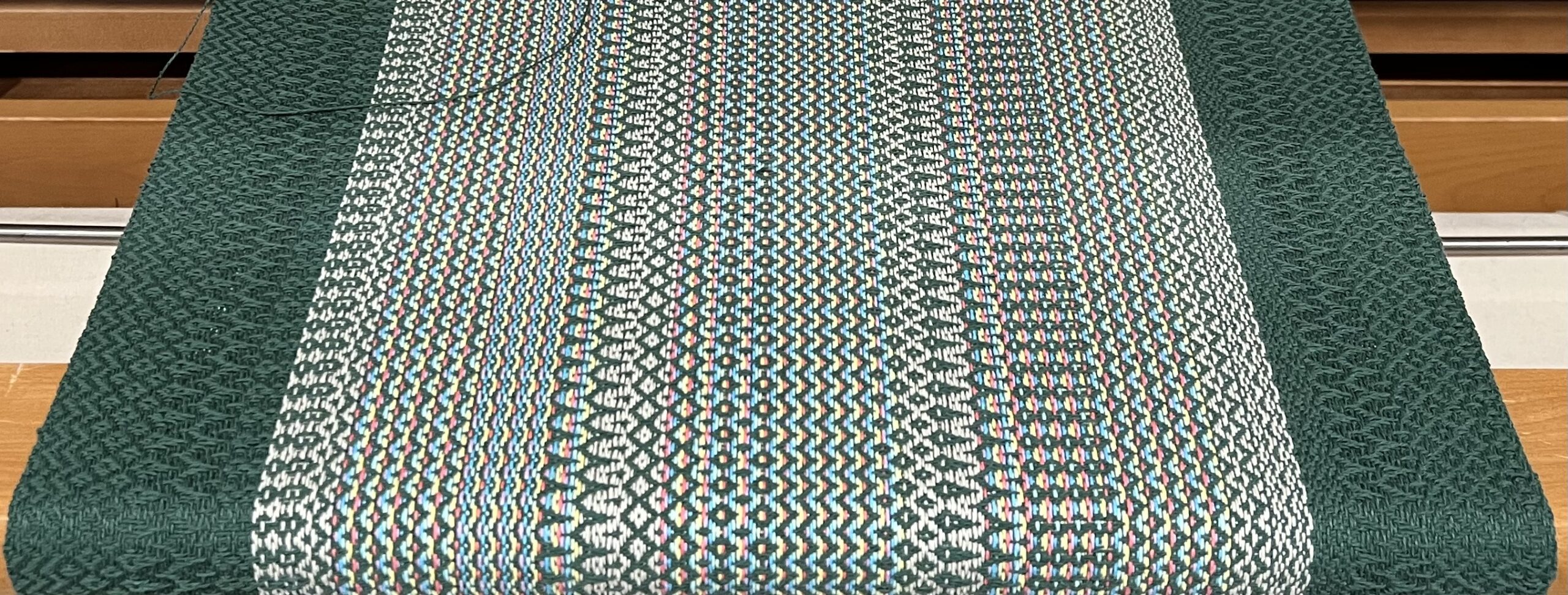
There are 456 ends in this towel. It measures 19″ wide in the reed.
The pattern changes do not line up with the colors. In the draft I used a solid purple to represent the multi-colored areas.

72 green
24 cream
72 ends in a variety of colors
24 cream
72 ends in a variety of colors
24 cream
72 ends in a variety of colors
24 cream
72 green

MAFA2023-042

This wove up very easily. I like both the straight treadling, and the reversing.
I used organic cotton, natural, for the light weft. I find it softer than regular unmercerized, and more linty to weave. Perhaps more absorbent.

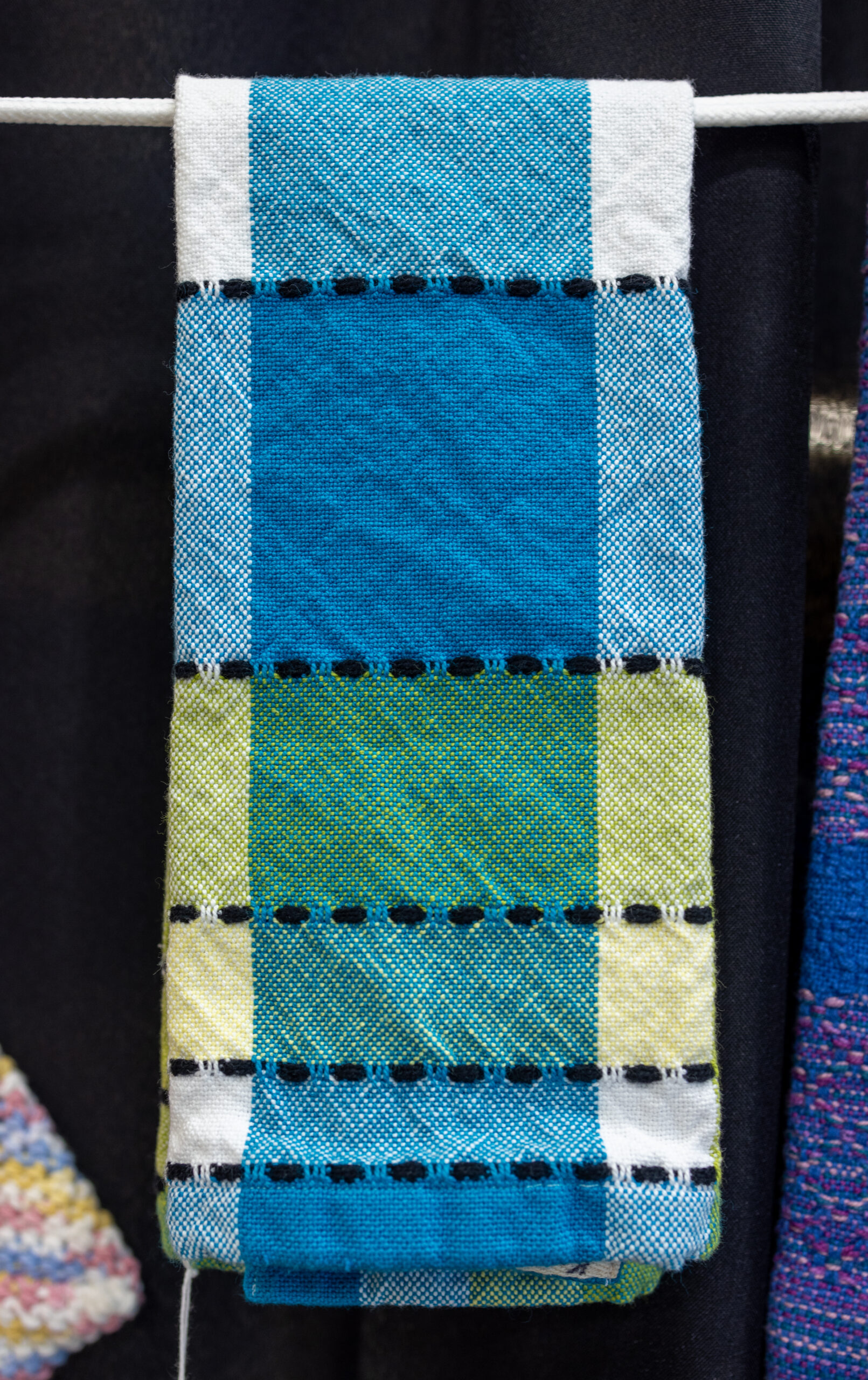
MAFA2023-028

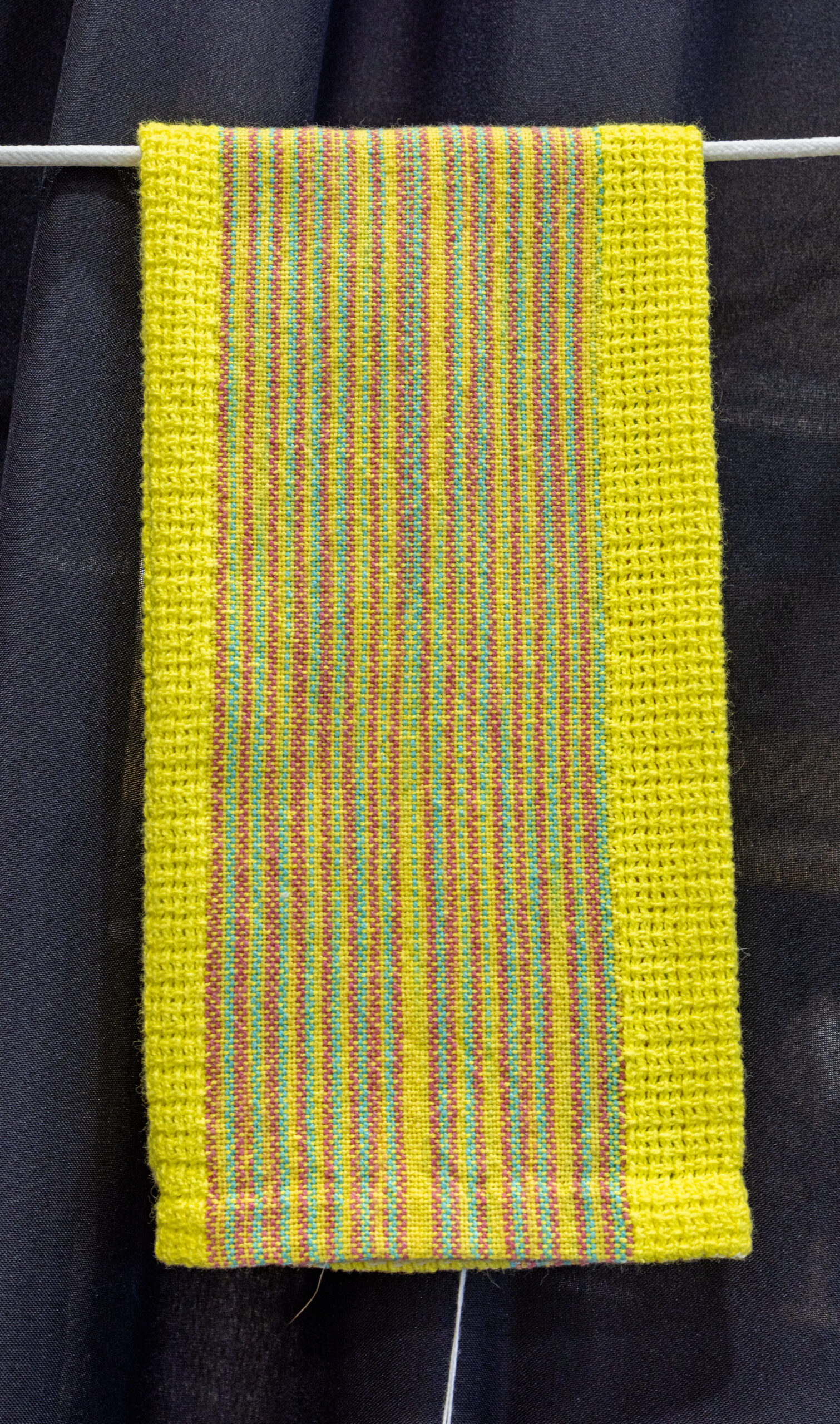
I used 6 shafts to reduce the number of heddles on shafts 1 & 2; putting the plain weave portion on #5 & 6. This could be woven on 4 shafts as well. I used Valley Yarns variegated “Cotton Candy” for the plain weave portions of the warp.

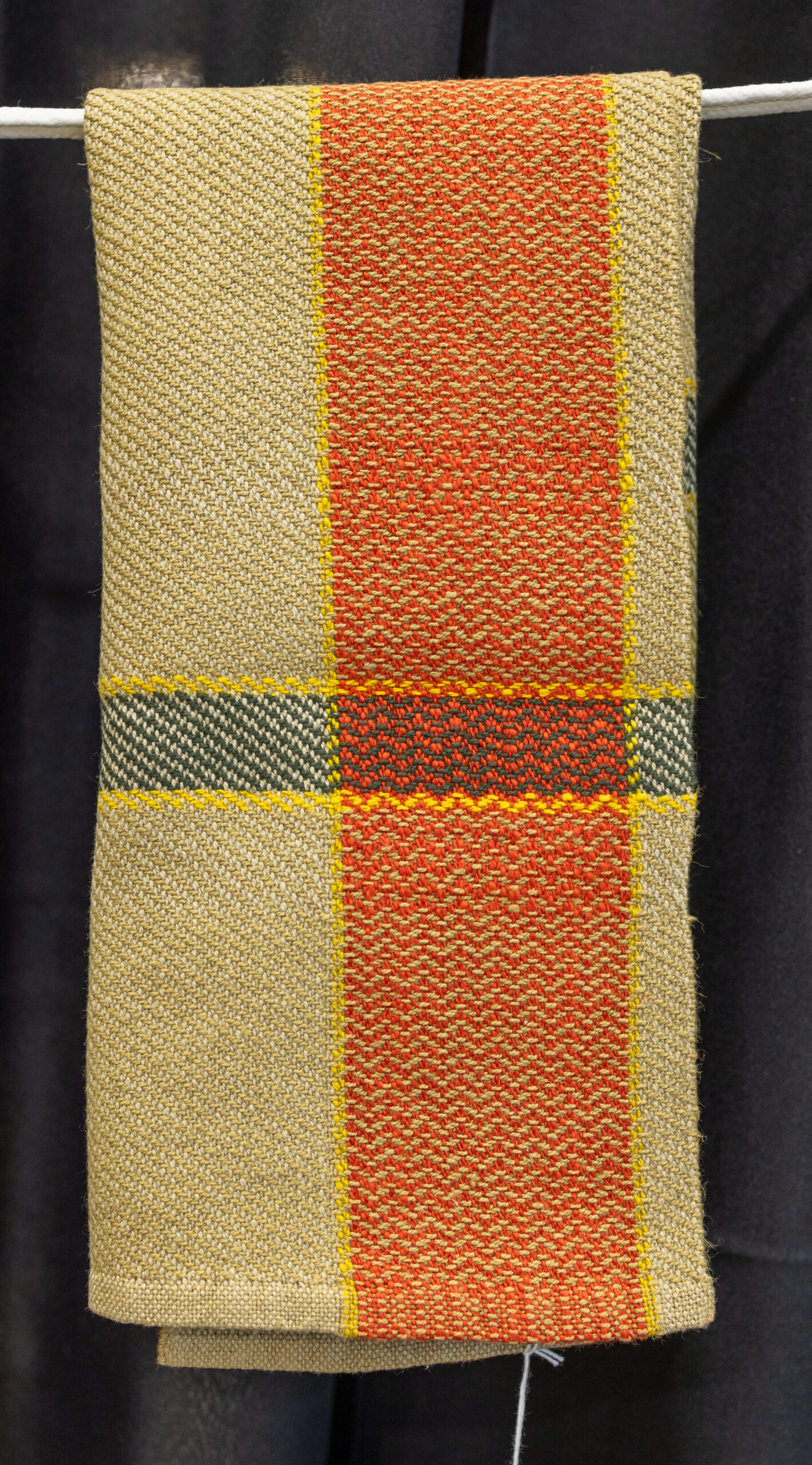
MAFA2023-008

This pattern is based on a draft that Robyn Spady sent me for my participation in her MAFA 2023 class ‘Pictures, Piles, Potpourri, and Perplexing Curiosities.’ She titled the structure “Better Than Basket Weave Basket Weave.”

I used two threads for each floating selvage. After taking off the loom, I serged the ends of each towel, folded the hem, and used the ‘stitch in the ditch’ technique with a straight stitch.

Very enjoyable to weave!

MAFA2023-004

I used Parson’s crepe threading, treadling and tie-up as referenced above, but added a band of my own design to one side of the towel.

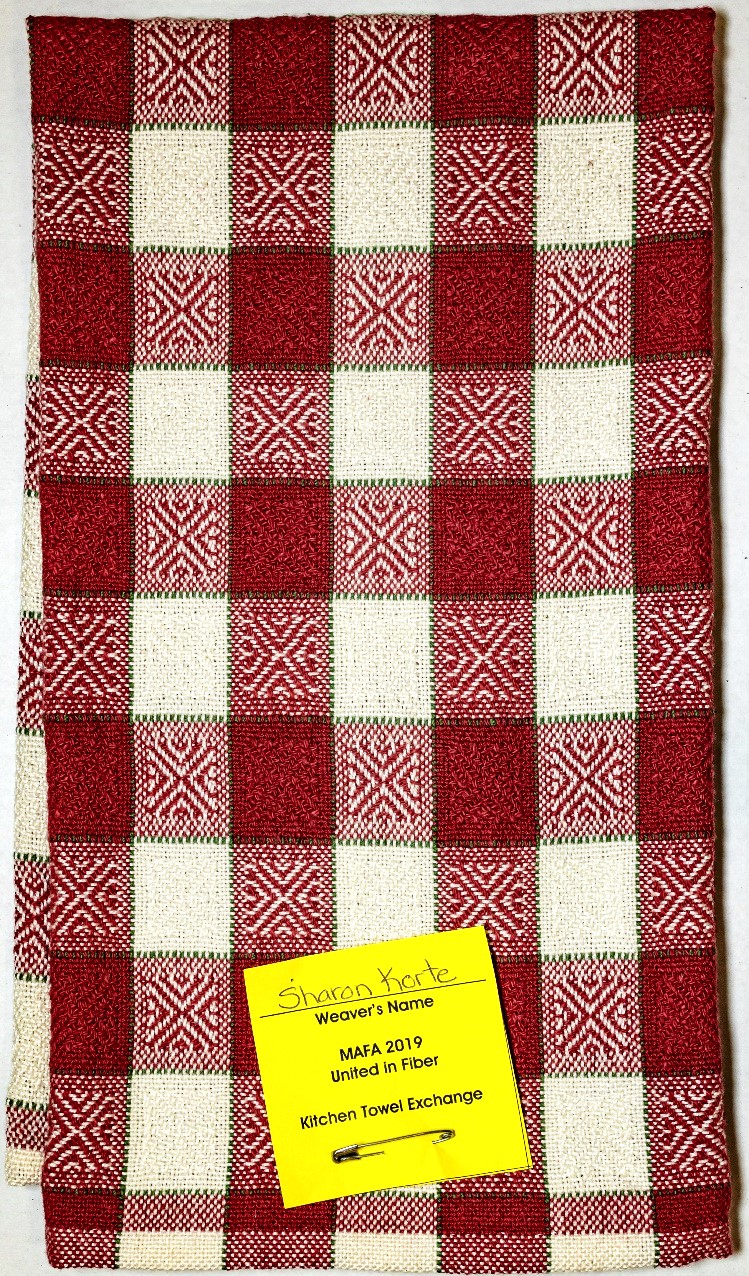
MAFA2019-050

I wove this at 25 epi so it would fit on my workshop loom. If width had not been an issue, I would have woven it at 24 epi.

MAFA2019-051

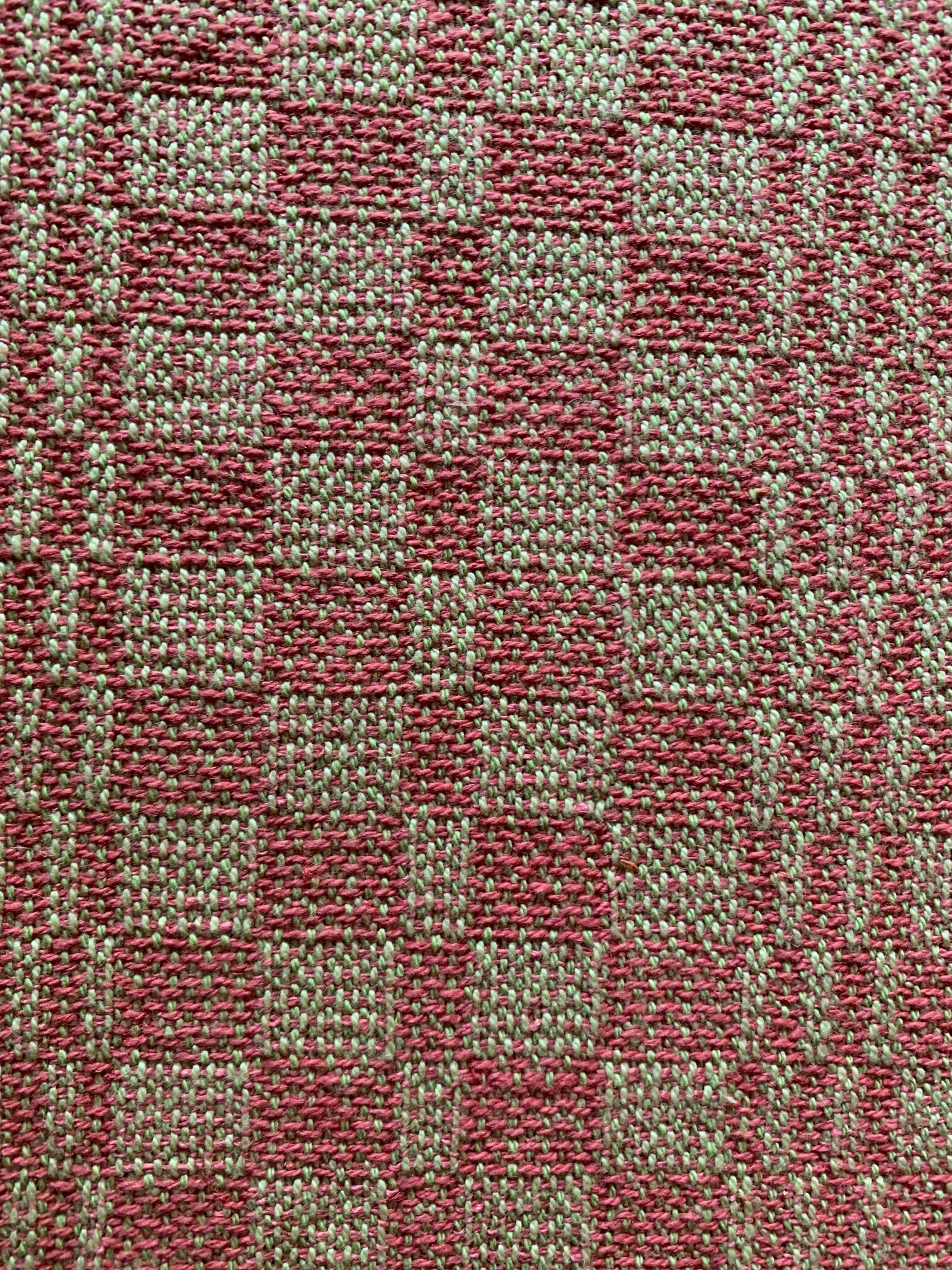
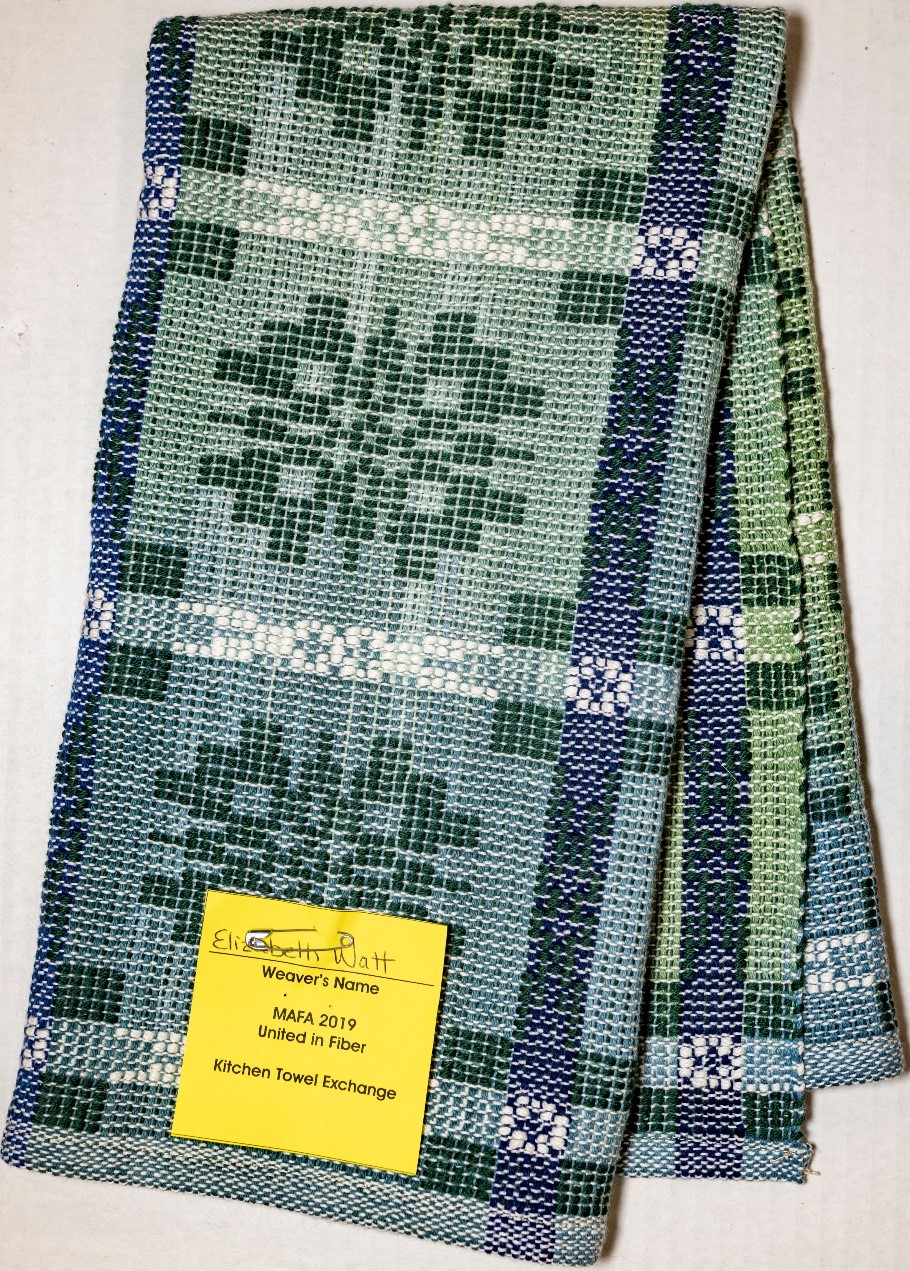
I like towels as usable samples of structures that are new to me because even a failure will probably still dry dishes. Diversified Plain Weave (using Madelyn Van der Hoogt’s “new DPW threading and treadling” see Weaver’s Summer 1997) is a really fun structure I wanted to play with. It has a simple 3 thread unit in both warp and weft that lends itself to using block designs.

A post on Facebook by Robyn Spady led me to a document on handweaving.net – Block Drafts from Heinrich Leisy’s Pattern Book – where I found a 4 block profile draft that appealed to me. I used Fibreworks to interpret it as a DPW draft. The warp is 1 thread thick (4/8 cotton) and 2 threads thin (2/16 cotton) repeated across. I wound the 3 threads at once to make chains that I then handpainted using MX dyes in shades of green for the main warp and navy for accent stripes. I did 5 towels and a large sample on the warp, playing with different weft colours for each one. The weft sequence is 2 shots 2/16 on plain weave treadles followed by one shot of 4/8 on a pattern treadle. My Tempo Treadle was indispensable for keeping my place in the very long treadling sequence.

The neatest thing about this structure is the colour effect. There is very little blending of warp and pattern weft colours so choices that would otherwise get muddled in a weave structure like plain weave (e.g. red pattern on the green background) actually work quite well. The thin threads are thin enough that they don’t seriously skew the background colour, either, though next time I might try a thin weft in a colour and value close to the warp colours to make it disappear even more and I might try an even finer thin weft (2/20 or 2/30). Note that the first towel looked sleazy on the loom so I cut it off and washed it to check. It shrank quite a bit in both length and width and filled in nicely with a beautiful hand.