
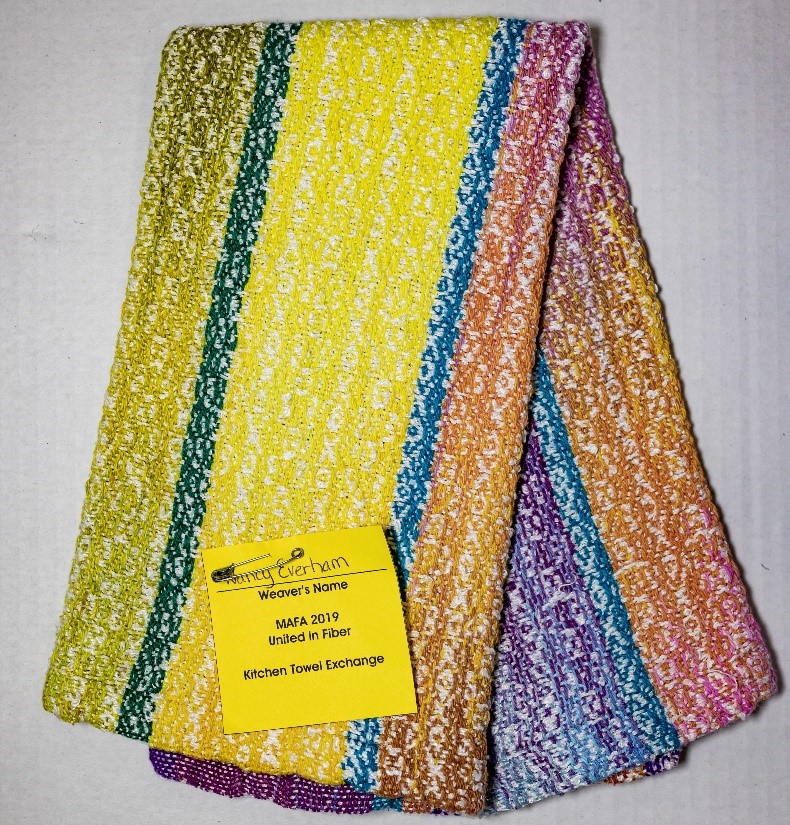
Used 5 stripes of my hand dyed 8/2 cotton (purple/blue, orange/pink, yellow, greens, red/orange) – each 3″ wide with 1/2″ wide stripes of purple, teal and blue of commercially dyed 8/2 cotton. The hems are plain weave (1 1/2″ long, turned and machine stitched). Crocheted a hanging loop from Red Heart Scrubby Smoothy cotton from JoAnn Fabrics. Chose a turned twill to best show off the hand dyed cottons. Originally tried to use a boucle cotton; but it completely obliterated the pattern – so I found the no. 8 white cotton in my stash (Phildar 316 Relais no 8 (made in France) purchased in an estate sale), which is actually a 4 ply but seems to be the same weight as 8/2 cotton. I think the pattern and the stripes are a beautiful complement to each other.
MAFA2019-002
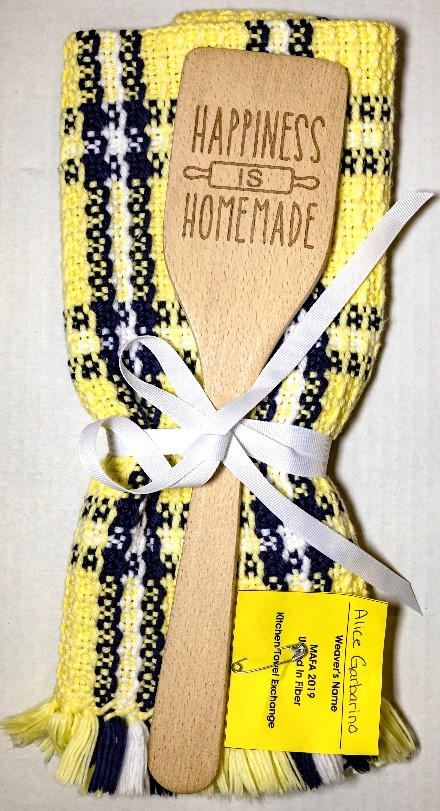
The colors and pattern I used were based on a towel that I saw at Red Stone Glenn last year. The pattern is from Jane Patrick’s _The Weaver’s Idea Book – Creative Cloth on A Rigid Heddle Loom_. I have used this pattern many times both in towels and also scarves. It is easy to follow and looks way more complicated than it really is. I love the versatility of the rigid heddle loom as I also did a plain weave towel on the same warp without the pick-up stick. The only difficulty I had was trying to translate the rigid heddle structure to the drawdown documents suggested. I hope this all makes sense to anyone wanting to weave this same pattern.
MAFA2019-004
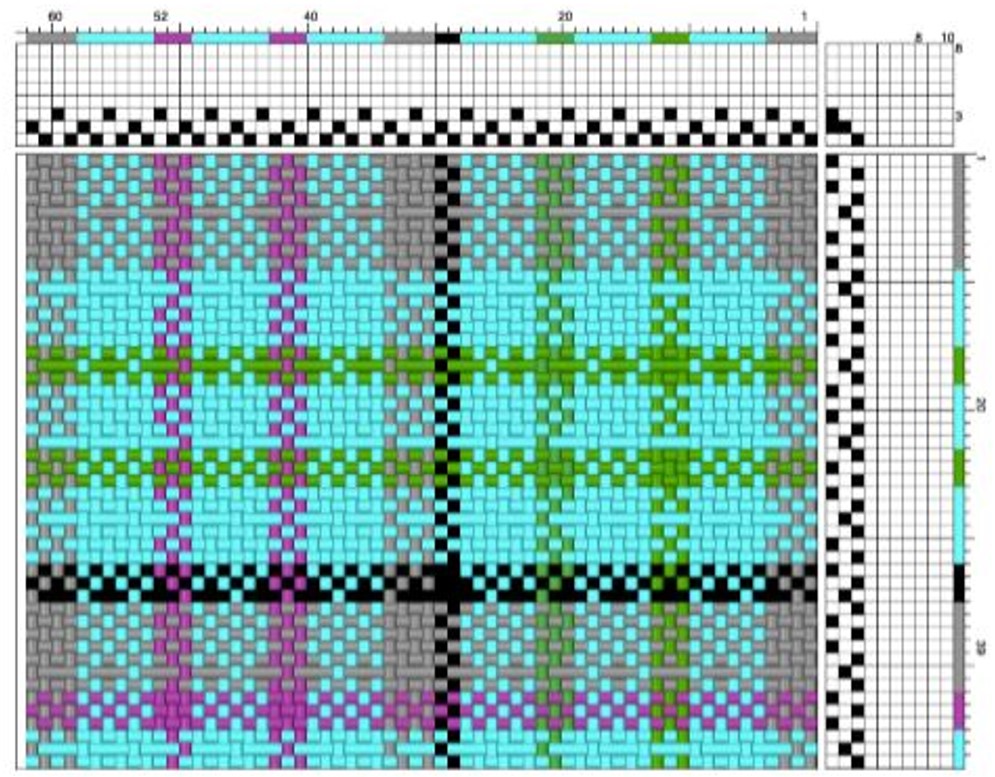
Woven on rigid heddle loom, with pickup stick used as third shaft. I was exploring textures available on a rigid heddle loom and tried to develop a threading and treading to get a Bumberet texture. This turned out to be almost impossible because Bumberet depends on sequences of 3s. Only some of the color stripes show the typical Bumberet design. However, I’m pleased with the texture which will be absorbent.
MAFA2019-020
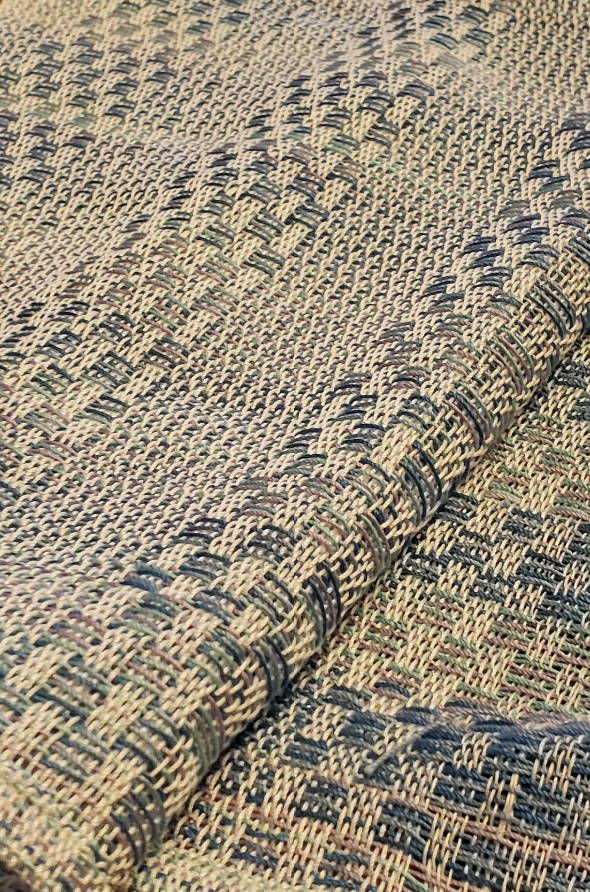
I am a beginner weaver and this is my first project. The cotton thread I used tangled easily and I struggled with setting the warp. And then making sure it was not twisted or mis-threaded. There are a few (many) mistakes.