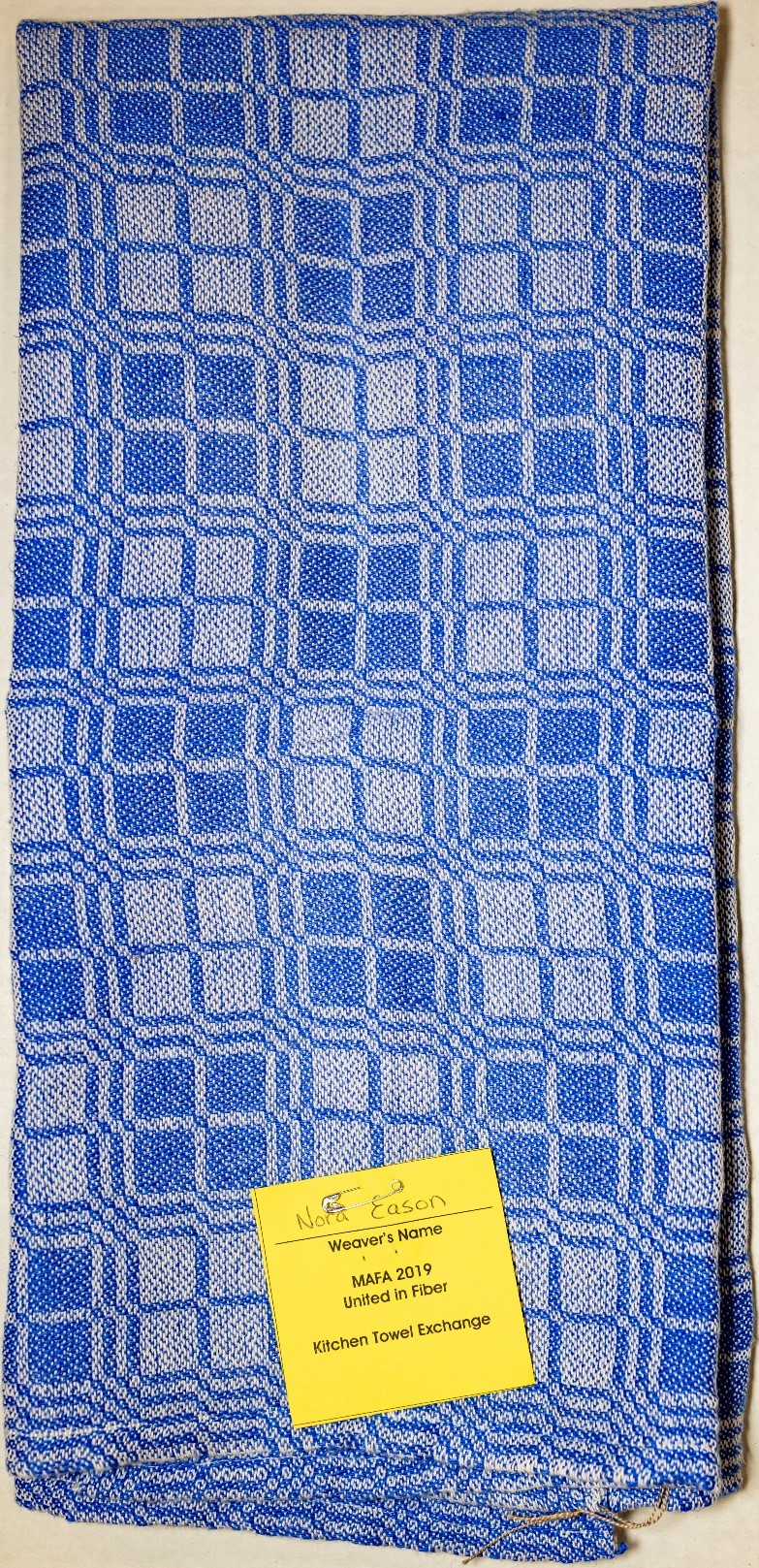
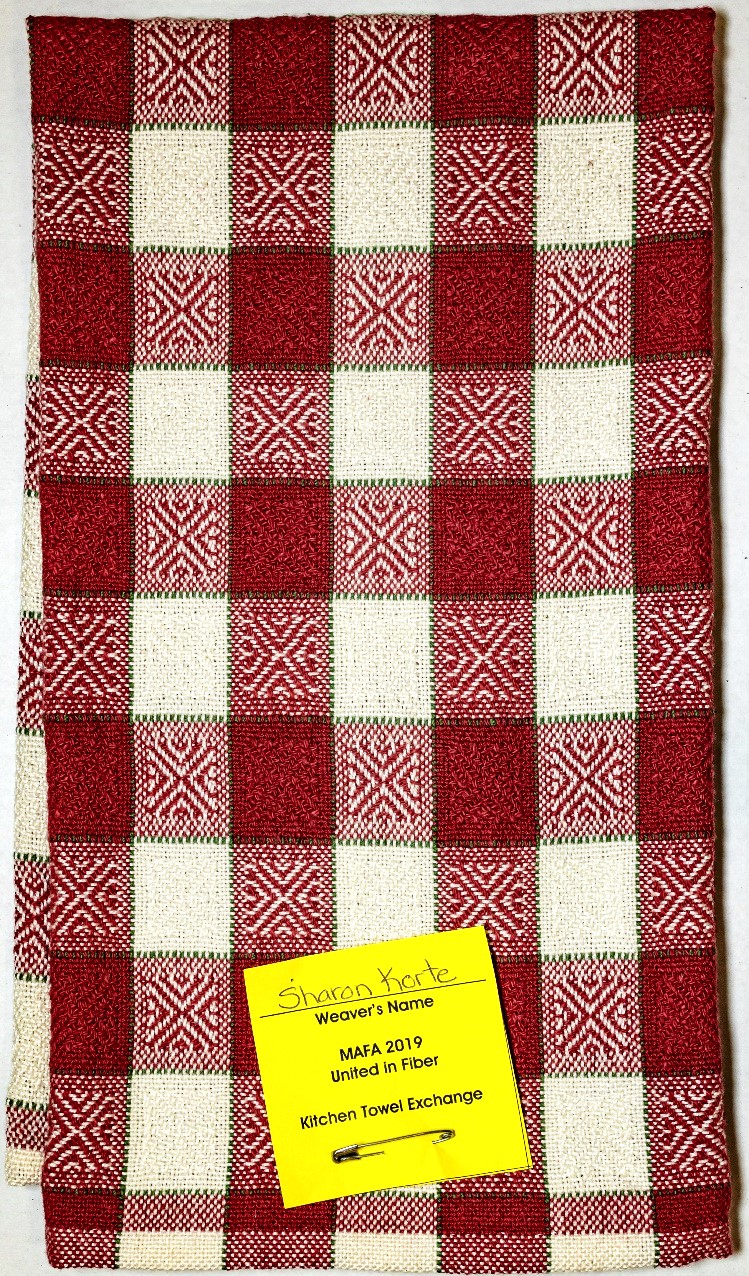
Finished towel is 17.5″ x 25.0″
MAFA2019-050
I wove this at 25 epi so it would fit on my workshop loom. If width had not been an issue, I would have woven it at 24 epi.
MAFA2019-060
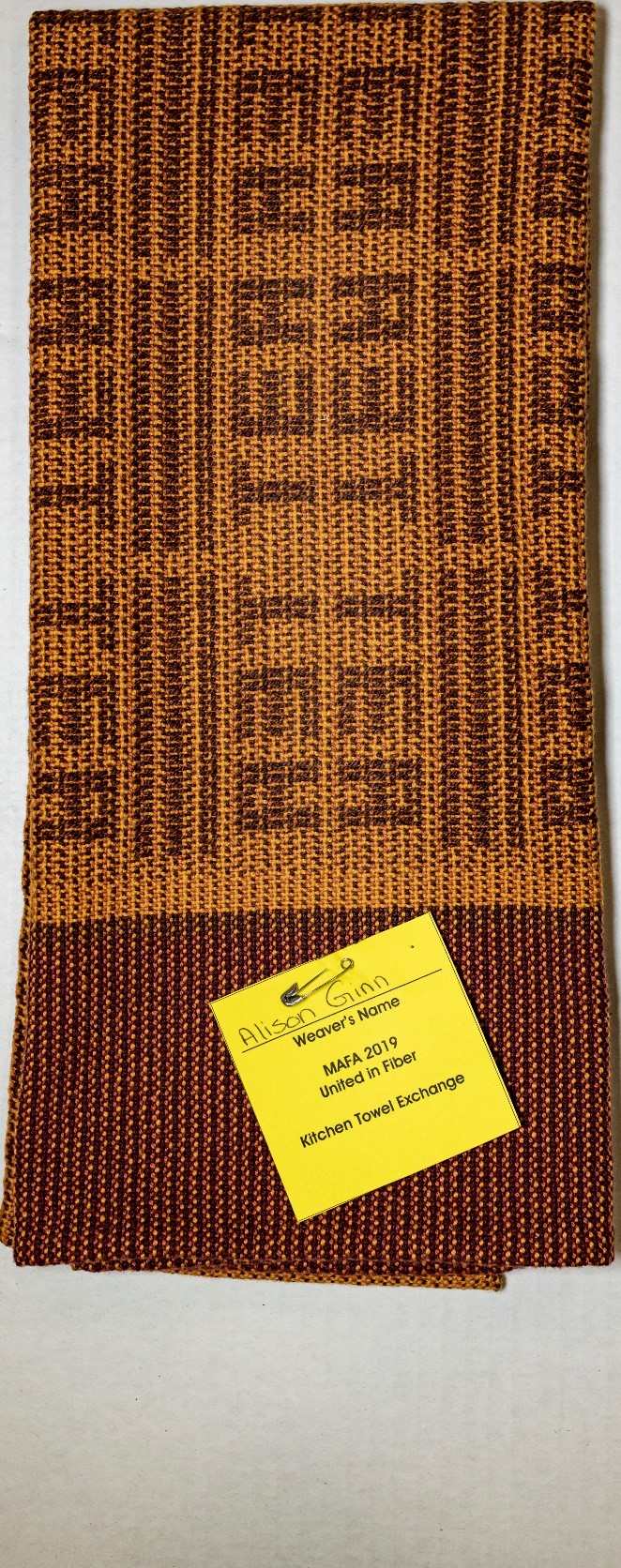
We are big tea lovers in the family – so this towel in Handwoven S/O 2003 caught my eye. I have used this draft numerous times over the years – in various colours and weights of fibre – for towels and as material for tray mats, tea cozies, market bags, etc.
For this set of towels, I returned to colours similar to those in the original article:
warp – brun moyen, rouille & orange brule
weft – magenta, brun moyen (pattern), orange brule (tabby)
Warped at 18 epi, wove at 36 ppi.
MAFA2019-053
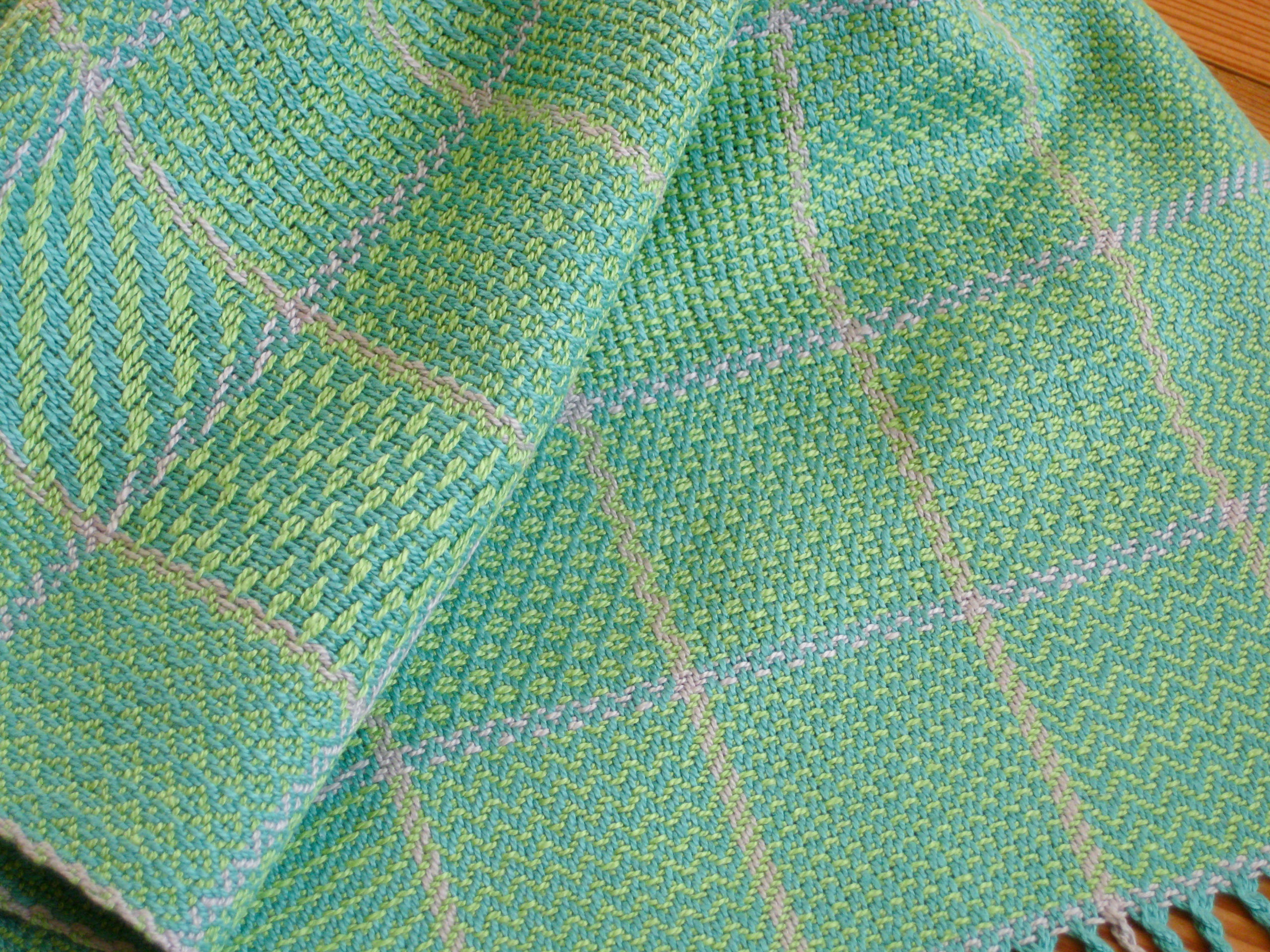
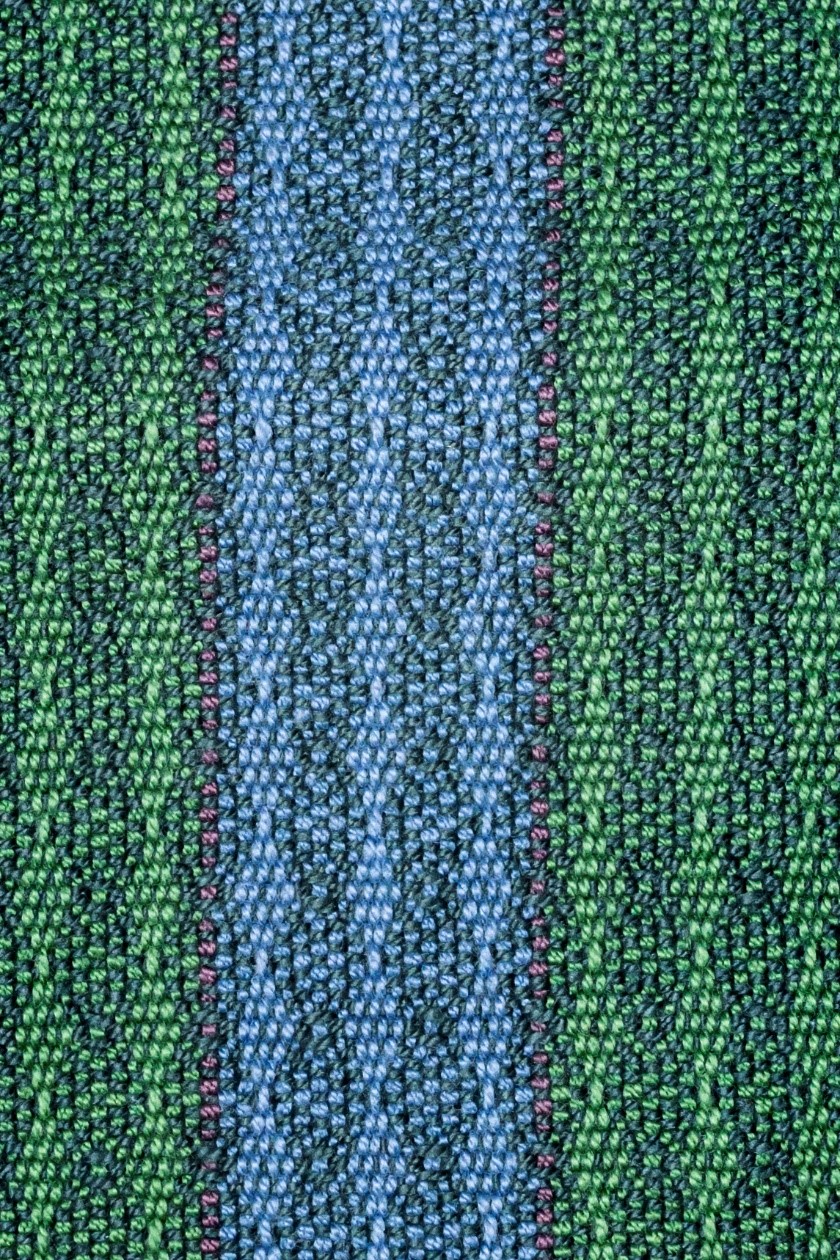
This was a warp and project that was my first exploration of a complex (for me) gamp.
While a newer weaver, and always trying new things, I loved working on a twill sampler with friend and weaving mentor Jane Stafford via her Canadian Online Guild. The resulting gamp for this set of four towels was inspired by Cally Booker’s step-by-step instructions and used some of my favorite colors. The project sampling on a Guild loom was great fun!
There is a band of mixed colors in the center of the towel that is playful, but I would not include that again…love the playful darker bands that are two colors interacting with each other.
Editor’s Note: Since we are missing a photo of Bethany’s towel, the green photo here is courtesy of Cally Booker. See Cally’s website at https://weavingspace.co.uk/blog/designing-a-twill-gamp-part-1/
Also, note, the draft here is a generic gamp draft.
MAFA2019-074
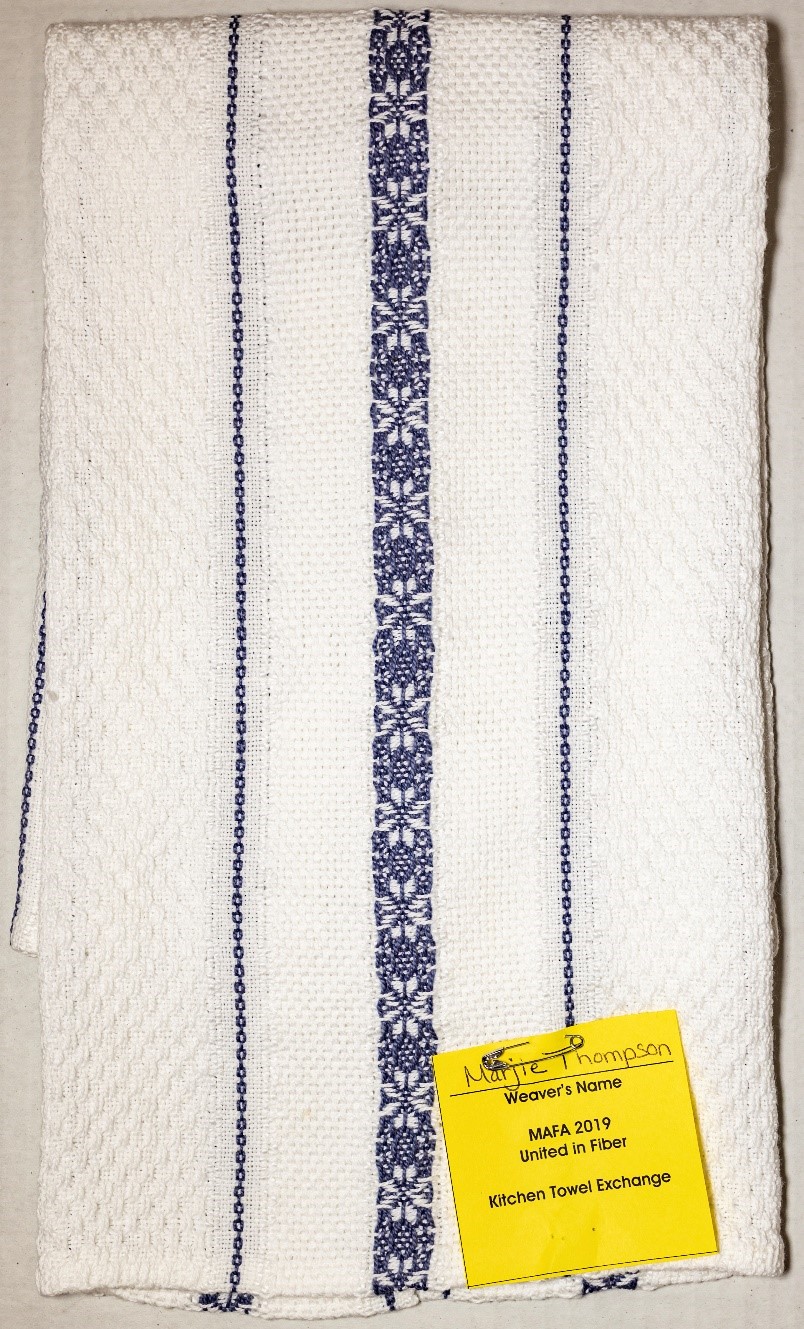
This was my 2019 Cross Country Weavers sample. The assignment was “Stripes in Structure.” The stripes contain 3 Shaft Spot, Basket Weave, and 9 Shaft Hin und Wieder.
MAFA2019-062
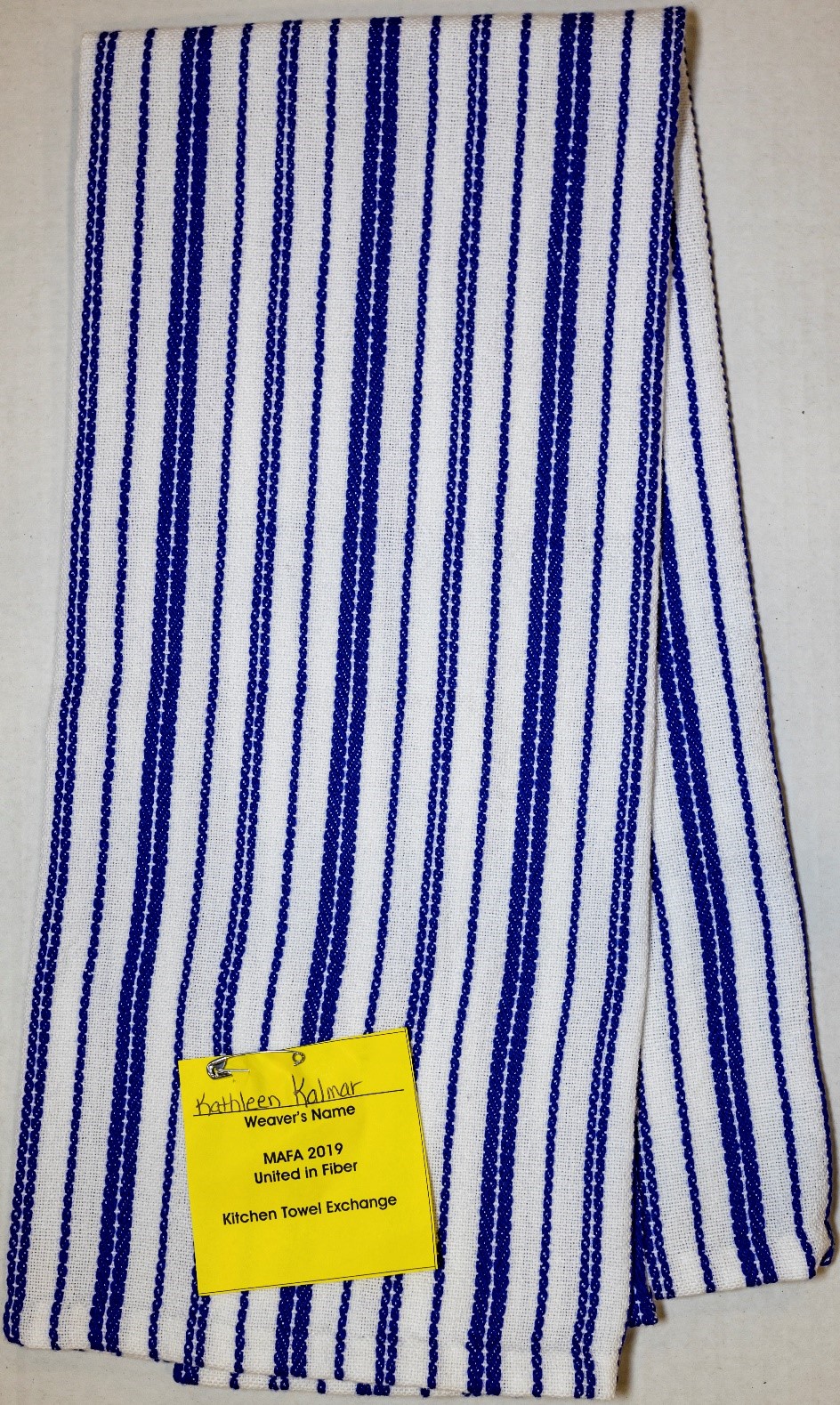
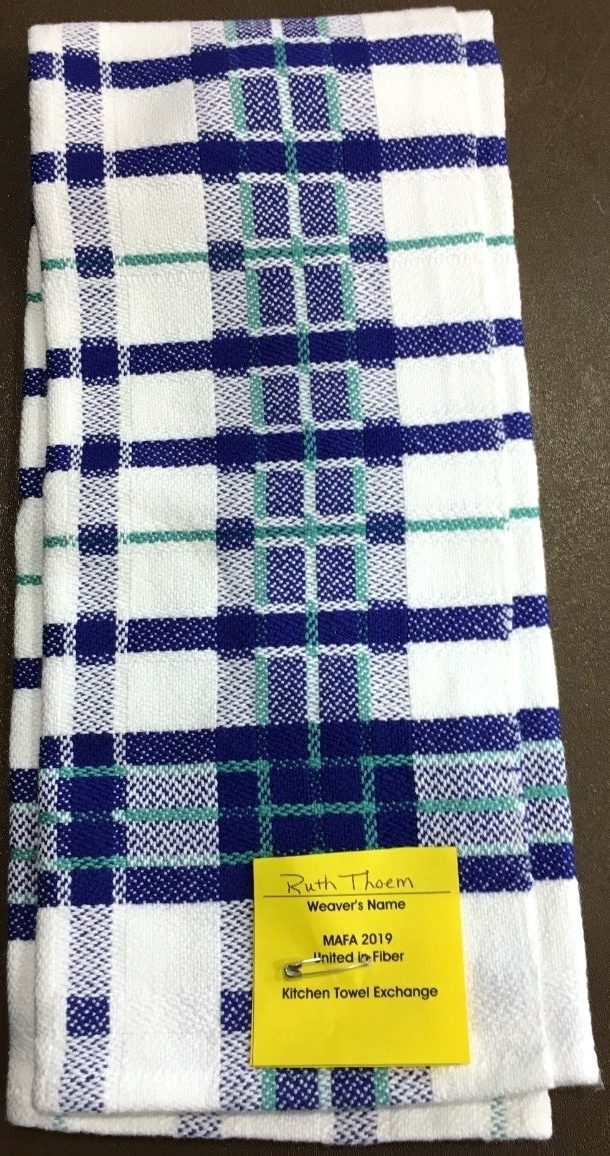
Towel is 8 repeats plus 18 ends to balance. Was 17.83″ in 15 dent reed. The warp had 418 ends of white 20/2 @ 30 EPI and 272 ends of 16/2 blue @ 60 EPI.
From the manuscripts of J. P. Meyer and F. Walbert and Jacob Angstadt. I got this draft from a Marjie Thompson workshop.
MAFA2019-069
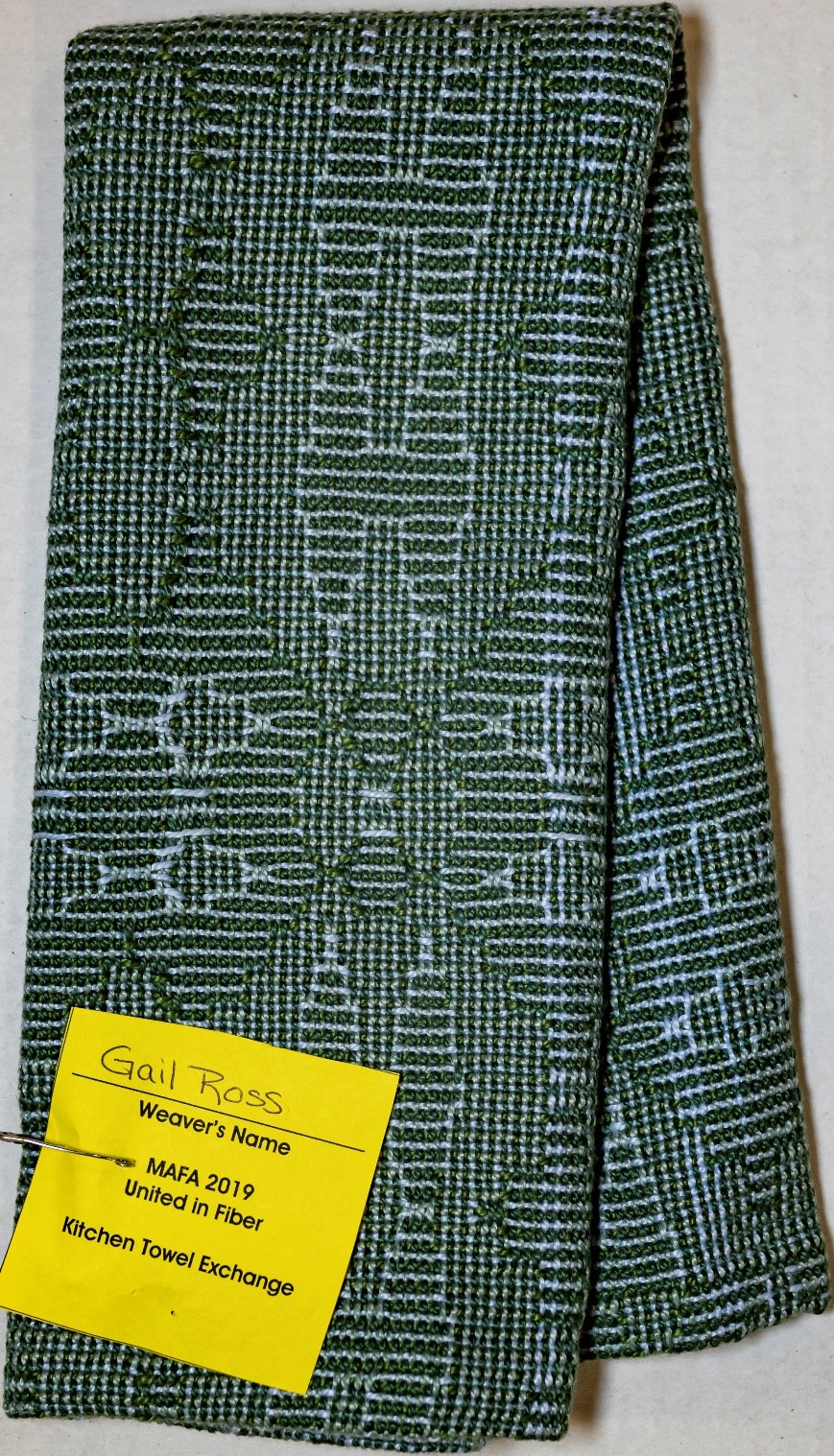
According to the monograph, shadow weave is basically a balanced weave but the patterns are derived from twill. The warp arrangement and weft picks alternate light and dark and the greater contrast, the greater visual impact.
MAFA2019-051
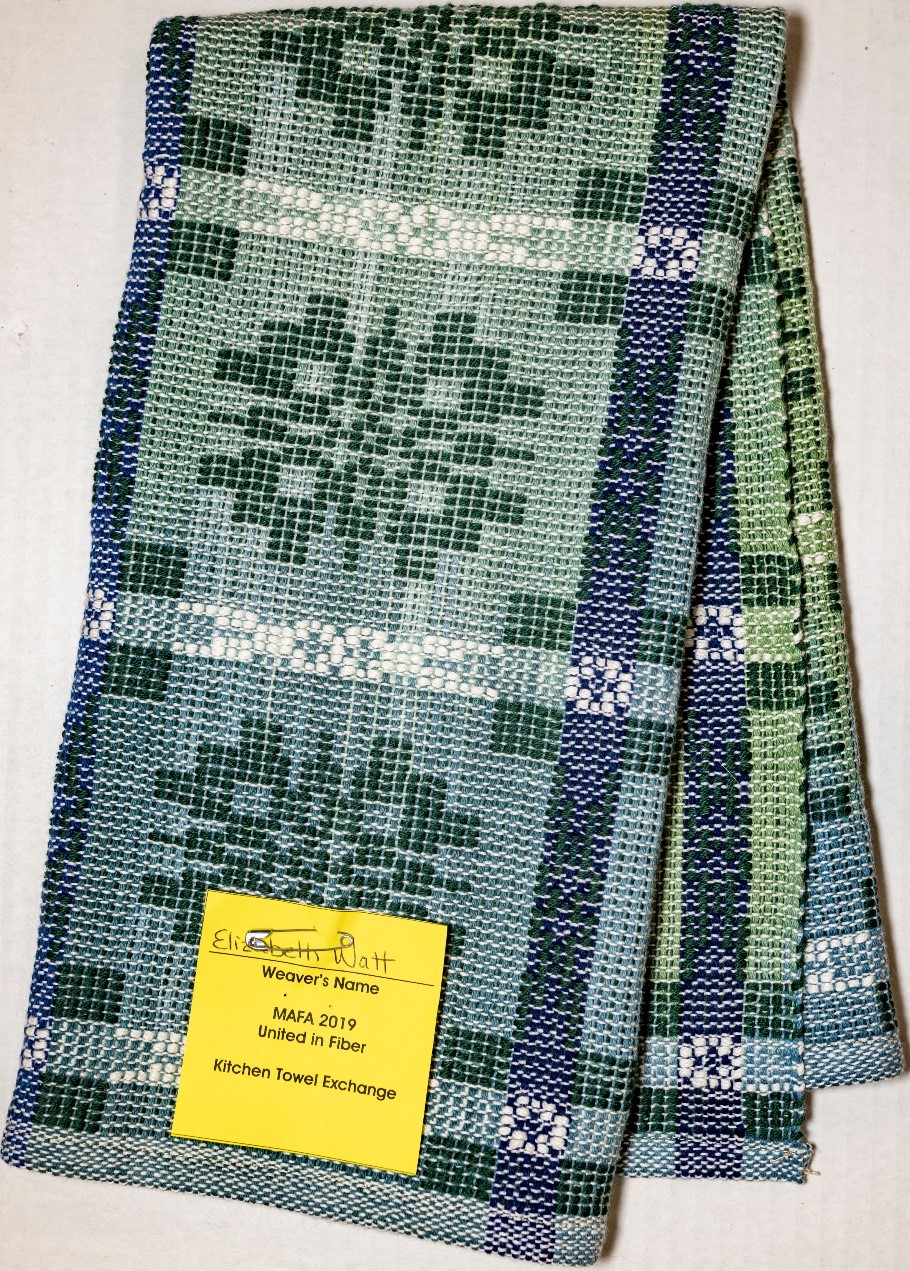
I like towels as usable samples of structures that are new to me because even a failure will probably still dry dishes. Diversified Plain Weave (using Madelyn Van der Hoogt’s “new DPW threading and treadling” see Weaver’s Summer 1997) is a really fun structure I wanted to play with. It has a simple 3 thread unit in both warp and weft that lends itself to using block designs.
A post on Facebook by Robyn Spady led me to a document on handweaving.net – Block Drafts from Heinrich Leisy’s Pattern Book – where I found a 4 block profile draft that appealed to me. I used Fibreworks to interpret it as a DPW draft. The warp is 1 thread thick (4/8 cotton) and 2 threads thin (2/16 cotton) repeated across. I wound the 3 threads at once to make chains that I then handpainted using MX dyes in shades of green for the main warp and navy for accent stripes. I did 5 towels and a large sample on the warp, playing with different weft colours for each one. The weft sequence is 2 shots 2/16 on plain weave treadles followed by one shot of 4/8 on a pattern treadle. My Tempo Treadle was indispensable for keeping my place in the very long treadling sequence.
The neatest thing about this structure is the colour effect. There is very little blending of warp and pattern weft colours so choices that would otherwise get muddled in a weave structure like plain weave (e.g. red pattern on the green background) actually work quite well. The thin threads are thin enough that they don’t seriously skew the background colour, either, though next time I might try a thin weft in a colour and value close to the warp colours to make it disappear even more and I might try an even finer thin weft (2/20 or 2/30). Note that the first towel looked sleazy on the loom so I cut it off and washed it to check. It shrank quite a bit in both length and width and filled in nicely with a beautiful hand.