

188 Warp Ends; remember when following Dixon’s patterns that the draft does show the threading needed to “balance” the stripes.
MAFA2025-3940
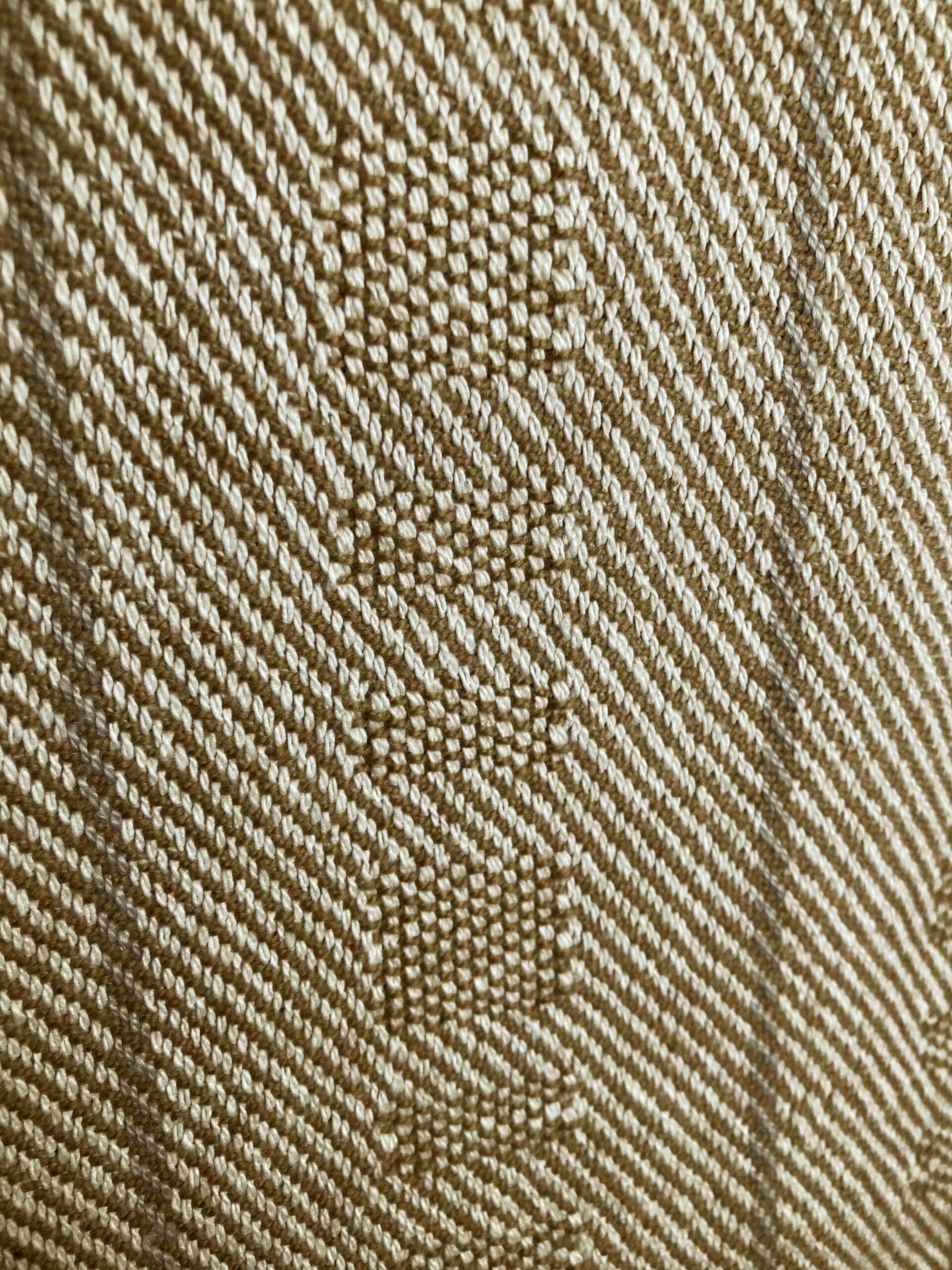
I made 4 towels, each with a different color weft. The warp was 19″ wide x 160″ long on the loom with 384 ends (4 floating selvedge threads). The finished towels were 16″ x 25″ hemmed. I lost 3″ in width and 6″ in length after removing from the loom, washing and drying the towels.
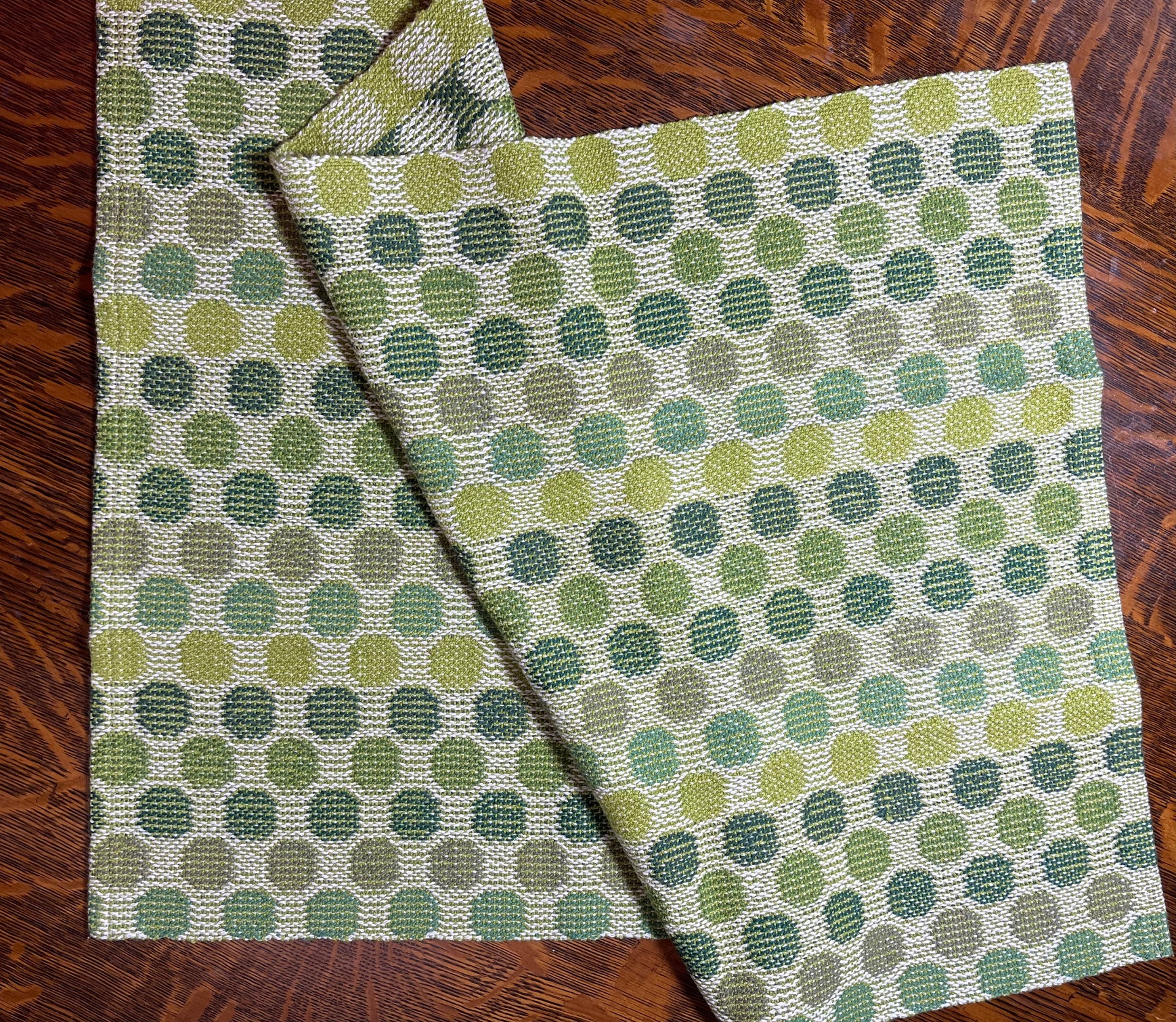
MAFA2025-3868
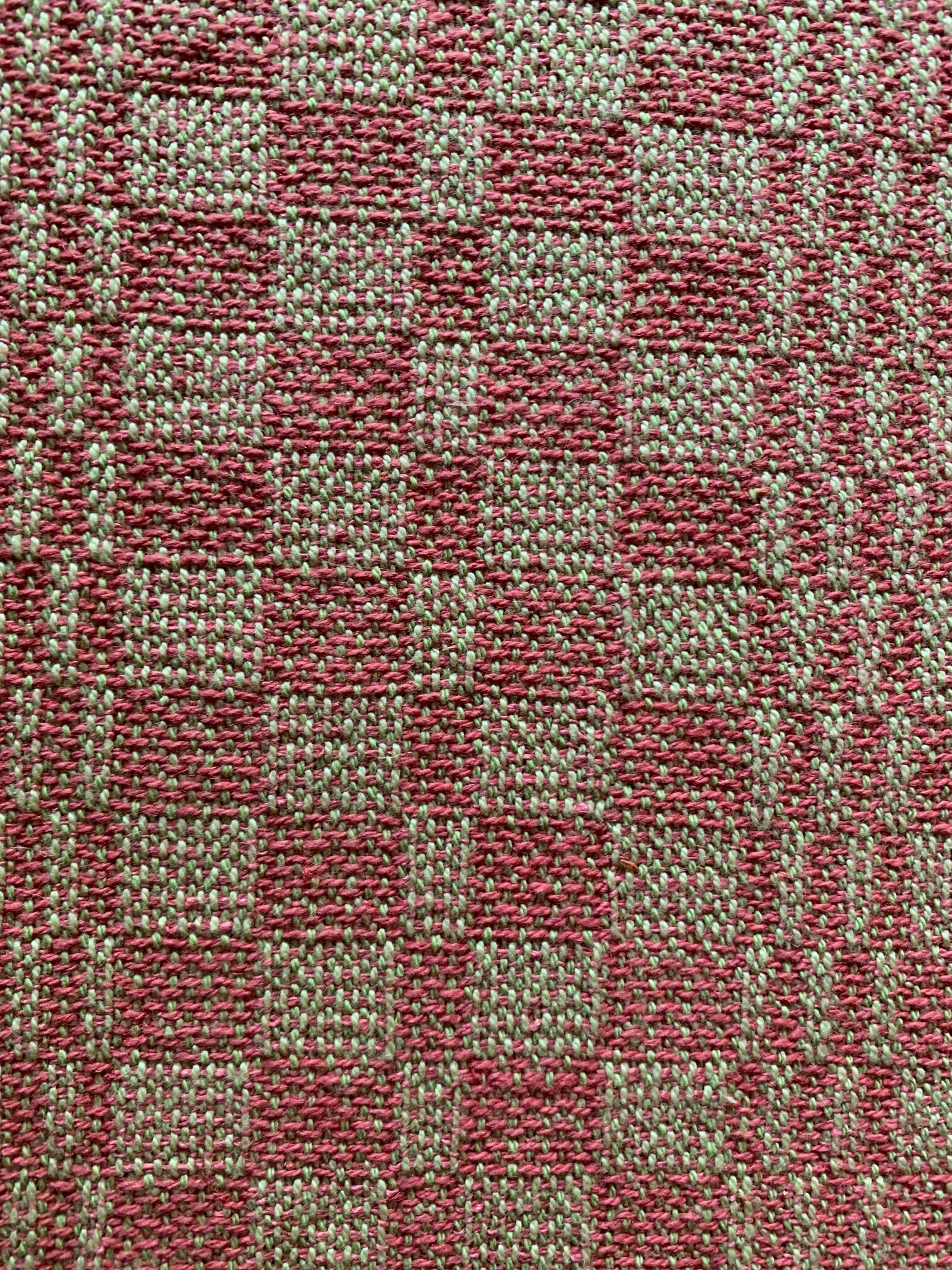
I always use floating selvedges with kitchen towels for less pull in and maintaining some durability and size consistency on the loom-personal choice is enter over, exit under
I’ve enclosed my general instructions as I published in Heddlecraft–one has lots of freedom with block sizes and symmetry versus asymmetry in all forms.
The towel being entered in the exchange is one of the six woven with this threading/warping.
I always choose a rolled hem–this towel is hand-stitched, but a zig zag machine stitch in fine thread would look just fine.
MAFA2025-3776
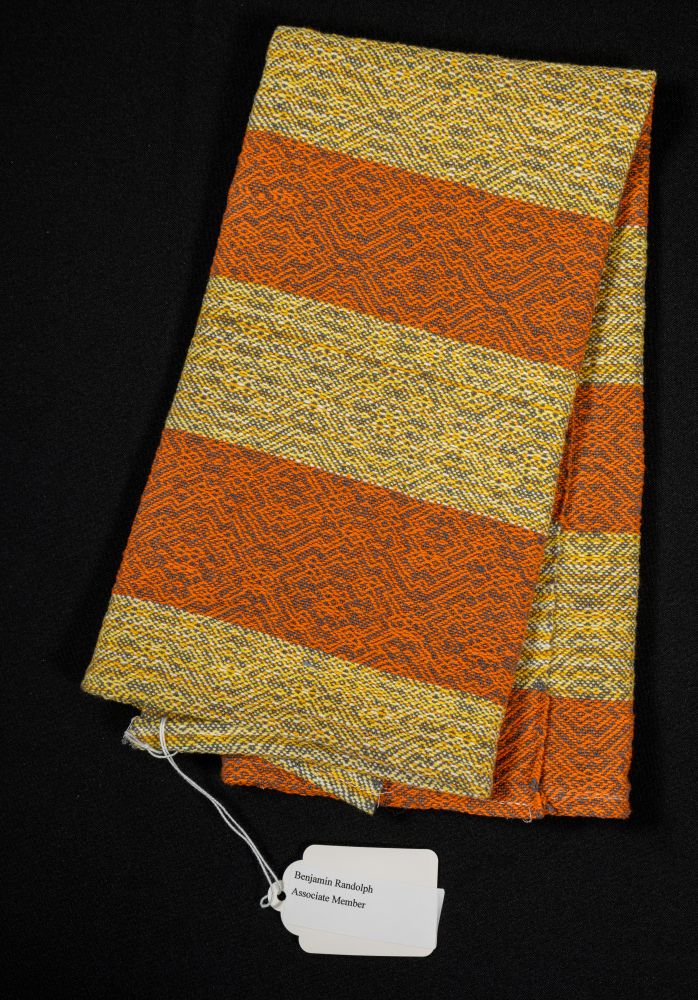
I used the draw down from Handweaving.net number 61229.
I used a 15 dent reed sett 20 epi.
Warped 444 threads 442 for the pattern and 2 for floating selvedge.
In the loom they were 22 inches wide and 30 inches long. After wash and hemming they were 18.5 wide and 25.5 long.
With the draw down from handweaving.net I added a border on each side of 8 threads per side and add a 2 in border pick at bottom and top of the towel.
MAFA2025-3748
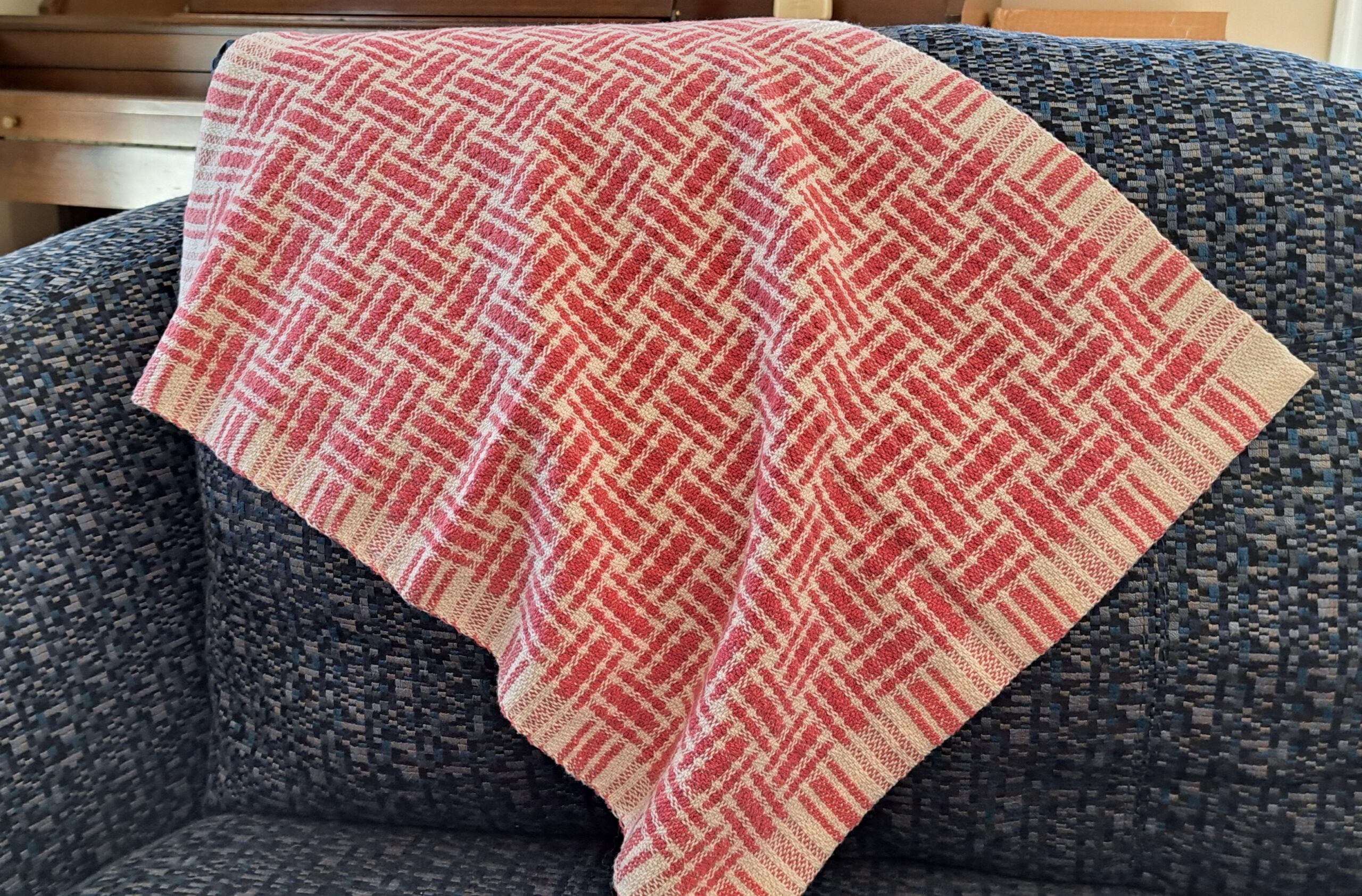
This towel was adapted from a Colour-and-Weave Baby Blanket that I designed for a study group project.
It is log cabin colour-and-weave overlaid on broken twill blocks – with the colour order of the blocks being LDLD DLDL.
I wove three towels – one tromp-as-writ; one using natural weft; and one using rose weft. Each of the single weft colour towels was woven with a straight twill treadling.
I chose the tromp-as-writ towel for the exchange.
Towel uses two colours – one dark and one light – for this towel I chose rose and natural.
408 ends plus 1 floating selvedge each side = 410 ends total
Finished size: 17″x26″
MAFA2023-044
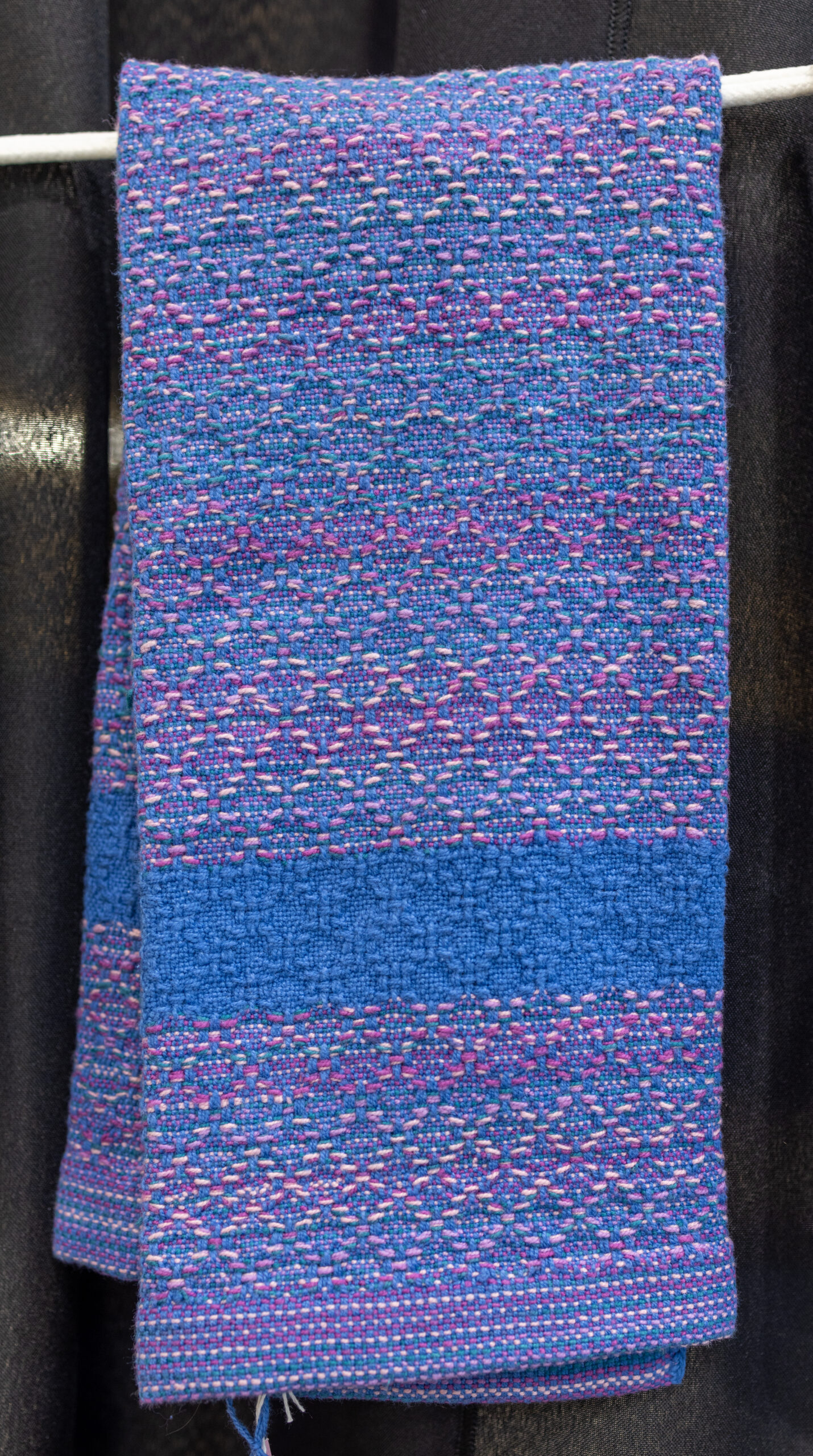
The threading is called huck variation by Russell E. Groff. I experimented with twill tie ups, but treadled as drawn, 121, 343, 121, 565, 787, 565.
Weaving in the reed was 20.5, “ and the shrinkage was 15%.
Total warp ends: 414 plus 1 floating selvage on each side.
Towel was hand hemmed.
MAFA2023-042
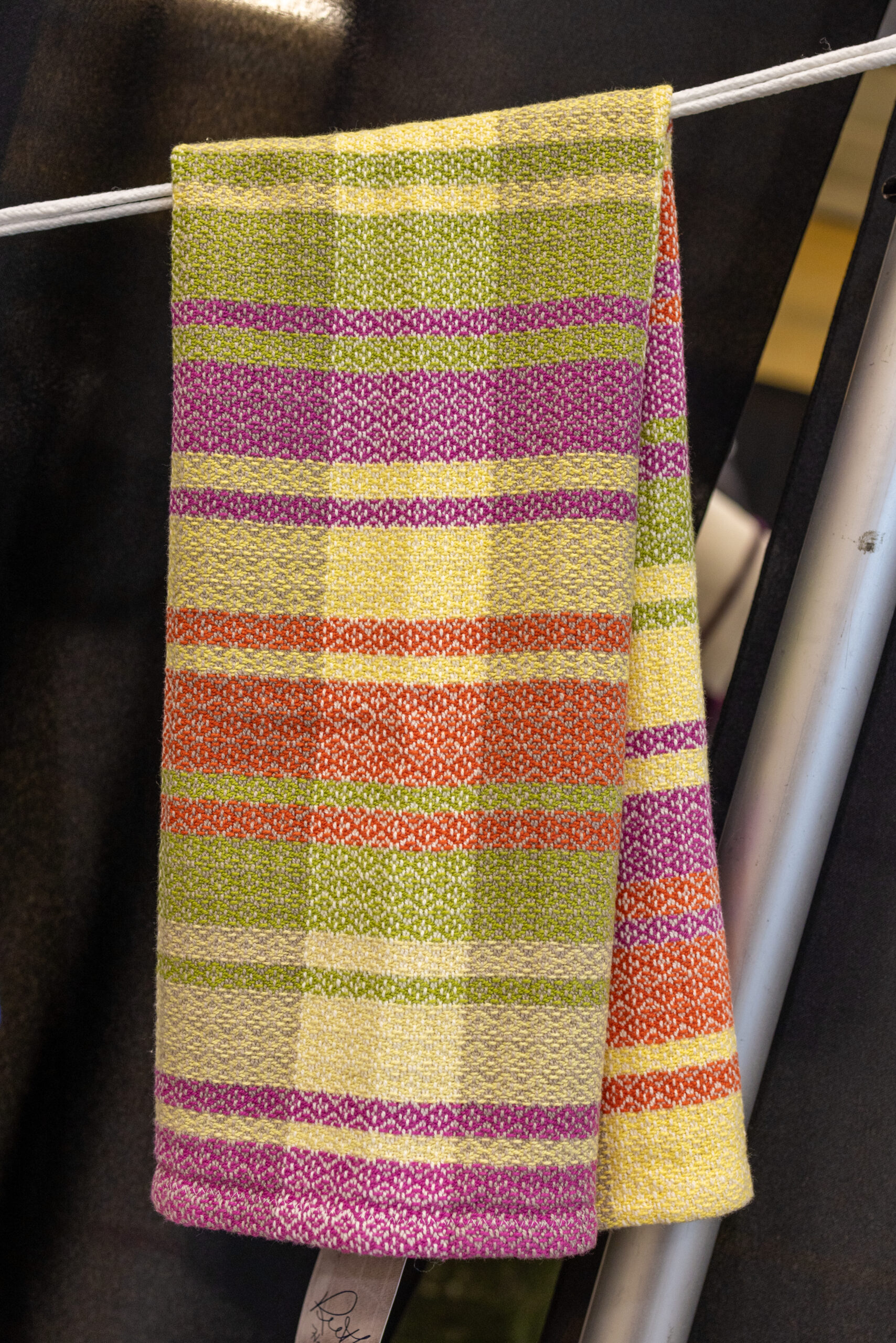
This wove up very easily. I like both the straight treadling, and the reversing.
I used organic cotton, natural, for the light weft. I find it softer than regular unmercerized, and more linty to weave. Perhaps more absorbent.
MAFA2023-036
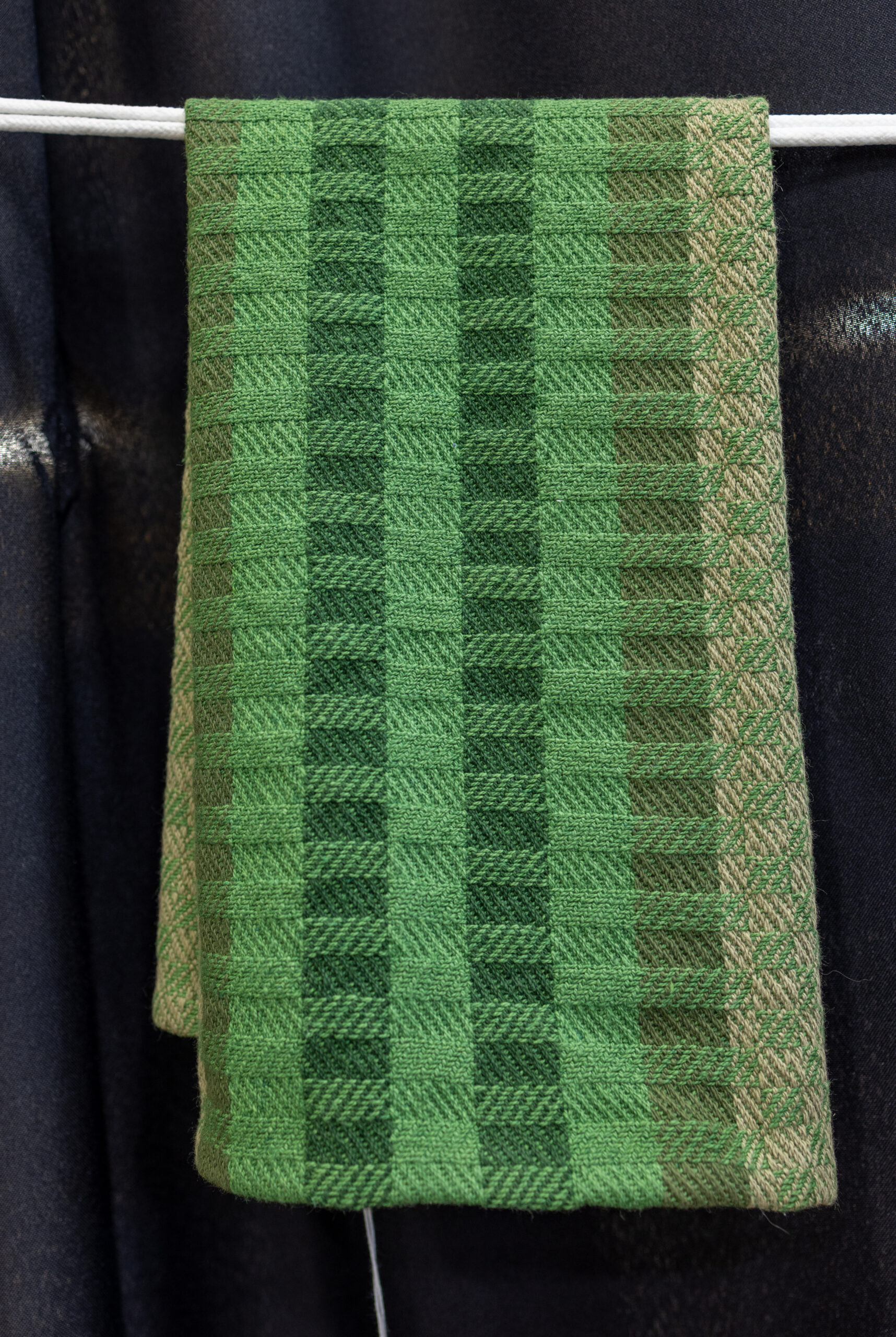
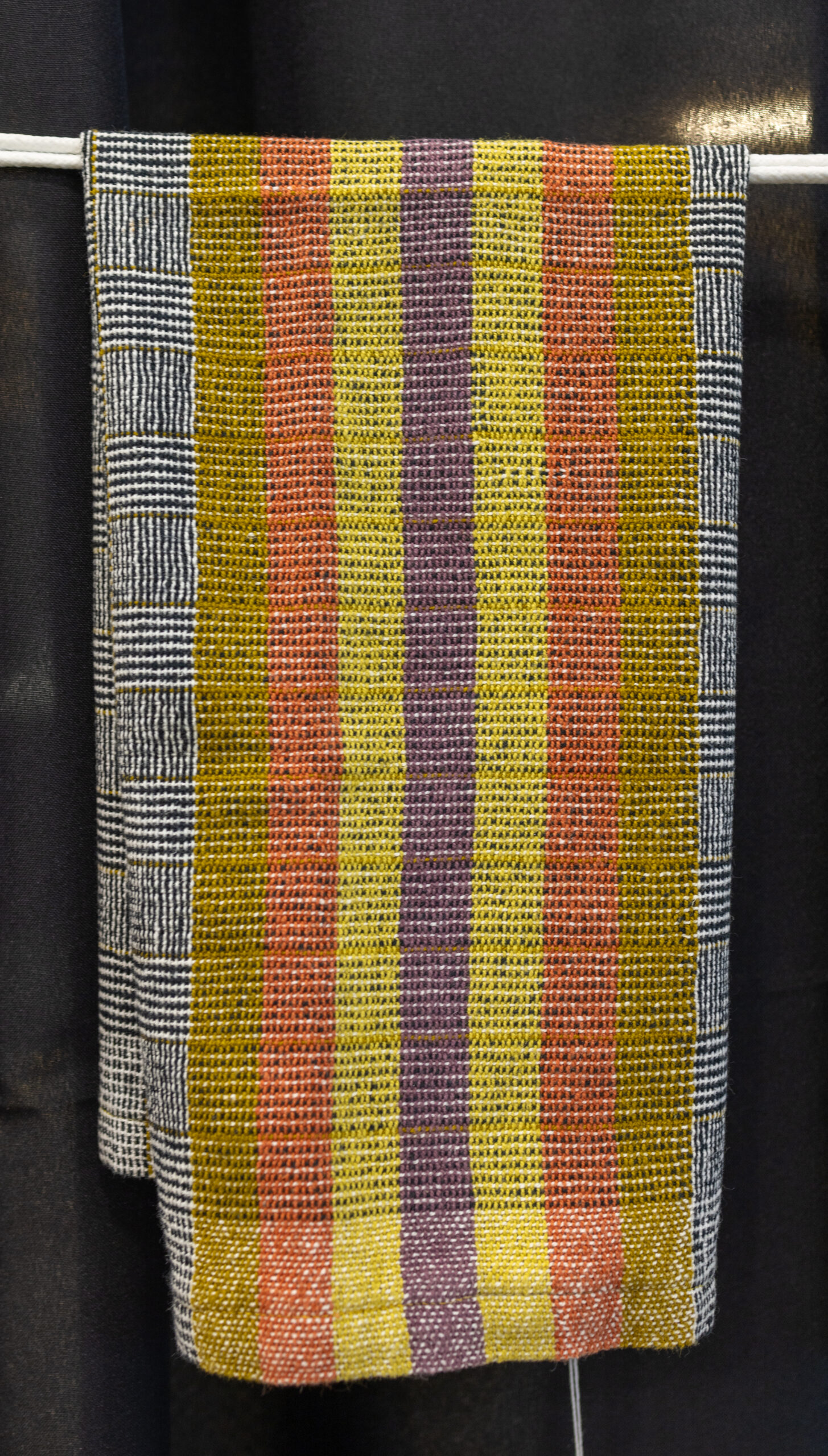
Wind on 500 ends: 496 for the threading and 2 doubled floating selvedges (which I like for strength in a workhorse handwoven) Be sure to keep a record of your color order for symmetry. I found it best to create threading blocks divisible by 4 to accommodate winding on two or four threads at a time. Width on loom was 20 2/3″ and after wet finishing lost about 10%. I hemstitched after wet finishing.
Be sure to put on lots of warp–two block turned twill permits so much experimentation with colors and block heights. My draft includes the threading and tie-up I used, plus my color order, but possible treadlings are so many. I utilized only one color (from the warp) in the weft but you can create variety with Fibonacci orders, plaids, and additional colors. Be sure to keep precise notes!
My 8/2 cotton was from Great Northern and the cottolin is Bockens’ “Nialin”.