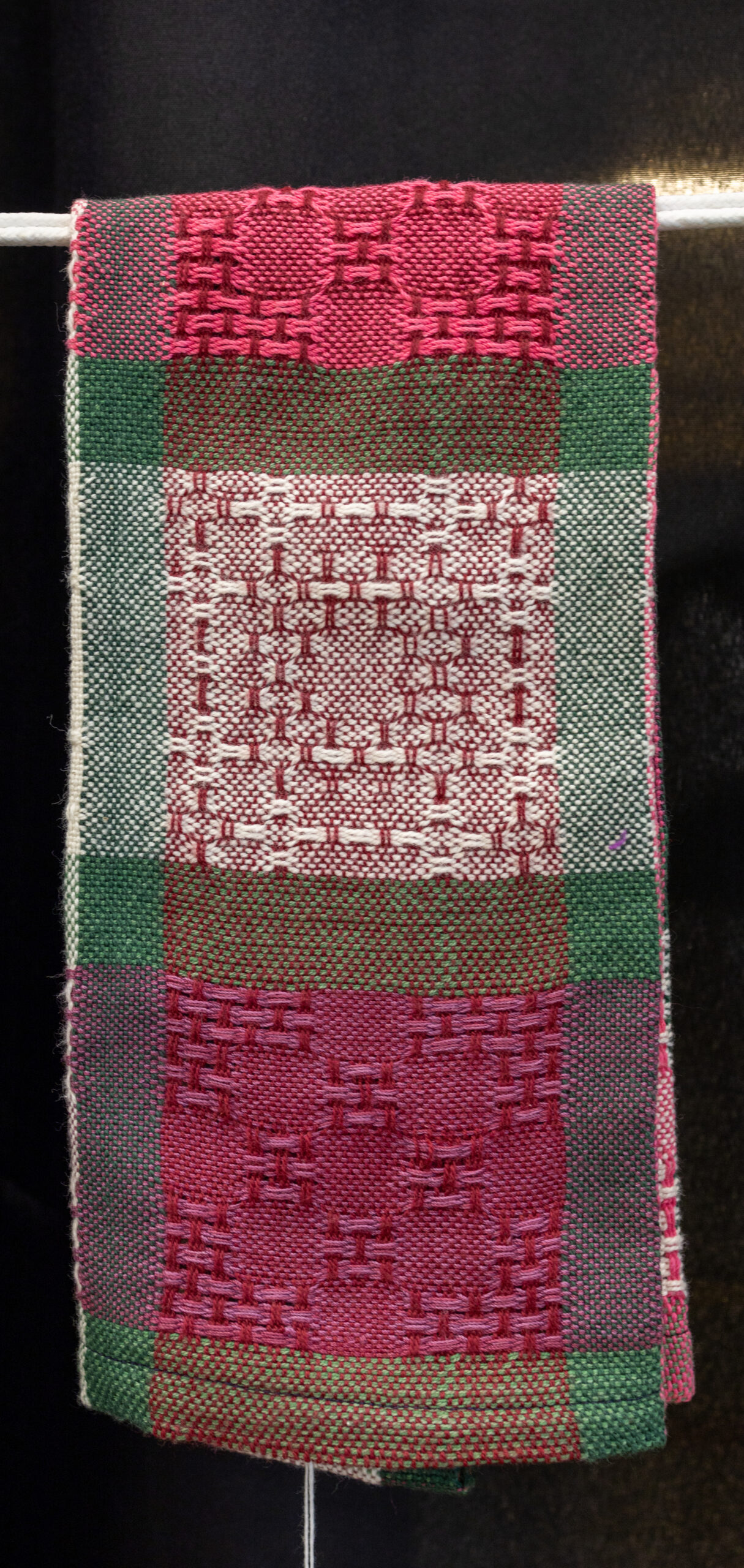
MAFA 2023 Towel Exchange

MAFA2023-044

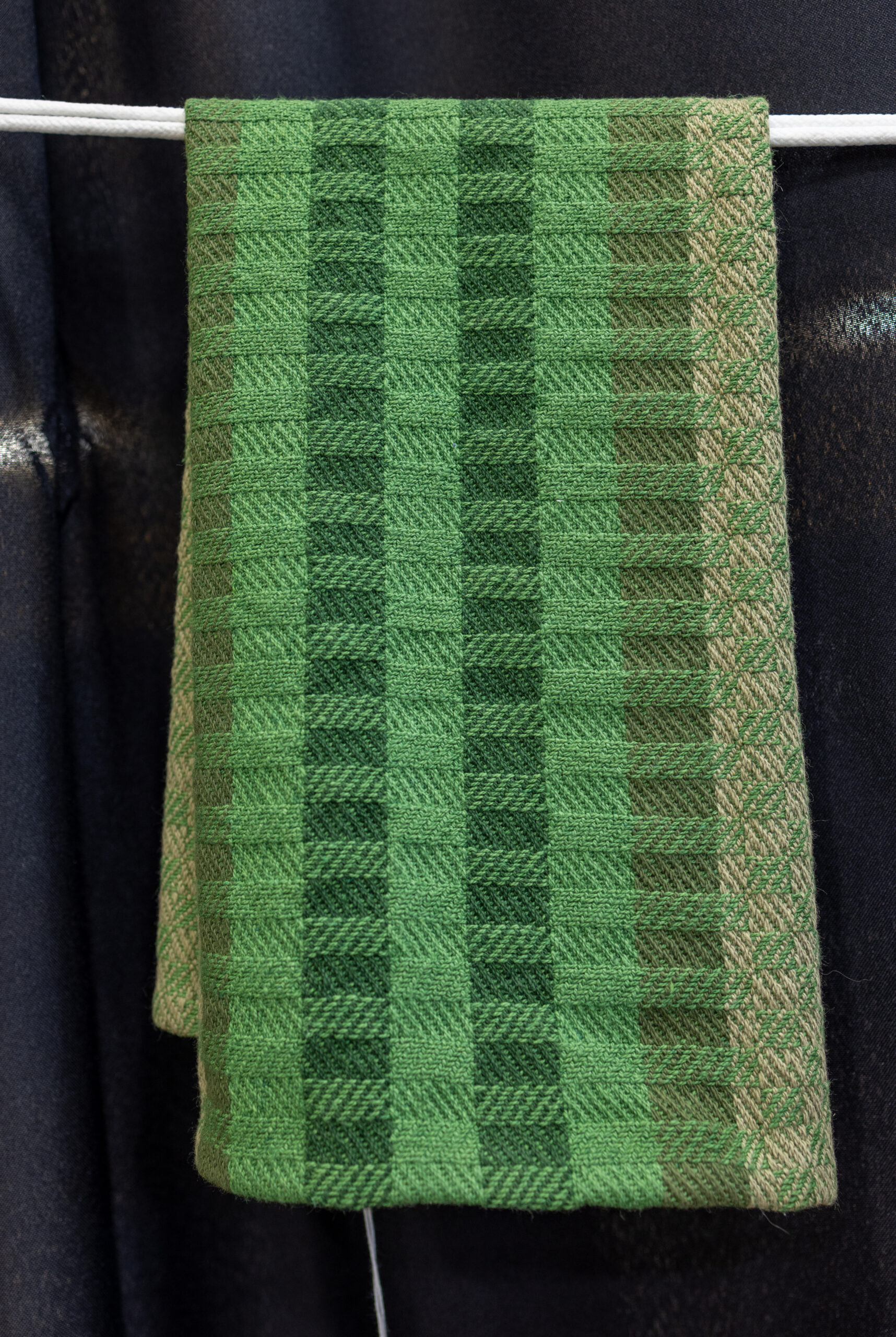
The threading is called huck variation by Russell E. Groff. I experimented with twill tie ups, but treadled as drawn, 121, 343, 121, 565, 787, 565.

Weaving in the reed was 20.5, “ and the shrinkage was 15%.

Total warp ends: 414 plus 1 floating selvage on each side.

Towel was hand hemmed.

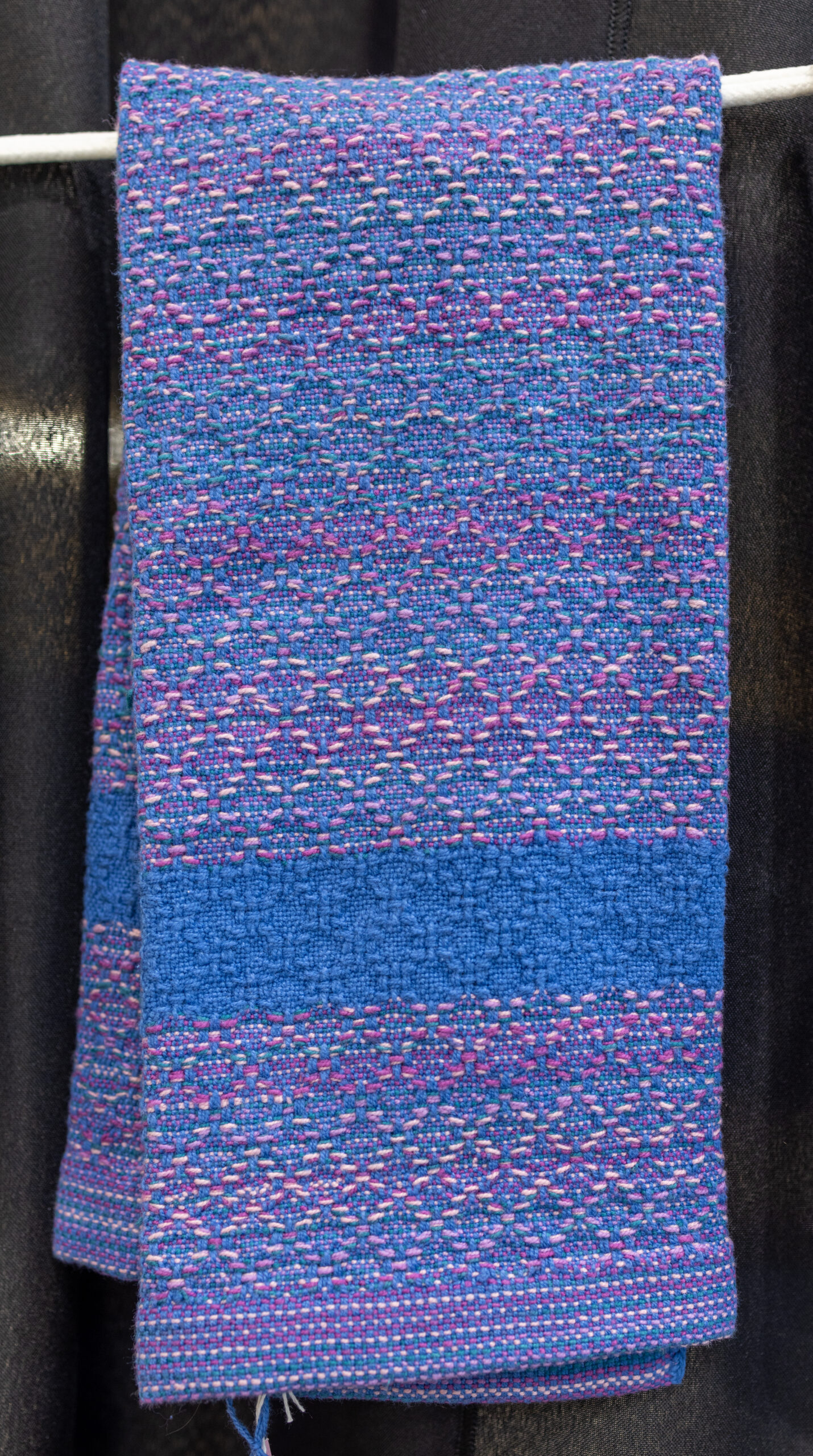
MAFA2023-043

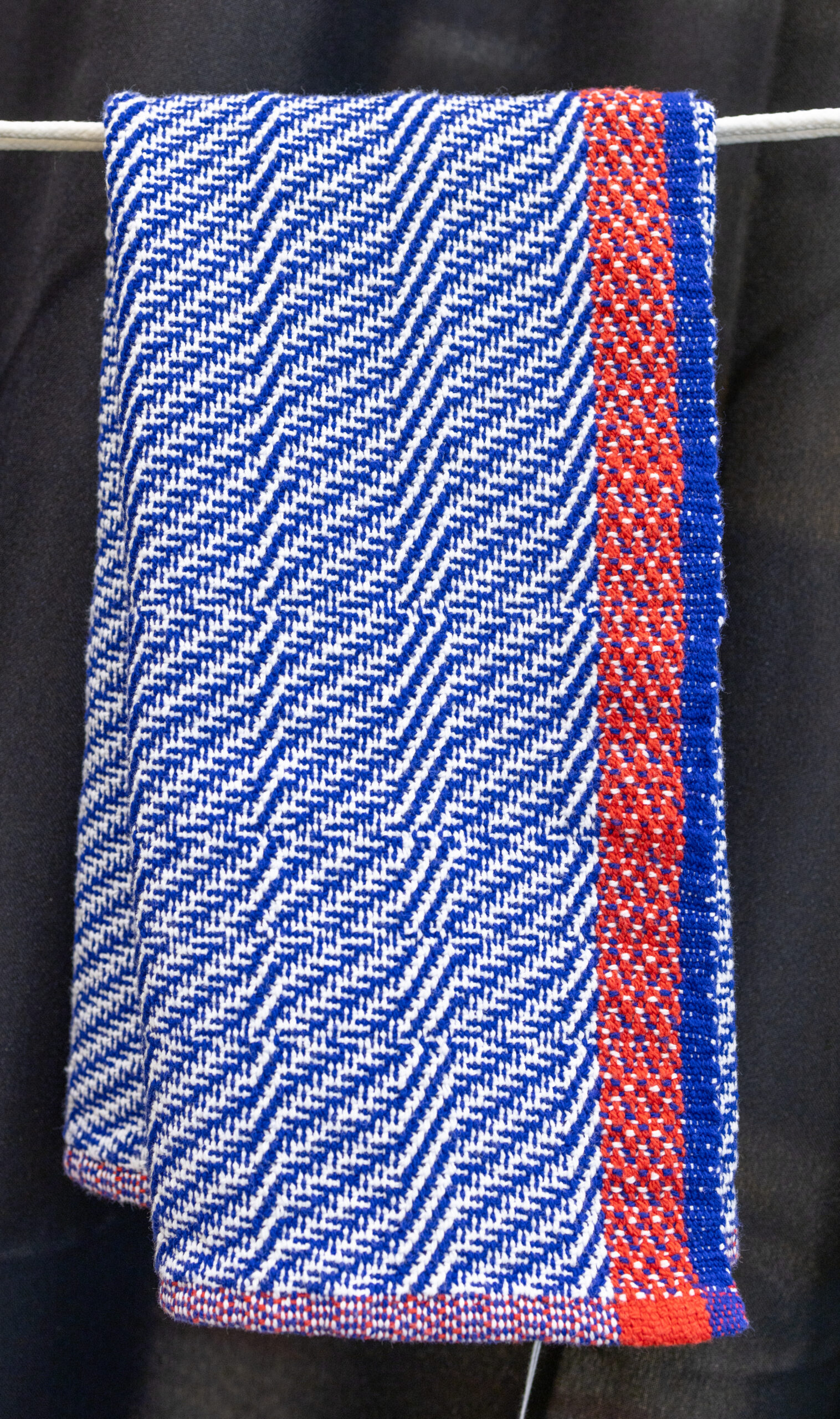
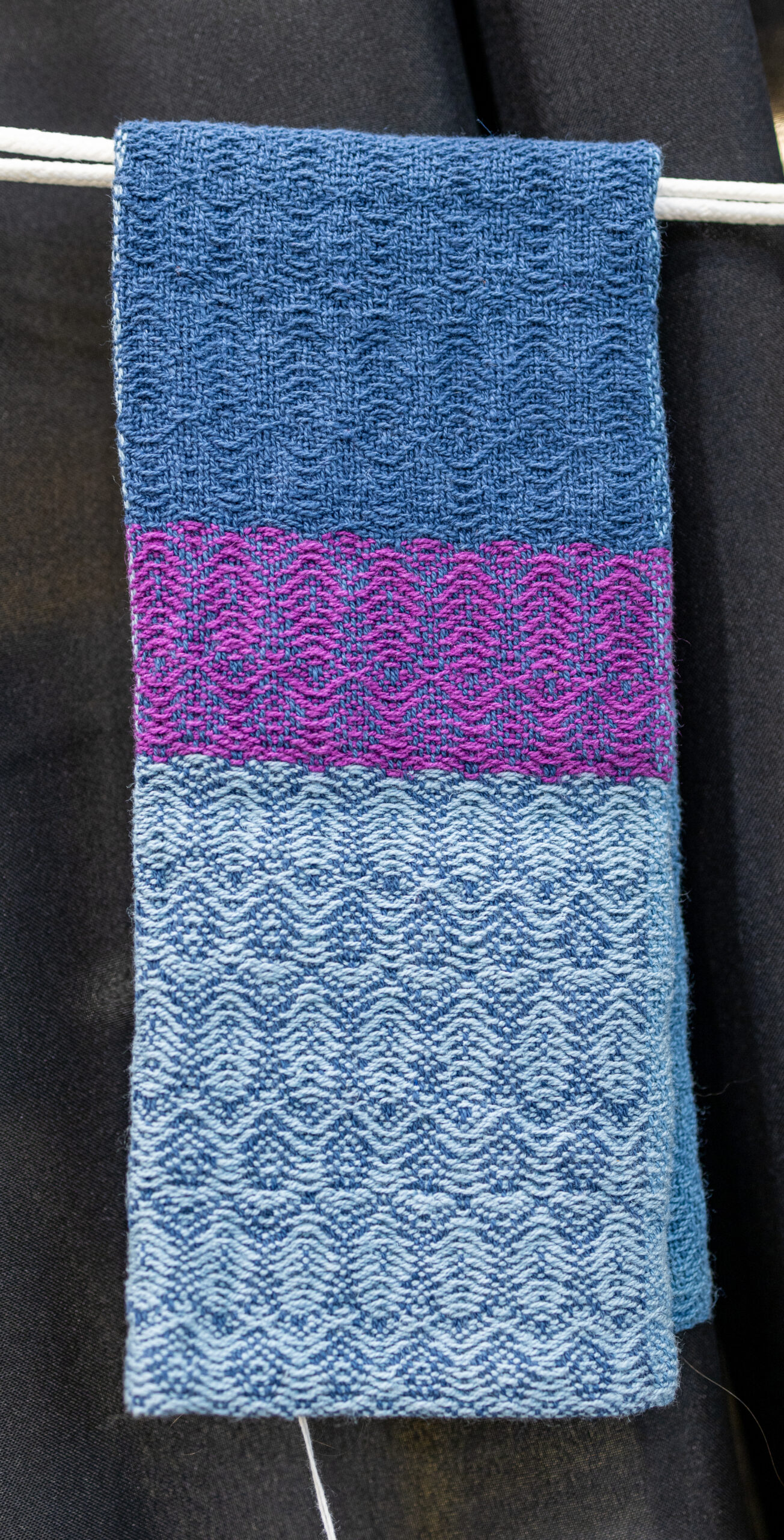
This was my first ever kitchen towel project! It also was my first shaddow weave!

My inspiration was thinking about an American flag and how the stripes would undulate if the wind were blowing.

I chose to shadow weave in blue and white vs red and white to maximize the contrast of the yarns.

This design was created for my submission to the Woolery 2023 Weave-Off. My warp was long enough for me to make several towels and I’m happy to share one of them as part of the towel exchange.

The trickiest part of this project was that some of warp threads wanted to cross. This resulted in 2 white threads or 2 blue threads being next to each other at a few places in the warp. It wasn’t particularly noticeable in the waves but it was quite obvious in the weft picks that became the hem. It’s not clear if this was a tension issue or if the sett could have been decreased. Getting them to uncross when weaving the hem picks is possible but tedious.

In the attached WIF and reading from right to left, the first 88 warp threads are the pattern and can be repeated. For the finished towel, I repeated this 5 times and then transitioned back to the hem portion.

MAFA2023-042

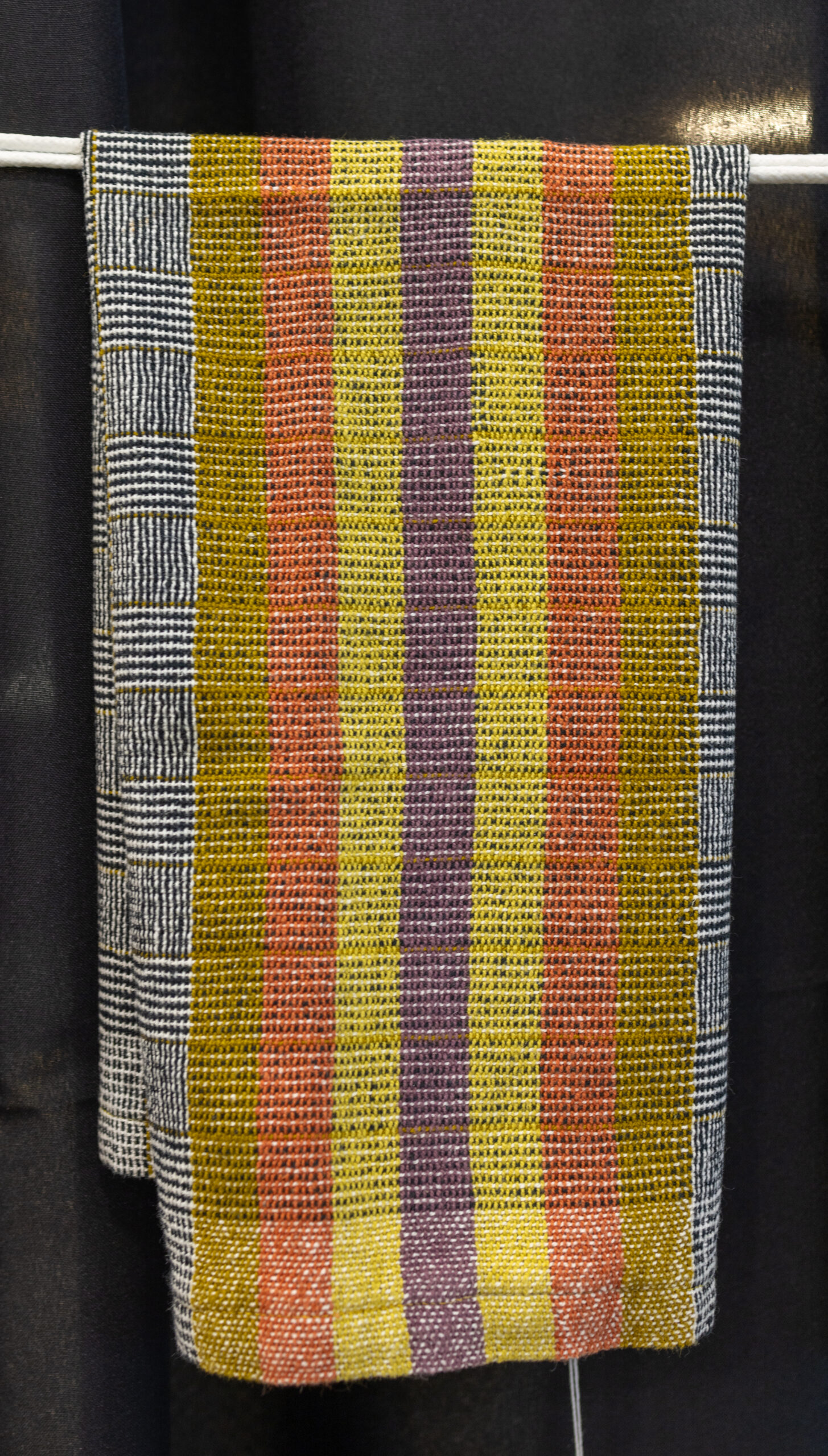
This wove up very easily. I like both the straight treadling, and the reversing.
I used organic cotton, natural, for the light weft. I find it softer than regular unmercerized, and more linty to weave. Perhaps more absorbent.

MAFA2023-040

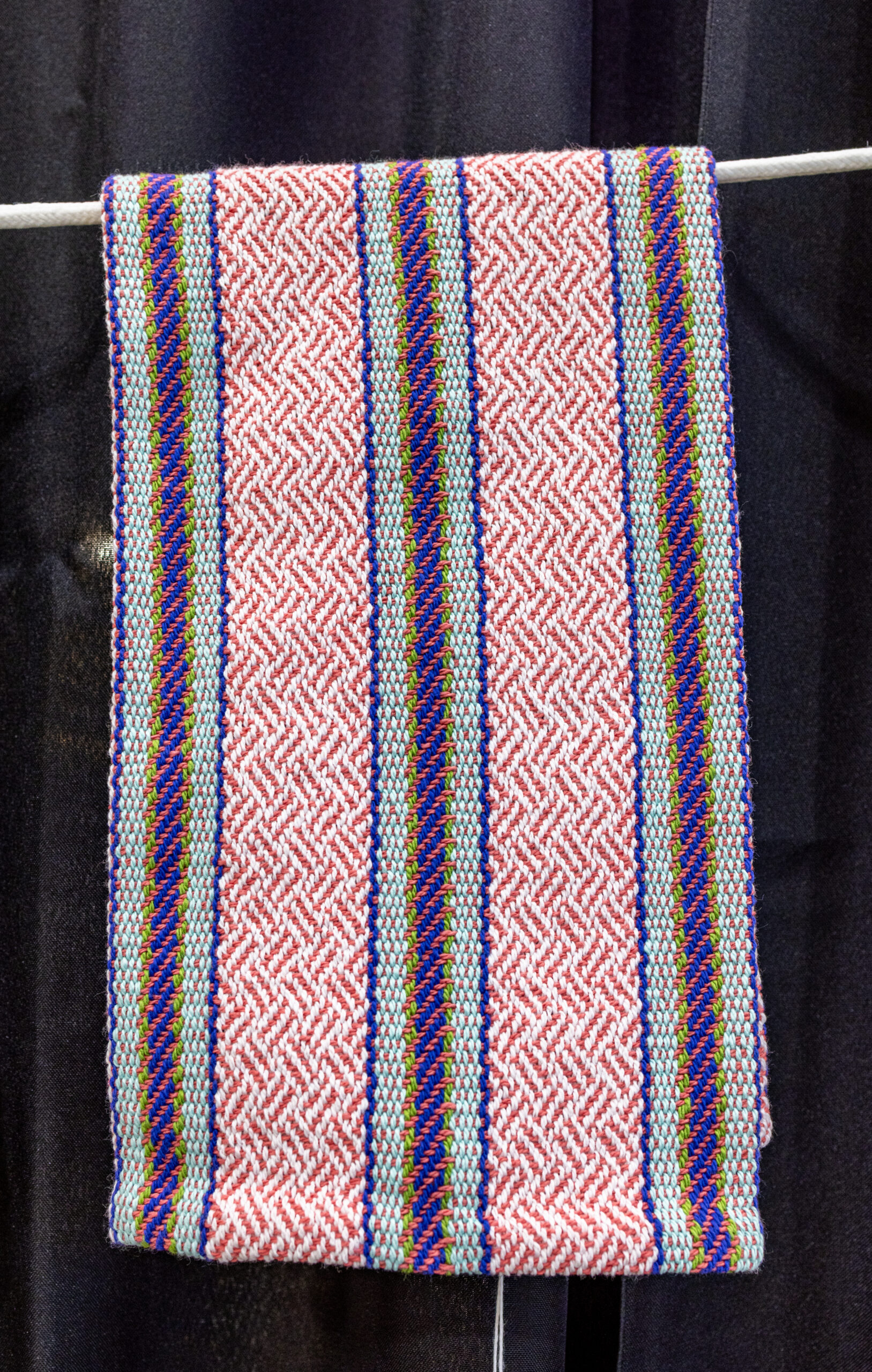
Towel uses 2 variations of treadling with a traditional M & W twill pattern. Vary treadling and colors as desired. Floating selvedges are incorporated. Hems are woven with plain weave, folded and machine stitched. WIF file shows 2 options for colors and treadling. There are many more options.

MAFA2023-039

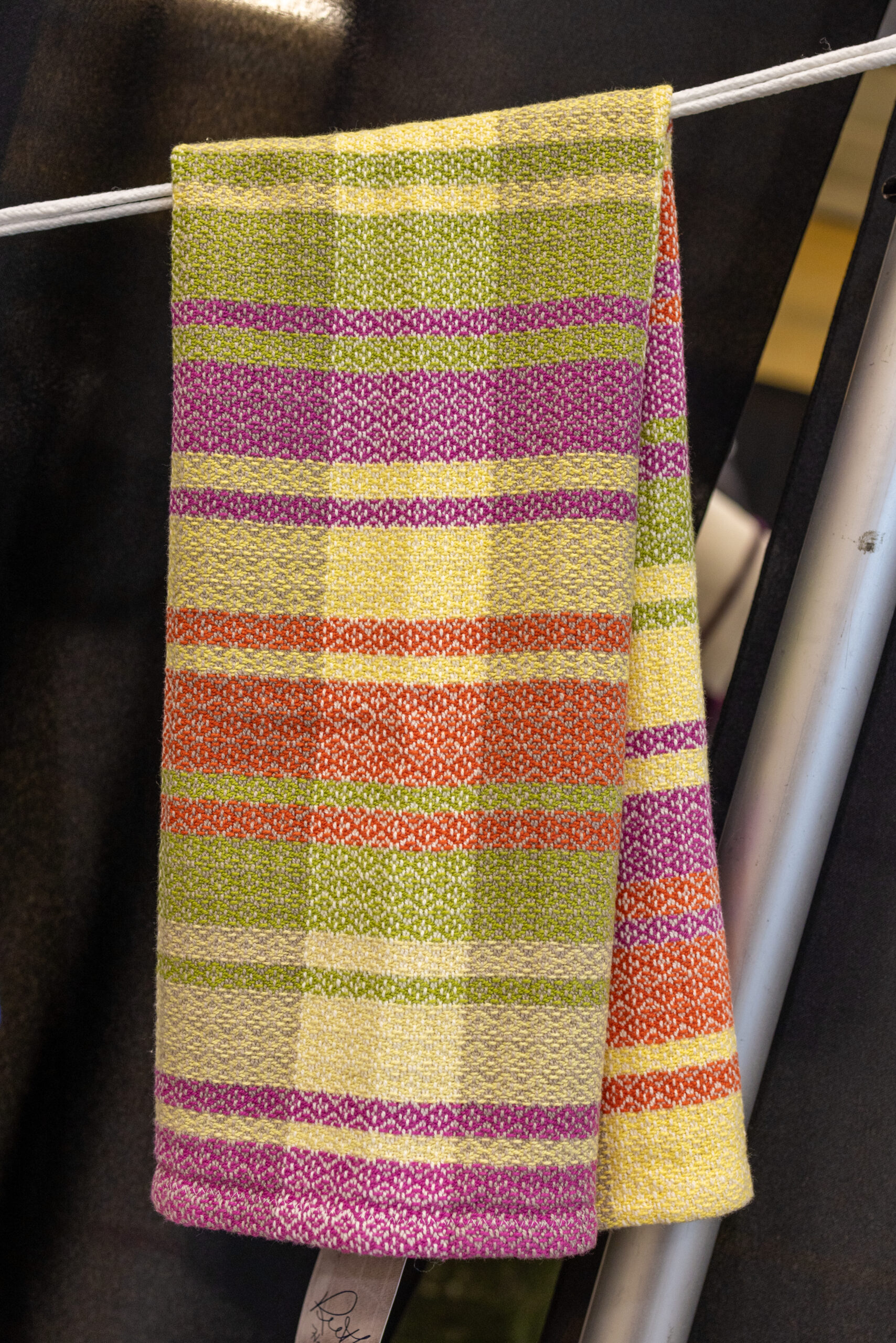
282 ends. Advanced twill threading inspired by Susan Balascio.

MAFA2023-038

This Handweaving.net draft was enhanced with the use of color warp stripes and can then be woven in a number of complementary weft colors. I found some errors in the original draft which I corrected and changed the widths of the straight twill, braided twill and half-basket elements and half-basket weave sections.

I used Bluegrass Mills 6/2 cotton for both warp and weft. There were 410 ends sett at 20 epi. Towels were finished with a handsewn hem then machine washed and dried.

MAFA2023-037

452 ends
I put on a long warp and regretted it later; with the color changes it was slow weaving. I was unable to find an attractive way to carry the colors along a selvage.
I liked the use of two shafts to create a plain weave border at each selvage. It solved the issue of the long floats at deflected DW selvages.

MAFA2023-036

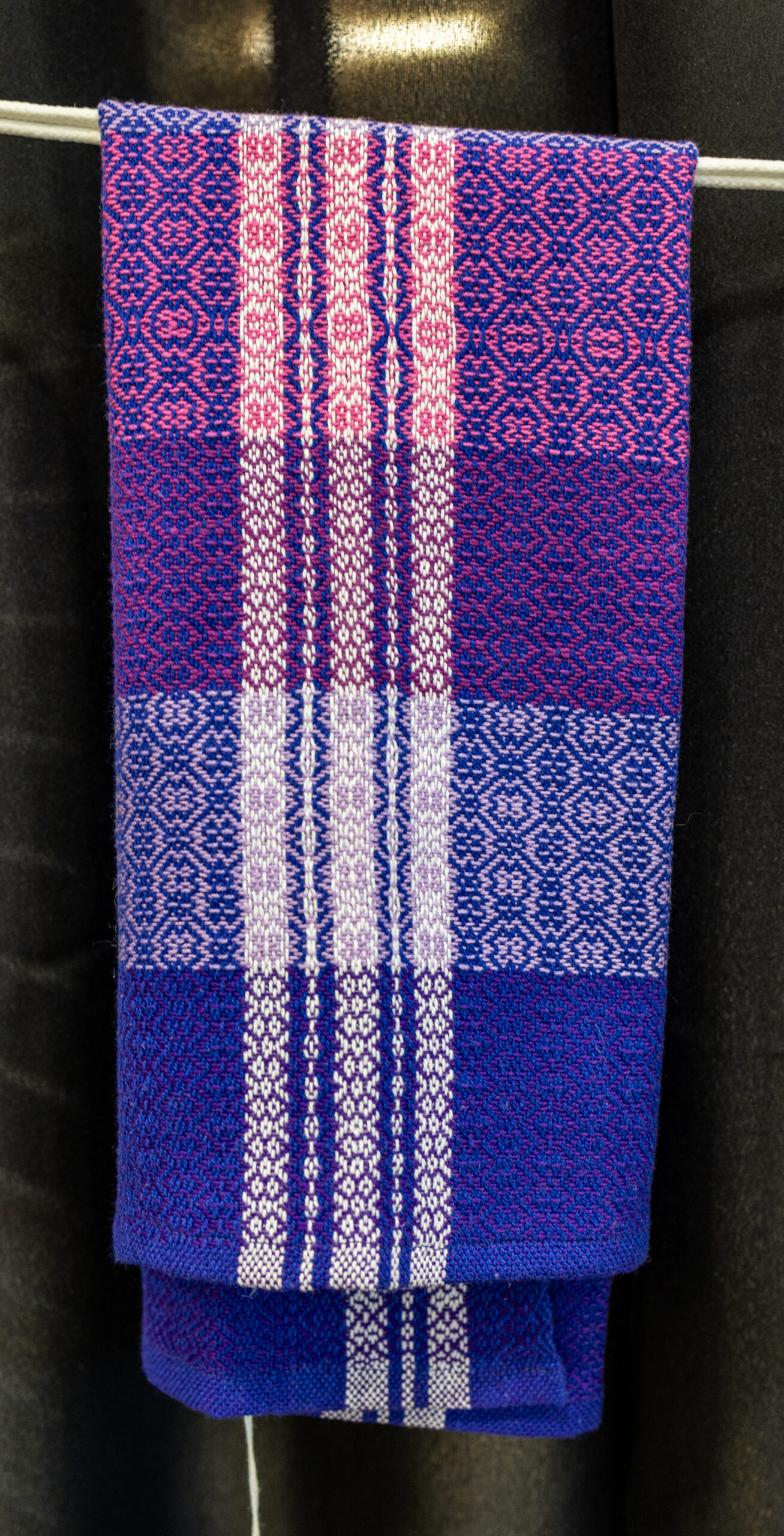
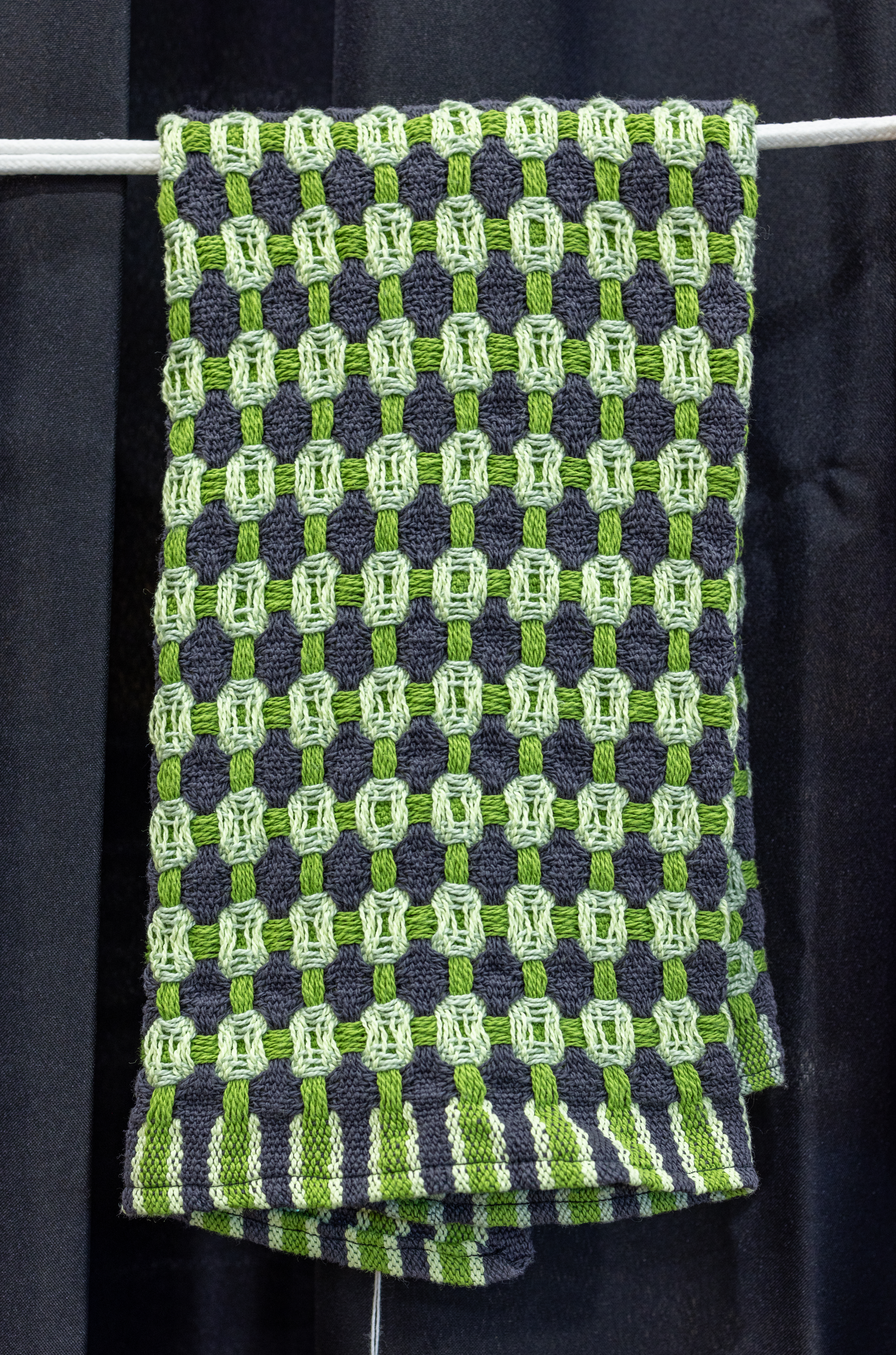
Wind on 500 ends: 496 for the threading and 2 doubled floating selvedges (which I like for strength in a workhorse handwoven) Be sure to keep a record of your color order for symmetry. I found it best to create threading blocks divisible by 4 to accommodate winding on two or four threads at a time. Width on loom was 20 2/3″ and after wet finishing lost about 10%. I hemstitched after wet finishing.

Be sure to put on lots of warp–two block turned twill permits so much experimentation with colors and block heights. My draft includes the threading and tie-up I used, plus my color order, but possible treadlings are so many. I utilized only one color (from the warp) in the weft but you can create variety with Fibonacci orders, plaids, and additional colors. Be sure to keep precise notes!

My 8/2 cotton was from Great Northern and the cottolin is Bockens’ “Nialin”.

MAFA2023-034

I used 2 patterns – one was Rosalie Neilson’s from her class and one of my own created in the class. There are 4 colors in both the warp and weft. I experimented with different colors in the weft. Floating selvedges were used. There was about 15% shrinkage.