Twill Simple

MAFA2025-3962

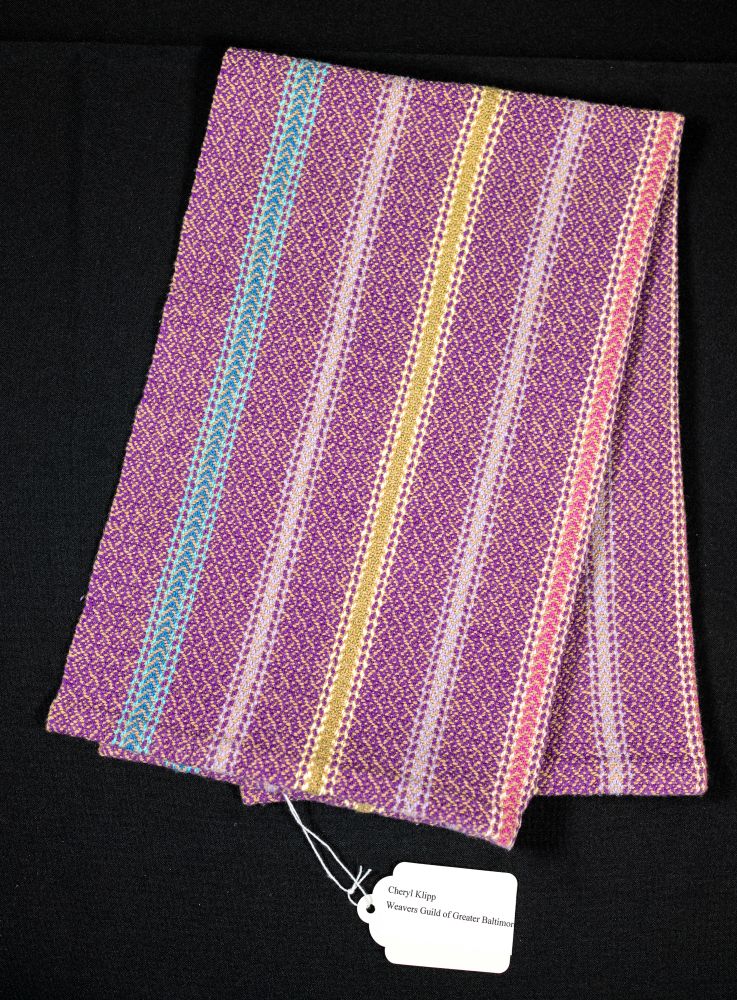
RIC RAC STRIPE TOWEL

Number of warp ends per color
Royal – 160 ends (includes a floating selvage thread not shown on draft)
Flax – 229 ends
Black – 8 ends

MEASUREMENTS
Warp in reed = 20”
On-loom = 18.5” x 33”
Off-loom = 18” x 31.5”
Hemmed and washed = 17.25” x 28.5”

Machine hemmed.

The ric rac effect in the stripes is prominent on one side than the other. I used that as the right side of the towel.

MAFA2025-3957

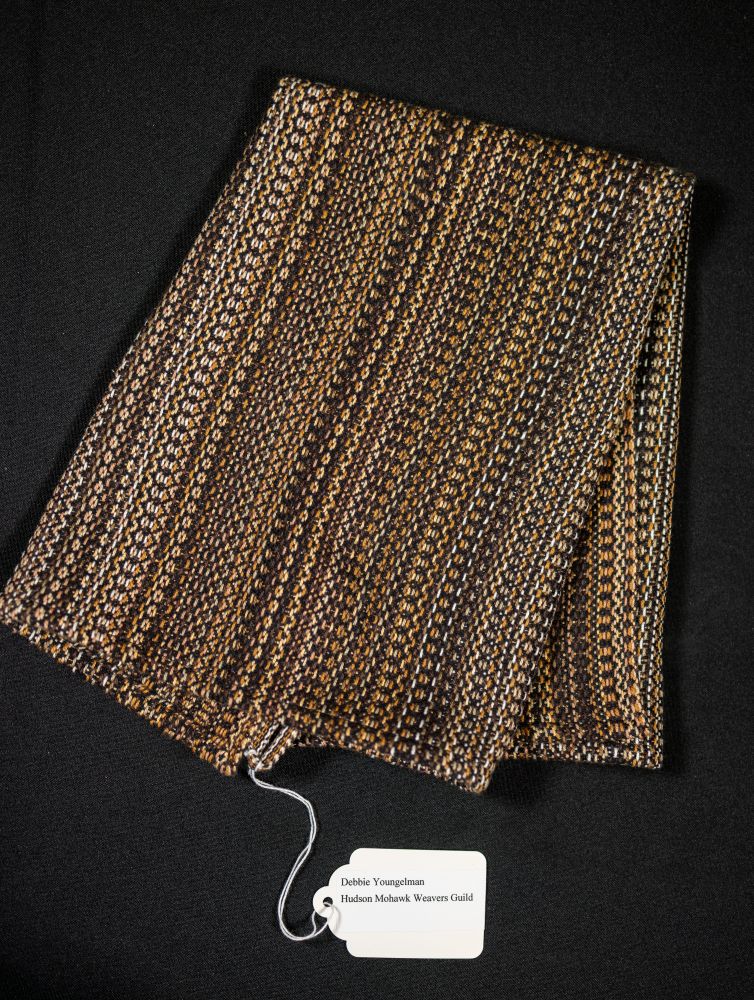
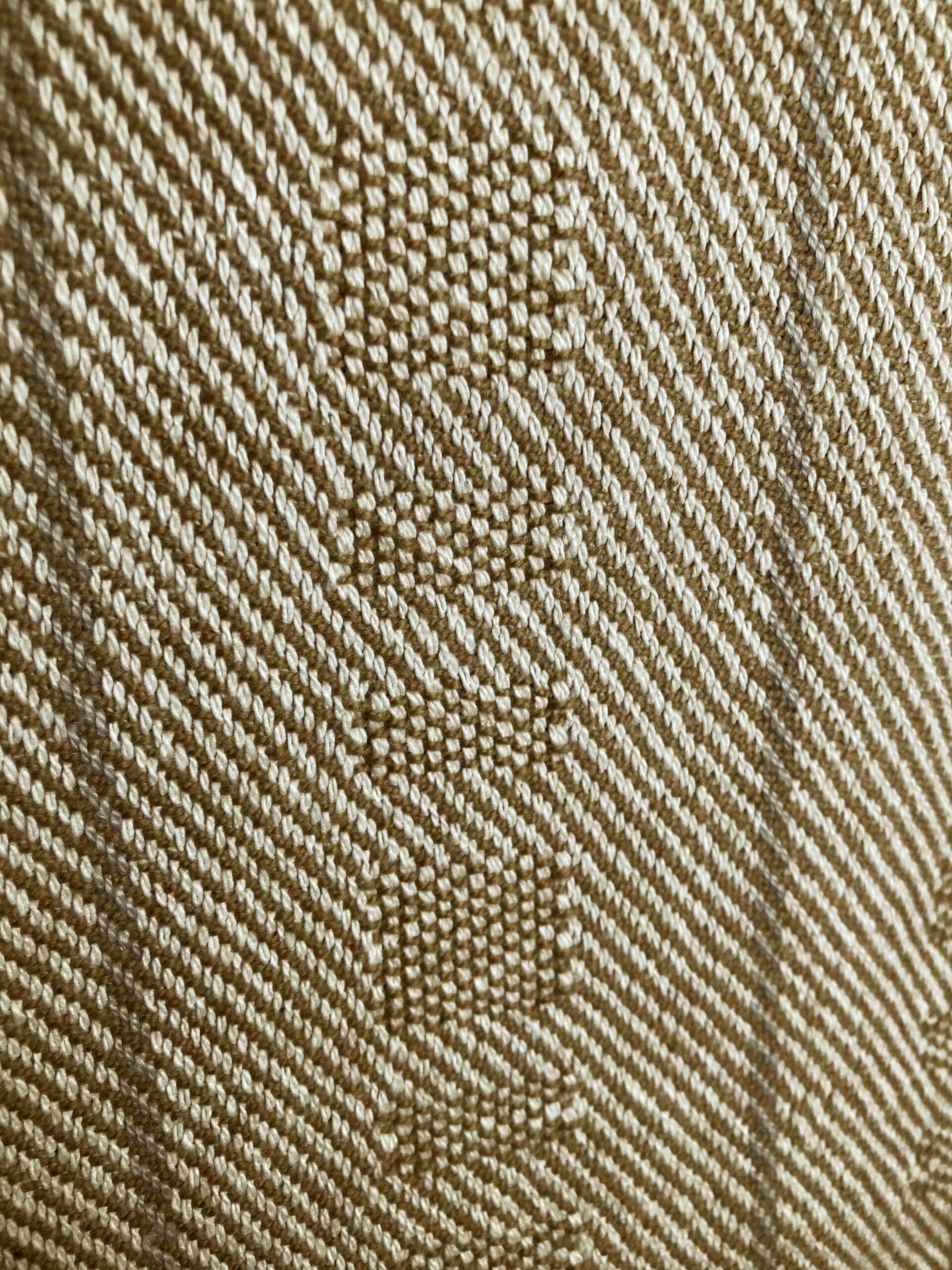
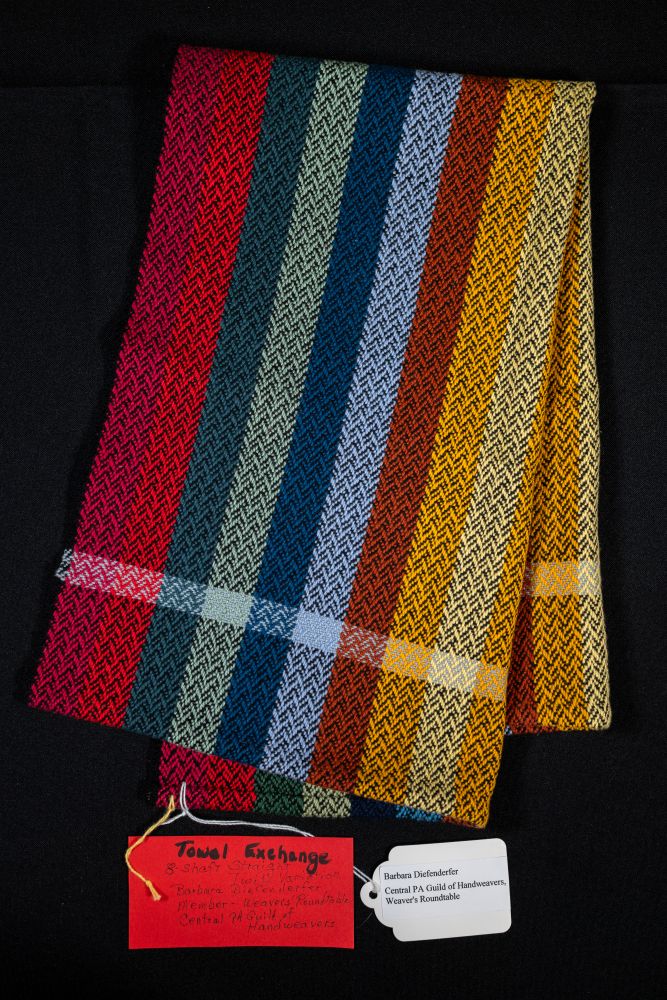
The warp is a randomly arranged assortment of yarns in the brown and tan family with a black weft. Warp measured in groups of 6 and then threaded randomly through the heddles. 504 ends.

MAFA2025-3955

There are roughly 18 picks per inch. I chose a slightly warp faced weave in order to show the warp colors a bit more than a balanced weave would.

The broken twill ground was threaded on harnesses 1-4, and the point twill stripes were on 5-8

19.5″ in the reed, 34″ long under tension
16.75″ x 27″ after hemming and machine washing in warm water, partially dried in dryer on high

I used two floating selvedges on each side, each in its own dent

MAFA2025-3954

This design is a combination of the well-known tumbling blocks on sixteen shafts and a pattern I designed for the “other” eight shafts since I was working with a 24 shaft point on the loom for several other purposes.
And yes, I was pushing the deadline for my 2025 Cross Country Weavers sample for the theme “Turn, Turn, Turn+ and the tumbling blocks “turn.”

MAFA2025-3953

The folded portion of the hem was woven as plain weave without the pattern weft to reduce the bulk of the hem section.

The tabby pick of the warp yarn between each pattern pick is used to help create stable fabric with longer end floats of the pattern weft yarn. The tabby picks need to alternate 1 & 2 in sync with the pattern picks to get a good tie down. The tabby picks are not shown in the book treadling, but by treadle numbers from the book (top down) treadling would start as 1, 10, 2, 9, 1, 8, 2, 7, 1, 8, 2, 7 … and so on with similar insertion of 1 & 2 between the pattern picks that are shown.

For weft yardage needed, PPI, and weaving time expectations, treat similar to other 2 shuttle weaves with tabby (e.g. overshot or summer winter).

MAFA2025-3952

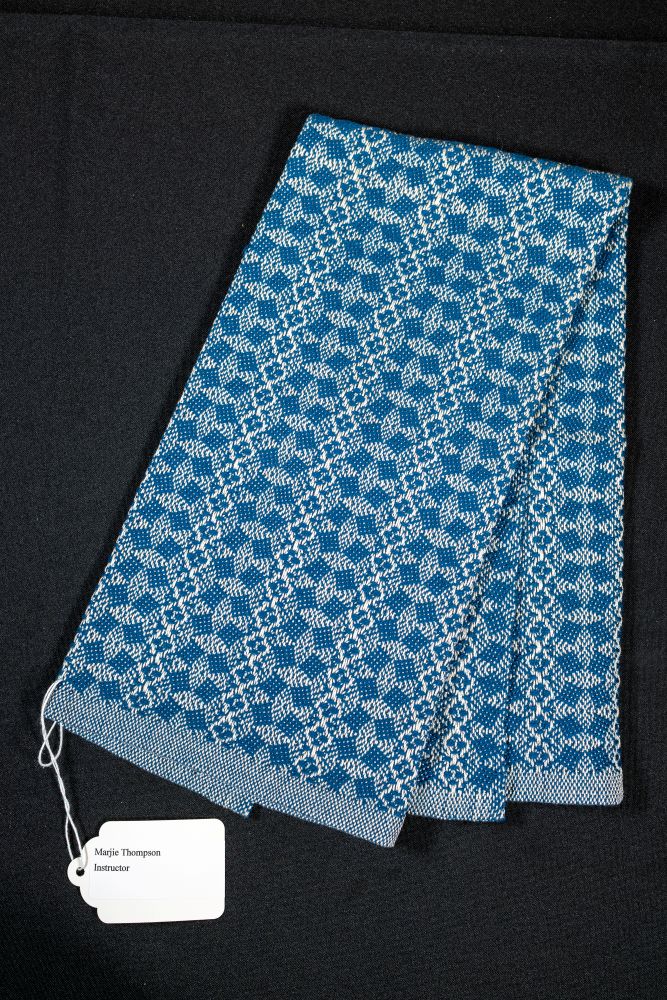
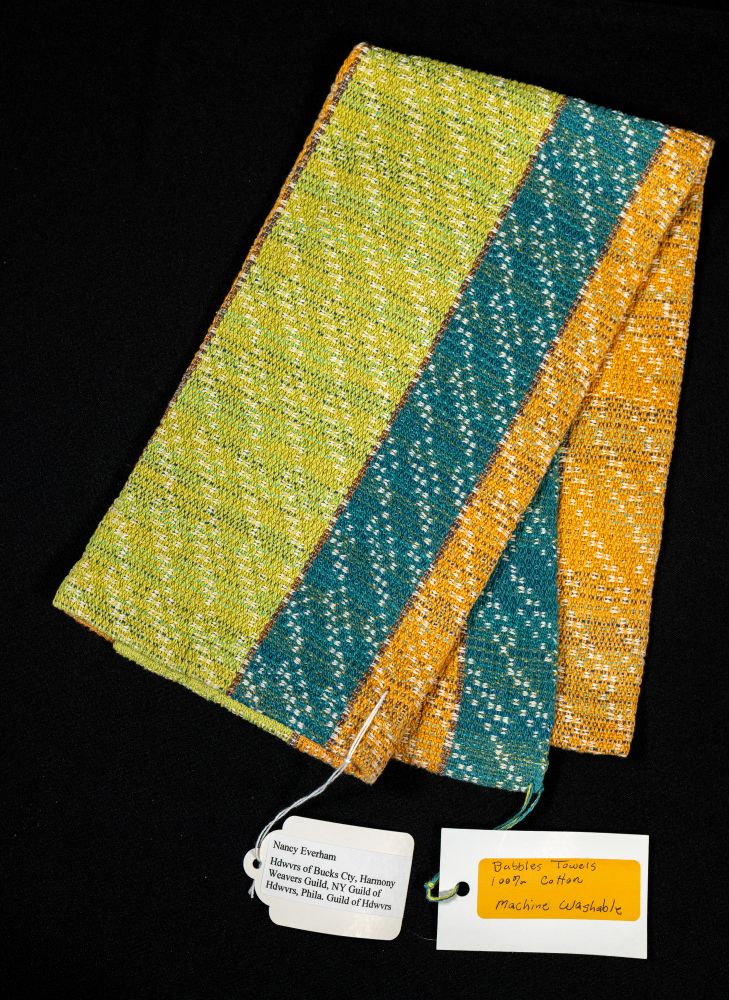
I was intrigued by this pattern and I call it “Bubbles”. It doesn’t look like the pattern pictured in the magazine – probably because I chose to use a ground weft in between each pattern weft. Using a variegated royal blue, gold and aqua for the ground created an interesting pattern.
The size was 19″ in the reed and 28″ woven was the length on the loom; but after wet finishing, its size is 15 1/2″ X 23 1/2″.
Total number of ends was 457.
I used white sewing machine thread for the hem (turned under 1 1/2″ on each end and machine stitched it in place.)
I think it makes for an absorbent towel.

MAFA2025-3940

I made 4 towels, each with a different color weft. The warp was 19″ wide x 160″ long on the loom with 384 ends (4 floating selvedge threads). The finished towels were 16″ x 25″ hemmed. I lost 3″ in width and 6″ in length after removing from the loom, washing and drying the towels.

MAFA2025-3871

At MAFA 2023, I created a shirt pattern in my class with Cal Patch. I wanted to use that pattern again, but for a different style of shirt. I plan to make this new shirt more like a tunic and possibly with a square neck. The front and back will be three pieces with two bird’s eye pieces on the front with one plain piece. The back will be the opposite.

In October 2024, our guild did some indigo dyeing. I decided to dye a warp at this event for my shirt. I found a commercial shirt pattern that helped me figure out what I wanted to do with my own shirt. This pattern involved two different fabrics – which I could create on one warp.

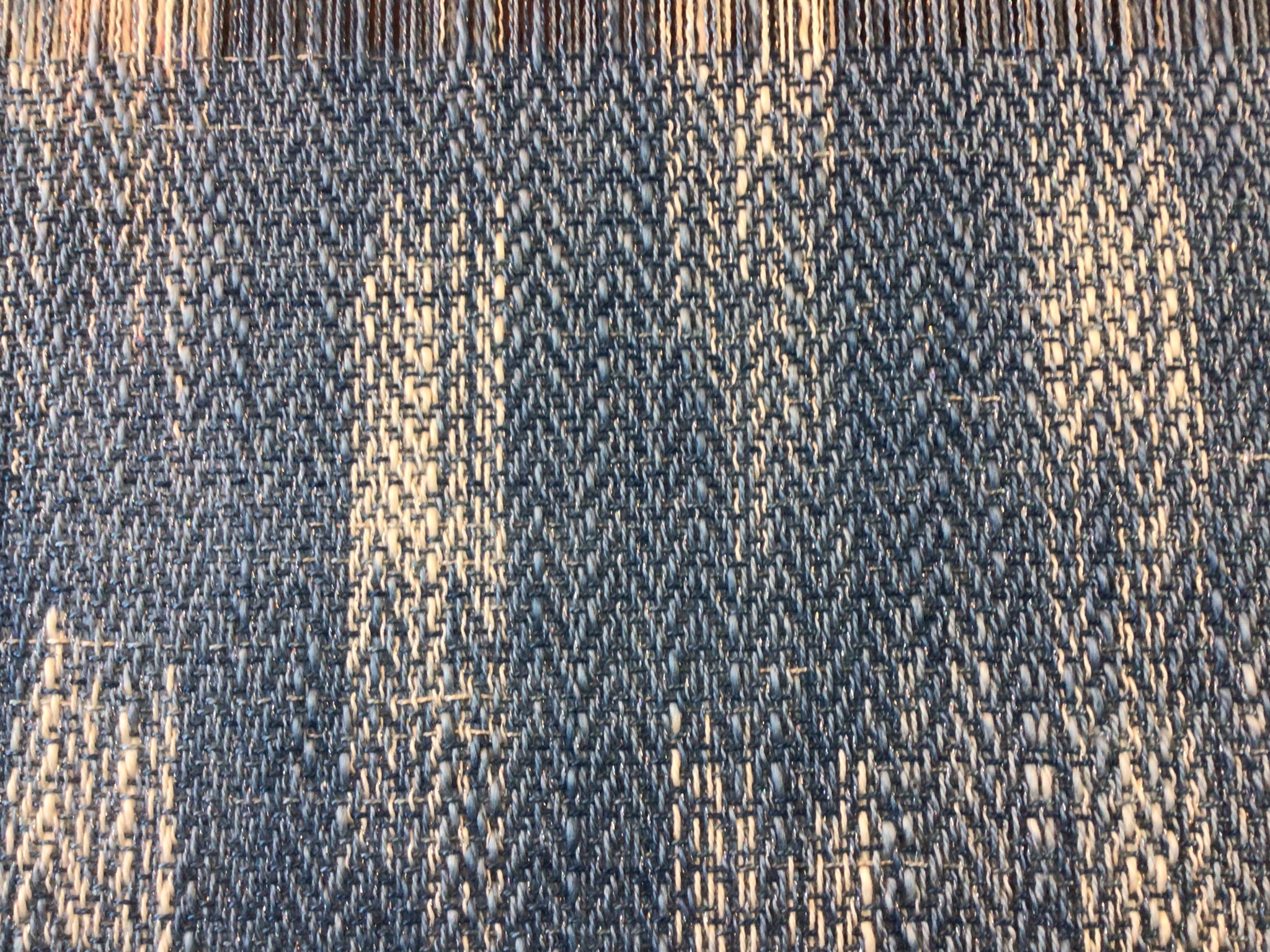
I made a six yard warp that has 1056 ends set at 24 epi. Half the warp was woven in a Bird’s Eye pattern beat at about 16 ppi. I used some 10/2 cotton that I had dyed at a different workshop for my weft. It was also dyed with indigo. The second half of the warp is plain weave woven with a mill end light blue cotton.

I did attempt some space dyeing on my warp, but I did not allow enough dye to get into the plain weave half of the warp. So the whole warp looks somewhat space dyed. I also should have been more patient and let my warp sit in the dye bath longer. I would have liked for the blue to be deeper.

The beat for this fabric was challenging for me. I like a firm beat. I usually match my epi and ppi. This was a good exercise for me. The fabric is loose and should be a good summer weight.

MAFA2025-3851

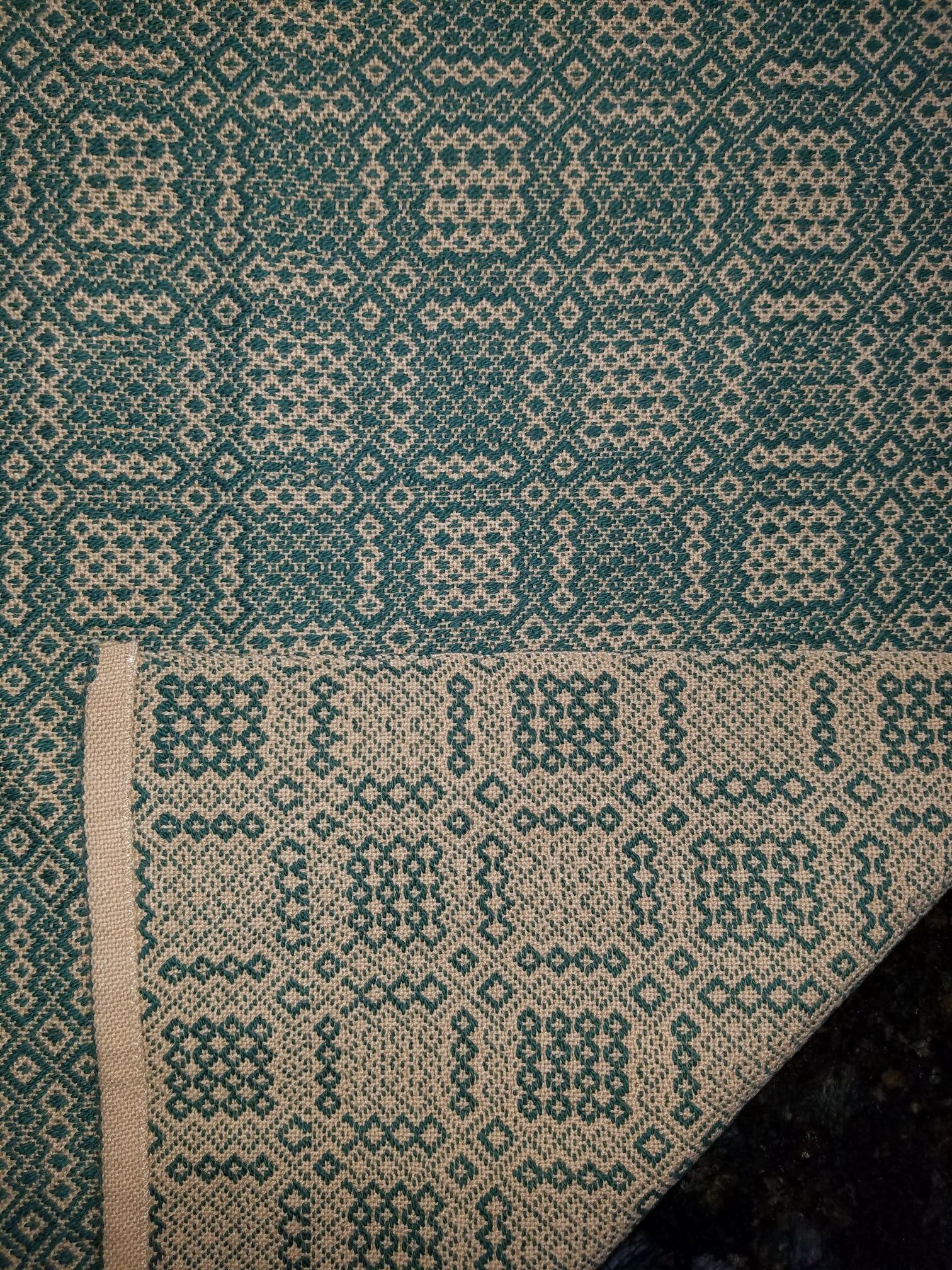
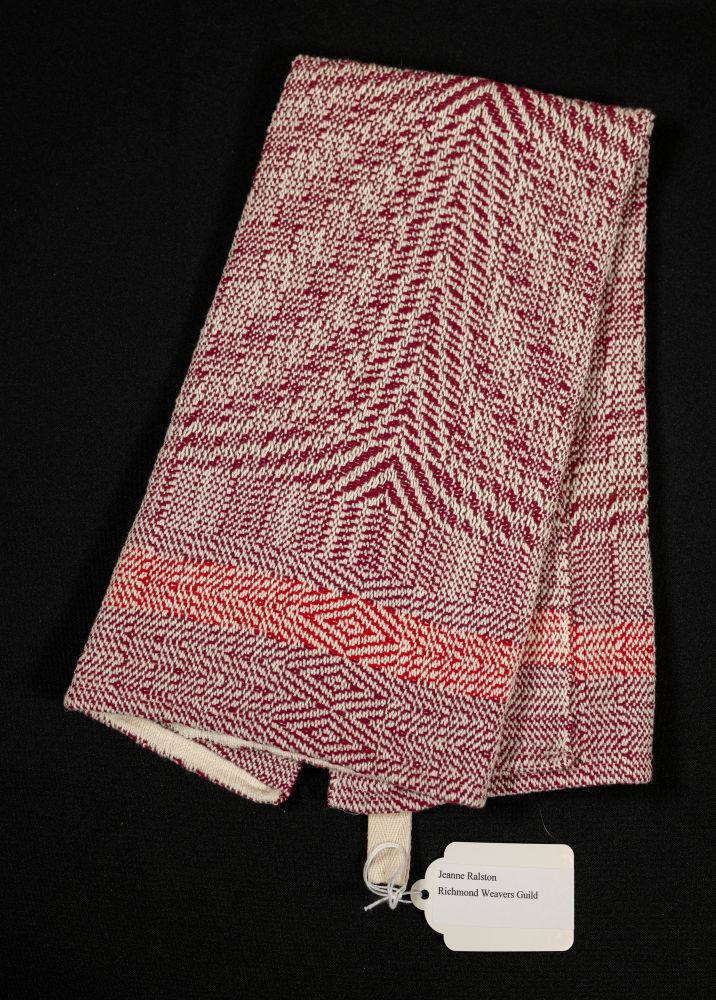
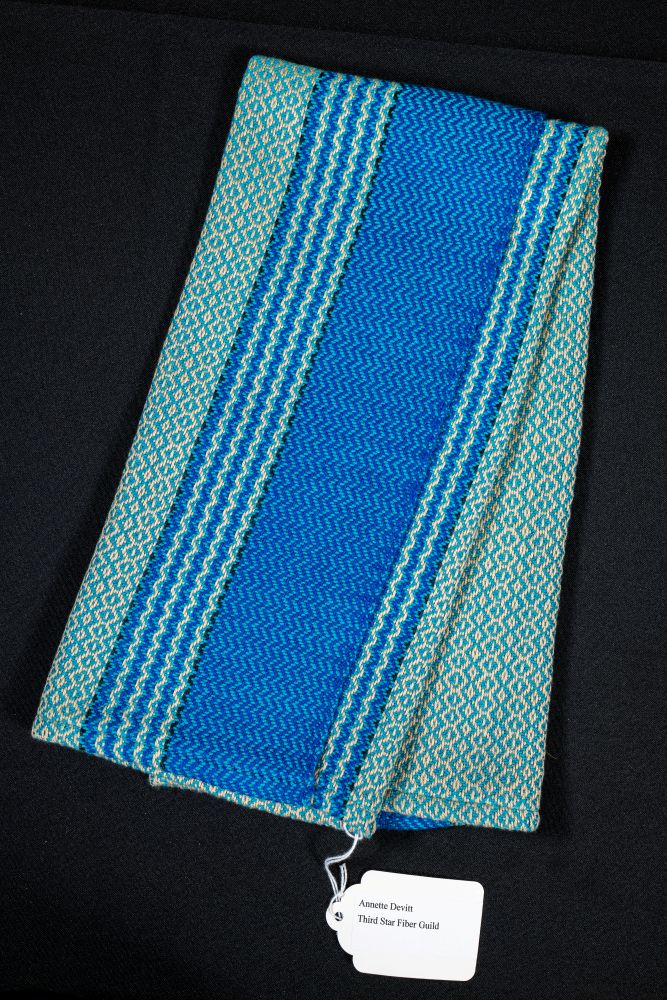
I designed this towel using a the traditional blooming leaf profile draft. I then used (432); (321);(214); and (143) as the blocks 4,3,2,1 respectively to substitute into the profile draft.
I used 486 ends plus two floating selvages.

MAFA2025-3850

This towel has 408 ends in the warp and was woven to 31 inches long. I began with a 9.5 yard long warp and wove 10 towels. It is my belief that a long warp gives the weaver a large variety of places to play. It also is very economical as far as loom waste is concerned. A warp for one towel has the same amount of loom waste as for for 10 or more towels. 200 yards of loom waste is average for dish towels! Think of the cost and then decide to make many towels using different weft colors and new tie ups or treadlings. This is what I call weaving fun! Additionally, I rarely have only one color in the warp.

I weave a towel as my heart desires, weave two shots of scrap weft and then begin the next towel. When the warp comes to an end and I remove it from the loom, I will sew a row of zigzag stitches at each end of each towel. Next I put the entire warp in the washer and add very warm water, let the towels soak for about 20 minutes and then allow the washer to finish the load. They go to the dryer next and tumble until barely damp. I steam press each towel and cut it from the warp. I then make a narrow turned hem and stitch it with small blind hem stitches. A final pressing and all is finished, I stand back to admire the play of colors and textures.